

Summer’s over. We have nothing to show for it. No tan, no lake, well, one of us went to a lake for an afternoon and spent it reading a novella where God is blind, so the church has to pay him in stamps, and the stamps come out of a thing in a box that drinks the priest’s blood, so that doesn’t count. Between July and the end of September we got through 85 horror books, which is a number a physician would want to discuss with you in a quiet room. Those are the months when publishing assumes, allegedly, that you’re at the beach, and drops the good stuff anyway, quietly, through the small presses, the way a guy slides you a folded note in church. We were in church. We took notes. A lot of the notes just say WHY, underlined. One says WHY next to a drawing we no longer understand and are not going to try to.
If you’re new: Recommended Reads are the books we’d put in your hands at a party while you were looking for your coat. Sinister Selections are the ones where we follow you out to the car and tap on the window. There are seven Selections this quarter, which is too many, and we ran the numbers twice because it embarrassed us. The numbers held.
Two of the seven are translations, because of course they are. One is self-published, the first time that has ever happened on this blog, and we plan to be insufferable about it for at least a year. There’s a climate-fiction press from Hamilton, Ontario on the list. Hamilton. The wolf book is in there, the one where the wolf has a theology degree, or the author does, we’re still not sure which. The Dominican one is narrated by a demon who has been riding a washed-up metal singer since 1969 and wants to trade him in for something younger, and it is somehow the holiest book on the list. And three are Big Five, which we have decided to be adults about. Reader, we almost forgave them.
Let’s fuckin go.
Quarter 3, 2026 Recommended Reads
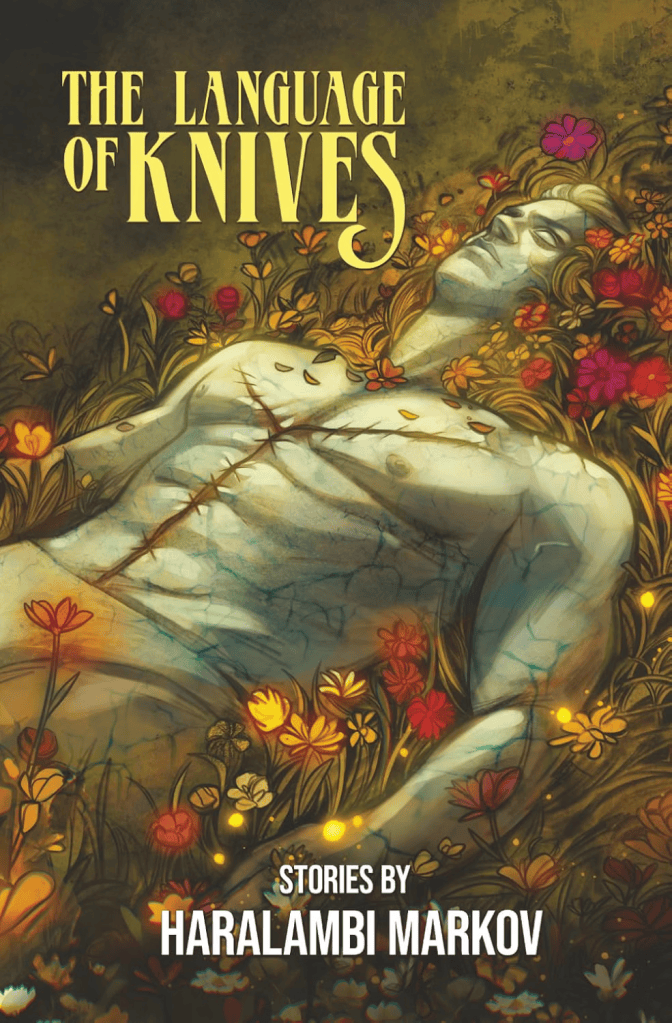
The Language of Knives by Haralambi Markov (Mythic Delirium) | Thirteen stories from a Bulgarian writer working in his second language, and the second language is doing things the first one should be jealous of. A call-center worker interviews a nine-headed hala for her podcast. Two pensioners boil raspberry jam so good the whole town gets hooked, and they get sealed into the bush, mid-coitus, until next August. A widower and his daughter bake his dead husband into a cake for the gods and it is somehow the tenderest thing in the book. Everybody gets eaten. Most of them ask nicely. The long haunted-B&B story overstays its welcome; the short ones are switchblades. (Full Review)






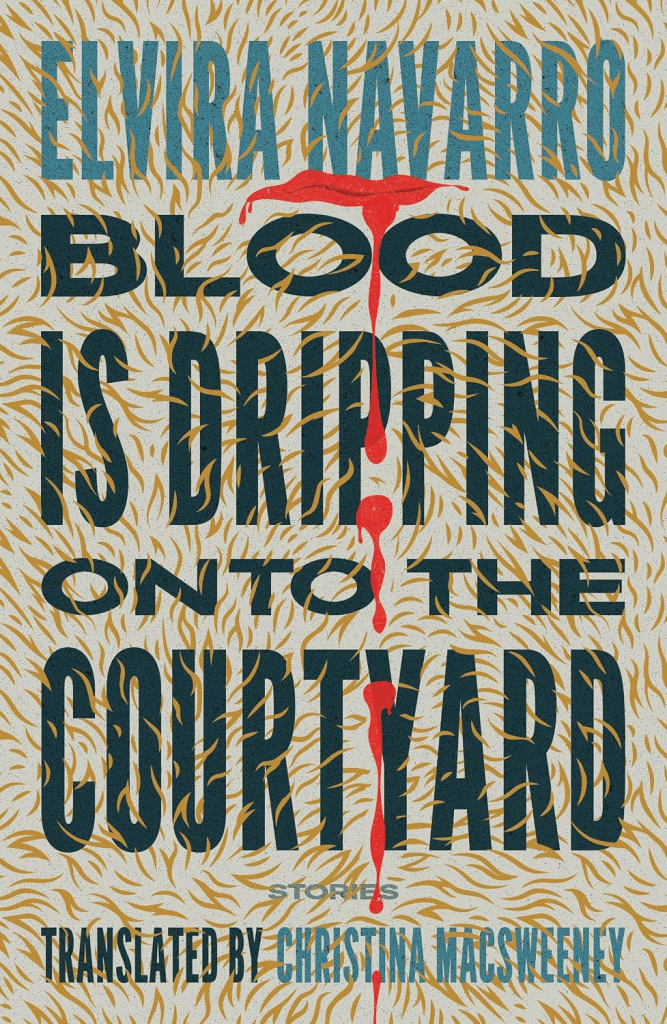
Blood Is Dripping onto the Courtyard by Elvira Navarro (Two Lines) | Nine stories from the Spanish margins, and the scariest one has no ghost in it. A laid-off printer sweeps roadkill off the A-2 at night with an old man who finishes the dying ones with a broom, and starts bringing the survivors home. A washing machine on a fifth-floor balcony fills with fresh blood during a Madrid heat wave, and the courtyard kids make up a song with the word murderer in the chorus. A bankrupt woman charges her phone at a cemetery outlet and keeps a femur in her underwear drawer. Navarro writes poverty, bodies and shame without a drop of consolation, and the sinister leaks out of the social like it was in the pipes the whole time. Two of the long stories are literary fiction with mood. The middle three are the real thing. (Full Review Forthcoming)



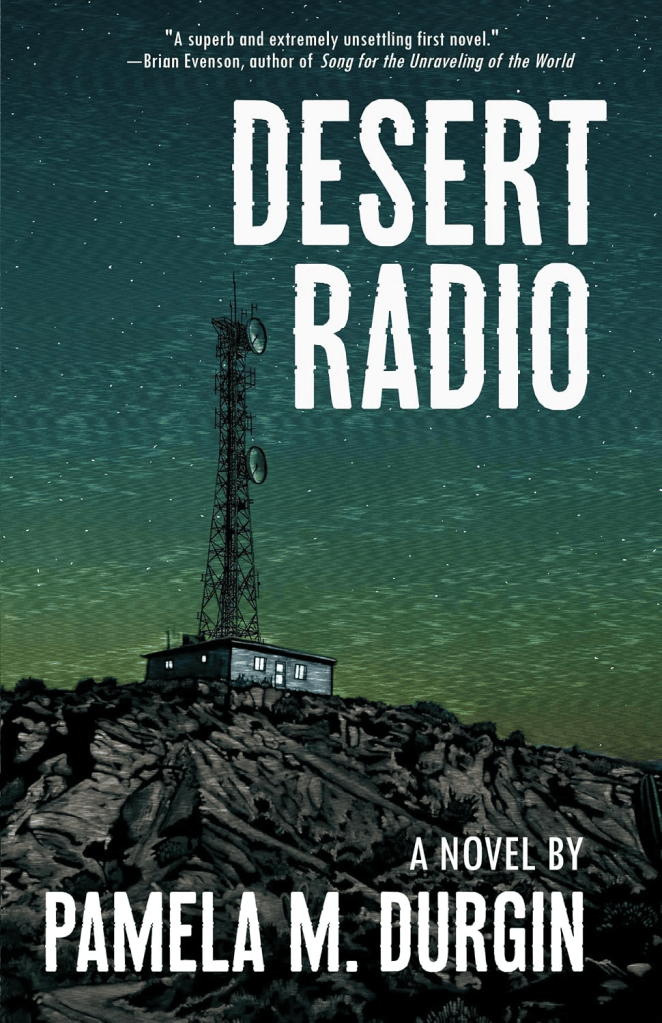
Desert Radio by Pamela M. Durgin (Word Horde) | Twenty-five days sober and fired from the Avis graveyard shift, Gloria stops in Ridgecrest, a bars-and-churches town on the lip of Death Valley next to a naval weapons base, and takes the overnight slot on Real Classic Rock. Missing-dog flyers on every pole. The dogs walk past the station door on their hind legs. Through the wall she hears a dental drill and a machine voice asking for access, and so, eventually, does a burro. Her landlord is a one-eyed Vietnam tunnel rat who leaves a bottle of Jack on the doormat as a housewarming gift. It’s Lovecraft by way of the Mojave, and the back cover names the templates before we could, but the dread runs from the first gas station to the last page, and what Durgin does with the sex scenes we are not going to spoil. Small-press debut. Watch her. (Full Review Forthcoming)




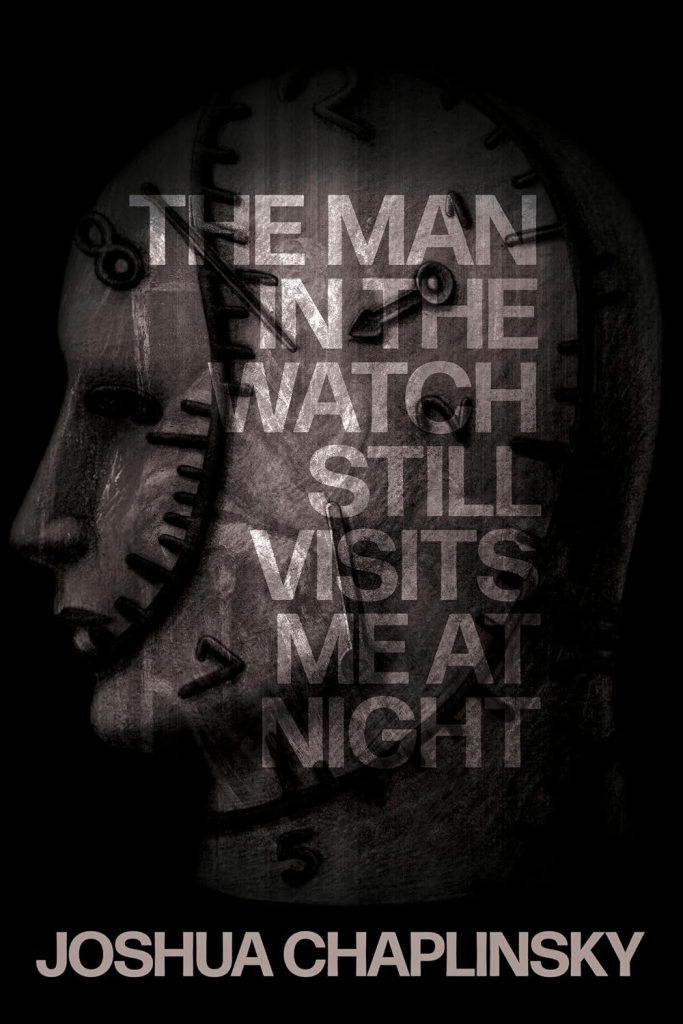
The Man in the Watch Still Visits Me at Night by Joshua Chaplinsky (CLASH) | Jenna is seventeen. She lost her virginity in the boarded-up Victorian at the dead end of Mayfield, the one with the black-painted sidewalk and the clock stopped at three, and took some letters on the way out. They’re from a pregnant girl, and they end with the Man in the Watch bargaining for her unborn child. So Jenna goes back to return them, and the house keeps her, and the dead couple inside start their day: she rereads one letter while her knitting grows into a baby cap, he steps out of the grandfather clock and eats the mail. The contents page starts at Part 3 and ends at ∞. The back cover says House of Leaves meets Lynch, which is accurate and also the ceiling. The last pages are printed in two inks, one collapsing under the other, and the ending is the best thing in it. (Full Review Forthcoming)


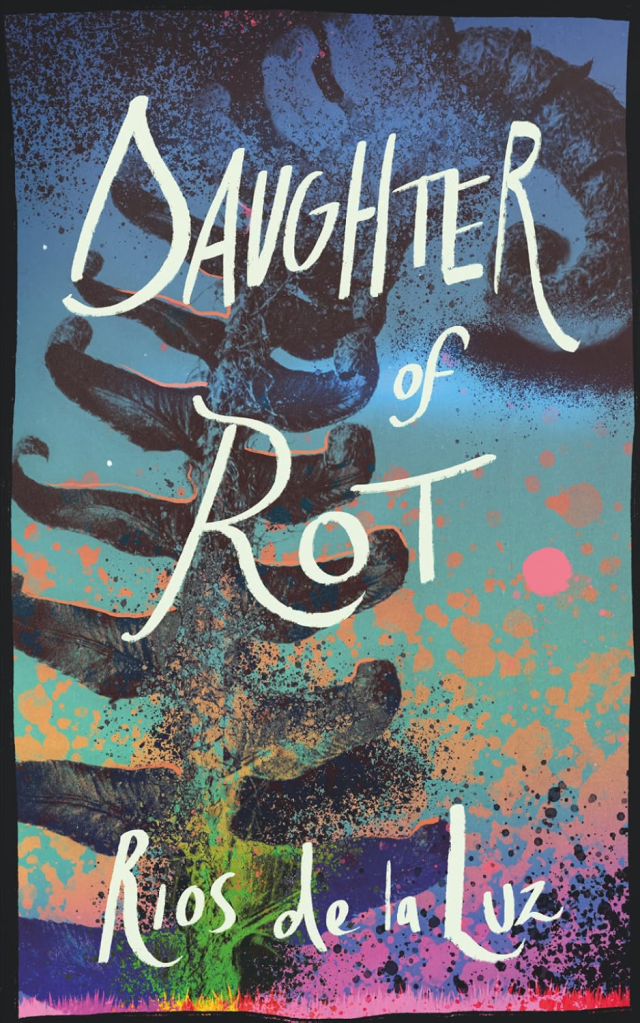
Daughter of Rot by Rios de la Luz (Broken River) | A house in the New Mexico woods gets pregnant. It narrates its own contractions. What it births is a room, and the room grows whatever the women who walk into it can’t have. For Olivia, left home alone every Wednesday with a shelf of ceramic chickens (Roberta the Second; Roberta the First met a hammer during one of Mom’s phone calls), that means a mother made of moss with rose thorns for teeth, who hugs her, which the real one won’t. The real one, Isela, is a liar with an appetite and the scariest thing in the book. A placenta drops from a ceiling. Somebody licks the stump. Novella length. Call your mother afterward, or don’t. (Full Review)


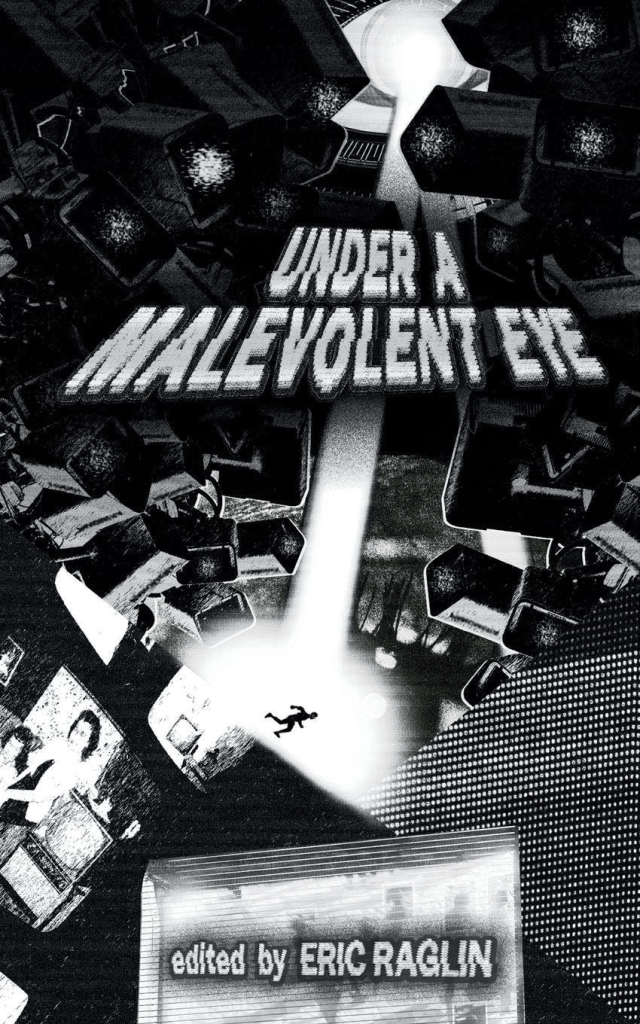
Under a Malevolent Eye ed. Eric Raglin (Cursed Morsels) | Eight new stories about being watched, from a Minneapolis micro-press whose back catalogue includes Antifa Splatterpunk, so you know which way the eye is pointed. Meagan Kane opens in an occupied Minneapolis, day 472, where eyes sprout on the surveilled and get spooned out and kept in the fridge (“Popsicles melt; eyes don’t”). Joe Koch writes a liturgy for the Ministry of the Omniscient Claw and it’s the best prose in the book. Charlene Elsby’s office surveillant falls for his target. A period app snitches. A six-year-old comes home wearing a body cam, and Mae Murray’s last two pages are the best ending we read so far this year. The middle three are a Twilight Zone marathon with better politics. Koch first, Murray last.



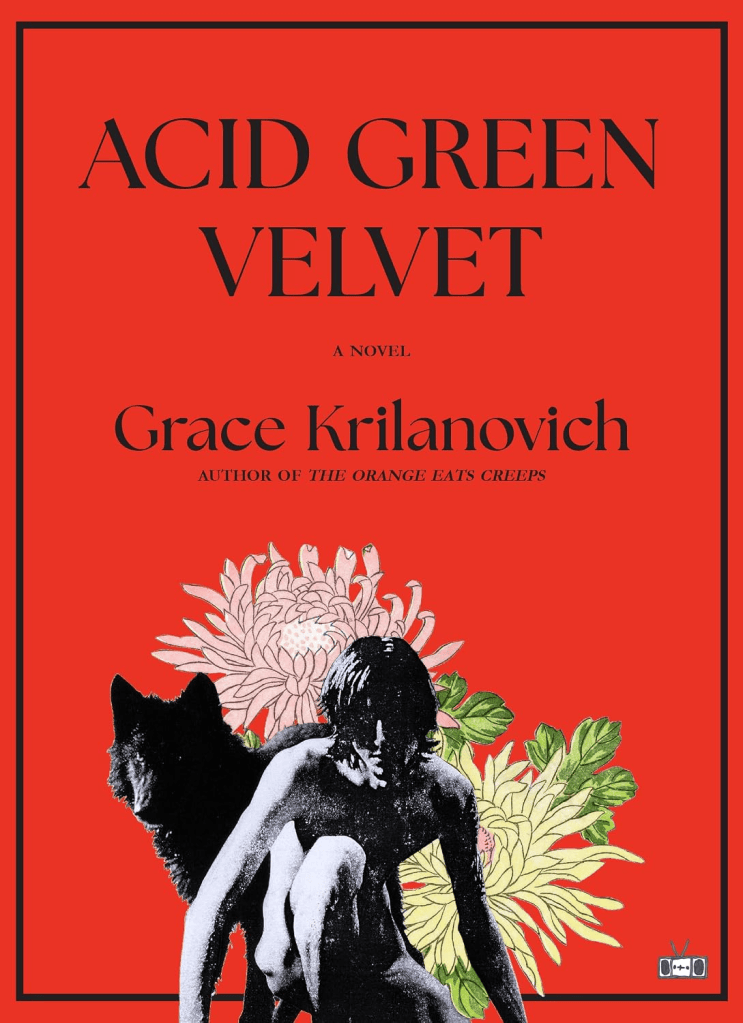
Acid Green Velvet by Grace Krilanovich (Two Dollar Radio) | Sixteen years after The Orange Eats Creeps, Krilanovich returns with a Gothic Western set in Anzar, California, 1879, where the anarchists wear calico loincloths, the rich composer sleeps behind three layers of drapes, the cook is called Grandma Rat and lives in a closet with a rat on her arm, and the dogs have hyena in them. Paulette is nineteen and paid to be the composer’s muse. The hobo uprising downtown marches under a banner reading ANTS ARE CAVEMEN. Everybody speaks in oracles and nobody explains a motive, on purpose, for seventy-five thousand words without a chapter break. The middle sags like a hammock with a body in it. The last sixty pages are the best thing she’s written. (Full Review)


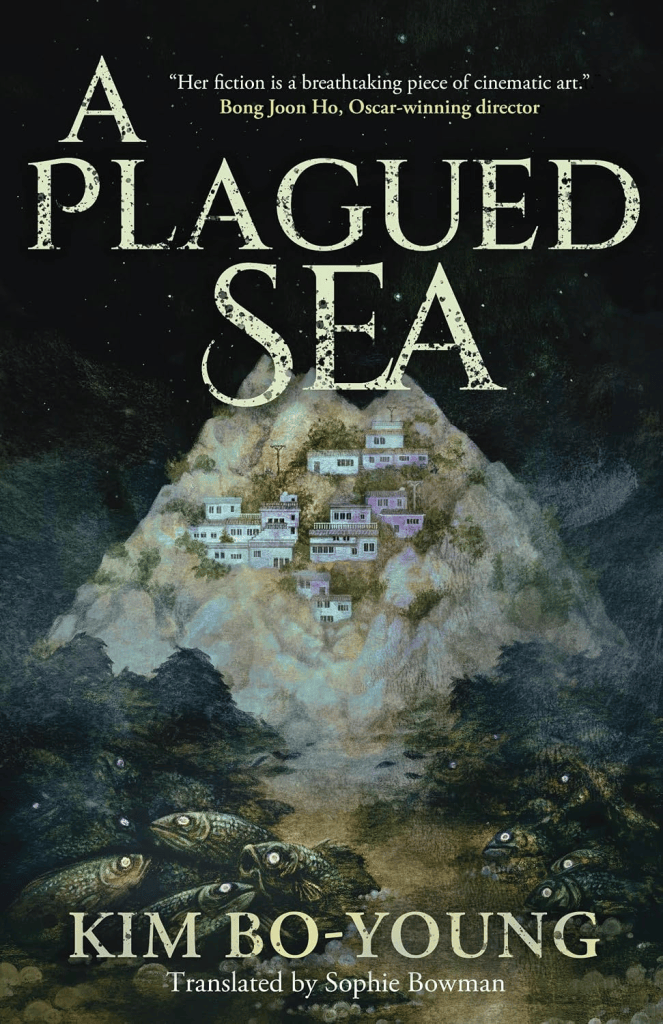
A Plagued Sea by Kim Bo-Young (Nightfire) | Innsmouth from the fish people’s side of the street, which turns out to be the side with a point. A Seoul bodyguard takes her niece to a fishing village the morning an undersea volcano shoves an island up offshore. Then the wave, the stagnant bay, the disease (bulging eyes, extra teeth, skin gone to wood, a smell like the back of a fish market), and three years of quarantine with her as the last clean person in town, enforcing it with two batons and a pocketful of vinegar sachets. A woman keeps something in a basin and explains that he’s kind and polite and doesn’t hit her. Kim wrote this for a Korean Lovecraft project, and what she’s actually interested in is who gets to call whom a monster. The retelling caps it. The basement scene doesn’t care.




Last Day of a Prior Life by Andrés Barba (HarperVia) | A real estate agent showing an empty mid-century house notices a small boy in a brown school uniform standing in it. He doesn’t blink. Her first feeling, and this is the whole book in one line, is a vague revulsion at his privilege. She copies the key. She comes back. What she finds the second time is herself, doing yesterday, on a loop. Barba (Such Small Hands) builds the haunting out of a locust hollowed by ants and still twitching, a jasmine bush that catches the same gust every twenty-nine seconds, and a haircut that sounds like meat under kitchen shears. Part Two explains more than it should. Part One explains nothing, and it’s perfect.

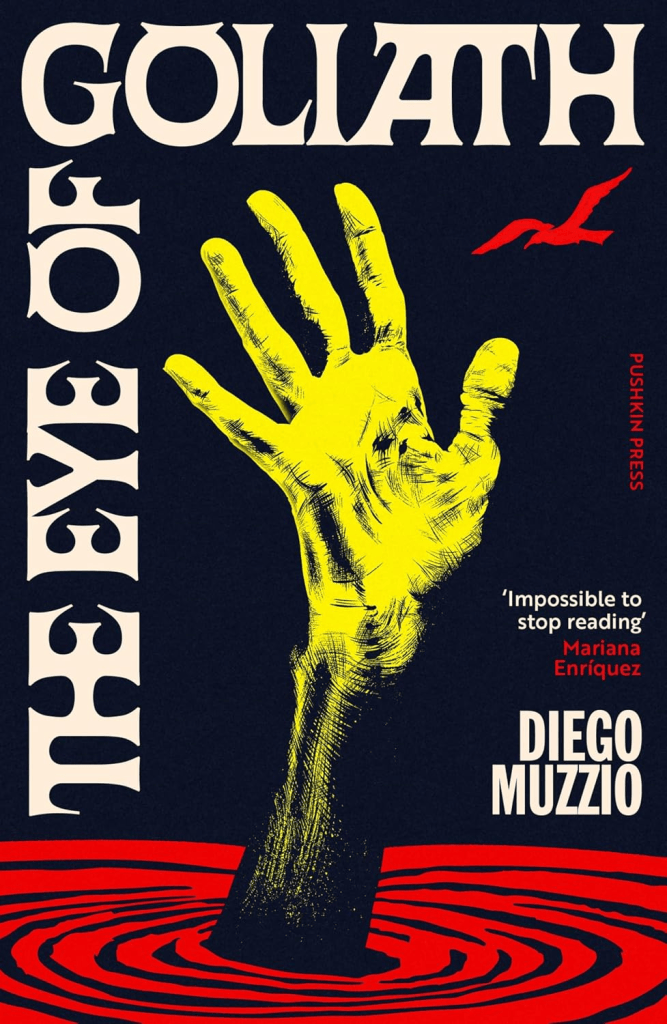
The Eye of Goliath by Diego Muzzio (Pushkin) | An Argentine poet’s first novel. Elias called it Jekyll and Hyde rebuilt as a lighthouse log, which is right and undersells the birds. A psychiatrist with a piece of the Somme still in his skull takes on a lighthouse engineer who came back from Patagonia mute, swimming face-down on dry land. The engineer’s diary is the middle of the book: a dead light at the bottom of the world whose last keeper murdered and embalmed his wife and daughter and kept them at the tea table for monthly visits, crowned in flies. Glass eyes arranged into one enormous eye. A sunk German fleet steaming past on its way to hell. Three knives by the stove, then two. The third act leans on its literary apparatus a little hard. The lighthouse is the best haunted anything this year. (Full Review)

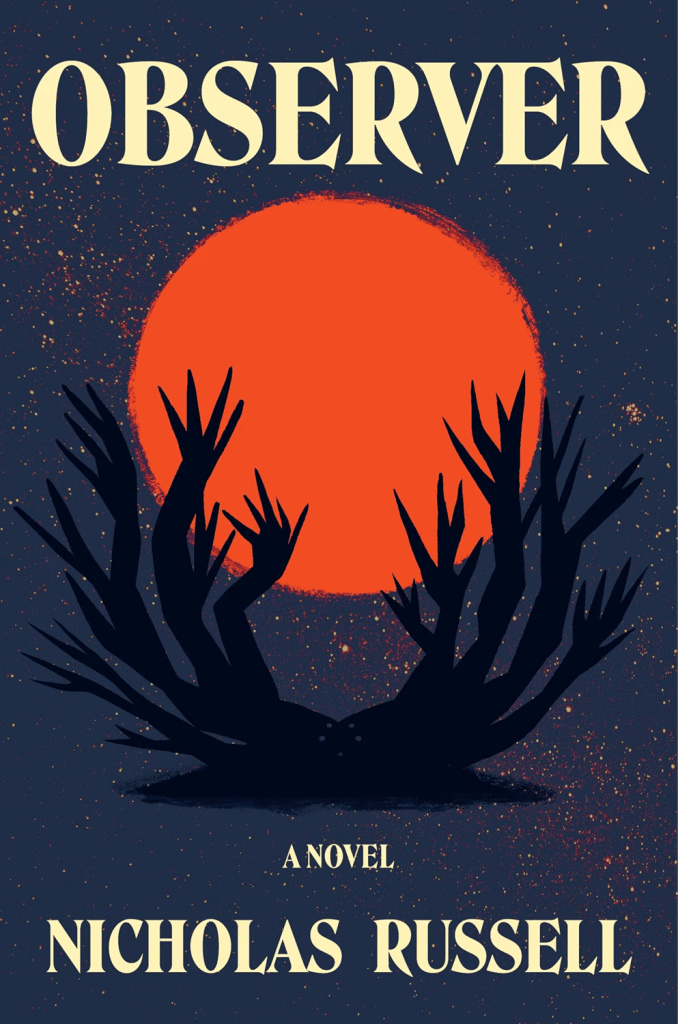
Observer by Nicholas Russell (Ecco) | Renata develops photos in a Las Vegas print shop during a heat wave that’s leaving bodies on the casino glass, and then her aunt shows up with boxes: the mother who gave her away at age one is dead. Mom was an astrophysicist at a liquid-mercury telescope on a twelve-thousand-foot mountain that closed in 1997, and the boxes hold her journals and a river surveyor’s diary from 1905. So Renata drives up. The town is a highway bend with a firebombed post office and a bar called the Spyglass, everyone has a rash, and the trees are watching, which is not a figure of speech. Russell’s debut takes fourteen thousand words to leave Vegas and has one page of italic oracle-babble it should have cut. The last chapter is a beast. (Full Review)

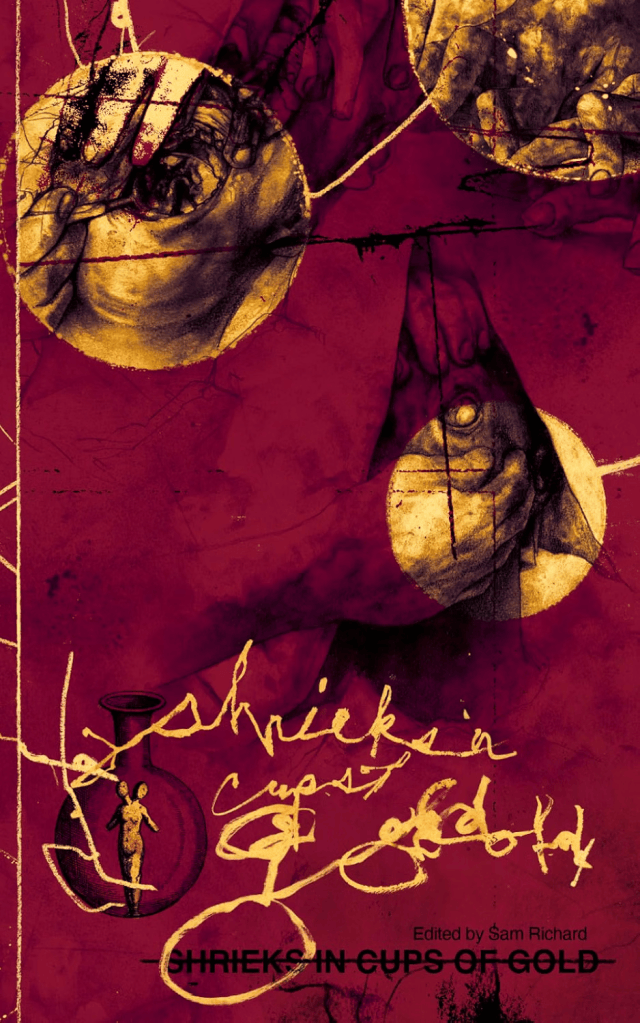
Shrieks in Cups of Gold ed. Sam Richard (Weirdpunk) | Five stories in tribute to Katherine Dunn, twenty-five thousand words, and a copyright page that says absolutely no AI was used, which in this, the year of our Lord 2026, is the sexiest sentence in publishing. A laid-off theme-park employee pushes toothpick halves through his cheeks for a permanent smile and snips off both pinkies in the kitchen sink so the four-fingered gloves fit. A pharma executive takes an untested pill called Ghost at a tasting-menu party and relives three dead friends while in-house counsel reminds everyone about the NDA. A wheel-god remakes the world as a gallery and a brother sits eviscerated in it, signed across the forehead. Sasha Ravitch’s story is the best in the book and the least horror, which is Dunn’s whole deal. A chapbook’s worth of book, from a press that means it.
Quarter 3, 2026 Sinister Selections
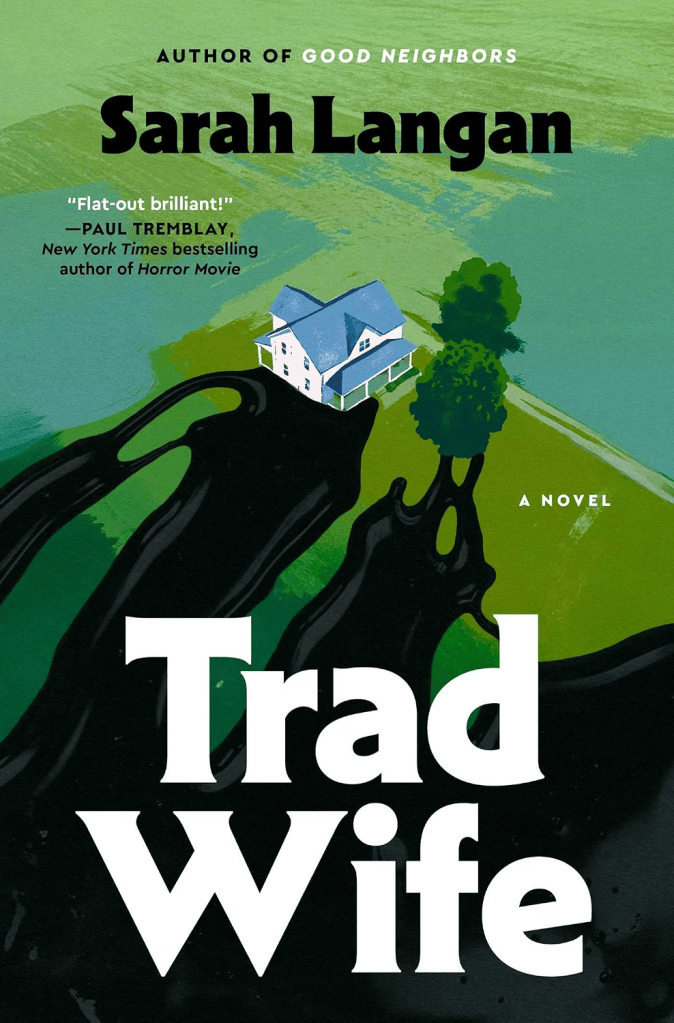
Trad Wife by Sarah Langan (Nightfire)
Jenny Kaplan wrote a personal essay. Her editor retitled it “Bad Boyfriends: Is Gen Z Drinking Drano?”, it went viral, a men’s group called the Brotherhood of the American Agenda decided she should die, and she lost her job. The consolation gig is a profile of Mia Wright, a trad-wife influencer on Black Swan Farm in western Pennsylvania who asked for Jenny by name. So Jenny goes, and then she stays a week, Freaky Friday style, and the farm’s content starts showing its seams: accidents staged for the camera that actually hurt the kids, children who freeze mid-motion, chickens hollowed out and bloodless, a locked stone room, a smell, and everybody telling her she looks just like Mia. The devil here is called Mr. Yellow. He lives in the yellow soil, spreads through cherry-scented MLM products and viral videos, and “I see you” typed in a comment section is a working spell. Between chapters Langan drops fake bicentennial articles, Reddit fragments, an Amway epigraph and a chunk of The King in Yellow, because she wants you to see the parts. The parts are Stepford, Rosemary, Get Out, Chambers. The machine they build is hers alone: the backlash economy as a possession vector, and a book that says the word sacrifice early and means it. The middle drags and the finale talks too much. Doesn’t matter. A Big Five book that cleared the curve anyway, and the smartest horror argument of the year about how attention actually works. (Full Review Forthcoming)
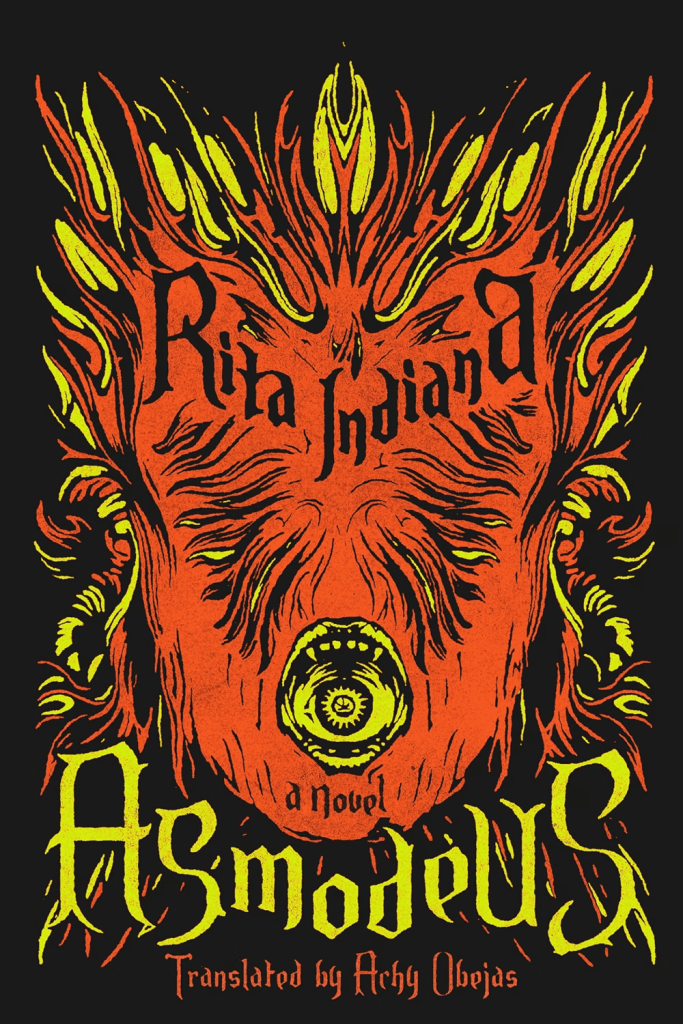
Asmodeus by Rita Indiana (Graywolf)
Monday, 1992, Santo Domingo. A man with no pants in a Led Zeppelin T-shirt is holding a dead sardine in front of a moldy mirror while two women laugh at his impotence, and he decides they’re witches. That’s Rudy Caraquita, formerly the biggest metal star in the Dominican Republic. The narrator is the demon inside him, Asmodeus, a fallen seraph who has ridden Rudy since 1969 and has decided, now that the coke’s gone and the equipment doesn’t work, to trade him in for a younger model. He exits as yellow slime with a black center. A witch spits him into an army knife, and the knife passes from a metalhead girl to a supermarket bagger who needs five hundred pesos for a guitar to a rich black-metal kid with a chauffeur and a Flying V, and everyone who holds it gets a little worse. Meanwhile Rudy, sober and wrapped in a bedsheet like a Desert Father, starts writing a tragedy in rhymed ten-line stanzas on his psychiatrist’s prescription pad, about people he has never met. They’re the people the demon is meeting. There’s an archangel nicknamed after a Spanish pop diva because she looks like Rocío Jurado dressed as a Roman soldier. There’s the Balaguer dictatorship, a torturer’s bathroom, a city that sells its children to cover its debts. Around the two-thirds mark the book does something to its own frame that we will not describe, except to say we put it down and walked around the block. Obejas had to carry about seven hundred lines of rhymed verse into English and mostly pulls it off. Feral, funny, holy. (Full Review)
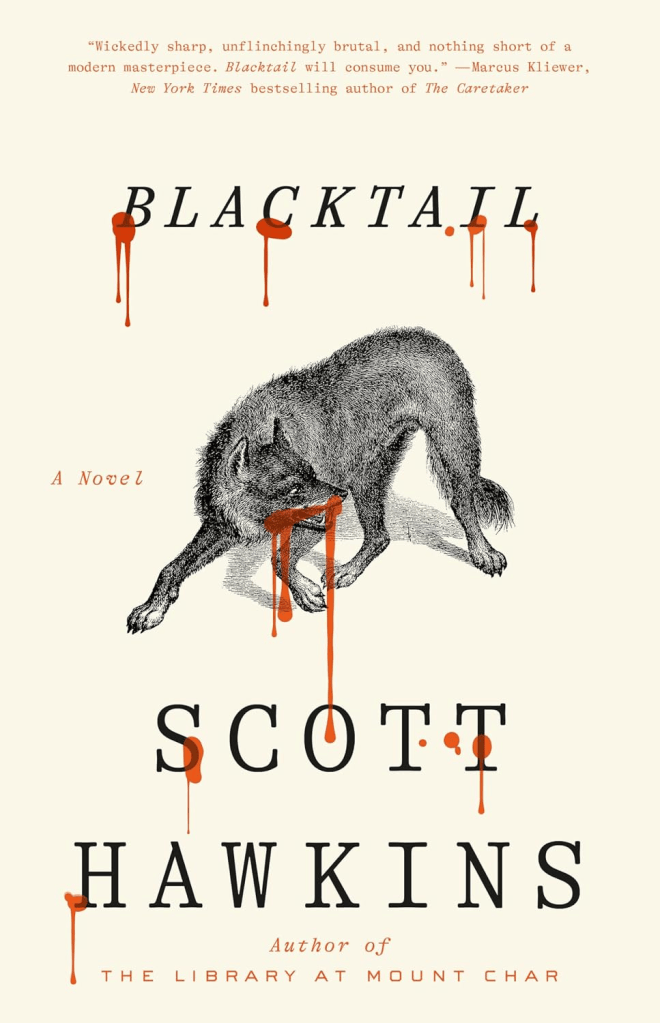

Blacktail by Scott Hawkins (Crown)
We called it Watership Down with the mercy cut out and the teeth left in, and we’re keeping that. Blacktail is a half-wolf pup whose mother is shot by hunters, who kills a lynx named Hate, and who falls for a chained house dog named Renren. Her owners spay her. That kills his unborn litter and, botched, kills her, on the chain. So he goes into House and does what a wolf does to a family, and a witch-cat older than sea turtles sends him south to wake the sleeping Forest God. The pilgrimage: a serial killer who speaks the language of the hunt, a cult of house pets worshipping the old woman who feeds them, a starving desert dog named Chester who becomes his pack, an archangel in a bonfire with an offer. Everything human is seen from the wolf’s side, so a highway is a river of light and a leash is a circle of stony ground, and the theology (a god is what happens when one creature touches another; to hunt a thing is to worship it) is the most serious anyone has been about animals since Adams. It’s also a book where a pet named Babykins says “Bite you and bite your fucking Forest God,” and the cast includes Fatberry, Trap-Slipper and Snooky-Ookums, and none of that is a joke, and all of it is. Eleven years since The Library at Mount Char. Worth every one. (Full Review)
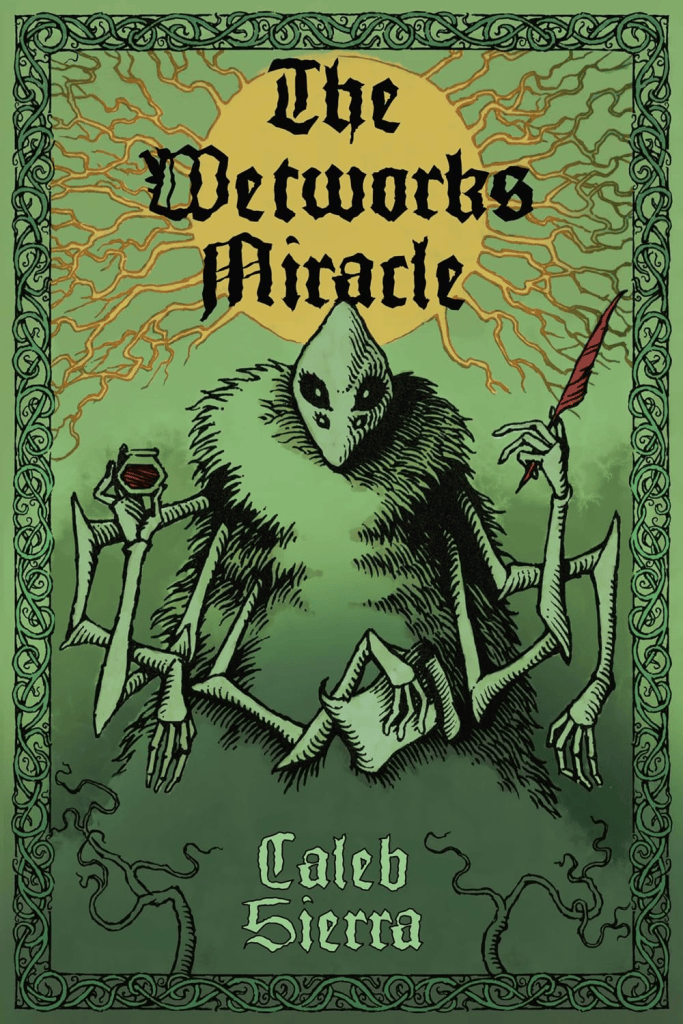

The Wetworks Miracle by Caleb Sierra (Stelliform)
Twenty-seven thousand words, five narrators, one plant. Humanity fled a dead god through a gate, aboard a ship that became a cathedral, and fifty years on lives on a sunless continent as livestock for the Root, a single organism that long ago learned how to be every plant and has since been learning how to be us. The peasants work the Wetworks, a fertilizer farm of mucus vents, alongside Heap, a man-shaped tool with a black diamond painted over a face of permanent grief. The church runs on accounting: God is blind, so prayers are paid for and receipted in Stamps, and the Stamps come out of a faceless, limbless thing in a wooden box that drinks the priest’s blood. Then a simple boy is fed into a saw blade, Heap tears himself in half to fit what’s left, and the thing that stands up starts answering the workers’ questions on the Root’s behalf, two words at a time. Death, boring. Miracles, easy. Watching, fun. A fifteen-year-old lays a clutch of eggs on her mother’s floor and names what hatches. Sierra studies religions, and his acknowledgments thank a priest for calling the book much too weird. The priest is right. Stelliform is a climate-fiction press in Hamilton, Ontario, and they just put out the strangest, tightest horror novella of the year.
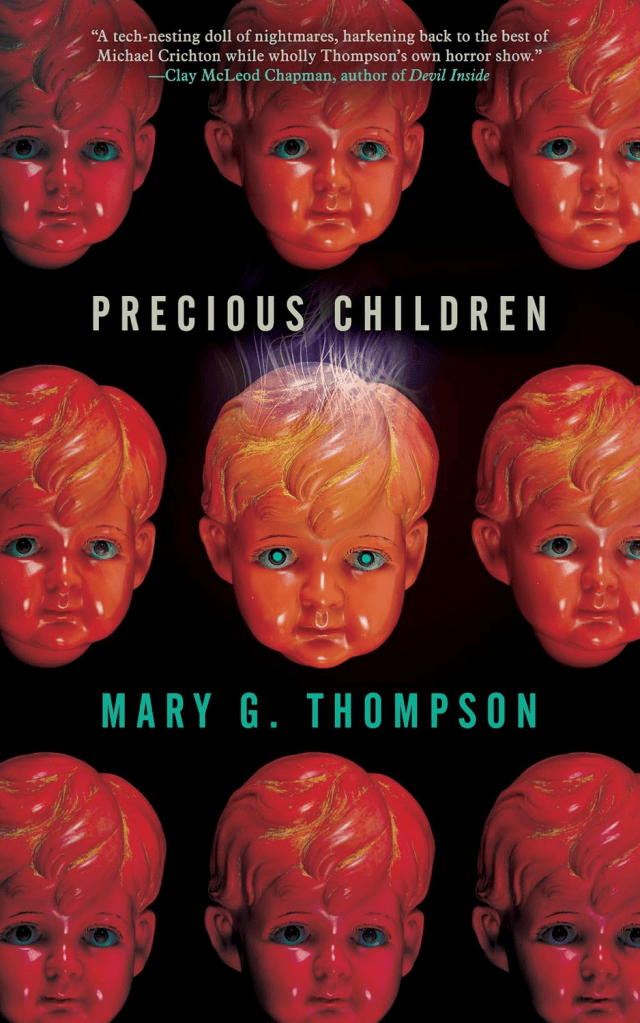

Precious Children by Mary G. Thompson (Tachyon)
2071. Kids keep dying, so the President’s Population Program lets the very rich clone themselves four thousand times, farm the copies out to adoptive families, and reclaim a body when their chosen child dies. The self goes in through a neck implant. Nanobots tidy up whoever was living there. Dina Blake’s son Geoff has died twice, and Dina copes with a device on her neck that switches feelings off, which is how she can watch the transfer and file the kicking legs under reflex. What Dina doesn’t know, and what the book tells you in the boy’s own voice long before she finds out, is that the first host was trained from infancy by his broke parents to win the fight for his own skull, and did, and has been wearing her son for five years. Three rotating narrators, one of them a twelve-year-old who strips the parental controls off reality and starts reading the company memos, and the memos are where the horror lives: contracts, ad copy, a research note stating that the consent hypothesis is confirmed. No monster. A mausoleum full of blank nameplates and a mother who likes things tidy. Benny said it earns every fucking inch. Don’t read the last three pages on public transit. (Full Review)
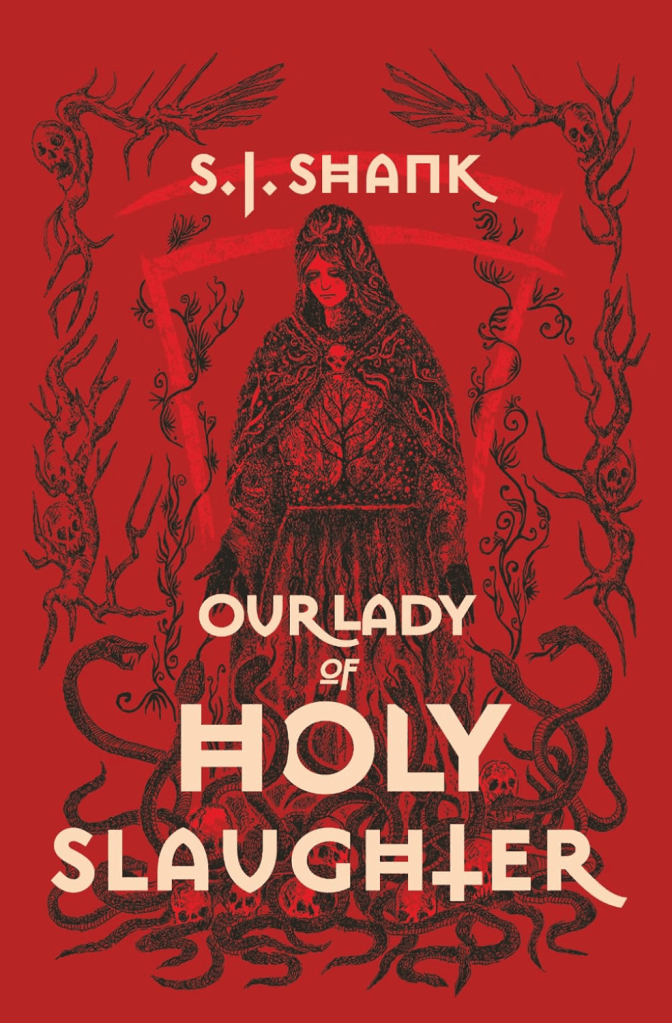


Our Lady of Holy Slaughter by S.J. Shank (Carthago Nova)
Self-published. The first Sinister Selection ever to come off an author’s own imprint, and the best novella we read this quarter. Six survivors of a crusader rout in the Baltic, 1236, are stranded on an islet in a Semigallian swamp: three Livonian Brothers of the Sword, a papal emissary whose entire German vocabulary is “No go,” and two native converts, one of them Gaidis, our guy, armed with a sharpened stick. A trumpet sounds in the mist. The brothers follow it in. Gaidis finds a single blonde hair, long as his forearm, threaded through a knight’s chainmail like it was woven there. A grass snake opens its mouth and asks him who his mother is. A veiled woman beckons across the water, and the knights see the Virgin Mary, and Gaidis sees the one who guides the bewildered dead, and the book lets both be true for exactly as long as it can. Then the crusaders start turning up hanging naked and headless with their arms folded. Twenty-eight thousand words, four chapters, dread as the entire mode, and a ground that is lying to you as hard as the Lady is. Then write the next one. (Full Review)




Mothersucker by Kim Bohyun (Vintage)
The Korean title was Bloody Mother. Vintage felt that was too subtle. Geum-hong’s daughter was murdered by her stalker ex in 2017; he got three years. Geum-hong walks up a mountain, collapses, gets bitten by moonlight (that’s the mechanism, no follow-up questions), rises as a vampire, kills him, and walks into the sunrise to be done with it. The sun has other plans. It throws her through time, to wherever an abused woman is wishing hard enough, and she arrives with pruning shears. The cops, meanwhile, work the case the only way cops can, forward, which is why they can’t see it: the killer’s technique looks like it’s degrading over the years because the first murder on their timeline was the last one she committed. The only detective who can see her is the retired one whose own time is broken. Thirty-seven date-stamped chapters, shuffled, and the shuffle is the argument. Part Two is a clinical case report, with footnotes, diagnosing her as a porphyria patient with delusions, and the book lets you believe it for about four pages. Benny said the vampire is the least disturbing thing here. A Big Five imprint doing, for once, exactly the right thing. (Full Review)


Leave a comment