





TL;DR: Markov arrives with a decade of risk packed into one object and most of it lands hard. Bulgarian folklore, body horror, and generational grief written in a second language with the precision of someone who has been sharpening this particular knife for years. The stories that work will follow you for days. The ones that don’t still show you exactly who you’re dealing with. Read it, motherfucker.

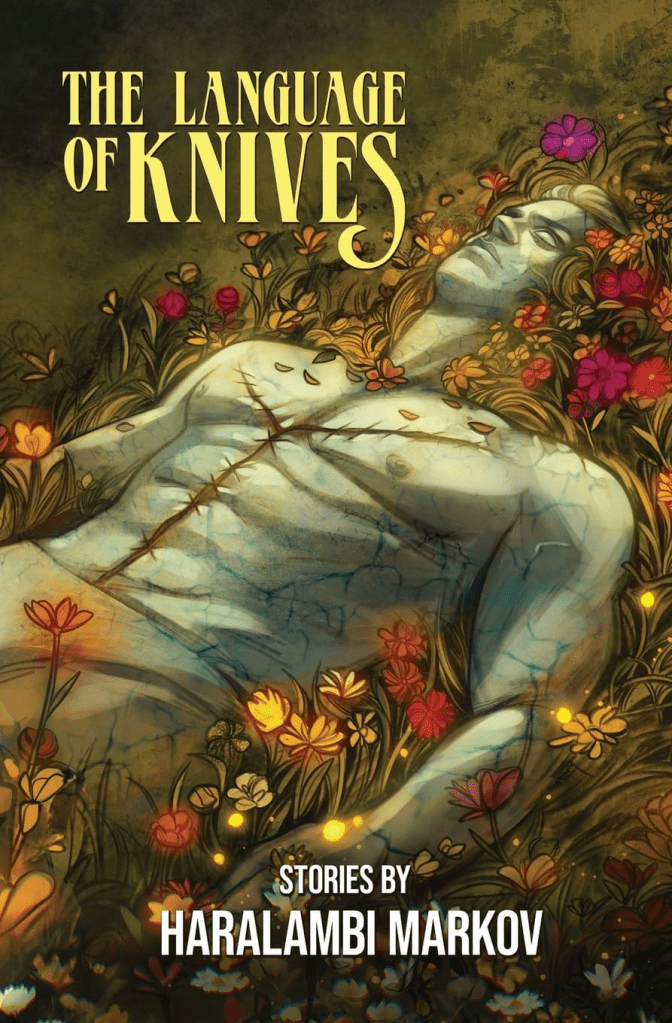
The title story of this debut collection is twelve pages long and contains more grief per square inch than most novels. It’s a ritual: two people, a parent and their child, methodically skinning, deboning, mincing, and baking another person they loved into a ceremonial cake, because that is how the gods of this secondary world receive the dead. Written in second person, with the clinical tenderness of someone who has rehearsed their own feelings so many times they’ve stopped feeling anything at all, it describes the scraping of a knife across skin the narrator knows by heart: the scars from sword dancers, arrowheads, a fire titan. What happens to love when it becomes procedure. Whether the ritual protects you from grief or just renames it. Haralambi Markov‘s title story was Nebula long-listed in 2015, published when the author was still figuring out what English could do. Eleven years and twelve other stories later, it anchors a collection that is ambitious in scope, often gorgeous, and occasionally uneven in a way that makes it feel exactly like what it is: a writer taking a decade’s worth of risk all at once.
That’s not a knock. It’s almost the opposite.
The Language of Knives is folk horror, body horror, cosmic horror, ghost story, surreal fable, and climate grief fiction, sometimes in the same piece. The connective tissue is Bulgaria (its folklore, its demons, its landscapes) and a preoccupation with what bodies mean when they are no longer yours. Every story turns on some version of that question: the body as ritual object, as curse inheritance, as monster-host, as the thing left behind when someone leaves. Markov, who was the first Bulgarian writer accepted to the Clarion Workshop in 2014, writes across traditions in a second language with a confidence that still occasionally slips into overreach, and the collection is stronger for both.
The best of it is genuinely stunning. “Nine Tongues Tell of” opens the book and almost unfairly raises the stakes for everything that follows. Damyana is a young Bulgarian woman working a call center job, caring for a dying grandfather, chain-smoking at 3 a.m. through the fog of Varna, when a woman in a park sheds her body and becomes something enormous with nine heads and a wingspan that swallows the sky. The story is structured as a podcast with interview transcripts between Damyana and the hala she befriends, interspersed with narrative, and the formal decision earns its keep. There’s something specifically correct about a monster that exists in the oldest oral traditions being encountered through earbuds, interviewed in abandoned tunnels, given nine dogs’ heads and a translator’s patience for imprecision. The hala winds its necks around Damyana while she sleeps underground, a nest of monstrous tenderness around a woman who has nowhere else to be. When the creature says it’s time to go to the Lower Lands, and Damyana says take me with you, and you understand that the whole story has been building to a choice between the living world and whatever comes next. That is horror doing the thing horror is uniquely built to do. It costs.
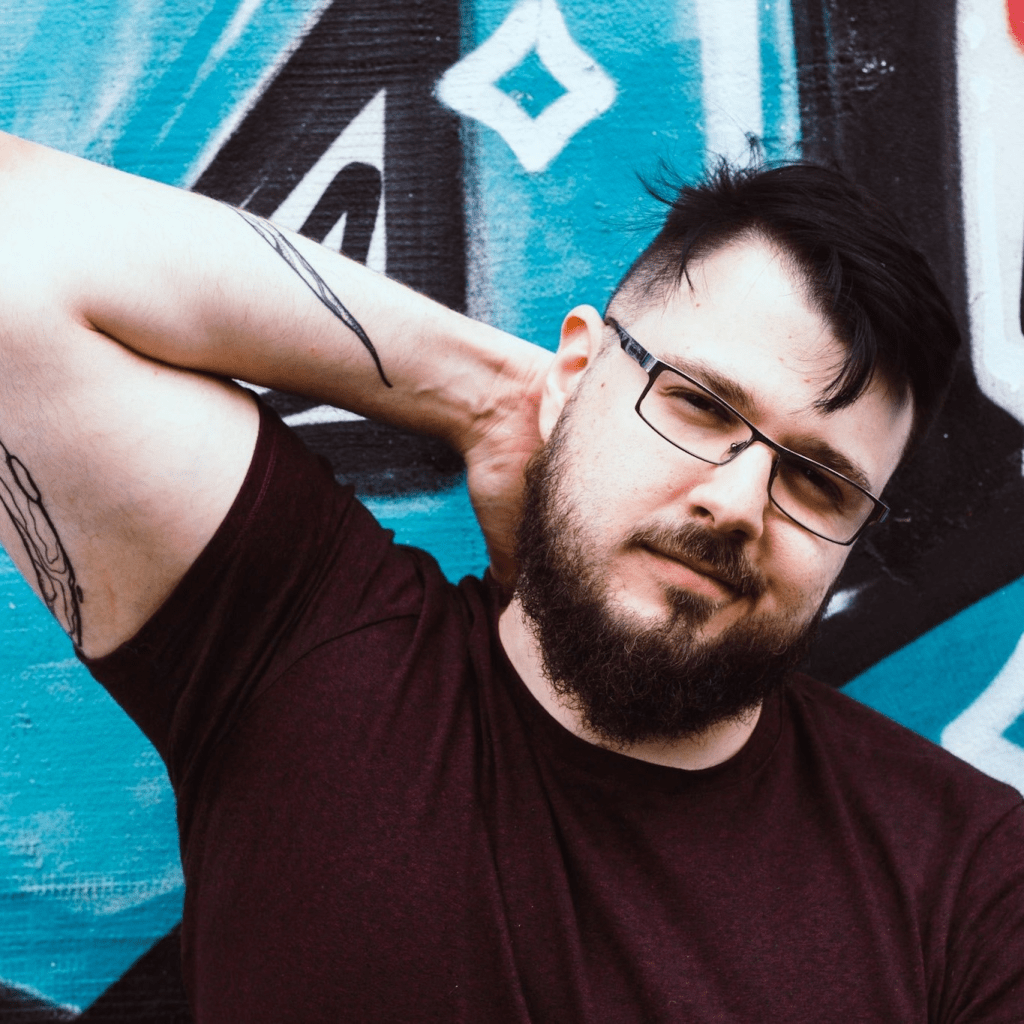
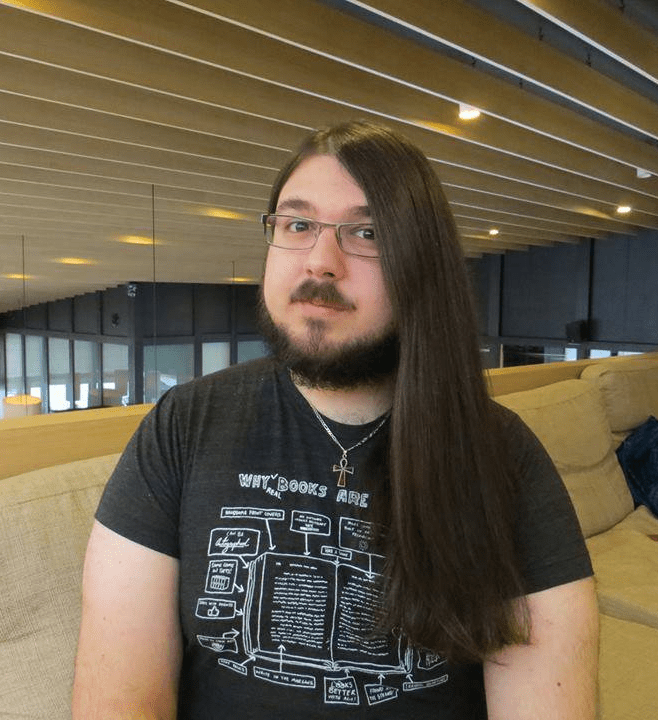
Markov is a Bulgarian fiction writer and editor who has described death and bodies as central obsessions: the finality of it, the gentleness of it, or its denial through transgressive body horror. After Clarion, their short fiction began appearing in Uncanny Magazine, Reactor, Weird Fiction Review, and anthologies dedicated to folklore and queer weird fiction. Their nonfiction essay “My Father, My Private Monster” made the Bram Stoker long list in 2025 for non-fiction, which tells you something about how autobiographical the architecture of this work is. Markov is writing, in some meaningful sense, about growing up Bulgarian and queer with an abusive father in a country that has its own complicated relationship with what monsters are allowed to look like. The folklore here is the language their body already knew. This collection is a debut in the formal sense but not in any other. It reads like someone who has been building toward a single object for a very long time and finally got to put it down.
The collection’s range is its strength and its occasional problem. “The Drowning Line” is a supernatural horror story about a man named Reinhart and his family’s generational curse, a drowned ancestor who appears in every body of water, pulling the bloodline toward the lake where it all started. You hold your breath as he wades into Lake Constance with stones in his pockets and a knife, because you understand it has always been going to end here. The way his ancestors’ hands pull him to the surface, “up, up, up away from my second death” lands with the weight of something settled. “Baba Yaga Helps Build a House” closes the book with a grand, ugly, satisfying mess: a grandson forced to do his grandmother’s witch-work discovers she ate his father, kills her, takes the house, and lets it carry him and a terrified girl somewhere new on its enormous chicken legs. It’s a revenge story in folk drag and it’s enormously fun in a way that feels deliberately, wisely placed last.
But the collection also contains “Holding Hands with Monsters,” which is erotic horror about a queer man’s sexual relationship with a creature from under his bed, and while the premise is doing thematic work about predation and transformation and the way damage can become intimacy, the story spends too long in the middle and overshoots its ending. “Convalescence,” about a nature photographer convalescing in a sanatorium during a catastrophic drought while his dead great-aunt tends to his infected leg, is gorgeous in individual passages and meanders in a way that undercuts the final image. Some of this unevenness is the nature of any decade-spanning collection. Some of it is Markov still figuring out when to stop, which is a real problem and also a real sign of a writer who isn’t playing it safe.
The prose itself is a genuine thing. It has texture. There’s a sentence in “When Raspberries Bloom in August,” a folk horror story about a couple who merge with a magical plant, where an old man holds his wife’s hand “the way she used to when boys sang songs about her hair and her feet could dance on burning embers,” and it lands like a hand on your shoulder. The sentences when they’re working feel built rather than written, each clause earning its next.
This is a fucking strong debut that announces a voice you should track. The stories that work will follow you around for days. The Cake Maker’s knife, the hala in the underground, the lake at night. Read it in the right order. Start with “Nine Tongues Tell of” and let it set the frequency. The book knows what it is.

The Language of Knives by Haralambi Markov,
published July 7, 2026 by Mythic Delirium Books.




Leave a Reply