







TL;DR: A shellshocked engineer, a dead light at the bottom of the world, a murderer’s stuffed birds standing guard over a blinded Virgin, and a doctor who wants the case more than the man. Muzzio’s first novel is Jekyll and Hyde rebuilt as a lighthouse log, and the log is horror of the first order, dread by inventory. The frame around it talks a little too much about its ancestors. The rock alone is worth the fare.

A drunk sea captain in Ushuaia sorts the lighthouses of the world for the engineer he is ferrying, and his taxonomy is a theologian’s. The towers on dry land are heavens. The ones close in along the coast are purgatories. The ones raised on bare rock in open water are hells, and the Eye of Goliath, thirty meters of granite on a birdfouled islet in the Strait of Le Maire at the bottom of the world, is the hell of hells. He says this to a man who was gassed at Gommecourt in 1917 and came home decorated three times over. The engineer does not take his meaning. The rest of the book is him taking it.
Diego Muzzio‘s first novel is built in three movements around a hollow. In the first, a Scottish psychiatrist named Edward Pierce, who carries a sliver of German shell in his right parietal bone and calls it the iron rat, receives at his private sanatorium west of Edinburgh a patient who will not speak and will not stop swimming. The man lies face down on the floor and does the crawl until he faints. He is David Bradley of the Northern Lighthouse Board, sent south to survey a dead light and hauled out of the South Atlantic weeks later, in the dead of the southern winter, trying to swim away from the rock. His diary comes with him, damp and rolled and tied round with yarn. The second movement is the diary. The third is what the doctor does with it.
The sanatorium is the book’s first pleasure. St Bartholomew houses twelve lunatics of good family whom the war unmade, and Pierce, who treats them with hypnosis and narcosis and a monthly visit from an Edinburgh brothel, walks the reader down the corridor like Virgil. There is a duke’s son found in a shell crater eating a German’s liver, who now creeps to the kitchen at night to eat the offal set out for the cat. There is a chaplain who took a warning from the angel Abaddon and led a company of Welsh fusiliers over the top into the machine guns, and who preaches yet in the garden. There is a medium who swindled the bereaved of thousands and believes himself dead and boarded by worms. The cat is named Mr Pumpkins. Muzzio sets the name down and walks on.
Then the diary, and the book changes its metal. Bradley writes in the present tense in sentences cut short as ration biscuit, a punctual methodical man making his inventory of a ruin: the crack at the base grown from half an inch to an inch and a half, the optic caked in salt and excrement, the gears gone to rust. He inventories the dead keeper’s cupboard the same way, and the cupboard is where the book turns. The keeper was a convict, a naturalist named Evans who strangled his wife and smothered his daughter and embalmed them both and sat them at a table laid for tea, and who took the post no free man would take and kept the light for years alone with a taxidermy kit, and who lies under a cairn on the far side of the rock, with a second grave bearing his name in the Ushuaia cemetery for the benefit of the press. Two tombs, Bradley writes. Exactly twice what any man deserves. His stuffed birds still hold the tower. Seven of them ring a plaster Virgin whose eyes have been scraped off. Crosses of wood and rope and whale rib climb the inner spiral of the stair. An enormous red crab comes out of the cairn and under it is the murderer’s skull in rotten sailcloth. Bradley reads the keeper’s logbook, in which the German cruisers sunk off the Falklands in December of 1914 pass the rock the following May going the other way and signal by lamp that they are bound for hell.
The dread that follows is clerical. Muzzio does not raise it with apparitions, though apparitions come. He raises it with bookkeeping. Three knives by the stove and then two. A grandfather clock Bradley has taken down to its screws that ticks in the next room. Drinking water going down faster than two jugs a day can account for. A word laid out on the table in the keeper’s glass eyes, and the next day the same word laid out in stones on the esplanade where the crabs fight, and the engineer recording each of these in the same flat hand he used for the fissure, because he is a rational methodical man, and saying so, and saying so again, until that sentence is the loudest goddamned thing in the book. A liner with three funnels passes the rock at night with a Dixieland band on the deck and not one soul aboard looks over. An iceberg drifts by blue as bottle glass with a shape inside it that is a man or a beam. And the rock keeps its own arithmetic of doubles: two graves; two butterflies with their colors reversed; a Stevenson who builds lighthouses and a cousin who wrote Jekyll; a David sent to look Goliath in the eye. The book cannot look at one thing without seeing two of it, and by the end this is both its engine and the noise the engine makes.
Muzzio is a poet by trade and a story writer by habit, and he cannot pass a man without taking his story off him. The keeper’s logbook holds a farmer who took a oneeyed woman from a brothel to his ranch below the mountains and came to believe a demon watched him through the sewn lid, and a mule driver taken by the Ranquel who spent twentyfive years as their fool and rode with them at last against his own people. The real Horacio Quiroga turns up in a newspaper clipping writing from the Misiones jungle in the murderer’s defense, and his column, about a rattlesnake and a revolver and the difference between a fact and literature, is the wittiest thing in the book. These are not digressions. They are the rock’s sediment. Every one of them is a man alone with what he did. At its widest the book is about the oldest thing there is, the thing Cain did in the field, and about the century that industrialized it and shipped its practitioners home to their fathers’ houses with the field still inside them, so that a stone tower in the South Atlantic and a country house in Lothian and a trench at Gommecourt are one place with three doors.
The third movement leaves the rock and goes back to the doctor, and here the book loosens its grip. Pierce rebuilds the western front in his garden, with sandbags and wire, to walk his patient back into a dawn in France he cannot remember, and this is as fine and as terrible as anything on the islet, a madhouse doctor playing God with an unloaded rifle and a wooden bayonet. But around it Muzzio hangs furniture the book does not need: a nurse who left the doctor and salted his pockets with lines from Alice in Wonderland, a German rival who insults him from Munich by post, a symposium that must be catered. The ancestors are named too loudly. A book with Stevenson in its bones does not need the novelist’s cousin at the door and the novel on the bedside table, nor Coleridge’s mariner in the luggage, nor Jünger over the lintel. And the doubles multiply past the point where they frighten into the country where they only rhyme. None of this sinks it. It is the difference between a book that holds a reader under and one that lets him up for air twice in the last third. Rahul Bery’s English is right for both registers, bone in the diary and upholstery in the frame, where Muzzio’s sentences run to subordinate clauses in the manner of the century he is writing about.
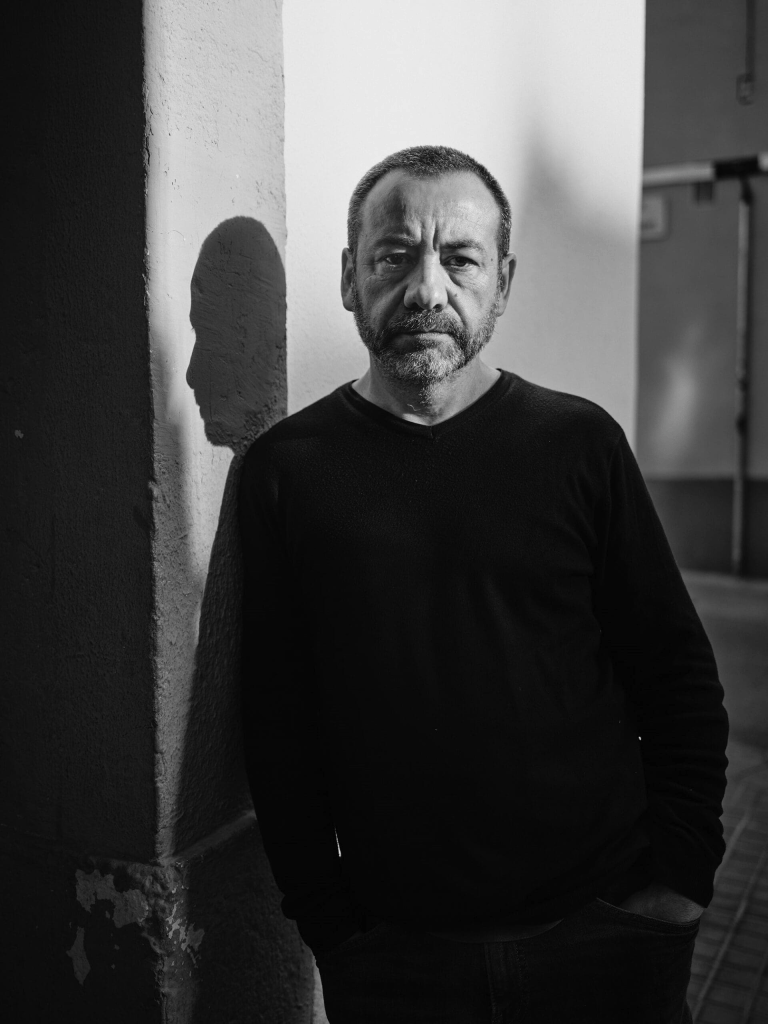
Muzzio has been publishing for thirty years and this is the first novel he has let out. He was born in Buenos Aires and has lived the better part of two decades in Le Mans, in France, where he teaches Spanish. His first book was poems, El hueso del ojo, in 1991, and the poems won him the Argentine National Arts Fund prize for Sheol Sheol and the Sor Juana Inés de la Cruz prize for Gabatha. Three collections of stories followed, Mockba, Las esferas invisibles and Doscientos canguros, and ten books for children. El ojo de Goliat came out from Entropía in Buenos Aires in 2022 and took the Fundación Medifé Filba novel prize the year after, and the juror Federico Falco called it, in three words that will do, a novel about guilt. Muzzio has said the seed was Rachilde’s La Tour d’amour, the 1899 novel of the Ar-Men light that he has wanted for years to translate, and the war, and the fantastic literature of his own country, Arlt and Bioy Casares. He writes, he has said, with no plan, finding the story as he goes, which is how the diary reads. And he has said the one thing the book is built on, that the place from which there is no returning is guilt.
The ending does not surprise. It confirms. What happens in it was written down before the book began, in the taxonomy the captain gave the engineer on the boat. There are no heavens in this book. There are purgatories, and the doctor keeps one. And the hell of hells is not on the rock.
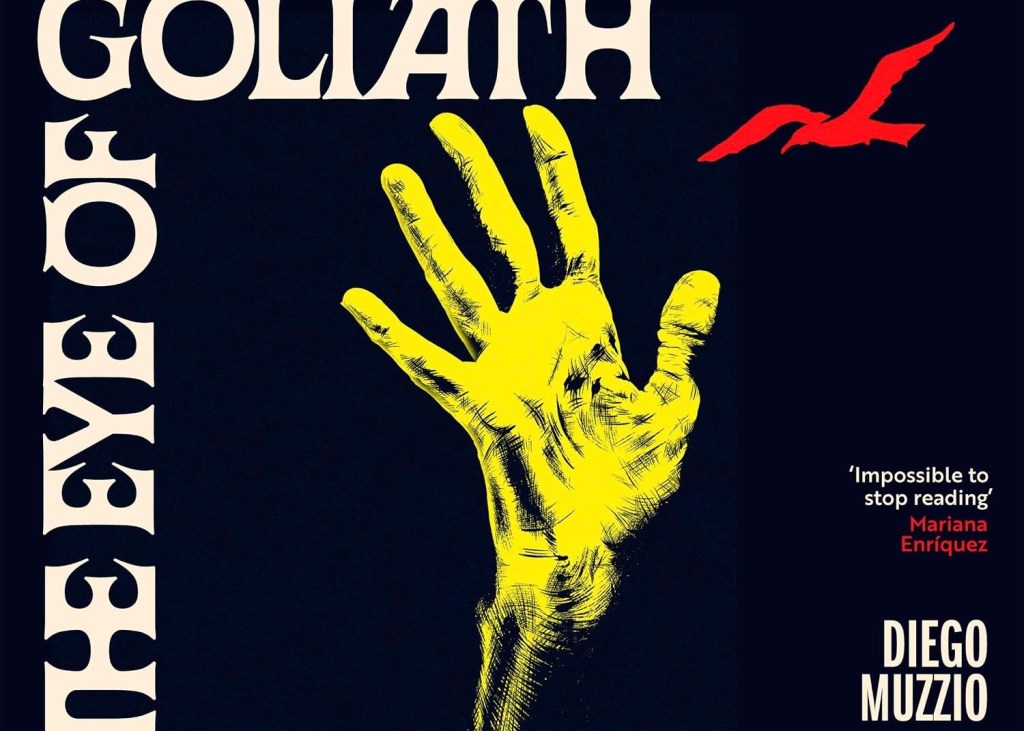
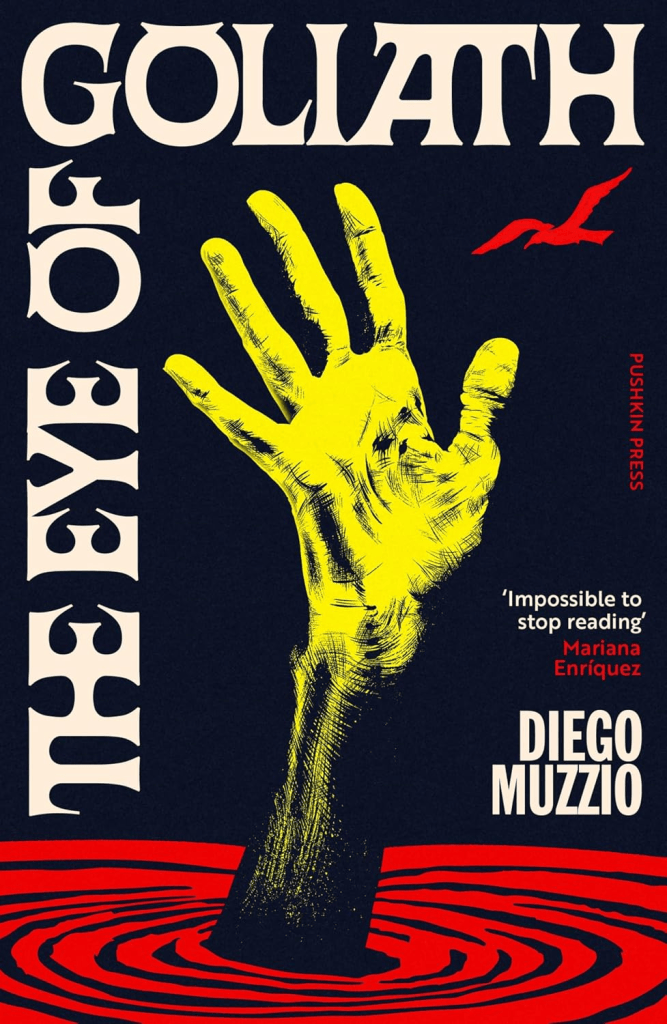
The Eye of Goliath by Diego Muzzio, published September 1, 2026 by Pushkin.


 The Blog Without a Face
Leave a comment