
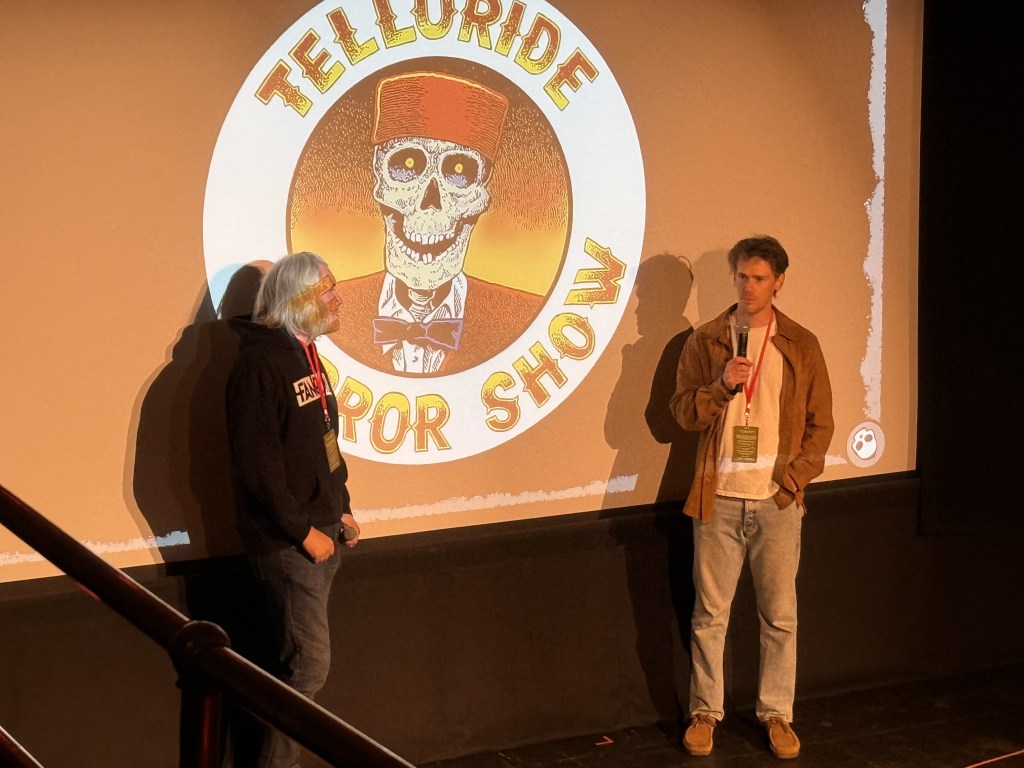
Telluride sits at the dead end of a box canyon at 8,750 feet, which means the air is thin enough that you get winded walking to the bathroom and the town is rich enough that the john has a view. For three days every October it fills up with people in black t-shirts who drove in from Denver, flew in from everywhere else, and paid real money to sit in the dark and be upset. The Telluride Horror Show, seventeenth edition, October 16 through 18, Colorado’s first horror film festival and the one that has sold out in advance every year since 2018. This BWAF finally went. Six-pack ticket bundles, a schedule printed out on paper like we were twelve, and the altitude doing to our lungs what the movies were doing to everything else.
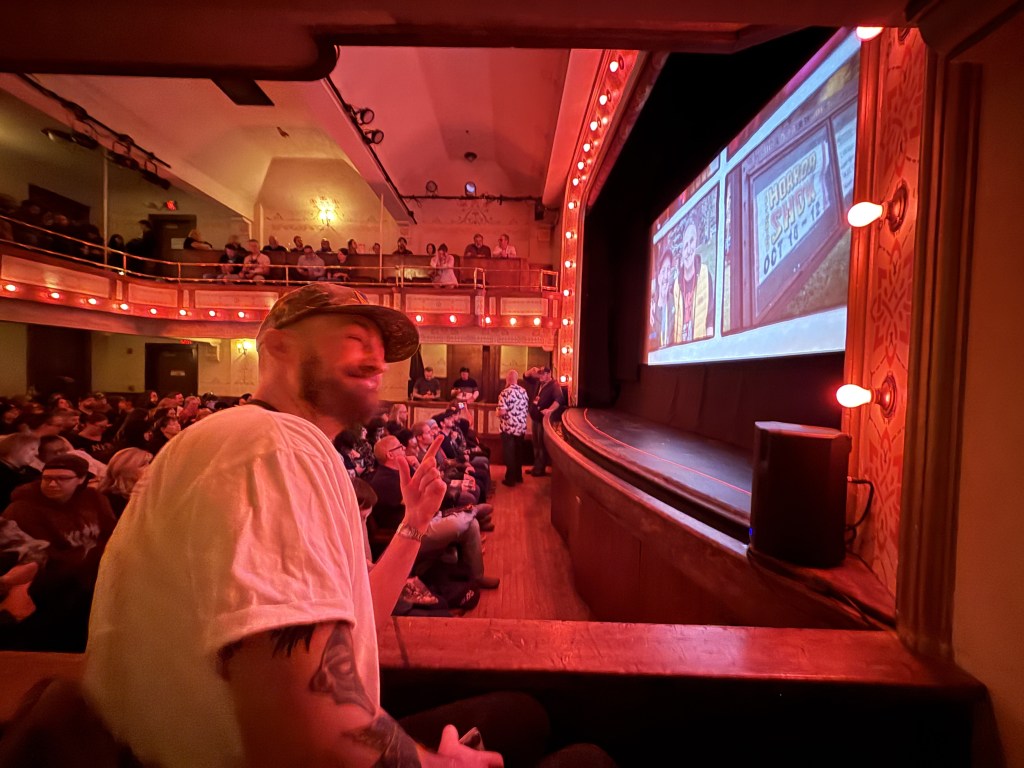
Logistics, for anyone planning the pilgrimage. The main room is the Sheridan Opera House, built in 1913, 230 seats, a velvet box where a man in a top hat gets shot in the second act. The big room is the Palm, which is the auditorium at Telluride High School, so you watch people get eaten under a banner congratulating the volleyball team (just kidding). Next door is a black box theater called the Bob that the festival renames the Blob every October, and it is small, and it fills, and we’ll get to that. This year’s artwork was Bigfoot, so there was a Bigfoot documentary you were not allowed to bring your phone into (NO EXCEPTIONS, the program said, in caps, the way you’d talk to a dog) and a 1980 Bigfoot picture called Night of the Demon that the program pitched as the Bigfoot movie John Waters would keep by the bed. There was a pig roast. There was a late-night show hosted by a vampire named Count Chuckles. Nat Cassidy, Tananarive Due, Steven Barnes, Eric LaRocca and CJ Leede did readings and signed books. We skipped the readings. We were at the movies, which is the entire fucking point of going up a mountain.
Eleven features in three days, in the order we saw them.

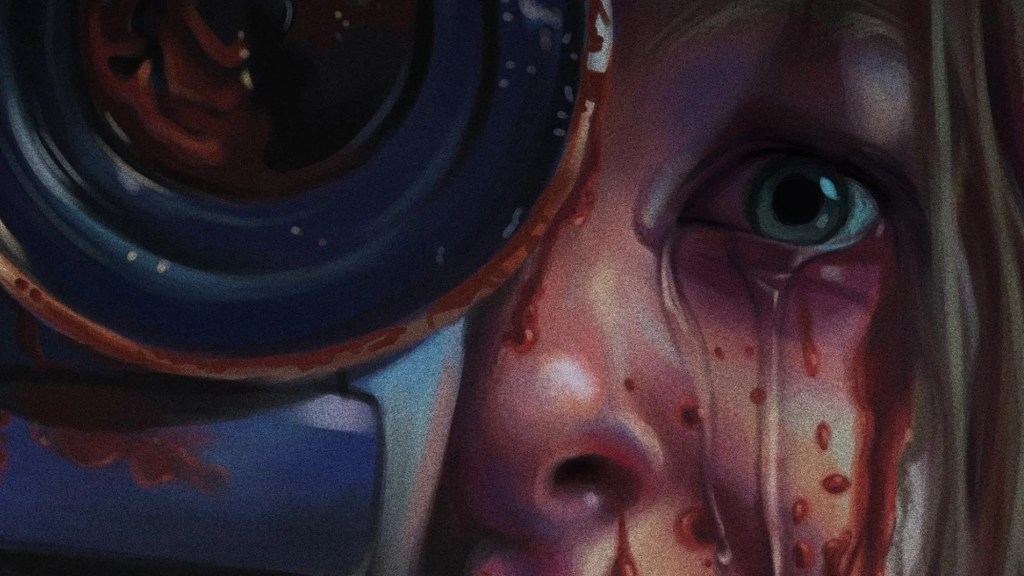





Erie
Director: Alison-Eve Hammersley
Screenplay: Jess Kohs & Alison-Eve Hammersley
A woman on a hike looks into a camcorder and her face empties out. She is gone from the frame, and a second later her body lands. That is Iris Scott, and the tape is the reason her sister can’t leave it alone.
Fall, 1999. Stella wants to be a journalist and has decided Iris is her story, so she comes home to Erie, Pennsylvania with a camcorder and her brother Oscar, who runs it like a man serving a sentence. What we get is her report with the seams showing: the retakes, the false starts, the brother sighing behind the lens. A dial-up chat room coughs up Red, whose girlfriend died the same way and who has a theory. A shuttered battery plant poisoned the ground, he says, and Stella buys it faster than Oscar does. It is the most Rust Belt haunting I can think of. The thing in the woods is whatever your dad’s employer left in the soil.
Hammersley understands what the camera is for, and it isn’t running through trees. Stella films so she can be a reporter instead of a sister. Every time she squares up for another take she is choosing the job over the grief. Oscar has no such cover. He blames himself for Iris and starts coming apart a few feet from someone who keeps asking him to hold the shot steady. That is the horror here well before the woods get involved, and Carly Stewart and Grant Crater play it like two people who have been losing the same argument since childhood. The movie takes its time getting there, but we didn’t mind so much particularly given the likeability of the characters.
Then Stella’s camera drops, and the film keeps going without it, shot like an ordinary movie. Found-footage purists will hate this, and they have a case, because the homemade grain was doing a lot of the convincing. We think it’s the most interesting moment of the film. For an hour everything we know has been Stella’s edit, the version of her family she was willing to put on tape. Take the camcorder away and you finally see what she was standing in front of. A found-footage film set in the year of The Blair Witch Project that walks out of found footage is not confused about its rules. It is telling you the tape was never the truth.





The Threshing
Director: Sean Mannion
The most alarming fact about The Threshing is that Sean Mannion had a nice time. He and his wife left Chicago in 2020 for a regenerative farm outside Boulder, and by his own account it went fine. Nobody was eaten. He came home anyway with a screenplay in which the chores run from animal slaughter to self-mutilation to cannibalism, which tells you what a writer does with a pleasant year among farming hipsters.
Gwyn takes the farm job. Franklin, a struggling writer, comes along because that is what you do when your partner has a calling and you have a laptop. Simone Grossman plays her as someone who has been waiting her whole life to be asked for everything. Jean-Louis Droulers plays him as a man auditing a religion from the back row. The religion belongs to Robert, the farm’s leader, and Jared Kemp gives him the calm of a man who has never once lost an argument about compost.
Except it isn’t a religion. Nobody on this farm prays or answers to a god. Mannion shot scenes of Robert praying and cut them, and the film is meaner for it. A god would give everyone an excuse. Here, every demand is defended with a principle you already half agree with. Waste nothing. Take only what you give back. Know where your food comes from. The film just keeps following that last one until you wish it wouldn’t.
The distributor’s pitch is Wake in Fright meets Raw… not sure. I guess Franklin gets Wake in Fright: the educated visitor who thinks he is above the place, undone by its hospitality. Gwyn gets Raw? But she is resistant to the appetite she is expected to have from the community. They are in two different horror films on the same acreage, which is also a fair description of a marriage in which only one person wanted to move.
And the acreage is real. The crew worked late afternoons and nights because the farm had farming to do by day, through the wettest June Colorado has recorded. You can see it. It is beautiful up there, and Mannion films it that way, which is how he gets you. You’d sign up too.


Species
Director: Marion Le Corroller
Screenplay: Thomas Pujol & Marion Le Corroler
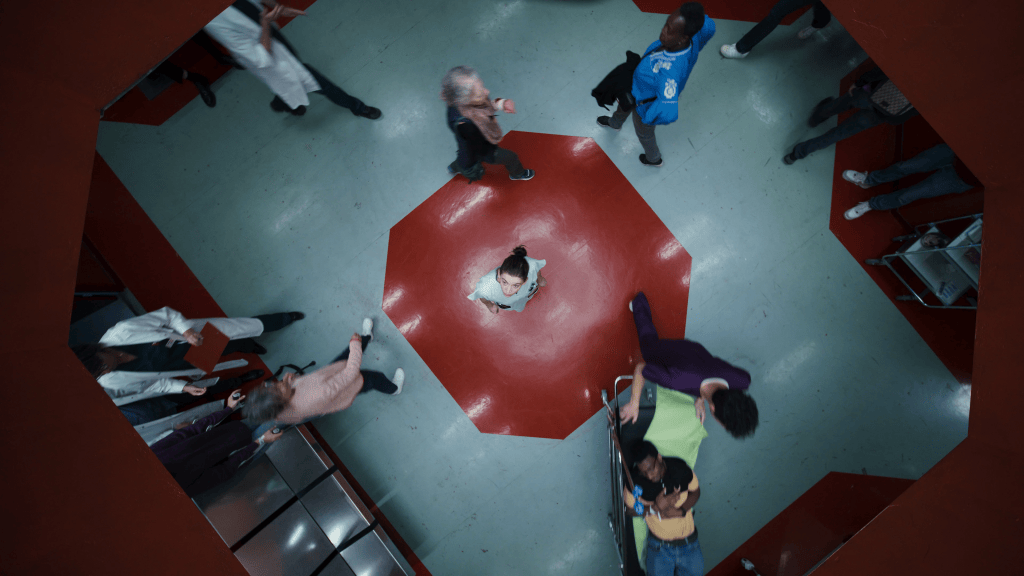
Twenty-five patients a day. That is the quota Professor Virgile hands her new interns, along with a leaderboard, and Karin Viard plays her as a woman who would consider lunch a character flaw. Margot is at the bottom of the board and one bad week from being thrown out. Then her skin starts to go. First a rash, then scabs, and before long she is sweating blood.
Le Corroller left finance to make this, and she could have set it on a trading floor. She put it in an emergency room, which is the crueler choice. A hospital is where the worn-out are supposed to go, and here the people staffing it are in worse shape than the people on the gurneys. Her old profession still gets a cameo. Margot’s first strange case is a pregnant stock trader who can’t sleep and has something wrong with her back. The director made her former job the patient. We respect a grudge that organized.
What the film gets right about burnout is that nobody believes in it until it bleeds. Margot comes down with what she has been seeing in the ER, and the doctors around her won’t accept that it is real. Tired is not a diagnosis. Everyone here is tired. My major beef with the flick is the convoluted “rules” of the illness/transformation.
And it understands the part most burnout stories leave out, which is that overwork has a high. There is a scene where Margot opens a rib cage with her bare hands and she is magnificent at it, far gone and finally winning. The job doesn’t only eat you. It also tells you you’re good, right up until the scabs.
It shares a makeup artist, an editor and a sound team with The Substance, and the look is the same family: pastel corridors, bright light, nothing hidden. The target is different. That film was about a body being looked at. This one is about a body being used, and it doesn’t care if you’re pretty. By the end the afflicted have gone feral in a way George Romero would recognize, which is where the English title earns itself. A generation worked this hard stops being the same animal. The French title, Sanguine, just means there will be blood. There is so much blood.

When You See It
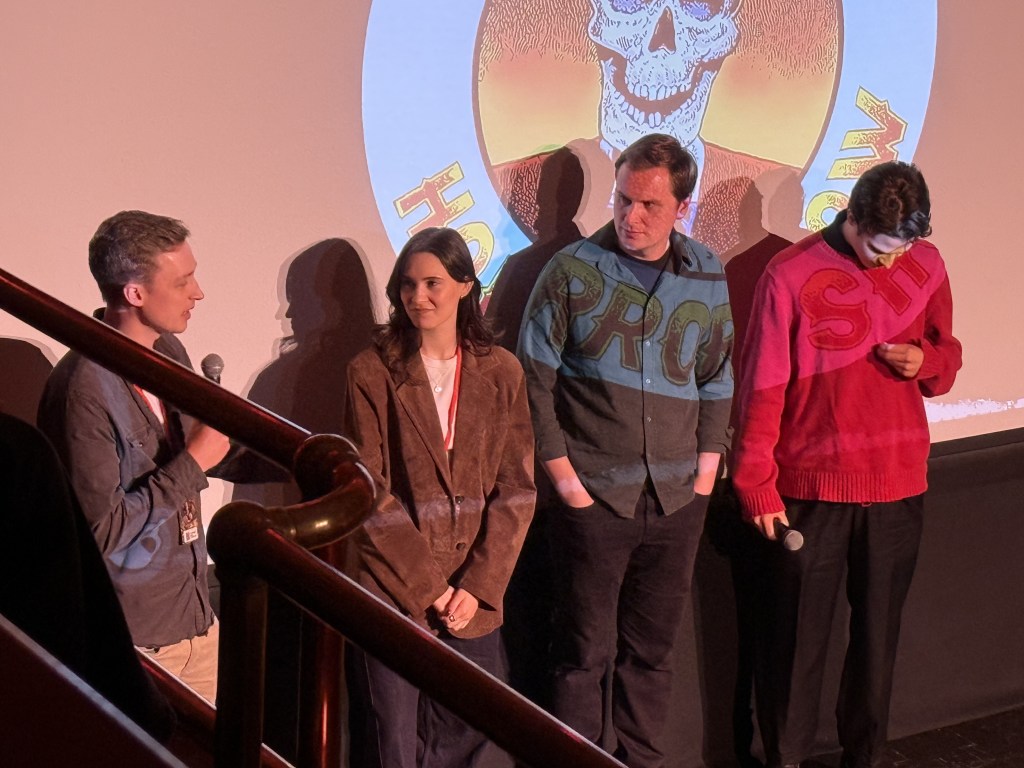
Director & Screenplay: John Abbott
People keep coming up to John Abbott after screenings to ask about the closet door in the bedroom scene, the one that creaks open. Abbott went back to his footage to check, and the door does not move. It stays shut the entire time. A room full of people watched a closed door and left remembering a haunting. That is the whole film, and it’s a better trick than anything a bigger budget could have bought him.
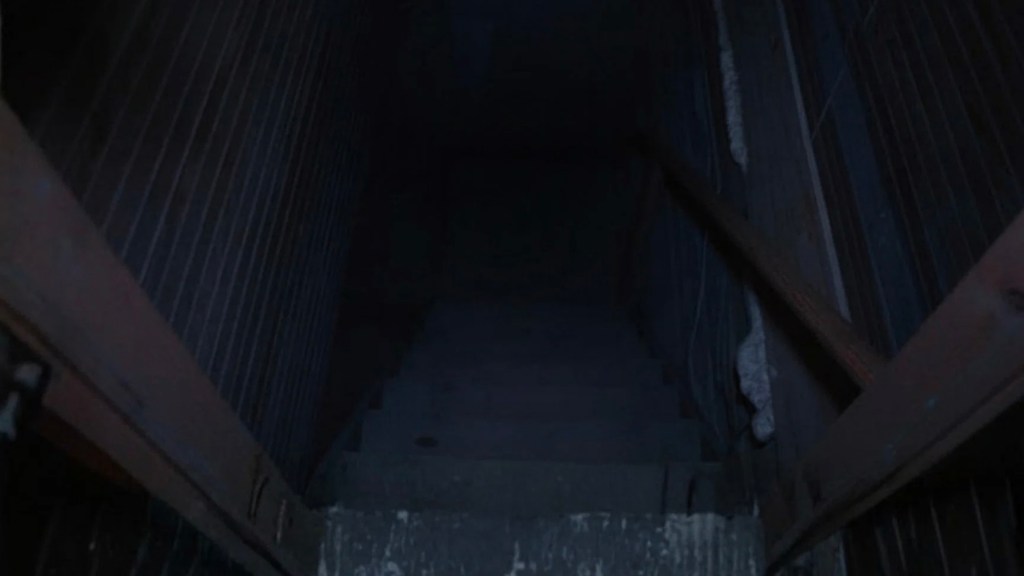
Everybody in this movie needs to see something. Cassie needs a case good enough to get her ghost show onto a network. The show’s promise is that nothing in it will be staged, which is a noble position for someone with no footage. She finds Tyler through a Craigslist ad after everything else falls through. Tyler says there’s a thing in the basement, and Tyler would also very much like to be on television. He is put out to learn the show has no buyer yet. So the believer needs a ghost to have a career, the host needs a ghost to have an audience, and Jake, who believes in neither ghosts nor Tyler, is holding the camera because he likes Cassie. Evan Ellicott plays Tyler right on the line between lonely and dangerous and never tips. You spend the film trying to decide whether to feel sorry for him or check the locks.
Jake gets the best line of reasoning in recent ghost cinema. Tyler describes the entity scratching at his bedroom door, and Jake wants to know why a ghost would be stopped by a door. It’s a fair question.
Abbott solves the genre’s dumbest problem with a doorbell. A Ring camera goes in early, so the footage has a reason to exist once the shoot is over, and nobody has to film a friend in mortal danger instead of helping. The scares are small. A scratch. A shape in a basement photo that might be a shape. Abbott trusts that if he gives you ninety minutes of a shut door you will open it yourself, and you do.
The frame is the quiet gut punch. The film is built around a later interview with Jake about what happened in that house, and Jake is the only one who sits for it. The movie doesn’t explain why. You notice, and then you keep noticing.
Fifteen thousand dollars, and the scariest effect in it is your own eyes. Somebody give this man sixteen.



River
Director & Screenplay: Joshua Giuliano
The killer wears yellow swim trunks. Bright yellow, with a flesh-toned mask cast from Dane DiLiegro‘s own face, so that what comes out of the tree line is an enormous man dressed for the lake and wearing a blank copy of himself. It should be funny. It is funny for about four seconds. He gets no name and no reason, and he swims faster than you do.
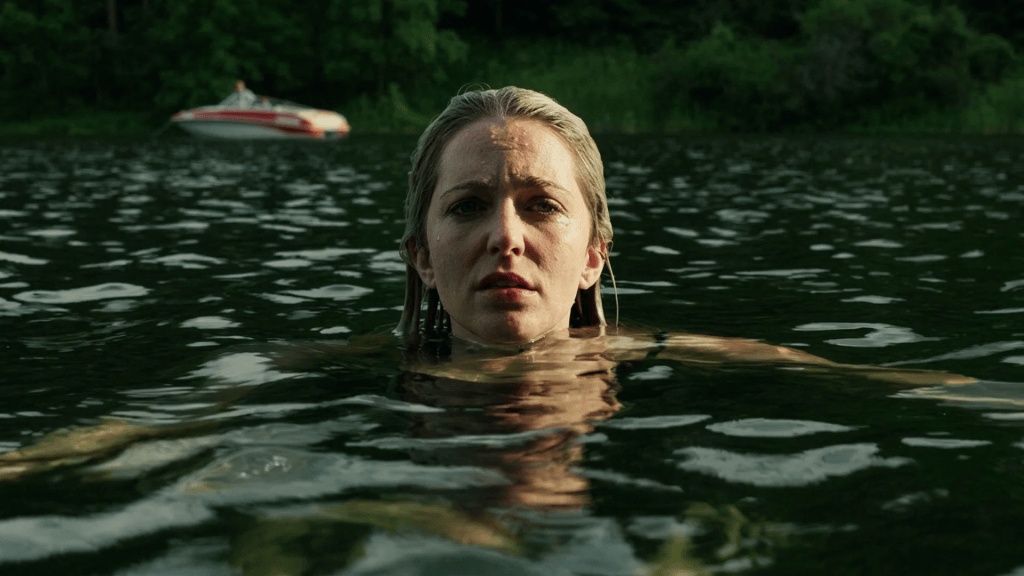
Before any of that, Giuliano spends real time on a boat with three people who would rather be anywhere else. Lucy is the one who stayed and looked after their father to the end. Carla is the eldest, who got out. Drew is the brother stuck between them, and Max Mattern makes him so awkwardly decent you start bargaining with the film on his behalf. The father drank. Nobody says much more than that, and nobody has to. Jane Levy and Jessica Rothe conduct an entire childhood’s worth of fighting at conversational volume. These three have come to do one last chore for a difficult man, at his favorite spot, in his boat. Then his boat quits on them. Of course it does. It’s his.
The river is a nasty, unforgiving setting. It’s West Virginia, the Monongahela, green hills and a dead railroad bridge and steam coming off the water after dark, and it is gorgeous. It’s also a hallway with no doors. You can’t run on it and you can’t hide in it. The production shot on real water and hauled the boat around by hand, and the effort shows in how heavy everything feels. Nothing on this river moves fast except him.
So why does a film this cruel end up being touching? A funeral asks a family to stand near each other and feel the same thing, and these three can’t. They are each grieving a different father. What the man in the trunks does, horribly, is give them the same problem at the same time. Lucy has been the responsible one for years with nobody watching. Now somebody has to be, in front of everyone, and you find out who steps in beside her. The reunion the ashes were supposed to produce happens anyway, at the worst possible price. Levy and Rothe never turn into action heroes. They turn into sisters.
This was absolutely killer and is going to cause a lot of buzz when it releases in January.


Ithaqua
Director: Casey Walker
Screenplay: Pascal Trottier, Peter Scott Vicaire & Casey Walker
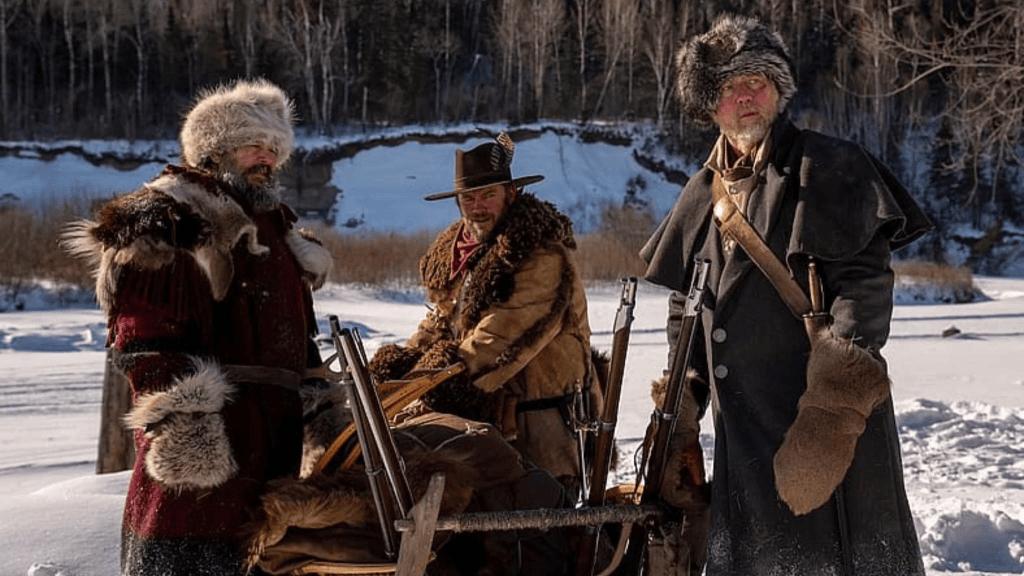
The Hammer logo on a new movie makes me nervous the way a Pizza Hut roof on a building that is clearly now a vape shop makes me nervous. This is the studio’s first new monster in sixty years, and the poster looked AI-generated, which I bring up because it’s funny and because it was not a great sign.
The backstory deserved a better poster. Casey Walker produced The Void and In a Violent Nature and spent twelve years getting this made. He nearly went broke doing it, and he was a couple of hours from pulling the plug for good when Hammer’s new owner decided this would be his first film. He shot it at the Fort William re-enactment site outside Thunder Bay, where he grew up, in daytime highs of minus 35 Celsius. The prosthetics cracked in the cold, so the starvation is mostly makeup and a lead actor who dropped thirty-five pounds.
So the first two acts were a pleasant surprise. 1821, the fur trade dying, a starving outpost, an American hired gun (Luke Hemsworth, the other one) leading a trading party to an Indigenous village, in a cold you can see on the lens. I am a complete sucker for sub-zero isolation. Hemsworth plays Cole small and tired, a man with a history of killing the people he now lives among, and the film doesn’t rush to forgive him. Kevin Durand is an English lieutenant in a very tall hat, being Kevin Durand. Michael Pitt runs the fort for the company, being Michael Pitt.
The mythology under the survival story is the dimension I’ll keep coming back for. Vicaire is a First Nations author and shaped the Indigenous material. The creature marries the Wind-Walker of the Cthulhu stories to the wendigo. Walker reads the wendigo as a story about greed and consumption. The outpost exists to strip a country for pelts. Now the pelts are gone and it is eating itself. You don’t need a monster. The company is the monster, and the hunger is just the invoice.
Then the third act goes and gets a monster. Several. It takes a compelling mystery and devolves into a mess that can’t pick a personality: gory action horror with quippy one-liners, a surplus of creatures Running on All Fours, a villain who might as well be mustachioed and twirling a fucking cape, deaths that should be a punch in the gut and aren’t. Here is why it stings. The film had an idea, that the horror was a system, and the finale swaps it for one cackling man and a pack of minions. Everything that made the first hour frightening was real: the cold, the ribs, the breath. The CGI shit-show poured over the ending is the only thing in the movie that doesn’t look like it’s freezing.
Two good acts, which is two more than I expected from the vape shop.


The Cycle
Director: Jordan Downey
Screenplay: Jordan Downey & Kevin Stewart
This will be brief… on purpose. Go in blind. The trailer tells you too much, the synopsis tells you too much, and other reviews of this film tell you far too much. We’re going to tell you about the first half hour.
Jordan Downey made ThanksKilling, the one with the turkey, and then The Head Hunter, which played this festival in 2018 and had roughly one actor and almost no talking. Now he has made a 111-minute police procedural with a completely straight face. That straight face is the achievement. There isn’t a wink in it. A man who once built a career on a foul-mouthed poultry puppet has decided to earn your trust one evidence bag at a time, and he does.
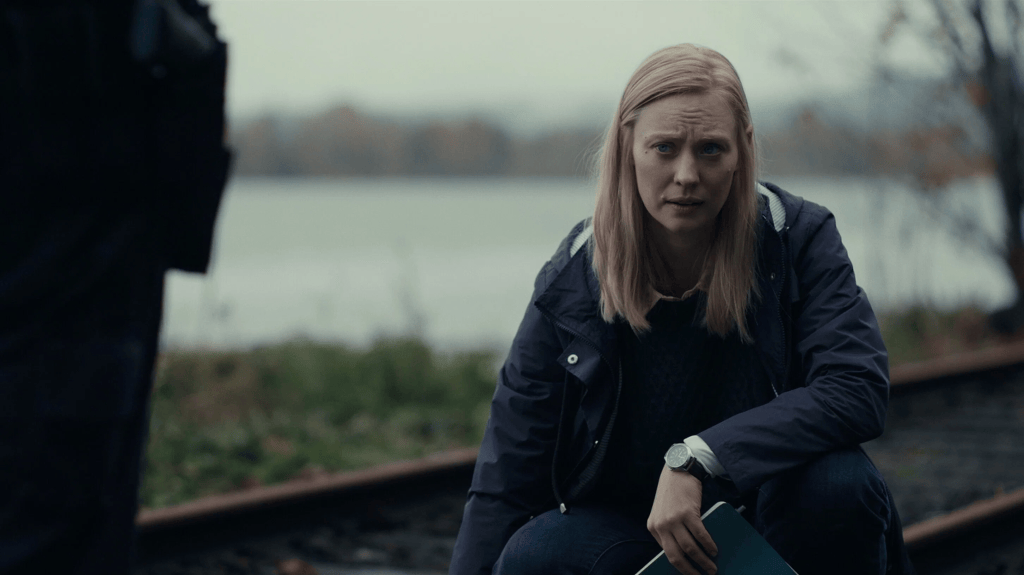
Deborah Ann Woll plays Meg, a forensic anthropologist. She runs a body farm, where she teaches FBI agents what decay can tell them about a case. She is good at her job without being a television genius, no photographic memory, no tragic violin. She looks at remains and tells you how long and how. Then the police bring her a double murder under circumstances that are absolutely fucking bizarre, and a man who has been missing for thirty-six years turns up at the scene. Time is the one thing Meg knows how to read, and the timeline in front of her does not read.
That’s the premise, and that’s all you get.
What we can say is that the film works the way she does. Evidence first, conclusions later, and nobody jumps ahead. Stewart also shot it, on the Oregon coast, and everything is wet, grey and patient. Downey and Stewart assembled a 300-page book of designs, wardrobe and lighting before they rolled, and you can feel it. Nothing in the frame is there by accident. It asks for your attention for a long while, pays it back with interest, and Woll is great the whole way, as usual.



Ghost in the Cell
Director & Screenplay: Joko Anwar
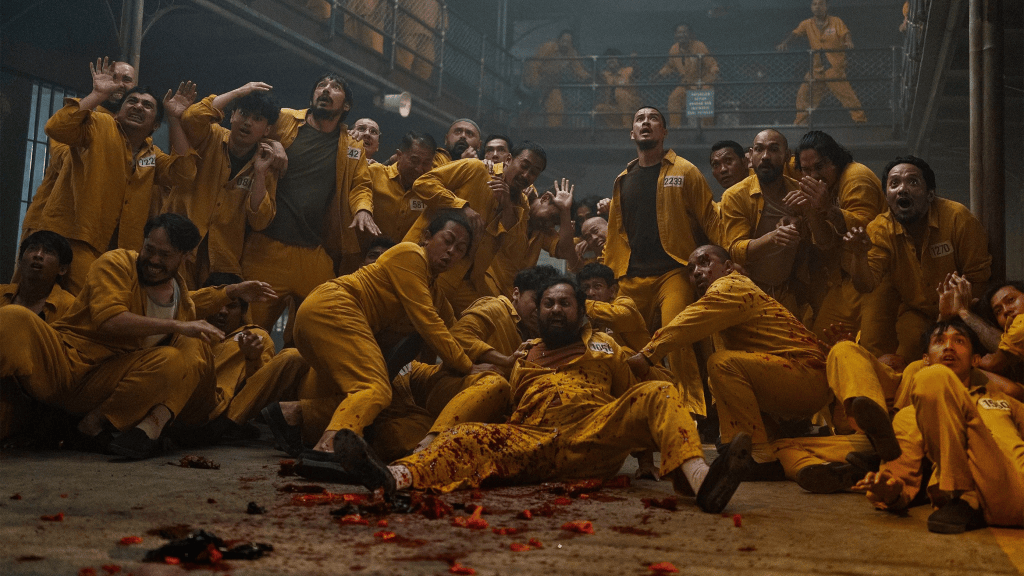
Joko Anwar made Satan’s Slaves and Impetigore, two films that understand how long a hallway can be. So I walked into his prison movie expecting to be locked in with something. What I got was closer to a workplace comedy with a body count. The body count, though, was pretty incredible.
The murders are glorious. A mild young journalist named Dimas lands on the block, the killing starts when he does, and the ghost doing it has an eye. It doesn’t just kill a man. It rearranges him and leaves the result out where the others will find it, like a gallery hang. These are wet, handmade, practical grotesqueries, the kind where you can feel a makeup crew giggling just out of frame, and each one is nastier and more inventive than the one before. I loved every one of them. For the length of those scenes this is exactly the filmmaker I came for, and I’d have watched two hours of nothing else.
There’s a good, angry idea under them. The thing comes out of a forest that was cleared on the back of bribes. Anwar has called a prison a small model of a country and he means it. The crooks get more warmth than the officials, and Bront Palarae‘s warden is a man who has never been told no.
Then there’s the rule. The ghost goes after whoever is carrying the darkest aura, and the cure for a dark aura is art or prayer. So the gangs have to calm down or die, and the film sends its hardest men to dance class. It’s a funny idea. It was funny the first time, and the second. The trouble is that it becomes the movie. Every time one of those beautiful atrocities winds the room tight, the next scene lets the air out with a bit, and after an hour of that you stop dreading who is next and start waiting for the joke about it. The kills deserve better company. So does the anger, which doesn’t survive being cut against a gag every few minutes.
The jokes mostly land, and the crowd I saw it with had a great fucking time. I just kept wishing the film trusted its own nastiness, because its nastiness is first-rate.
So, middling overall, with a wing of the museum I’d visit again tomorrow. If you like your horror-comedy weighted toward the comedy, add a point and go. Still fucking killer to see him on a big screen. Next time I’d like him to turn the lights off and leave them off.


Recluse
Director & Screenplay: Henry Chaisson
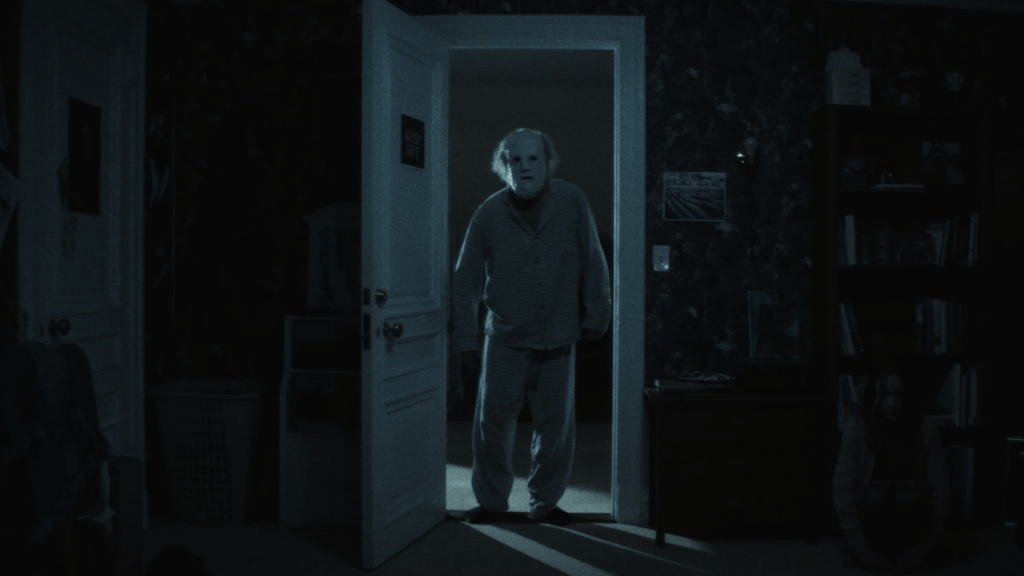
The sound recordist is the one person on a film set who is paid to stay quiet and listen to everybody else. Joan chose that job. She lives alone, she is devoted to cassette tape, and she has arranged a life in which nobody looks at her. Then her father catches fire and she has to go home.
Her father is a painter, a famous one who won’t show his work. So the title has two candidates before the film is ten minutes old. Lawrence Wyatt made images for a living and hid them. His daughter grew up in a house full of things she was not supposed to see and became a person who works entirely by ear. Chaisson never says this out loud. He lets you notice that she learned to listen in a home where looking was the dangerous thing.
Which is why the gimmick is more than a gimmick. When Joan puts her headphones on, the soundtrack becomes what she hears, and what she hears on her recordings of the burned house are voices that were not in the room. The film does its scaring in the ears. A hiss resolves into a word. You lean in, which is exactly the wrong thing to do, and you do it every time. Sasha Frolova plays most of this alone and silent, face held still, and you can watch her decide whether to rewind.
Xander Berkeley, under burns and mask, has very little to work with except a voice and a presence in a bed, and that is plenty. The paintings on the walls are his own work. That fact changes how they look once you know it. Somebody actually made those.
The bones are old. Estranged child, big house, family rot, a past that wants out. Chaisson wrote Antlers and episodes of Servant and he knows this furniture well. What’s new is the instrument. He also scored the film, co-edited it and worked on the sound design, which may explain why a version that played Tribeca in June went back into the shop. A director who made a movie about a woman who can’t stop replaying the tape was never going to leave his alone.
It ends hard. Vertical has it for theaters in the first half of 2027. See it somewhere with good speakers and a quiet crowd.


Black Sheeps
Director: Jonathan King
Screenplay: Matthew Grainger, Rosie Howells & Jonathan King
I’m going to be honest. This wasn’t the first pick. We meant to catch Breeder at The Blob, which is a black box theater roughly the size of a two-car garage, and got turned away at the door because the room was full. So instead of a movie about an eccentric poodle breeder who lures a broke college student to her ranch, we got a movie about sheep. One livestock-adjacent horror film was swapped for another and nobody was hurt.
Twenty years after the original, Jonathan King is back, and he has pluralized the title the way James Cameron would have. Oates, a young scientist played by Tabatha Killick, traces a new pathogen to her hometown, which sits in the shadow of the sheep station where the first movie’s trouble began. There is a fenced-off area called The Zone. Nathan Meister returns as Henry Oldfield, now a weathered farmer, and plays him like a man who has been proven right about sheep for two decades and gotten no credit.
The first film was about genetic engineering. This one is about what a small town does when a scientist shows up and tells it something is spreading. Woolston has a new eco village that the locals resent and a secret cult of older residents who worship the flock. You do not need a film degree for this. King has made a movie about people behaving like sheep and cast it with sheep. It is the single most obvious joke available to him and he tells it for a hundred minutes.
Wētā Workshop built the creatures again, and they are rubber, wet and gloriously physical. A sheep puppet biting a man’s face will always be funnier than a digital one, because you can tell somebody is under the table working it. There is also a towering creature called The Ram, anatomically generous, and that’s all we’ll say about him.
It isn’t deep. But it is a happy film, gory and good-natured, and it sent a full room out grinning. Still, wish I had seen Breeder instead. T

Victorian Psycho
Director: Zachary Wigon
Screenplay: Virginia Feito
English fiction has never trusted the governess. She is educated and poor, she eats with nobody, and she spends all day alone with your children. Jane Eyre got a husband out of the arrangement. The woman in The Turn of the Screw got ghosts, or thought she did. For a hundred and fifty years the question hanging over the job has been whether the nice young lady in the schoolroom is quite well. Virginia Feito’s answer is to have her tell you.
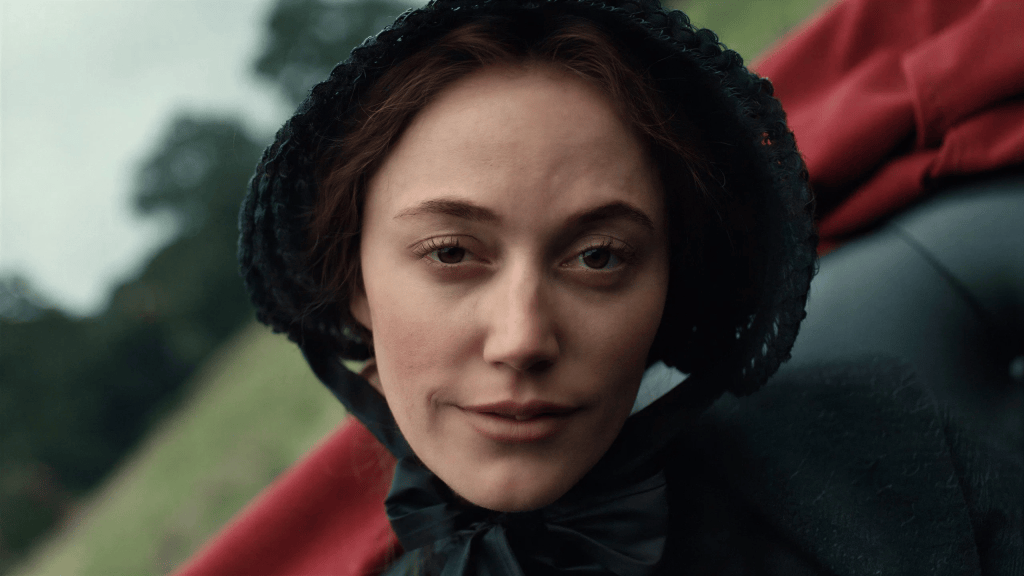
Winifred Notty looks straight down the lens in the opening moments and declares herself the sanest person she has ever met. It’s 1858 and she has just arrived at Ensor House to teach the Pounds children. The family is named Pounds. Feito is not hiding the ball. Winifred narrates in a prim voiceover, the story is cut into chapters with fussy ornamental title cards, and from the first minute you know exactly what she is. The film has no interest in whether she’ll kill somebody. It wants to see how long the table manners hold.
That’s where Maika Monroe comes in, and she is a joy. She has spent a decade being followed, watched and chased, and here she finally gets to do the following. The performance is all surface tension: a tight little smile, a head tilted a few degrees too far, a voice that never rises. She plays Winifred as the only person in the house who has read the rules closely enough to see they are insane. Jason Isaacs and Ruth Wilson are the master and mistress, both monstrous in ways their society approves of, and the film’s best running joke is that Winifred keeps being the most reasonable person at dinner.
Zachary Wigon used to be a critic, and his last film, Sanctuary, was two people in a hotel suite fighting over who was in charge. He’s good at this. A manor with servants is the same fight with more rooms. He also makes a choice some people won’t forgive: when the blood comes, the camera tends to stay on Monroe’s face. I still liked it. The violence was never the surprise. Her enjoying it is.
The cost of showing your hand in the first minute is that the plot has little left to reveal. Nonetheless, the continuous undoing of Winifred was very enjoyable. If you came for a mystery, there isn’t one. If you came to watch a very polite woman run out of patience with the English class system, pull up a chair.
Feito adapted her own 2025 novel and gave it a different ending.