







TL;DR: Mazywood is Tananarive Due at full stretch: a child star, a wonder dog, and a Hollywood that pays nine-year-olds to look neglected, told with the flat precision the subject deserves. The snow chapters run long and the creature gets gentler than it should. The freezer in the garage, expiration date 1980, is the scariest object of the year.

Every wish in Gracetown, Florida, comes with terms, and the terms are read to you by another child at lunch. Wishes always try to trick you, Priscilla Stephens tells seven-year-old Mazelle Washington on the last day of school in 1926, so you have to say what you want without leaving nothing out. Mazelle writes hers on the back of a map and checks it before she throws the penny. She wants a best friend forever who will keep her safe from anything bad and do shows with her, and they will have the best act in the whole world. She closes her eyes because that is how she prays. She says amen. The birds come back, nothing else does, and she decides the Wishing Pool is one more lie.
The dog is waiting in the road, caked in mud with two gray-white rings around its eyes, and after she picks up a stick to break its skull with, it bows. Mazelle grew up in a family act and once saw a circus dog in a fake lion’s mane become the biggest draw in the tent, so her next thought is the leaky roof. “That’s how easy killing to defend herself would come to Mazelle Washington,” Tananarive Due writes, “from the time she wasn’t as tall as the McCormacks’ cattle fence.” She names him Scout. That night she puts on a show behind a bedsheet on the clothesline, and her sisters stop laughing “as if air were seeping out of them.” Her father, pipe unlit in his mouth, asks very quietly where the dog came from.
Two years later she is Little Mazy of the Li’l Gumshoes pictures, two hundred dollars a week and a photograph in the California Eagle, and for a good while Mazywood is funny about how that happens. Hal Roach passes on her reel by telegram: ROACH SAYS HE ALREADY HAS A DOG. Jerry Lorenzo, who wants his own Our Gang and says he loves all his kids the same, has her hair mussed every Saturday to look neglected; the week it comes out too tidy, she looks like Easter Sunday. The only adult on the lot with any sense is Mrs. Wu, who plays the laundry lady so she can stay near her three-year-old and keeps the boy away from Scout.
Then sound comes in. Millie Sharpe, the director’s wife, “the nicest woman Mazelle had ever met except for Mother,” is going to be her dialect coach, because the audience has been hearing Mazy’s voice in the title cards and that voice did not go to prep school. Millie closes her eyes. When she opens them her face is scrunched like a tantrum and what comes out is a minstrel’s, and she is proud of it. After the door swings shut, Lorenzo says it plainly: Mazy can’t sound like that and play in the Southern markets. What a country, right.

The father has lost his job by then. For a month the nine-year-old’s check has been the only money in the house. “Everyone knew except her” gets a paragraph to itself, and it earns one.
Scout, meanwhile. He never sleeps. He eats his dog food “with duty rather than the joy of other dogs” and hunts squirrels, and Mazelle wipes his muzzle before her family sees. He smells like the floor of a swamp. Touching him makes her want to wash her hands, and she thanks him every morning anyway, rubbing behind his ears “like she would a genie’s bottle,” because a Southern child knows luck is a tenancy and the rent is gratitude. There is an Aunt Ruby in the house who swears like a drunk and runs Saturday lessons with a hairbrush, and Scout does not care for her tone. Aunt Ruby lasts about as long as you would expect. The dog leaves three days after the contract does, the way he came, through the mud, and that’s the first seventy pages.
The grown Mazelle is the book Due wanted to write, and it is the one she wrote best. Eighteen and five dollars a day in a slave dress on the Gone with the Wind lot, she meets Hattie McDaniel, who opens her door in a silk robe with a fur collar and explains the business in one sentence: if she stopped making pictures she might have to go back to being a maid. Hattie keeps a card room in a supply closet, no drinking, no loud talking, no big bets, where the Black cast can stop acting. Clark Gable swaps her prop tea for scotch on camera, and afterward she stands over him in that closet and explains why they can replace Hattie McDaniel and cannot replace Clark Gable, then grins and says got you back, and I believed both halves. What happens in Lorenzo’s office some years on, after the mint julep and the question about where her back hurts, Due renders with the flat precision it deserves and not a word more. The party at the Ambassador Hotel is the best stretch in the novel: the doorman who says keep your head down, Lena Horne in the ladies’ room asking whether there is lipstick on her teeth. Mazelle sits down at the white piano and plays “As Time Goes By,” and the room sings with her, and then Lorenzo, drunk, steers her over to Walt Disney and says do Lazy Mazy for him. Go on. Show him.
The other half of the book is the present day, and the present day is Johnny Washington, Mazelle’s grandson, sixty, who wrote and directed four Frat House Haunting pictures and is the Blackest thing in them. “We all gotta eat, sis,” he tells a girl on a studio golf cart, who then offers to help him climb aboard in the voice you would use on a puppy. His wife, Tasha, is forty-five and pregnant and has decided that no one but God will ever know her first reaction to the test, and Johnny has decided the same about his, and they sway together, their new way of dancing. The daughters are Sharise, eighteen, who keeps an Altoids tin with no Altoids in it, and Imani, thirteen, who packs a flint firestarter for a weekend at a ski lodge because she has watched every episode of Naked and Afraid. She used to lie more than she does now, Imani tells us, and the secret to a good lie is to be specific. Details. Due knows it too. When Imani breaks the padlock on a dead woman’s unplugged freezer and finds fifty packages from the McCloud Butcher Stop, the label reads USE OR FREEZE BY 1-6-80, and the thing that makes you set the book down is the date.
Whatever Mazelle was feeding is still out there, and it swims under the snow. Due’s creature is a sack of bad parts, bat flaps and a crocodile’s snout and whiskers like worms, and it moves “like a creature of the mud.” A podcaster with colon cancer drives up to the gate hoping to see something extraordinary, and he barely sees it at all, and that is the cleanest horror in the book: a man taken apart beside his own Jeep with the keys still in the ignition.

Then the snow, and the snow is where my complaints live. Five hundred pages is room, and too much of it goes to the walk. Johnny loses time and tells us so, an hour or five minutes, and tells us again. The prose, plain and sturdy in the Hollywood chapters, goes slack in the cold: a mother’s voice becomes “a scythe ready to carve this monster into strips.” And the book warms toward its monster. Late on, Imani is explaining its moods to her father (“It’s his happy noise!”), and a monster whose moods can be explained is a pet. Due knows that, I think, since the whole novel is about what it costs to keep one.
She has been circling this ground a long time. Due was born in Tallahassee, and in 1960 her mother, Patricia Stephens Due, and her aunt Priscilla were two of the Florida A&M students who chose forty-nine days in jail over a three-hundred-dollar fine after a Woolworth’s sit-in. Priscilla Stephens Kruize is thanked in the acknowledgments; a girl named Priscilla Stephens is the one who tells Mazelle how to wish. Gracetown is Due’s invented Florida town, also home to The Reformatory (2023), which took the Stoker, the Shirley Jackson, the World Fantasy, and the Los Angeles Times Book Prize. Mazywood started as a short story, “Incident at Bear Creek Lodge,” a World Fantasy winner itself, and she says the novel grew out of Donald Bogle’s Bright Boulevards, Bold Dreams and a late affection for survival reality shows, which accounts for Imani and most of the snow. She had never watched Gone with the Wind before she wrote the chapters set on it, which may be why she looks at it the way a stranger would. Kirkus called the result “perilously close to a career triumph.” Close is right.
Mazelle tells Lorenzo that if he touches her again she will fucking kill him, and she means it. He tells her she will always be Lazy Mazy, and he means it too. She names her lodge after the character anyway, to honor the one responsible for her fortunes, and is embarrassed to say the name out loud to Lena Horne. Somewhere past the middle she takes an axe to the sign. Due put the word back on the cover.
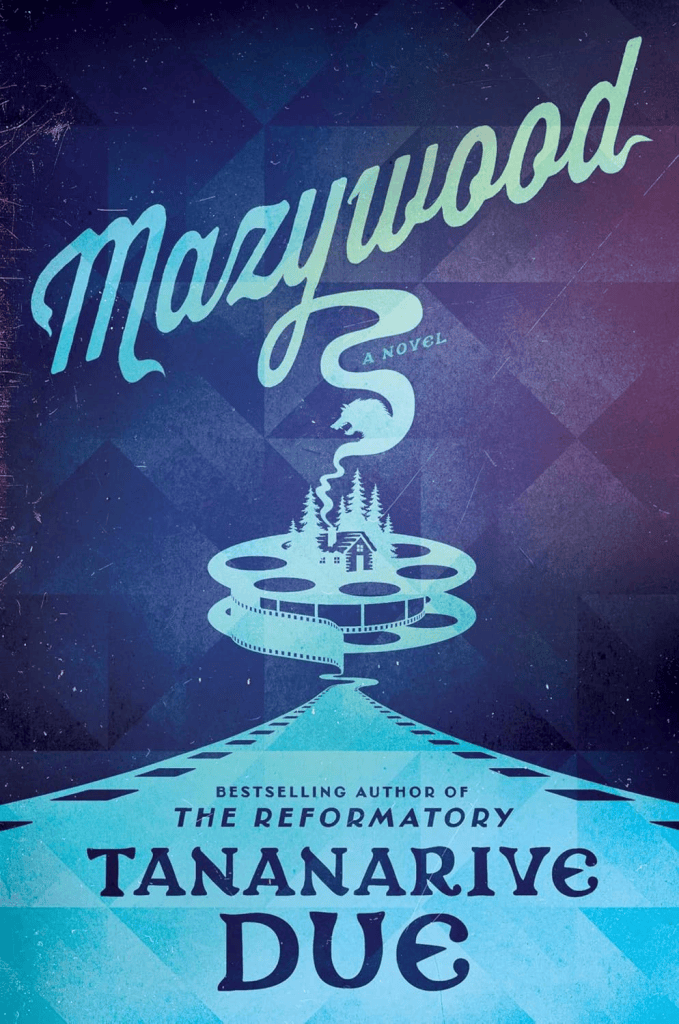
Mazywood by Tananarive Due, published September 22, 2026 by S&S/Saga Press.



Leave a comment