



TL;DR: A psychic teenager, a mother who sells pills through the kitchen window, a coven that can’t outshout a car alarm, and a Sumerian goddess with no table manners. Lindsay Merbaum’s Witches of the Wheel is grotesque, very funny, and cold in the right places. Pull up a stool. Bring something to sacrifice.

The bottles at The Wheel refill themselves, provided nobody breaks one. The bathroom has three stalls and never a line, whatever is going on in there, and when the bartender is asked how, they say, “I don’t believe in lines.” Back rooms open in the rock as the crowd grows and close again when it thins, taking some of the glassware with them. There is one house rule, NO SMOKING, chalked up by the register. There is no dishwasher. The seventeen-year-old who narrates Lindsay Merbaum‘s Witches of the Wheel notices this over a bin of dirty glasses and calls it cruel. She’s right.
The Wheel is a lesbian bar at the bottom of a brick tunnel in a broke Midwestern town called Babylon. On her first night Gold cries on her barstool because nobody in the room is laughing at anybody and nobody has thrown a thing. The door wants a sacrifice. Brenda, who runs the place, hands her an old dagger and mentions that some people come in naked. Gold takes a fistful of her own curls and cuts. “Wow. Ok,” Brenda says. “I’ve just never seen anyone do it that fast.”
She has had practice. Gold grew up in a farmhouse with her mother, Barb, who sells painkillers and EpiPens out the window over the kitchen sink and calls the sagging back porch “the service entrance.” Barb is pink and pasty, with fingernails of yellow horn and teeth “all different sizes and colors, like flint corn.” She wears T-shirts with kitties and hearts on them, “clothes for a giant child.” Unlabeled boxes wall the hallways to the ceiling, a second house built of trash. When the girl turns out to have the sight, Barb puts her to work at the kitchen table reading for strangers, tells her she is a good earner, not as good as pills, and starts calling her Gold. Her given name is Esther, which to Gold sounded like mothballs and medicine. The nickname, she tells us, felt good in her mouth. Years later, if Gold drifts toward a truth that might lose a repeat customer, Barb grips her shoulder and tells the client, “Ope, she’s getting another signal.”
Barb’s best friend is Lottie, who wears pajama bottoms as pants on the grounds that she has buried three husbands. Asked to mind the little girl, Lottie shuts her in a closet full of clothes and bugs, calls it hide-and-seek, and leaves her there all day. That night Barb asks if she fed the child. “Of course I did,” Lottie says. “I’m practically her father.” The television goes quiet. Nobody chews. Earlier that day Lottie hollered back at a man on television who was yelling about sin and sodomy: “Takes one to know one, asshole!” When Gold is nearly grown, Barb sits on the porch one night glaring at the rainbow flag two men have hung across the street, “disgusted yet slightly awed.” Gold points out that Barb has Lottie. “So?” says Barb. “That’s different.”
Where I come from, a woman like Barb gets called a character, which is what a town calls a woman after it has decided not to call the county. She is the best monster in this book, and there is a goddess in it.
The goddess first turns up in that closet, and Gold, having plenty of ghosts already, takes her for one more. This one is a naked brown girl with animal horns and a voice like old machinery. “Child, what does the axe have to fear?” she says, and then, “Amuse me. Tell me your tales.” So the child tells fairy tales in the dark, and the horned girl hums “like a fly, like the stories were delicious.” On the day Gold gets her first period, in the bathroom of a library that smells like pee and beef stew, the girl appears beside her laughing, tips a black scorpion out of her cupped hands as a present, and says she would like to taste the blood and be the shepherd of the sheepfold. Gold, lining her underwear with toilet paper, has questions. “Taste how? Like, with her tongue?” And: “What the fuck? What shepherd?”
Gold is funny exactly where a horror narrator is supposed to go solemn, and the laugh shows you how little air was in the room. The sentences are plain and short, and now and then a simile walks in sideways, as when snow falls “like the heavens were shearing their sheep.” The epigraph gives away the goddess’s name long before Gold works it out. Inanna has had a long second career in feminist spirituality, and goddesses in that line of work tend to get sanded down to fit on a tote bag. This one squeezes a pomegranate over her open mouth, lets the juice run down her neck, and belches. Over a barroom filling with black water she announces, in capitals, THEY ARE SPARROWS. I AM THE FALCON. Hela, who leads the Thursday coven, tells Gold, “It’s not a blessing to be chosen.”
Several of the regulars are named for gods, and Gold will tell you which. Iris’s hair is a new color every time she comes in, and when Gold finally notices, well past the halfway mark, that it is working through the rainbow, she says, “It was a pun on her queerness. How clever.” The pun is fine. Gold explaining it is the trouble, and she explains a great deal. When she wants to know more about what has been visiting her, she looks the name up at the library and the novel prints the entry. By the time the goddess recites her own myths in full, late on, I knew the goddamn myths. Merbaum admits in her acknowledgments that she spent nearly a decade on it and that it “suffered and benefited both from way too much research.” The visions are vivid one at a time, but in the back half they come so often they stop being visitations and become weather. Gold meets each one with the same questions and the same tears, and though she is seventeen and has every right to them, the repetition wears.
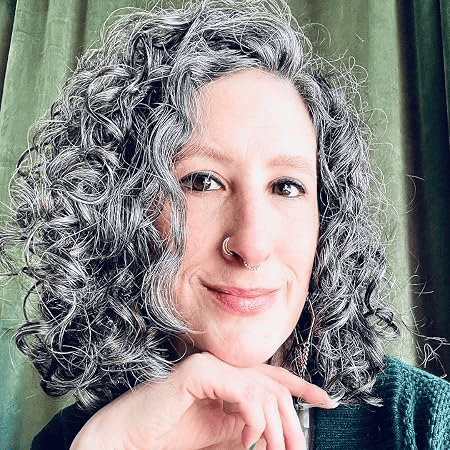
Merbaum spent four years in Ecuador writing a novel about witches and volcanoes, then abandoned it. In San Francisco she worked as a live-in cook for what she told the Washington Independent Review of Books was a “boundary-challenged” couple on a raw-food diet, and lived in an unheated room off their garage, “bringing in men and forbidden foods, like dumplings and non-organic produce.” That room gave her the idea for The Gold Persimmon: “a hotel to cry in.” That same year she told The Rumpus her next book would be about “a magical Midwestern queer bar, where witches and goddesses converge.” Vampires at Sea, a smutty novella about emotional vampires on a cruise, got there first, in 2025. She founded Pick Your Potions, which her author bio calls “a consortium of mixology and witchery,” and behind the bar is the one place in this novel where she never seems to be checking her notes. Gold can name a stranger’s drink before they order it, and she keeps trying to talk the regulars into a Hanky Panky. No takers. In the acknowledgments Merbaum thanks a writing group called the Study Coven and calls herself its “leader/High Priestess.”
The funniest scene in the novel is a coven failing. On the night of a blue moon Gold crouches uninvited in Hela’s bushes and watches the circle shiver in white shifts around a makeshift altar. A car alarm drowns out the chant. Hathor, a baby-faced butch in a dress too small for her that still hangs like a potato sack, raises her arms, and for a moment they are two golden horns with the moon cradled between them. Then the light turns out to be a police helicopter. Gold writes the whole thing off as milquetoast witchcraft. I laughed at the helicopter. Hela started this coven on purpose, for witches with “little to no inborn ability,” and the novel never once laughs at them for wanting the moon.
Shortly after Barb dies, a woman named Sharon finds Gold passed out in front of a synagogue and has her sons carry her home. Sharon is short and plump, with a handshake that could snap a chicken’s neck, and she talks three times faster than she walks. Later she rents Gold the little apartment under her front steps and waves off the subject of rent: “It’s crass to talk about money.” One morning Gold comes home to find that Sharon has been in, because she could see through the window that the place was filthy. Then Sharon pulls on yellow rubber gloves and teaches her to clean. Every book dusted separately, since “dusty books turn rotten, which is a sin against literature.” A long-handled brush for the toilet: “Under the rim, and don’t forget the base.” Then, by way of benediction, “Now, just make it a ritual, and your home will be a home.” Gold says she has to work. The next day there is a bucket of cleaning supplies on her step, and in a dish towel, wrapped in paper towels, a slice of buttered challah, still warm.
Gold had already turned down every invitation to dinner. “I refused to play the orphan at Sharon’s table,” she says.
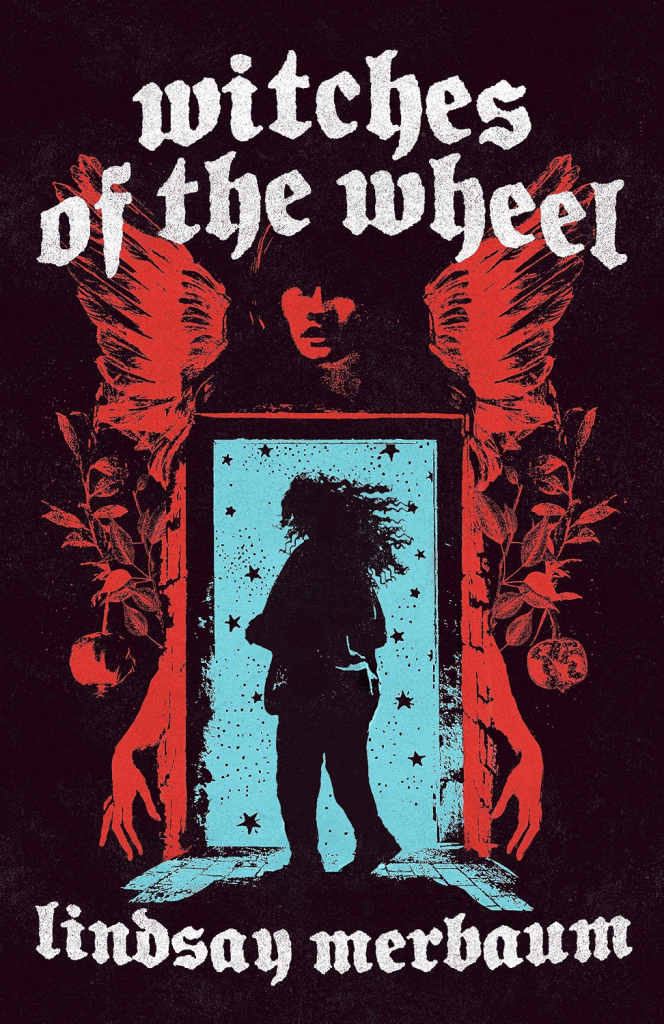
Witches of the Wheel by Lindsay Merbaum,
published September 22, 2026 by Creature.


Leave a comment