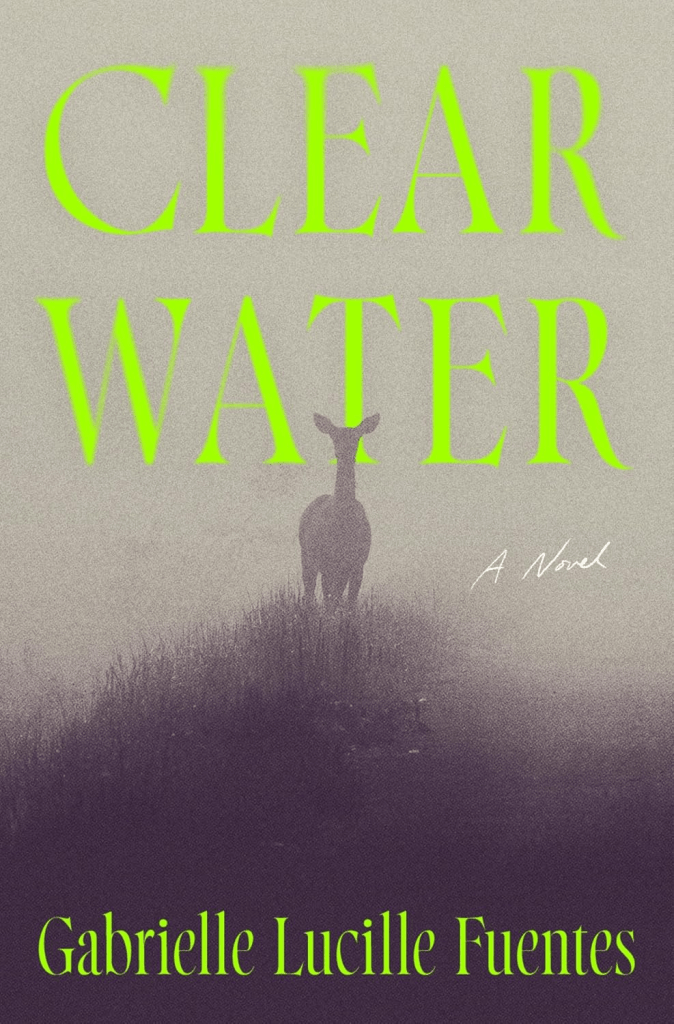
TL;DR: A Wisconsin town has been losing its teenage girls to pills for fifteen years. Now the dead girls are back, barefoot in the snow, feet on backward, and every witness sees whoever they lost. That’s a hell of a hook, but the book stops to explain it. The scares are weak. The characters are killer. The best chapter is a party in 2003 where a girl dies on the kitchen floor and nobody calls an ambulance. Read it for that chapter and the cast. Don’t read for the ghosts. They’re here to make you feel better.





Clear Water believes that the girls a town loses to pills are still out there, that they come back in February as something barefoot and wordless with its feet on backward, that each one looks like whoever the witness has lost, and that if one grieving woman follows them far enough onto a frozen lake they will bring her to a place where she can do what nobody did for her sister.
The setup. Brewer, an invented small town in northern Wisconsin, February 2018. Alma Figueroa is a furloughed Legal Aid paralegal, half Cuban in Norwegian dairy country, and she has been crying for months. One night she finds a barefoot girl on a county road in a T-shirt streaked with somebody else’s blood, who hums instead of speaking. The hospital can’t keep her, so Alma takes her home, and two days later the girl is gone, her boot prints stopping mid-stride in unbroken snow. Within a week the whole county is seeing girls like her, there and then not. The senior cop, who has a Punisher tattoo (red flag if I’ve ever heard one), a white F-150 Raptor and a two-thousand-dollar tactical watch that he lost and bought again, calls it a prank. The book doesn’t hide its villain. Behind all of it is Alma’s sister Kayla, dead of an overdose at a party on prom night fifteen years earlier. The jacket says “mystery, noir, myth, and horror.” The publisher’s own site, in quieter words, says a literary mystery with a speculative edge. Trust the quieter words.
I read the first third of this in my car in the driveway with the engine running for the heat, because the book is set in February and I commit dammit! The first third is where the book makes its case. Alma has the girl in the back seat for seventeen miles and spends them dressing her: an old-fashioned nightgown, which under the hospital lights is a T-shirt; her sister’s face, which she keeps seeing over the girl’s; eyes that must be Scandinavian blue, because that is what a girl found in the snow in Norwegian country has, and then the girl wakes and the book gives you three words, “They were brown.” Every witness after that sees a different girl. A woman sees her lost tomcat come back wild. A patrolman sees a starving rabbit that is suddenly a girl stretching her mouth around a word meant for him alone. The book’s idea is that a lost girl is made of the people looking for her. That the word “girl” is a thing we throw over an absence so we can stand to look at it, and that the clothes, the eyes, the age, even the species get supplied by the eye that needs them. George Berkeley, an Irish bishop, argued in 1710 that a thing exists only in being perceived. Berkeley also spent his last years prescribing tar water for smallpox, gout and most of what ailed Ireland, so weigh the man accordingly. The book’s version is stronger than his, because it’s about the missing. A tree doesn’t care who’s looking, and a lost girl is nothing but who’s looking, which means the people who loved her are the ones least able to see her. For most of its length Clear Water trusts this and lets the sightings carry it.
Then it loses its nerve. The book is told in a close third person that rotates among five people and the girls themselves never get a chapter because what they can’t tell you is where the fear lives. Twice, though, the story stops for a two-page essay in a voice that belongs to nobody in the book and knows what the girls are: “They are lost girls.” “Women are always turning into animals.” Late on, in a blizzard, Alma thinks the same essay a third time in her own head, in case you were taking a shit. A book that has spent two hundred pages proving that the looker makes the girl does not need to tell you that the looker makes the girl, and when it does, the proof shrinks to an illustration. It does this at small scale too. A favorite image in the book is an old woman’s yard stained blue overnight with the piss of hundreds of rabbits nobody saw, and the patrolman who finds it explains it in the same paragraph. Buckthorn berries turn rabbit urine blue, he did a science project on it as a kid and his brothers teased him for months. Let the piss be blue. I’m with the brothers. The essays are the book’s worst fucking idea and also its bravest, because re-read “Don’t they look pretty dressed in white at night” and that voice from nowhere is accusing you, the reader who bought a horror novel about dead girls, of wanting them this way. A brave mistake is still a mistake.
Her ex-husband brings animals home inside his clothes. A baby owl in his shirt pocket, early on, and a year and a half into the marriage two puma cubs in his vest. The man is a Russian nesting doll of wildlife. I’d have left at the owl. He is also, like everybody else in this cast, a person who wanted something before the first girl walked out of the snow. He wants to stay, in a school bus, with whatever he’s carrying. Alma wants to stop crying and to be anywhere but Brewer, and has wanted the second since 2003, so the two of them are a collision from the first night. Her roommate, a Chicago organizer turned farmer, wants one piece of land, and the cop wants the same piece, and that fight moves the plot without a ghost anywhere near it. The villain is the exception. The cop doesn’t want anything the way the others do. He owns things. The tattoo, the truck, the watch and, later, a boat are how the book tells you he’s the bad man, and when he breaks into a woman’s trailer and shits on her floor, the book treats it as evidence against him, which it is, but the inventory had already given you the verdict. He’s a label. The rest of the cast are people, because what each of them wants makes something happen, and in a novel about who is looking at the girl it would have been easy to build the cast out of pairs of eyes and nothing else. Fuentes built them out of wants, and the cast is the one thing in this book I’d set beside the best of what this blog has covered.
Two pages in every five are the past, and not one of those pages has a ghost in it. The book runs on three timelines: 2018, where the girls are; Kayla’s last year, 2002 into 2003; and 2013 to 2016, in which Alma comes home from law school in Chicago, marries, and leaves. The braid is doing a job: it holds the worst night back until two-thirds through, so the present-day search keeps borrowing dread from a past you haven’t been shown yet. That reminds me of of Gillian Flynn’s Sharp Objects and of Liz Moore’s The God of the Woods, and in both of those the withheld past is a crime. Here it is a death, and the the haunting of 2018 is a bill come due for 2003. The trouble is what it does to the girls. Quarantined in one strand of three, they can’t be what drives the book. They are a weather system over a mystery the other two strands built entirely out of people. That’s quite the subcontract, and when the mystery needs closing they get called in to close it.
About two-thirds in, the book goes back to the night Kayla died, and the tense it uses is **chef’s kiss**. Every paragraph begins “Alma would remember,” so the night is told from fifteen years off while it’s happening, each detail already something she has carried: the phone ringing while she and her best friend button each other into prom dresses; a girl’s voice saying “We can’t wake her,” promising to call an ambulance, and not calling; one girl too high to stand on the kitchen floor of the party house, saying Kayla was a rat who kept threatening to tell, and then, “Tell who?” The chapter lists, flat as a deposition, what Alma would be told afterward. That no ambulance was ever called, and that the house was empty and the tracks snowed over by the time the police came. Then this sentence, which I’ll read: “Alma would remember that Inger turned to Dale and Dale told Inger everything and the door back to Kayla shut forever.” Three clauses hung on two ands with no commas between them, the way a child tells you something happened, and the last verb is shut. The sentence before it has Alma deciding that as long as her friend doesn’t know yet there is a door back to before, and this one closes it in a breath. The sentence after says that for years every memory of Kayla alive was swallowed by Kayla’s open mouth. The belief this takes off you is that an overdose is an accident. The dead don’t refuse anything in that chapter. They get swallowed.
That’s the chapter. Heavy shit.
There are clear parallels with Flynn’s Sharp Objects (2006). A woman with a dead sister goes back to the small town she fled as it loses its girls. The dead girl who can’t speak to the living but keeps pointing at her killer is similarly reminiscient of Alice Sebold’s The Lovely Bones (2002). The girls’ backward feet come from the ciguapa, of Dominican and Cuban folklore. Fuentes’s dead counted on acorns, and a hollow of warm lights in a whiteout where girls and animals sit together and the faces change as you look. Two or three things that happen in this book run on that.
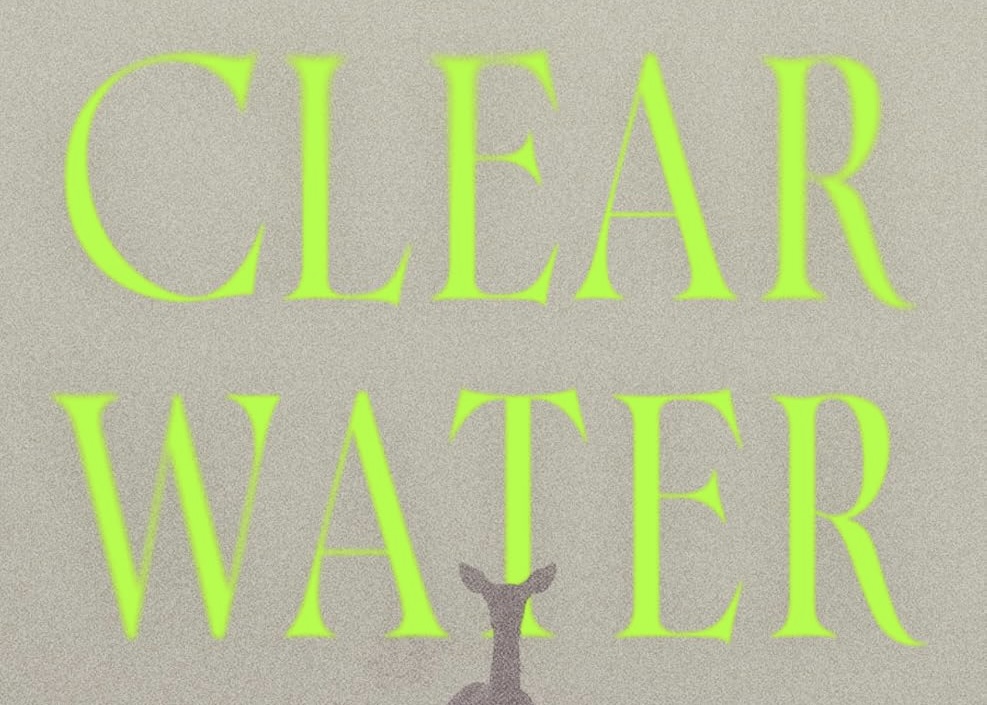
The one resurrection in a book full of the returning dead is pharmaceutical. The girls bring Alma to a door, and what she does on the other side of it she does with a nasal spray she has carried in her coat since page one, naloxone, the overdose-reversal drug, so the ghosts here are ushers. Then the close consoles, by design. A kitchen full of people eating casserole, because it’s Wisconsin and the casserole was there before the house, then the thaw, then a doe bringing her fawn down to the water to drink. The doe is on the cover. They pass it around. This is where I get off. The book’s own argument is that a lost girl is what the looker needs her to be. The girls at the end are what a grieving woman needs. They find the lost one, they settle with the man who owes them, they go, and then everyone fucking eats. The prom-night chapter already told you how this town’s dead get treated. Nobody comes, and the snow does the rest. The book knew that well enough to write it, and then sent the fucking cavalry anyway. Either Fuentes knows that, and the ending is Alma dressing the dead one last time in what she needs them to be, which would make it absolutely heartbreaking, or Fuentes wanted her ending and took it. Take either of those home. Which one you pick says more about you than about Fuentes.
Gabrielle Lucille Fuentes grew up in Wisconsin and this is her second novel, after The Sleeping World and her short story collection Are We Ever Our Own. The sisters sing Tracy Chapman’s “Fast Car” in their mother’s car in 2002 with the heat up, and I have a position on the Luke Combs version that you’re not getting. The one time I feared for a life in this book, a patrolman had just whispered “I’m a Vikings fan” in a bar full of Packers fans, and I believed every man there would fucking kill him. The girls in the snow never got me that far. The phone call in 2003 did, and the book had a chance to stay out in that cold, and it went inside and ate.