
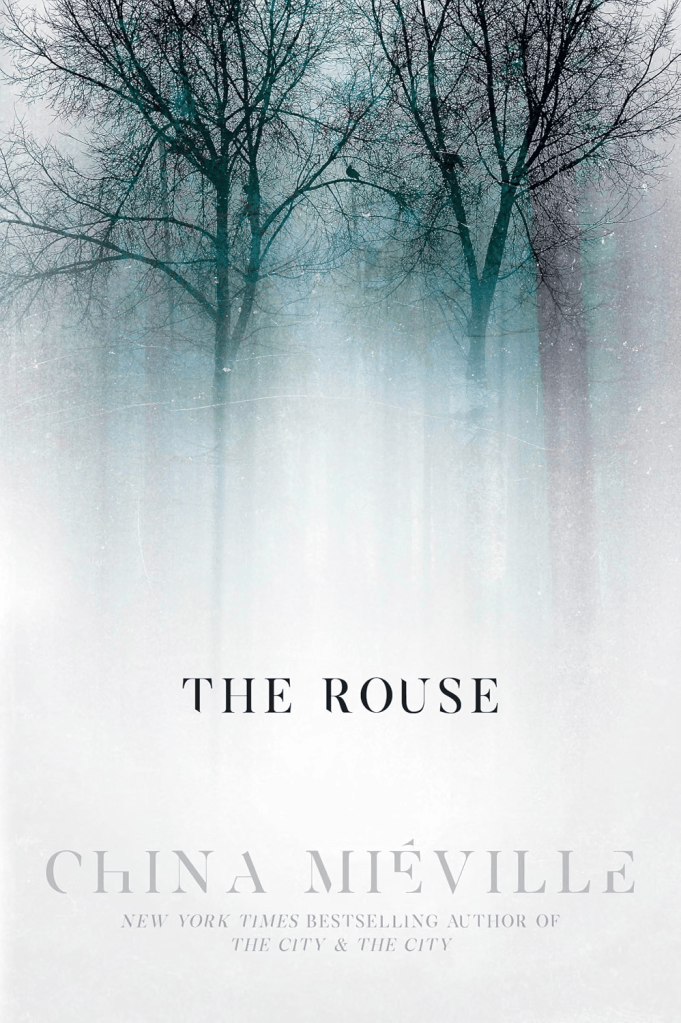








TL;DR: The Rouse is the largest ghost story anyone has attempted in a generation and one of the few worth the attempt. Miéville raises the dead with a bugle and a defence budget and sets a mother’s grief in the middle of the machinery, where it outlasts every acronym. Too long, too clever, and frightening anyway.

Between the August of 1914 and the eleventh hour of the eleventh month of 1918 the British Empire put something near a million of its own men into the chalk of Picardy and the clay of Flanders and the sand at Gallipoli and the silt of the Tigris, and in China Miéville’s telling not one of them has ever got up again. Every other war gives up its dead. Malaya gives them up and Aden and Oman and Bosnia, and a clerk somewhere is keeping count. The four years of the Great War give up nothing. The novel calls this the Kaiser’s Enigma and sets it down the way a man sets down a stone he has carried a long way and walks on without explaining it. It is the strangest fact in a book built of strange facts.
The premise is this. The Rouse is the bugle call the British Army blows at its sleeping soldiers, two notes on a rising figure, and blown in the right place by the right men it wakes the other kind of sleeper. What comes up is not a soul. What comes up is born at the death and of the death and knows nothing of the life that went before, and the men who traffic in such things have a dozen names for them, revenants, lespries, suppletions, the Roused, the way a slaughterman has names for the cuts. Soldiers Rouse best. The British Rouse best of all, a fact the book treats as it treats the weather, and so there is a unit of the state that has been at this work since the nineteen fifties out of a saltbitten camp on a shingle spit in East Anglia, and the dead shed objects, a comb, a boot, a button, and every object the dead shed has a flaw in it somewhere, a snag, and the flaw is how the living tell such things from things merely made.
Against that machinery Miéville sets a woman named Maur Towns, and she is the reason to read the book. She raises a boy on her own in the Harlesden and Kilburn of the seventies and eighties, a quiet longlimbed boy who climbs everything, trees and walls and the gate to the front yard, and the boy joins the RAF Regiment because it is a thing to do and comes home from Bosnia and in 1995 dies at a barracks called Shackingham, two shots, an open verdict, one of a run of deaths at that place the Army has decided to call suicides. The opening movement, titled A Story of Life, carries her from a maternity ward to a coroner’s court and is the best thing in the book. Miéville renders her from the outside as a regimental historian would, what she does with her hands, what she keeps in her pockets, the seeds and stones that begin going missing from her handbag in the years after, and he cuts the story with fragments of a later interview in which an older flatvoiced Maur answers questions the book withholds, so the grief is always arriving from two directions at once. Then the novel leaves her in 2006 with a journalist’s campaign and a padre and a letter that was not in the world the night before.
The other half of the book belongs to a man. Steven Allardyce, Choirboy to the men who knew him young and Stallo to everyone after, a Special Air Service trooper of the Malayan Emergency who walks into a jungle clearing where an English sycamore is growing that has no business east of Suez, and comes out of that country with something at his back that he will spend the next fifty years calling his control. He is recruited to the spit. He loses hours. The chapters that follow him through Oman and the Cold War run in another register, dashed dialogue, squaddie argot, the memoranda of a ministry that has read The Golden Bough and The Beano with equal attention, and they are where the book is funniest and where it is slowest and those are often the same page. There is a Christmas party in the tunnels under the spit that the novel goes back to for the rest of its length the way a tongue goes back to a broken tooth. Stallo is rendered from without, a man who takes rooms and holds a weapon a certain way, and the book never says what he feels and never leaves it in doubt. There are cover names and acronyms enough to fill a filing cabinet, and there are stretches in the middle third where the reader is inside the filing cabinet and the filing cabinet is dreaming.
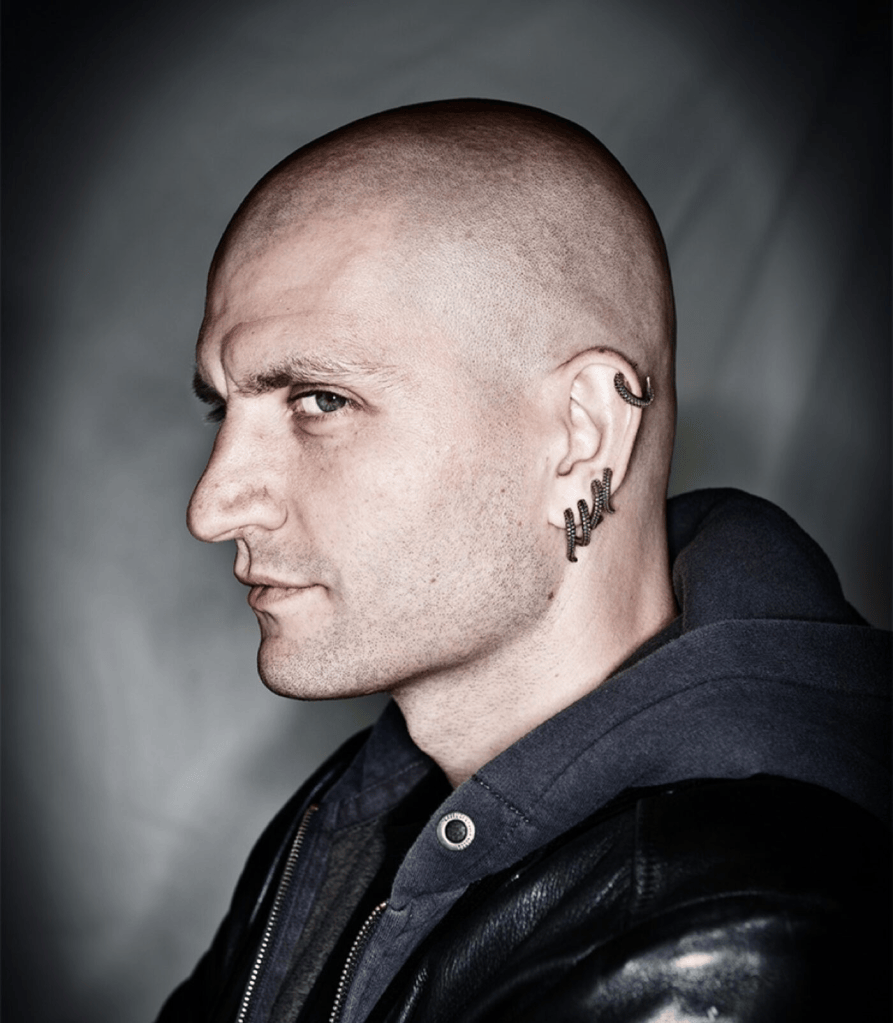
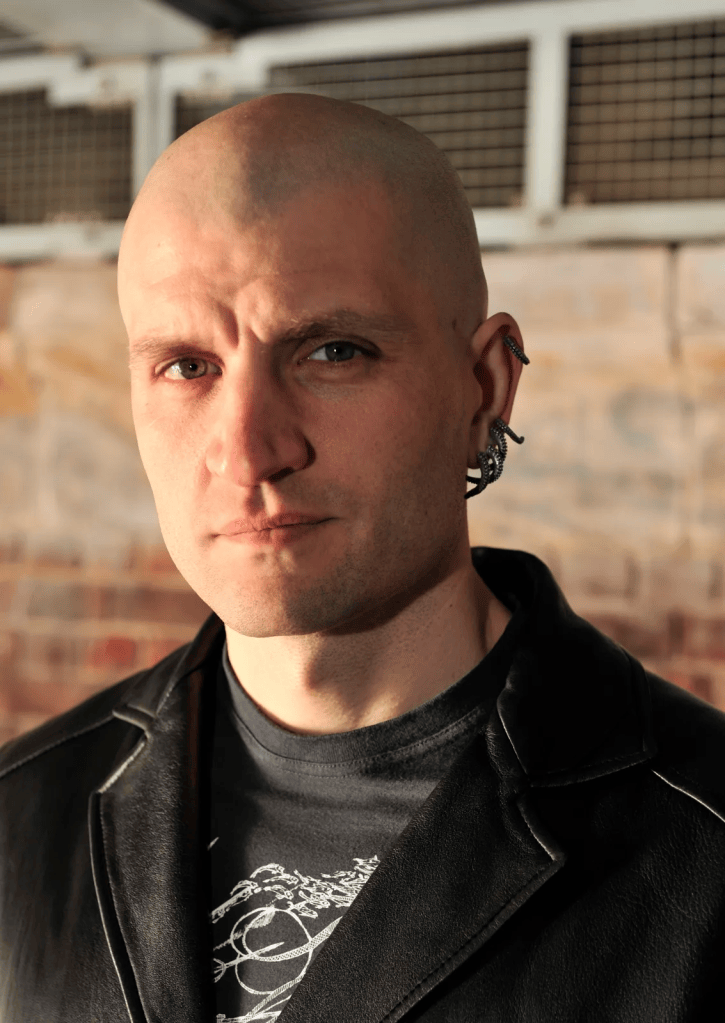
Miéville was born in Norwich in 1972 and raised by his mother in north-west London, in the same few square miles Maur walks with her pushchair, and he came to fiction by way of social anthropology at Cambridge and a doctorate at the London School of Economics that became a Marxist theory of international law, a strange apprenticeship for a horror writer and the right one for this book. He stood for Parliament for the Socialist Alliance in 2001 and lost. He wrote the Bas-Lag novels and took the Arthur C. Clarke Award three times and the Hugo for The City & The City, and after Railsea in 2012 he went fourteen years without a full novel of his own, writing instead novellas and a history of the Russian Revolution and a book on the Communist Manifesto and a collaboration with Keanu Reeves. His publishers say The Rouse was twenty years in the making and the Guggenheim Foundation paid for some of those years and the book reads like it. Not in the sense of labour. In the sense of sediment.
What frightens in it is mostly what is withheld. The Roused want two things of the living and both are small. They want to be read ghost stories, and the book keeps a shelf for the purpose, M. R. James by the paragraph, and they want to be shown blank pages, and the second want is worse than the first and the novel never says why. The set pieces are few for a book this long and land because they are few. A staircase in an old officer’s house. A séance at a bomber station. A letter that will not hold still. The helicopters, which the book cannot leave alone, which come down in every decade with the same word in the ears of the men beneath them until the reader learns to flinch at a rotor. And under all of it something older than any of the dead that calls itself Old Pal and laughs, and the laughing is the one thing in twelve hundred pages that never gets an explanation and never needs one.
Pull back far enough and the argument of the book is this. That the afterlife is not a thing found but a thing built, like radar, like the bomb, in the same generation and by the same class of men, and that once built it was a province to be administered and a market to be cornered and a front to be held, and that a nation which had lost one empire among the living went looking for another among the dead. It is a large claim and Miéville makes it without raising his voice. He makes it with paperwork.
The snags are real. The book runs to twelve hundred and sixty pages and there is a plainer novel two thirds that length inside it that would have cut deeper for carrying less, and the interludes, a glossary of oscilloscope terms, the stages of decay of a standing dead tree, are sediment too, some of it bedrock and some of it silt. The espionage plot accrues bodies and factions faster than it can make them matter. One character says that jargon is always poetry and the book believes her, and the reader is not always invited to. And the Roused are rationed. Hundreds of pages go by in which the dead are a rumor in a memo. The book does not give a fuck what a horror reader wants. That is its right and it pays for it.
Close the book and the machinery goes first, the acronyms and the factions and the men in the filing cabinet. What does not go is a boy on a gate and a woman’s hands and a handbag that will not stay full and the two notes of a bugle blown across a shingle spit at men who have been ordered to get up at once. Some of them do.
The Rouse by China Miéville, published September 15, 2026 by Del Rey.



Leave a comment