
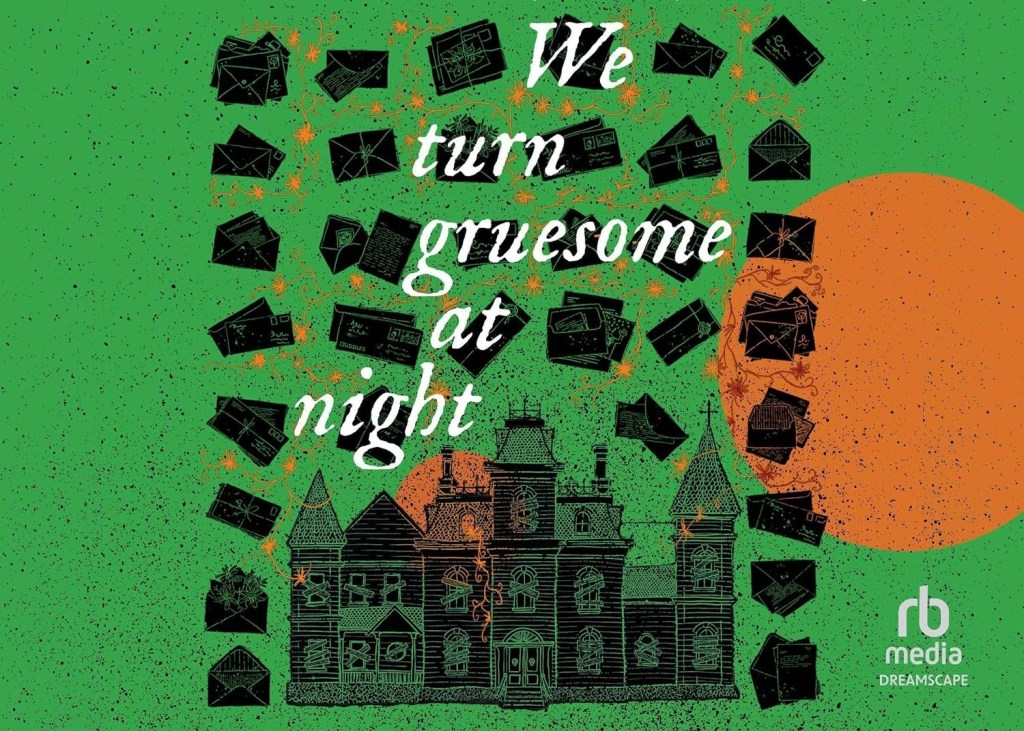
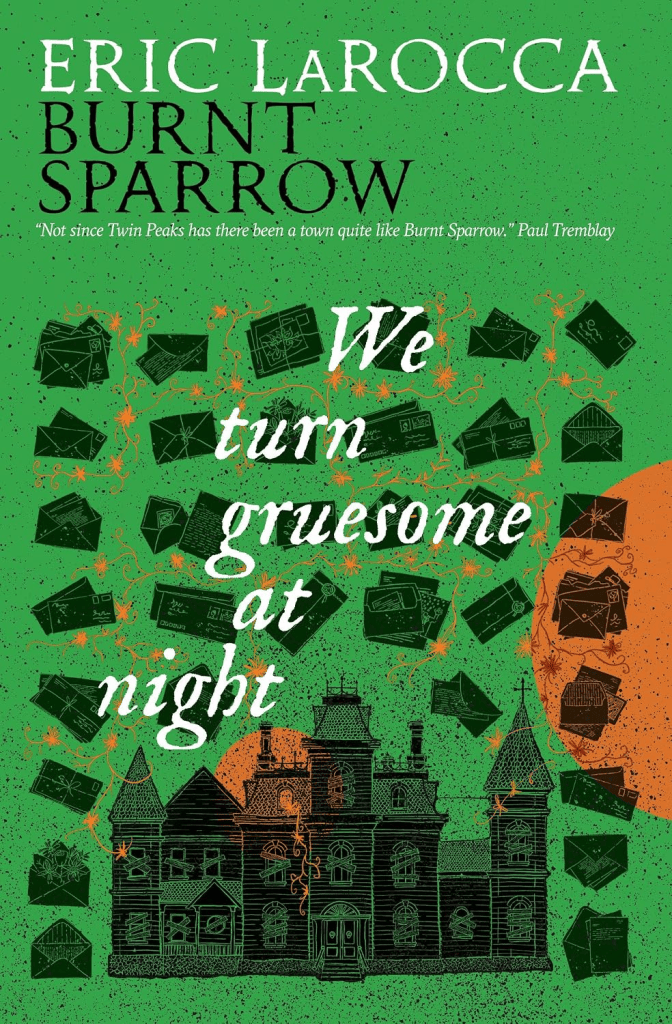







TL;DR: The most airless thing LaRocca has written. Two people sealed in a rotting house, a chain of anonymous confessional letters, and an argument that monstrousness is not born in the atrocity but in the eight thousand identical afternoons before it. The prose over-explains itself. The dread does not. It got under my skin and stayed.

The scariest thing in this book is a row of garbage cans.
Rupert Cromwell has been sealed inside End House for ten years. He cannot cross the front threshold. He has tested this. He pokes his fingers past the line until the skin sizzles and unspools and comes back gnarled, and then he does it again, because pain is at least a thing that happens to him. In the meantime he has memorized the fetid stain by the bathroom door in the East Wing and the moth hole in the carpet outside Gladys Esherwood’s room. He cuts his own hair with a bowl and a rusted pair of clippers and after a decade he has not improved. Out back the trash has gone soft and candied and the smell comes through the walls, and he doesn’t notice it anymore, and that’s the part that scares him. He would worry if it stopped.
Early on, Rupert remembers a high school unit on the Western Front and how the men who came home ruined were not ruined by the shelling. They were ruined by the waiting. That is the thesis, and Eric LaRocca puts it on the table in the first chapter and then spends the rest of the book proving it: what turns a person monstrous is rarely the atrocity, it’s the eight thousand identical afternoons before the atrocity. Boredom as a moral solvent. I have never read a haunted house novel that understood the house is not the problem.
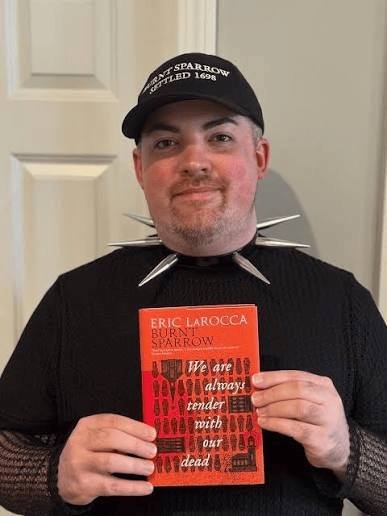
This is the second Burnt Sparrow book and it is a smaller, meaner, more airless thing than the first. Where We Are Always Tender with Our Dead had an entire town to work with, this one has two people, one dying mansion, and a mail slot. The mail is the plot. A grocery courier starts bringing Rupert letters from something called The Perdido Society, an anonymous confessional chain running quietly under the town, strangers typing their worst private thoughts to strangers. Rupert’s correspondent is a man frightened of what he might do to his adopted infant son. The letters keep coming. They go where you are afraid they are going and then they keep going, and the truly upsetting thing is not the content of the letters but that Rupert starts living for Mondays.
Here is where I have to be honest, and I came to horror sideways out of playing in bands, so understand this is a musician’s complaint. LaRocca has one tempo. The sentences in Rupert’s chapters are built the same way over and over: a clause, then the clause restated with adjectives stacked on it, then a qualifier. Vile, loathsome, monstrous. Perhaps. Almost as though. He wonders if. The man writes a beautiful sentence and then writes it again slightly wider in case you missed it, and Rupert is forever explaining to himself the thing the scene has already shown you, and every time he does it the scene loses a little blood. It’s maddening, because when LaRocca shuts the fuck up and trusts the image he is genuinely hair-raising. A faceless thing wearing his father’s shape tells Rupert that sometimes you have to hurt someone to show how much you truly care, and somewhere behind it a children’s choir is singing Christmas carols in a different cell of his mind. That gets no gloss and needs none. More of that. Fewer perhapses.
The best writing in the book is smuggled in sideways. A man calling himself Mister Jakes arrives in town on the first cold wind of October, and his chapters are short, and what he does is tell stories, and what he thinks while telling them is that all storytelling is a transmission of cancer. He tells one about a woman, a handsome antique alarm clock, and a thing she did at twelve years old that she has never been able to explain to herself. Later Rupert plays a tape his dead mother recorded for him and we get a story about a woman who wakes with a small cut on her thigh that opens wider every time she speaks. I read that one twice. It is the most exact thing about love and self-erasure I have found in a horror novel in years, it has next to nothing to do with the plot, and I don’t give a shit. This is LaRocca the novella writer breaking into his own house. He is better at that length and he knows it. Whether the nesting reads as load-bearing or as a guy who couldn’t stop writing short fiction depends on how generous you feel. Some nights I feel generous.
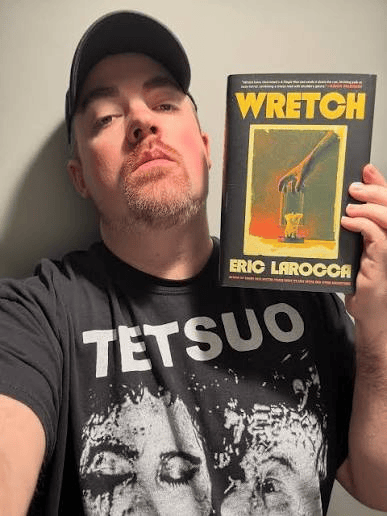
He has been building toward something this size for a while. LaRocca broke out in 2021 with Things Have Gotten Worse Since We Last Spoke, a novella about an online correspondence that curdles, which tells you precisely why the letters here land: he has been writing epistolary damage his entire career. Esquire named him one of the writers shaping horror’s next golden age, Locus called him one of the strongest and most unique voices in contemporary horror, and he is a three-time Stoker finalist and Splatterpunk winner whose stated instinct with any project is to ask how it can be told as efficiently and succinctly as possible. Burnt Sparrow is him losing that argument with himself on purpose. He has said he could not tell this story in one book, that condensing it would be a severe detriment to the art, and that the whole thing is built around thresholds and what a person is willing to sacrifice to cross one. Of this installment he has said he was working on a much smaller canvas and going for something intense, claustrophobic and discomforting, running on surreal nightmare logic. He got it. He has also said that with the rise of fascism in the States these novels feel timelier than when he started them, and I would ordinarily roll my eyes at a man making that case for his own haunted house, except this is a book about a town that keeps its dead pinned to the pavement under chicken wire as a civic exhibit, and about ordinary people talked into atrocity one small permission at a time. Point taken.
Gladys Esherwood is the better character and I suspect he knows it. Her first chapter opens with a fistful of pills in her palm, and what she loves is not death, it’s the staging: Joan Crawford, Bette Davis, froth on the lip, something lush and operatic. That’s an entire woman in one paragraph. She is vain and abused and cruel and desperately lonely, and she misses having ghosts, misses the specific discomfort of being watched by something, because the phantoms have all cleared out and even they would not stay in a house this joyless. Her chapters have weather in them. Rupert’s have footnotes.
The violence, when it arrives, is not stylish, and thank god for that. LaRocca has never confused carnage with cool. It is clumsy and takes too long and everyone involved is humiliated by it. There is a one-eyed stray dog in this book. I am not going to tell you anything else about the dog. I am still angry, which is the correct outcome, and the fact that the scene made me angry instead of merely queasy is the whole difference between a writer using cruelty and a writer meaning it. He means it. There is a content warning in the front matter, and unusually it is not marketing. Believe it.
The last page says End Of Book II and it means that literally. Nothing resolves. Things tighten. Middle books get graded on a curve they didn’t earn, and this one has the standard middle-book shape problem, which is that escalation is not the same as structure. But it escalates honestly. Nobody arrives anywhere they were not walked to by degrees. And the late stretch does something I found almost impossible to sit still for, which is to watch a person begin painting a flattering version of his own history on the wall while the evidence is still warm.
I wanted it tighter. I wanted about twenty percent fewer qualifiers. It’s still the one I’ll be carrying around in December, and I have thought about that alarm clock at least once a day since.
Nobody in this novel becomes a monster. They just run out of other things to do.

We Turn Gruesome at Night by Eric LaRocca,
published September 8, 2026 by Titan.

 The Blog Without a Face
Leave a comment