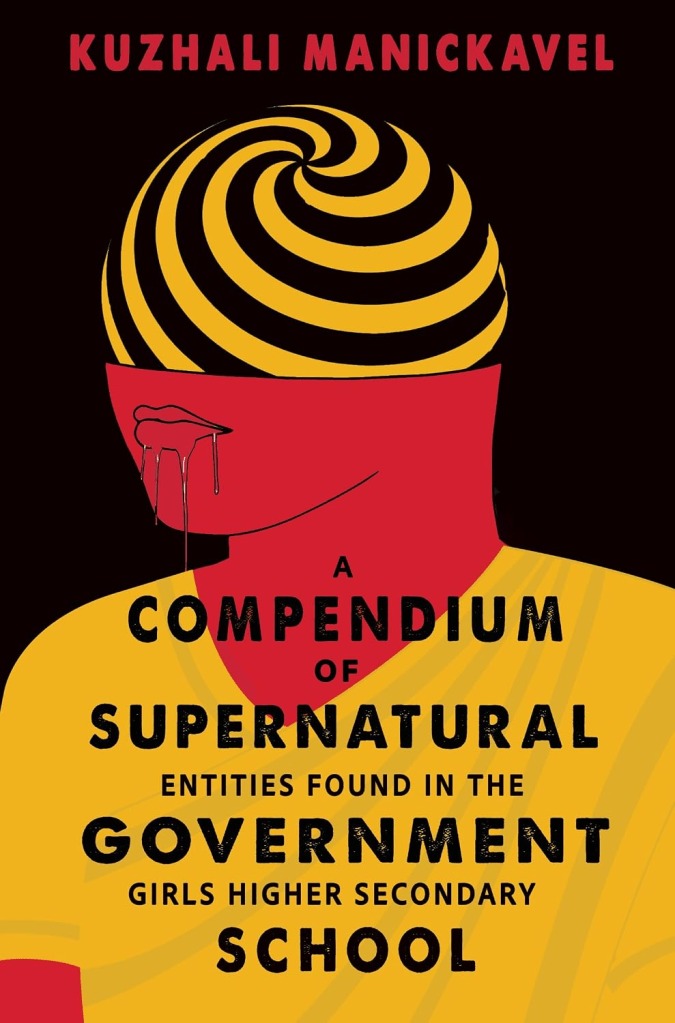
TL;DR: A girl nobody notices finds a notebook she can’t throw away. It’s a field guide to the monsters in her government school, half of them stamped Harmless, and every one of them is something that happens to girls here. The teacher who actually ruins girls gets no entry. The format is the SCP wiki’s, the jokes let the dread out about one section in three, and I don’t give a shit. The plainest scene in it fucked me up worse than any of the monsters did. Buy it.



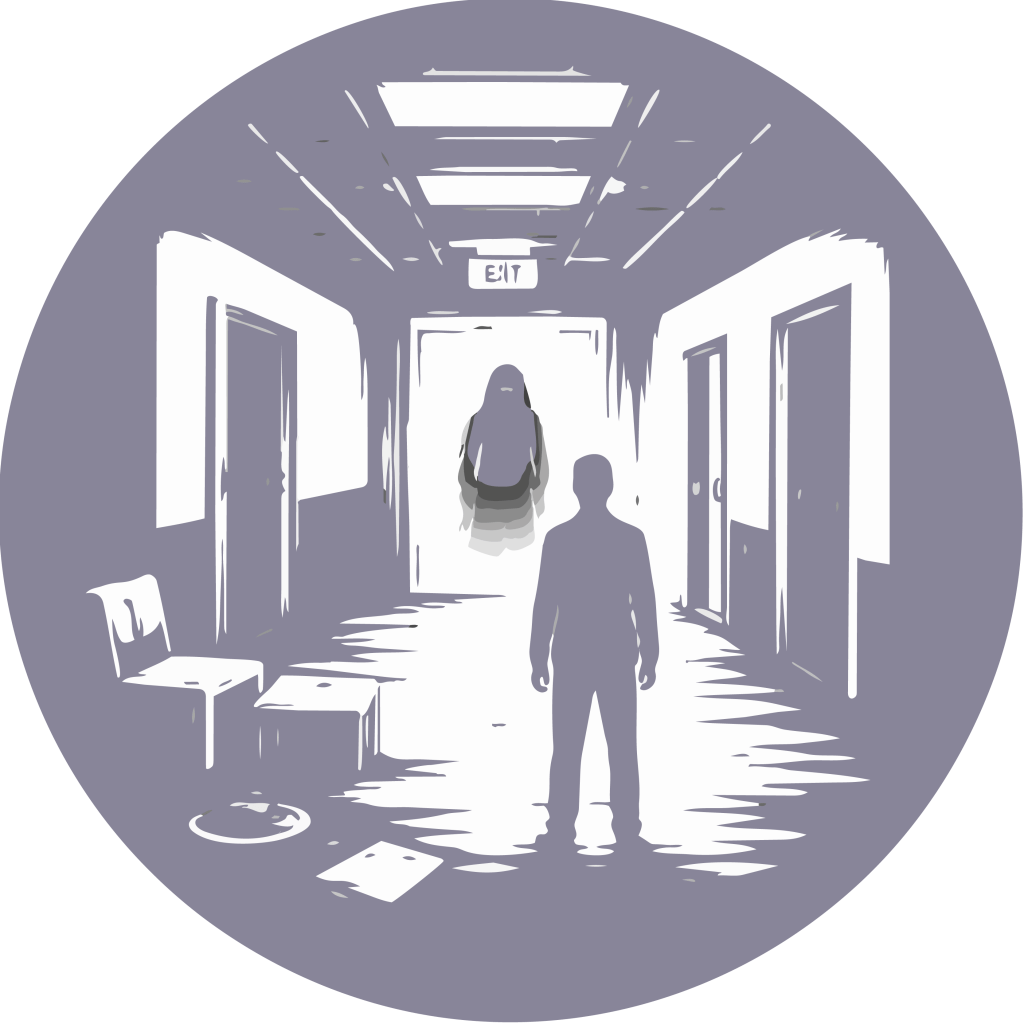

“One must never assume it is just a chair.”
That’s the first page, in the voice of a committee calling itself the Association for Moral Upliftment and Universal Friendship, and it’s the rule the rest of the book follows. A chair may be an undead carnivorous bird at rest. A botany record notebook may be a bestiary. And a field guide that sorts twenty-three supernatural entities by Danger Classification, twelve of them under Harmless or thereabouts, can leave the one person in the building who is actually hurting girls off the list completely. He’s the English teacher. He has no entry. It took me half the goddamn book to see it, and why I think it’s one of the better horror books of the year.
Thamarai’s parents have jobs in two different towns, so she’s been parked with an aunt in a temple town in Tamil Nadu that the book never names and that is, by the big temple and the author’s own biography, Chidambaram. “This was a place you drove through with the windows up.” On her first day of 9th standard, sitting on the floor in the doorway because the room is full, she finds a dusty botany record notebook in her bag. She puts it on the floor by the wall. It comes back. She tries the drainage canal. It comes back. The transection drawings in it look like girls and giant insects, and the entries have danger rankings.
What you’re holding is that notebook, cut into her story: fifty-five short sections of close third person on Thamarai, and between them twenty-three entries in the format of a field guide, Name, Danger Classification, Description, Mode of Operation. The Sand Worms of Patriotism, who surface at every flag-raising to swallow two girls (always reported to look “happy and hopeful as they descend”) and who founded a group called Just Because We Hate Girls Doesn’t Mean We Are Gay. The Cine Hero, who takes a girl’s hand from around a corner, “fingers first,” and leaves her a husk with her mouth open, having decided which shampoo she’ll buy for the new house. The Little Nightmares, which root in the brain until “the host will have nothing left inside.” Suitcase Pasanga, the thin ghosts of murdered college students who come up to you at twilight and ask, in Hindi, where the nearest STD booth is. Harmless, says the committee, about a murdered kid. It would like your own notes in the pages provided at the back, no ballpoint pen, death certificates attached where applicable.
I read that Introduction on a Saturday and decided I knew exactly what this was: Welcome to Night Vale, the podcast that reads cosmic horror as community radio announcements, with a bestiary stapled on. I had it wrong. By page thirty a small grey old woman shuffles out of a locked room at Thamarai’s maths tuition and Thamarai, who never helps anyone with anything but always asks the elderly out of politeness, calls out “Hai paati, do you need any help?” What follows involves a jaw that drops to the floor, seven fingers on one hand, a tap, and a bar of blue washing soap, and I read it standing up, which is a stupid fucking way to read anything. Then comes the entry. Paati. “Fourteen fingers and fourteen toes. Does not consume water.” Generally harmless.
That’s the pattern. The scare lands, and then the committee files it, and the filing is funny. The Sex Demon dresses like a Tamil movie villain from the seventies, pale blue three-piece suit and a pipe, knows fuck-all about sex, and keeps a vegetable plot. When Thamarai finally corners one weeding his millets and asks why he’s called that: “I don’t know. Some idiot put that name.” His name is Mani. Roughly one section in three ends on a joke or a home remedy, and it means the dread in this book arrives in set pieces and runs under the comedy as a hum instead of driving from the front. If you need a horror novel that never lets you up for air, this isn’t it. I held it back a notch for that.
Kuzhali Manickavel was born in Winnipeg and moved to Chidambaram at thirteen; she lives in Bangalore now. Her two story collections and a chapbook came out between 2008 and 2014 from Blaft in Chennai, the small press best known over here for its anthologies of Tamil pulp fiction. The Guardian called the first collection “just very, very beautiful,” and for once the Guardian was right. This is her first novel. Angry Robot, the London genre independent under Watkins Media, has it for the world outside India, edited by Simon Spanton. Blaft has the Indian paperback. It’s written in English with the Tamil and the Tamil-English (“mood out,” “crack,” “porikki,” “vera level”) left unglossed. Angry Robot’s own description calls the book “a boundary-pushing fantasy that blends magical realism with dark academia, perfect for fans of Bunny.” Dark academia, my ass. The school has six toilets with a government funding plaque on the wall and keeps them locked, so the girls squat in the scrub behind the building in full view of the passing train, an exercise the compendium files under The Crusades. Magical realism is what publishing calls a horror novel when it has to look up where the author’s from.
Two years on, 11th standard, the year that doesn’t matter, nearly all free periods. Thamarai is famous for simply sitting there. Two tuition companions, neither of them a friend. S.T. Priya is dark and sullen and treats every compliment as mockery (“Loose-u”; “Don’t put ice”). She sings entire Tamil film songbooks in tunes she makes up on the spot. Prasanna is Brahmin, a lecturer’s daughter, light-skinned, first rank, the only person on earth who worries about Thamarai’s future, and Thamarai has been in love with her for a year, and with roughly every other girl in the room for about three days apiece. And there’s the English Sir, from a respectable family, a sticker on his bike that says There Is No God, a stump where his left ring finger should be, who every year picks a pretty 11th or 12th standard girl and talks to her in his room for hours with the door open so nobody can say anything, and asks her why she pins her half-sari where she pins it and where else she wears safety pins, until the rumours get loud enough that her family pulls her out of school and marries her off, or she becomes one of the akkas who disappeared, and “None of it was ever his fault.” This year it’s the class leader. Thamarai’s entire campaign against the bastard is to glare at him during assembly. “Frankly, he did not really know who she was.”
Nobody did.
About a quarter in she goes up the school staircase, the one good thing in the building, and there’s a flight too many, and the corridor at the top doesn’t end: a classroom holding a dust storm, another holding a dying landscape under a big red sun, a locked one with a blackness in the window she feels she could touch, and rows of small girls on the floor who don’t blink. She eats half a sugar jelly, finds the stairs again, comes down. “Nobody had even noticed she was gone.” The less anyone watches her, the more she can see. Her periods stopped when she moved here and she’s told no one. Manickavel never explains any of this and never needs to, because the structure keeps saying it for her: the girl no one keeps track of is the only one who can read the file. That’s the claim, the book builds it instead of stating it, and it’s why this is a Sinister Selection.
A thing that goes nowhere: palli mittai. Tiny candies the size and shape of lizard droppings, each one a single cumin seed in a shell of coloured sugar, and the compendium says some girls will wonder for the rest of their lives how they get the one seed in. I looked it up. There’s a rotating pan involved, apparently, and that’s as far as I got, and it’s been three days.
The entry format is the SCP Foundation’s, the collaborative wiki running since 2008 where anonymous writers file anomalous objects as containment reports with an Object Class and a clinical voice, and Manickavel lifts it whole. The haunted girls’ school where one girl sees the spirits in the stairwells and toilets is Japanese school horror’s: Hanako-san in the third stall, the Gakkou no Kaidan films of the nineties. The corridor that runs to infinity is the hallway in House of Leaves and the Backrooms, the internet’s endless empty office. The last pages borrow their shape from The Virgin Suicides, and I’ll leave it there. A careful reader could say the novelty here is a Tamil setting and a great voice on a known kit, and that reader isn’t wrong, and it’s the reason this sits where it sits instead of higher. What none of those own: a bestiary that is the girls’ own lives filed as fauna with the predator left out, and invisibility as the organ of sight. And the thing I keep coming back to, which is that three separate times in this book an act of kindness is what does the damage.
The nitpicks, and then I’m waving them off. The first fifth has one scare in it and a shitload of tuition. It’s also the funniest writing in the book, with a physics master whose free dentures, from an old student who bought his dental degree, skid around his mouth while he swears he’ll get Thamarai through “Even if I lose my life in the process!” (“Please don’t die because of me sir. Even I wouldn’t die for me.”), and it’s where the three girls get built, so no charge. The English Sir is a type, a smirk and a method and no inside at all. I went back and forth on that. Where I’ve landed, for now, is that the one thing in the school with no entry gets no interior either, on purpose, and I reserve the right to be wrong.
S.T. Priya is the book’s great creation and I didn’t know it until two-thirds through. A coward and a rumor-monger who changes sides partway in. She will shove your head under a desk for a whole chemistry period because she doesn’t feel like sitting next to you, and she’s the only one who ever asks Thamarai if she’s okay.
I spent twenty minutes after the last page looking for the notes pages at the back that the Introduction tells you to fill in. There aren’t any. No acknowledgements. No author’s note either. The book just stops and you’re left holding it.