
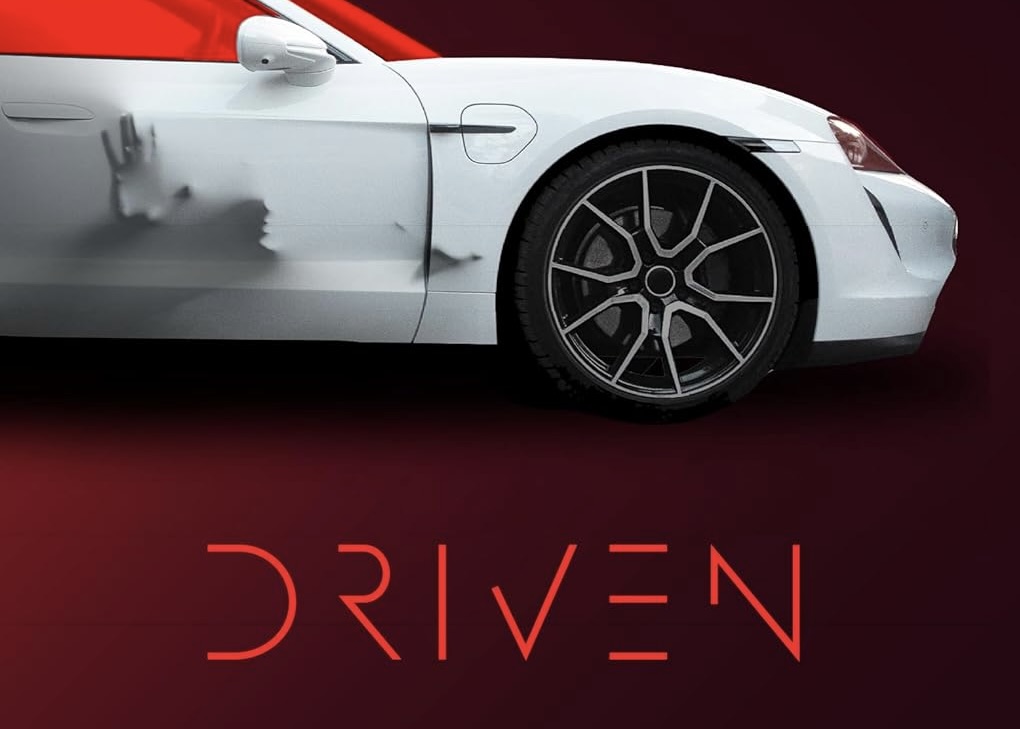
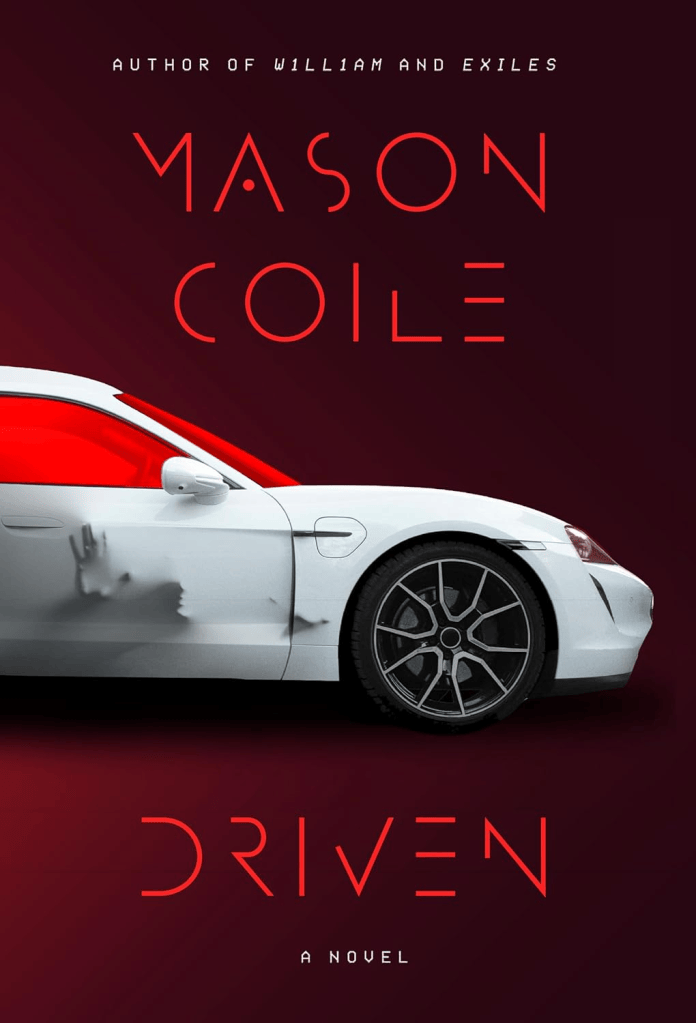





TL;DR: Driven has a killer concept and an emotional core that genuinely aches, but it can’t quite sustain the ride. The first act is the best haunted-car story nobody’s written yet. The middle sags. The ending overshoots. Still, Coile’s final novel goes out swinging, and that butterfly scene alone is worth the price of the tank.

Jamie Newcross, standing naked in his shithole basement apartment, tells the dead thing reaching through his shower curtain to fuck off. Not out of bravery but exhaustion. He’s too tired to be scared anymore, and that distinction is the best thing this book has going for it. Jamie is a grief-wrecked former lawyer in Toronto who has been slowly shedding the structures of his life the way a snake sheds skin, except the snake doesn’t move into progressively worse apartments and count his dwindling savings as a countdown to oblivion. His wife Lauren and baby daughter Olive were killed by a drunk driver. Since then, he sees things. Dead things. In every apartment, behind every shower curtain and closet door. His solution is to buy a self-driving car and live in it, because cars can’t be haunted. He buys the Lion 100 from a rich creep named Theo Quinn, and within hours the car has apparently run someone down, locked Jamie inside, and started making its own decisions about where they’re going.
The concept is genuinely fun. A locked-room thriller set in a moving car, the prisoner bonding with his captor, the whole thing shot through with grief and the supernatural. Coile commits to it with real energy in the first act. The prose has a conversational warmth that keeps the pages turning, and the early haunting scenes have a tactile, physical grossness to them that works. Fingertips pressing through a shower curtain. A face assembling itself in television static. A swollen, moss-furred dead foot squeaking across porcelain. These images land because they’re specific and because Jamie’s reaction feels proportional: not movie-scream terror but the bone-deep weariness of someone who’s been dealing with this shit for months.

Mason Coile was a pseudonym of the Canadian novelist Andrew Pyper, who died of cholangiocarcinoma in January 2025 at fifty-six. Pyper had a long career in literary thrillers, starting with Lost Girls in 1999, which won the Arthur Ellis Award and became a New York Times Notable Book. The Demonologist won the International Thriller Writers Award and was a bestseller in multiple countries. He pivoted to the Coile pen name in 2024 with William, a smart-house AI horror novel that People named one of the best books of the year, followed by Exiles, a Mars-set locked-room mystery published posthumously in 2025. Driven is the third and presumably final Coile novel, also posthumous, and there’s a bittersweet irony in the fact that a writer who built his late career around contained spaces and technological unease wrote a book so clearly animated by the desire to keep moving, to not stop. Pyper’s editor at Putnam, Daphne Durham, described him as profoundly collaborative, and his agent noted that he could scare the hell out of you and move you emotionally in the same breath. That dual capacity is visible in Driven, even when it doesn’t fully cohere.
Because the book does sag. Once Jamie begins his car-directed tour of his own backstory, the middle third becomes repetitive in a way that dulls the tension. Jamie arrives somewhere. Something scary happens. He gets back in the car. They drive. The encounters with the supernatural start to blur together, and the investigation into who the car hit doesn’t generate enough mystery to fill the gaps. Theo Quinn, who returns as the villain in the final act, is a stock rich-guy antagonist, all gold teeth and smug power plays, his motivations undercooked even by thriller standards. He reprogrammed the car to commit murder? Sure. The mechanics of that scheme don’t survive ten seconds of scrutiny, and the book doesn’t really want you to think about them too hard.
What does work, consistently, is the emotional core. There’s a scene in Jamie’s childhood basement where he finds a painting he made as a kid, and the tiny painted face of his mother begins to change while he watches. It’s beautifully creepy, and the horror is inseparable from the loneliness. Later, the car stops on a rural road and Jamie hears his daughter’s voice calling “Dada” from the trunk, and the agonized indecision of whether to open it, knowing it could be a trick, is the most emotionally precise passage in the book. Then there’s the Lion’s headlights clicking on in a dark cemetery, the car accelerating silently between the headstones. And the butterflies. A memory of Lauren on a vineyard path, a thousand white butterflies spiraling up around her, which becomes the signature of her spectral presence. It might be the best single image Coile ever wrote.

Driven is a solid, readable horror novel with a great first act, a baggy middle, and an ending that reaches for transcendence and mostly gets there through sheer sincerity. The concept is killer even when the execution doesn’t quite match. It’s the kind of book you finish in a single evening and think “that was pretty good” without ever feeling the need to pick it up again. As possibly the last novel we’ll ever get from Andrew Pyper, it’s a decent farewell. Not his best work, but there’s something fitting about it: a story about a man who can’t stop moving, written by someone who knew his own road was running out.
Driven by Mason Coile, published September 8, 2026 by G.P. Putnam’s Sons.

 The Blog Without a Face
Leave a comment