
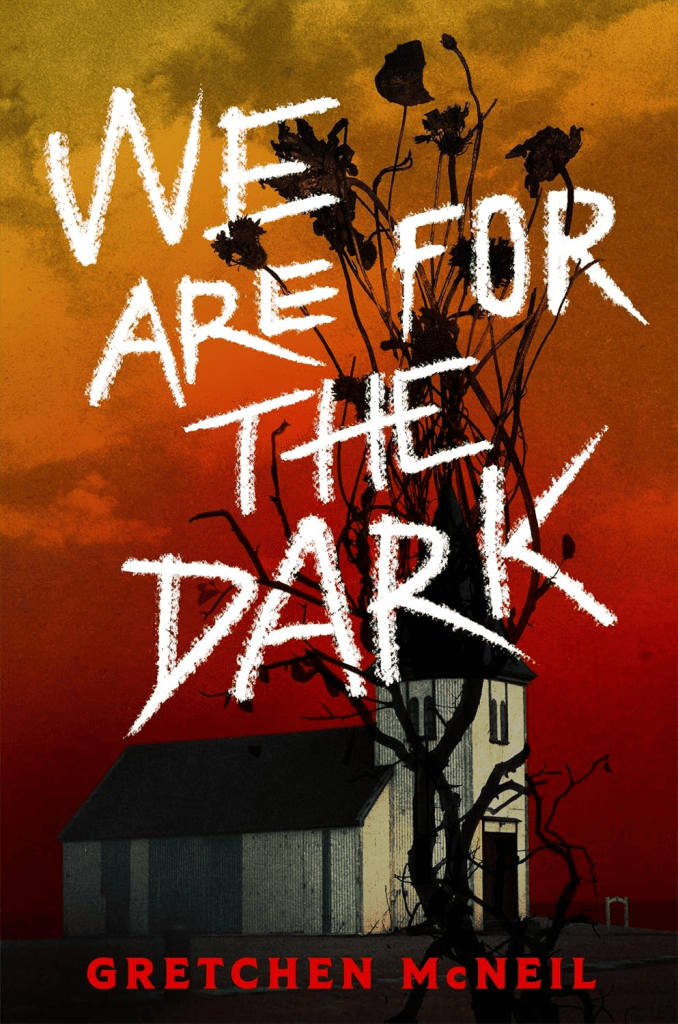




TL;DR: McNeil’s anchorhold is genuinely terrifying with a medieval stone cell, a bound demon, a woman dissolving slowly into both. The architecture of dread is sound. What softens it is the novel built around it: warm where it should be cold, explained where it should be implied. Read it for Aine. She earned the stone.

The anchorite tradition is not well remembered because it is comfortable. It flourished in medieval Europe among persons who believed that immurement was an act of love, that to be sealed alive into a stone cell attached to a church, with only a cruciform window through which to receive communion and watch the world continue without them, was a form of spiritual marriage with God. A priest read the last rites over the living candidate. Soil was sometimes scattered. They were, by the reckoning of their community, already dead, and whatever years remained to them were given wholly to prayer and intercession, a lighthouse soul burning behind stone until the body gave out and the grave outside the wall received what was left. This is horror material of the first order. It needs only to be stated and the unease follows on its own.
Gretchen McNeil knows this. We Are for the Dark takes an FBI-agent-turned-parish-priest and a junior constable of the Royal Newfoundland Constabulary and deposits them, separately and then together, onto Bale Island: a featureless rock in the North Atlantic that appears on no maps, has no boats, and does not want to be found. A priest has gone missing from St. Barrind’s, its lone parish. The island’s aging Catholic community tends its secrets with the same patient obsessive devotion it brings to its daily mass requirements. And somewhere beneath the church, through a tunnel that descends to the sea, something has been bound for centuries that was not meant for release. The novel takes its title from Shakespeare’s Antony and Cleopatra and the epigraph arrives like a sentence handed down from a judge: the day is done, and we are for the dark.
Bale Island is cold and featureless and convincing in the way that real Newfoundland isolation is convincing, a province where the fog off the Labrador Sea smells of something older than human settlement and the locals tend their silences like crops. The island’s wildflowers, heliotrope-purple and growing in the limestone seams, are quietly awful in the way all toopretty things are awful once you learn what they are for. The anchorhold itself, a stone cell attached to the church with no door and a cruciform window through which the host is passed and through which whatever the cell contains can watch the mass unseen, has the quality of a place that should not exist outside the historical record. McNeil understood that an isolated island community practicing medieval mortuary religion for purposes the reader cannot yet name is the right container for what she wants to put in it.
The best sections of the book live inside that cell. The structure alternates the main narrative with chapters called “The Testament of a Wretched Sinner,” written in the voice of Aine, the anchorite, in a medieval register that is labored and earnest and strange, the voice of a woman who entered confinement as an act of supreme faith and has spent uncountable years learning what faith costs when something else has moved into the walls alongside her. These chapters have a texture and a chill the main narrative cannot consistently match. Aine’s prose, with its thee and its thy and its slow dissolution from devotion into something more nakedly desperate, does what the rest of the book wants to do and reaches it more often. The squint window. The kneeler placed against the stone. The lover on the other side who has kept the rules for decades and then breaks them because love is the one thing the Great Enemy has always been able to use. These are real images, hard and specific.
The difficulty is the main prose. McNeil published young adult fiction for fourteen years before We Are for the Dark, and this is only her second adult novel, and the sentences remember where they came from. The voice is competent and occasionally funny in a way that is also, here, a problem. A character who should be frightened reads as a character having a mildly inconvenient Tuesday. The interiority of both protagonists is excessive, explaining what they feel and why they feel it, and in a book otherwise built around what cannot be named or fully seen, this surplus of psychological narration functions as a flinch. The fog and the stone and the anchorhold are doing the real labor. The prose keeps walking into the room and turning on the lights.
The protagonists are unevenly drawn. Miriam Rideout, the junior constable, is the better of the two. She has the logic of a cop and the grief of a daughter and the lowburning fury of a woman who has been underestimated in every room she has ever entered, and she is convincing, working the mystery the way working people work problems, without elegance and with some stubbornness and with the occasional leap that is not quite deduction but arrives at the right place anyway. Father Shane Ryan, the former federal agent who packed it in for the seminary, is less convincing as a unified self. His past functions as biographical scaffolding that was never converted into character at the foundation. The romantic tension the novel tends between them across its middle sections undercuts the dread at roughly the same rate it intensifies. A book cannot ask you to dread the thing in the tunnel and also ask you to want these two to find each other. The requests compete. The horror loses.
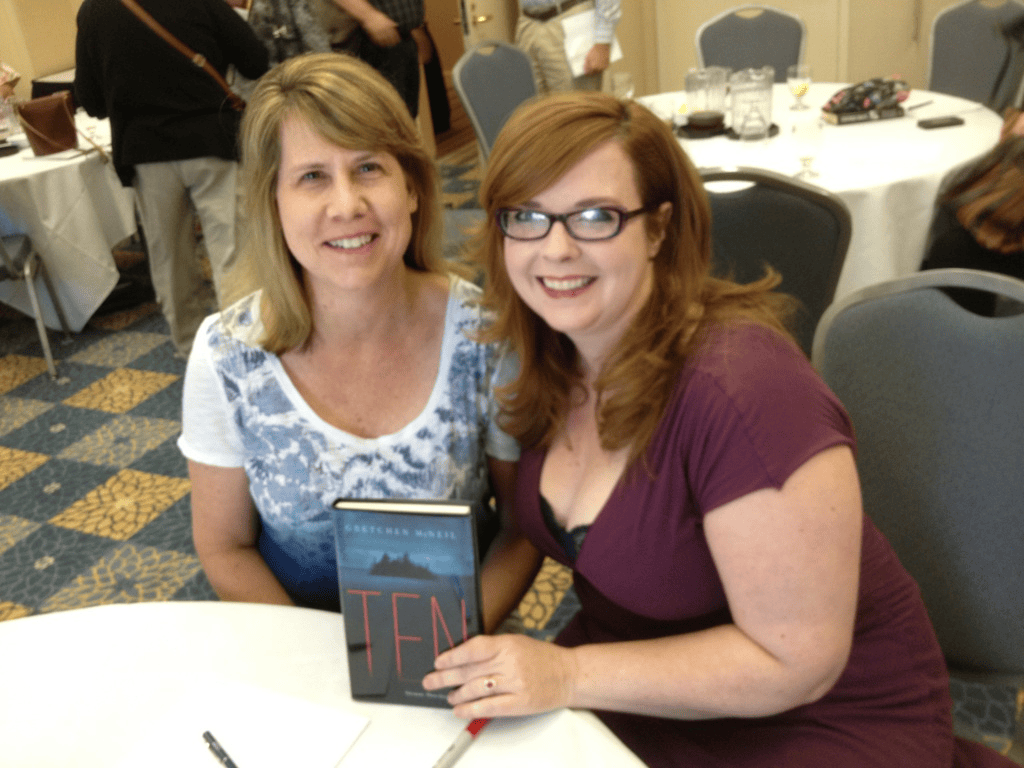
Gretchen McNeil came up as a classically trained opera singer and former circus performer before she published her first YA horror novel, Possess, in 2011. She has since placed books at BBC and Netflix, seen Ten adapted for Lifetime, and built a career on isolated settings treated as characters in their own right. They Fear Not Men in the Woods, her debut adult novel from DAW in September 2025, drew on Scandinavian folklore and the Pacific Northwest timber country and was received as a capable, frightening piece of work. We Are for the Dark, her second adult novel and the follow-up, draws instead on Irish ancestry and the historical coexistence of Catholicism and folk practice, a territory she has named explicitly in discussing the book. That sourcing is real and felt, particularly in the island community’s liturgical rhythms and in the theological architecture beneath the anchoritic rite. She understands the spiritual logic of what she is building. Whether the prose she has brought to the site is the right prose for it is a different question.
The two investigators are stymied repeatedly by the same mechanisms, stonewalled by the same three islanders in varying configurations, the cycle of inquiry and obstruction repeating with a patience that eventually becomes its own variety of tedium. Each new disclosure takes the same number of steps as the last one to arrive, and the reader begins to feel the formula before the book does. There are roughly two cycles too many.
The ending arrives. It does what it needs to do structurally. It does not haunt.
There is a colder and stranger book trying to emerge from We Are for the Dark, and it is visible in the stone of the anchorhold, in the flowers floating in the well water like a warning no one has yet learned to read, in Aine’s testament dissolving slowly from devotion into something that is only partly her own voice. These things are right and frightening and achieved. But the novel around them keeps insisting on warmth, on the familiar comfort of genre convention, on explaining what is felt rather than letting the stone do it, and this insistence softens what should have been allowed to cut.
The cell is there. You wonder about Aine for days.
What was walled in did not wait.



Leave a Reply