
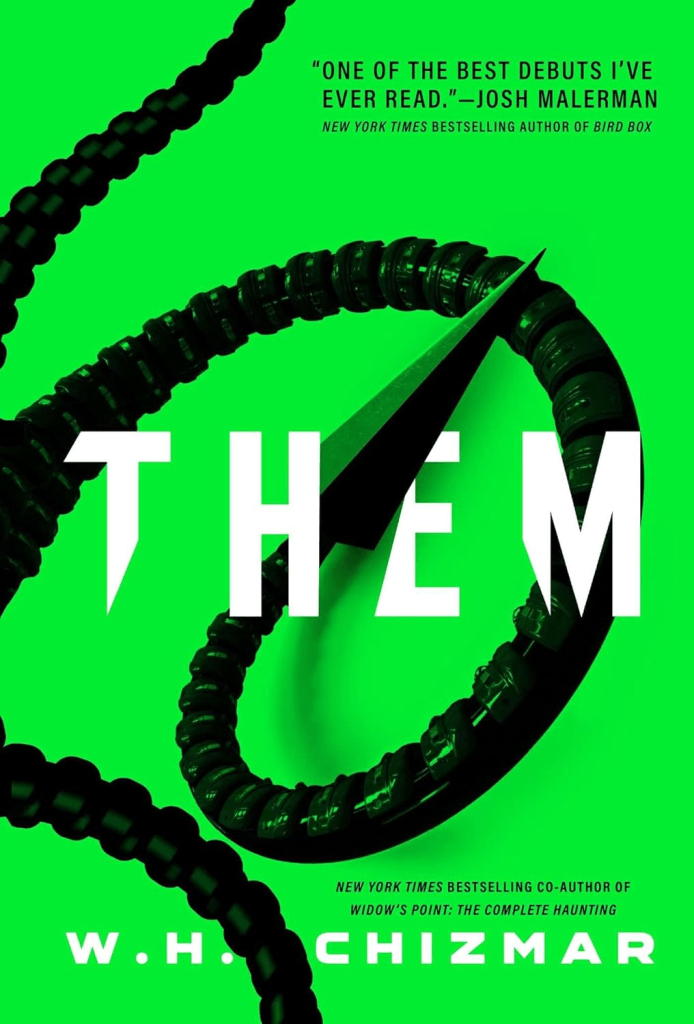






TL;DR: Twenty-foot alien scorpions are not a metaphor. Except they completely are. Them is post-apocalyptic horror that sneaks a meditation on grief and contact and what it means to be a person inside a creature feature chassis and mostly gets away with it. Messy in the middle, devastating at the edges. Chizmar is the real thing.

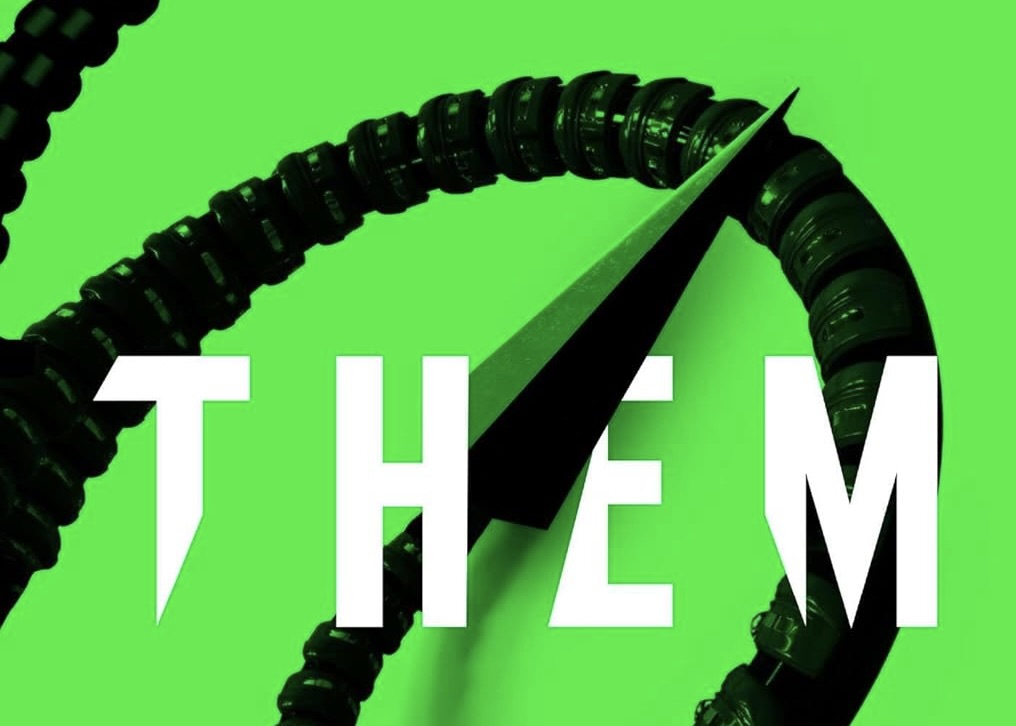
Here is the problem with writing a survival horror novel about a man walking alone through the ruins of America: you need a hook so the reader doesn’t just feel like they’re watching someone scavenge canned goods in the dark for three hundred pages. W.H. Chizmar knows this, and he found one. A handful, actually. The hook is that the monsters are alien. The hook is that they’re called Scorpions and they are twenty feet of obsidian chitinous nightmare that fear the dark and eat people the way you eat oysters, just tearing back the shell. The hook is a dual narrative weaving between our unnamed wanderer and a government confession about exactly how these things got here. And the biggest hook, the one you don’t see coming, is buried near the end. I won’t spoil it. But it involves a perspective shift that’s either going to make you feel like you got punched softly in the heart, or like you need a minute.
A top-secret government project successfully teleports matter across the universe and brings something back. That something gets loose in Maine. Several years later, a man with no name, a Grateful Dead cap, a pistol, and a backpack full of canned goods walks north by night through the rubble of American civilization, looking for survivors and some vague internal thing he doesn’t quite name. Along the way, he picks up a radio station. He meets some people. He makes some choices he’ll spend the rest of the book hating himself for. The second narrative, interspersed throughout, is a first-person account from a government insider explaining in measured, wry, self-aware prose exactly how the end of the world happened.

The prose texture in this book is interesting because it does something debut novels rarely pull off: it sounds like a person, not a writer. Chizmar’s sentences have rhythm. Real rhythm, the kind that lands differently depending on which paragraph you’re in. The wandering sections go long and loose, winding through abandoned cornfields and flooded bowling alleys with the dreamy pace of someone who’s spent too long alone. Then something scares the man and the sentences get very short. Fast. Right. It works. The confession narrative has a different register entirely, drier and more measured, a bureaucrat who got a master’s degree in sorrow. The contrast is one of the book’s genuine pleasures.
There’s a scene in a darkened forest, the man inching toward a waterfall with a lighter and a prayer, Scorpions nesting in the pool at the bottom, water so loud he can’t tell what’s living and what’s current. You feel the narrow logic of it, the way every human instinct in that situation would be wrong and the man knows it and keeps moving anyway. There’s a moment where he finds a child’s watercolor painting under a refrigerator magnet and the sun in it is bright yellow and the sky is normal until it isn’t, because there in the treeline, a child named Annie painted the Scorpions too, black scythes taller than the pines. He throws it in the fire. You can’t unknow that image. Later, there’s the radio scene, and I am not going to describe it except to say it involves Led Zeppelin and a man alone in a basement and a decision to turn the volume up, and it made me feel something embarrassing.
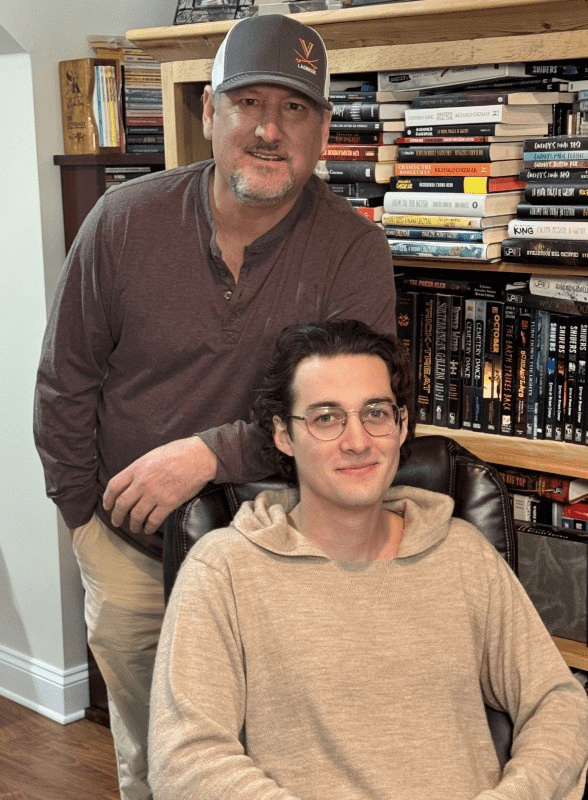
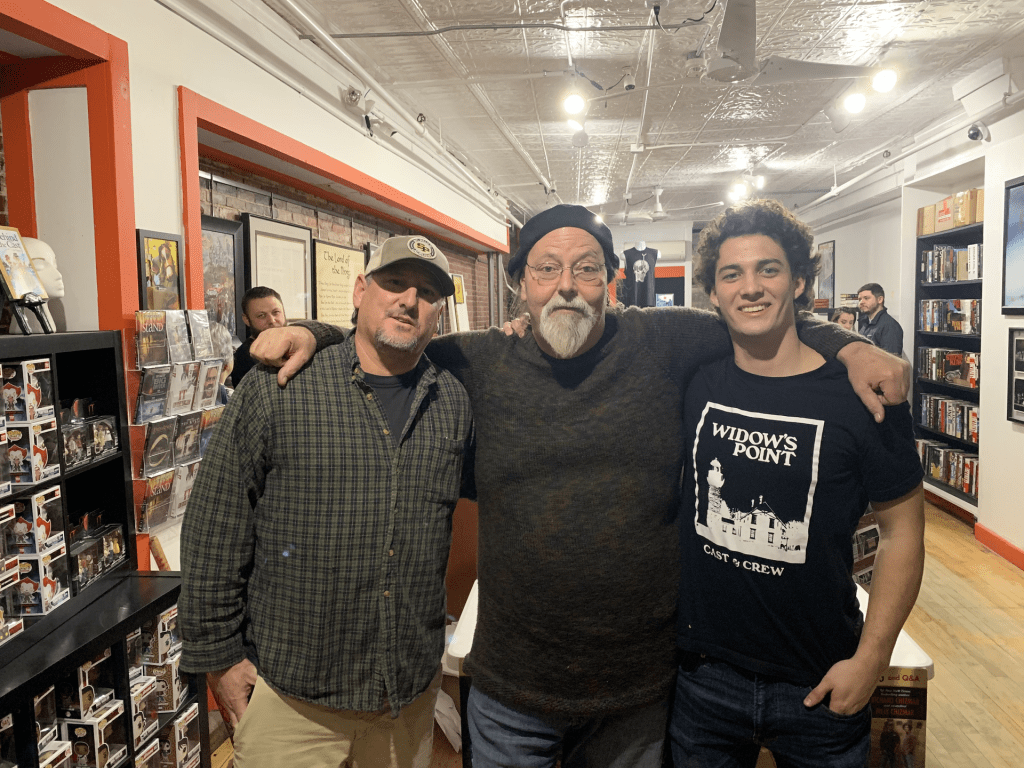
W.H. Chizmar is, to put it mildly, not working without a safety net here. He is the son of Richard Chizmar, founder of Cemetery Dance Publications and collaborator with Stephen King, which means he grew up in what might be the single most horror-saturated domestic environment in America outside of a New England haunted house. Richard Chizmar said Billy “got more of the reading and writing genes” and that he published his first short story in an anthology at age fifteen or sixteen. Before Them, W.H. Chizmar co-wrote Widow’s Point: The Complete Haunting with his father, a found-footage haunted lighthouse novel that became a New York Times bestseller. Them itself had a long runway: Chizmar began the book during the early COVID-19 pandemic, serialized it on Patreon in 2023, and then released it as a limited edition through Lividian Publications in 2024 before Gallery Books picked it up for a wider release. That Patreon origin shows in the book’s structure in ways that are mostly good and occasionally not. The limited Lividian edition included full-color artwork from Vincent Chong, six black-and-white interior illustrations, and a contributed afterword from Josh Malerman. Malerman’s blurb compares the prose to Matheson. That’s a lot of pressure for a kid from Maryland who named his dog after James Joyce. Chizmar earns some of it.
Where the book wobbles is, unfortunately, structural. The unnamed protagonist is a deliberate choice, and it mostly works in atmosphere, but it keeps you at a certain distance from the man for the entire runtime. He’s a cipher. Ciphers are good in Bird Box because the horror depends on absence. Here, the horror is enormous and visible and the emotional weight of the book should come from the man’s inner life, and sometimes it does, but when you don’t know his name you can’t quite hold onto him the same way. The government narrator is more vivid despite getting less page time, which creates an imbalance the book never quite resolves. There are stretches in the middle where the pacing goes slack in a way that feels like the novel’s origins as a serialized work: scenes that would land with a week between them feel slightly padded when read in sequence. Not bad. Just looser than the best parts.
The ending is strange and brave and I am choosing my words carefully here. It doesn’t resolve in the traditional sense. It does something else entirely. I think it earns it, mostly. The final image is one that I found myself returning to involuntarily, which is the highest compliment I can offer. A monster named Rkrkat stands on a mountaintop in the snow, naming the snowflakes after someone they lost, not understanding what grief is called but feeling it completely. The genre surface of Them is creature feature post-apocalypse. The actual subject is loneliness and who or what gets to feel it. On its best pages, Chizmar makes that question genuinely hard to answer. That’s not nothing. That’s actually a lot.

Them by W.H. Chizmar,
published August 11, 2026 by Gallery Books.


Leave a comment