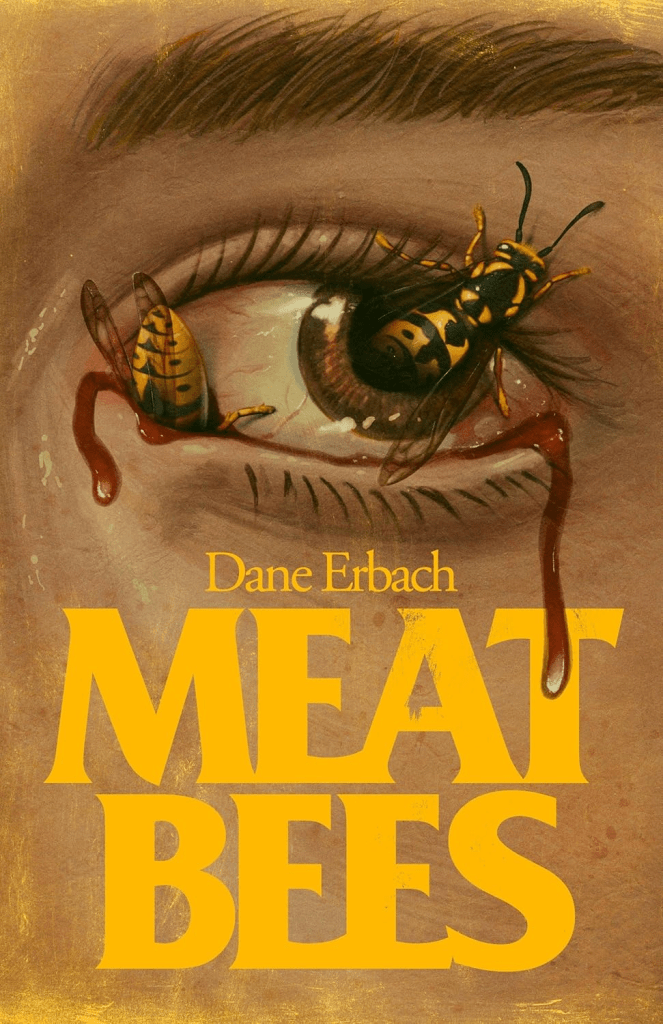




TL;DR: Scarlett Sutton shows up in the Smokies expecting a messy summer with her dad and a mom in crisis, and instead gets front-row seats to a tourist town being quietly, efficiently strip-mined by something with wings and a serious appetite. It’s a lean, gross, frequently fun creature-feature that knows how to sprint and scream, even if it sometimes trips over its own tone and never quite cashes in on its nastiest ideas.

Here’s the quick pitch: Scarlett, a teenager already marinating in true-crime brainworms, lands near Stovetop Mountain and ends up working around the local tourist machine. People start turning up dead in ways that do not read as “tragic accident” unless you are the kind of authority figure who is paid to say “tragic accident.” Scarlett falls in with a small orbit of local teens, including the competent, levelheaded Liv and the anxious, lawyer-trained Bitzy, and their attempts to make sense of the deaths run headfirst into the usual wall of grown-up denial, small-town optics, and “please stop asking questions before the money stops coming in.”
The best thing Dane Erbach does here is make the horror feel like it’s happening in a place that sells horror as a cute commodity. The Smoky Mountains setting is humid and sticky and neon-lit by gift shops, parking lots, and guided experiences, and that contrast is where the book is sharpest. The violence is not elegant. It’s not gothic. It’s not a spooky candle in an attic. It’s bugs doing what bugs do, multiplied by a nightmare math problem, and the result is visceral in a way that’s both vicious and kind of darkly funny. When this book locks into its “Jaws with wasps” energy, it is absolutely a good time.
Erbach’s writing style matches the teen-centric POV: fast, chatty, observational, with little jolts of humor used like a tourniquet. Scarlett’s interiority is full of anxious pattern-matching, spiraling hypotheses, and the kind of self-aware joking that says, “If I don’t laugh, I’m going to throw up.” It’s readable as hell if sometimes leaning a bit YA (something I do not dig). Scenes move. Dialogue has snap. The book understands the rhythm of young people trying to sound brave while very much not being brave. Where it gets wobbly is consistency. Sometimes the voice nails that hot-summer dread, and sometimes it leans a little too hard into “quirky commentary,” which can undercut tension right when you want the dread to sit on your chest and do push-ups.
I dig the way the story treats modern true-crime culture as both a coping mechanism and a contagion. Scarlett’s fascination with mysteries feels like a way of controlling chaos, until the chaos shows up and makes her realize control was always a fantasy. There’s also a smart undercurrent about exploitation: towns exploiting nature, tourists exploiting tragedy as a story, online personalities exploiting bodies for clicks, and everyone telling themselves they’re different because their reasons are “good.” The book takes a pretty hard swing at that late-stage “everything is content” sickness, and even when it’s blunt, it lands more often than it misses.
You can feel two sticky threads: grief and appetite. Grief as a thing you try to manage with narrative, with investigation, with certainty. Appetite as literal consumption, yes, but also the hunger for answers, attention, and control. The horror machinery turns those into a messy mirror: when the swarm arrives, it doesn’t care about your intentions, your reputation, or your carefully constructed explanations. It just eats. The aftertaste is less “I’m scared to go outside” and more “I’m sick of how quickly people decide a lie is good enough if the lie keeps the machine running.”

Now, the flaws. I’m docking points for a few things that keep this from being a full-throated recommendation. The escalation is strong, but the emotional beats can feel a little staged, like characters occasionally have to stand in a spotlight and announce what they represent. Some secondary players read more like functions than people. And while the book’s big, gross set pieces are effective, the connective tissue between them can feel a bit too tidy, like the story sometimes rushes past the lingering dread it earned because it’s eager to get to the next “holy shit” moment. I wanted a little more time in the fear, a little more weirdness allowed to breathe, and a little less smoothing-over when things should stay jagged.
Meat Bees feels like a strong “arrival” novel that’s built to be devoured quickly, the kind of book you hand to someone who says they want horror that’s fun, nasty, and current without being homework. It’s not reinventing the ecosystem, but it’s got teeth, it’s got speed, and it’s got a couple of images that stick.
A sweaty, entertaining creature-feature with some real bite, but it doesn’t quite dig deep enough to turn its best ideas into something unforgettable.

Read if summer vacation horror with tourist-trap rot underneath; bugs-as-monsters, body-count momentum, and gleeful grossness; true-crime culture getting side-eyed and slapped around.
Skip if you need slow-burn subtlety over big creature-feature swings; you hate teen-voice snark as a pressure valve; you want every thematic strand tied off clean and perfect.
Meat Bees by Dane Erbach,
published August 4, 2026 by CLASH Books.

 The Blog Without a Face
Leave a comment