
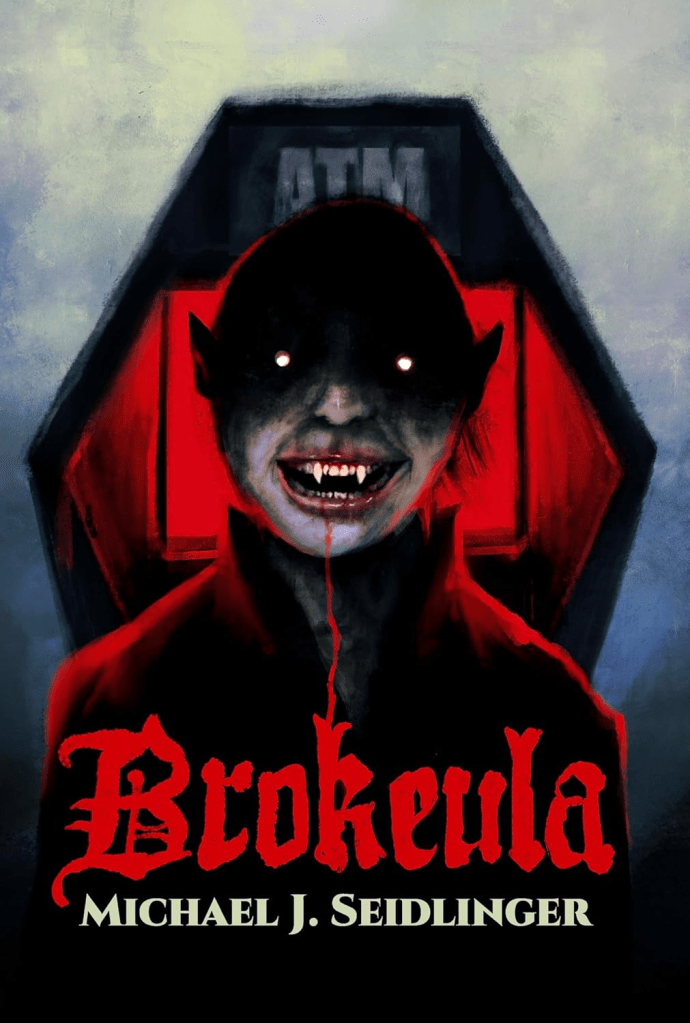





TL;DR: Brokeula is a vicious little capitalist-vampire grenade: sharp as hell, grimly hilarious, and way too accurate about how people sell survival as a product. Michael J. Seidlinger makes immortality feel like onboarding, debt, and churn, then backs the joke with real blood and real unease. Fast, filthy, and insanely quotable.

Michael J. Seidlinger’s Brokeula is the kind of vampire book that opens with the real modern curse: an overdraft alert and the sensation of your soul leaving your body through a banking app. This is first-person, broke-brained, nasty-funny narration from a vampire who isn’t starving for blood so much as starving for cash, which is honestly the most believable undead update I’ve read in a while. The voice is the hook: jittery, profane, self-mythologizing, and constantly bargaining with itself. It reads like a guy doing a standup set inside a coffin while doomscrolling “how to start your own LLC,” which is, yes, a thing that happens here. It’s sharp, propulsive, concept-forward satire with plenty of bodily nastiness and a great central gag (immortality as a payment plan).
James Sugré is an ancient vampire with ancient problems, except the main one is that he’s broke, embarrassed, and desperate enough to turn immortality into a business model. After a messy feed and a flash of entrepreneurial brainrot, he starts building a corporate machine around “turnover,” pitching eternal life like a subscription product, complete with tiers, validation metrics, and the kind of sales language that makes your skin crawl even before the fangs come out. The hook is delicious: vampires have always been parasites, but what if they finally admitted it and hired HR?

Seidlinger’s writing strength is how he weaponizes cadence. The sentences jog, stumble, double back, then lunge forward, which mirrors the book’s central anxiety: constant motion as a substitute for stability. The POV is intimate and performative at once. James is confessing, but he’s also pitching, always pitching, even when he’s alone. And the vampire mechanics are smartly fused with contemporary disgust. Feeding is still euphoric, but it’s also framed as risk management, contamination, and liability, with James thinking about disease and consequences in a way that feels less Gothic romance and more “what’s the deductible on this?” That collision is where the horror works best: the bite isn’t just violence, it’s an act of consumption happening inside a system of rationalizations.
Structurally, this is built like a novella with a switchblade. It moves fast, keeps scenes tight, and rarely indulges in long, moody wandering. The pacing is a feature: the corporate satire needs momentum because corporate life is momentum, the endless churn pretending to be purpose. You get clean set pieces (street-corner predation, sales pitches, “early adopter” energy, boardroom vibes) and the escalation ladder is obvious in a good way: personal desperation becomes enterprise thinking, enterprise thinking becomes franchising ambition, and ambition becomes a problem the book can’t solve with a motivational quote. If there’s a downside for BWAF tastes, it’s that the book’s engine is so efficient it sometimes feels like a killer concept machine executing the plan, rather than a story that gets stranger as it goes. The dread is real, but it’s managerial dread: the fear of being replaced, being irrelevant, being outcompeted, being audited by fate.
The scariest parts are the moments when immortality gets translated into a sales funnel. Lauren (who is very good at spotting lonely men with disposable income) pitches forever like it’s a dating app upgrade: “What if I said you weren’t alone,” and the guy practically signs in blood. Later, there’s a grotesque corporate satisfaction in the way clients are ranked and validated after feeding, as if murder is a performance review and the only thing that matters is percentile. The horror recognizes something rotten and true. People don’t only want power, they want applause for power.

Brokeula is about capitalism as vampirism, sure, but it’s sharper than the obvious metaphor. It’s about the humiliation of scarcity, and how quickly humiliation turns into justification. James isn’t just broke, he’s offended by being broke, like poverty is a personal insult the universe is doing to him. That entitlement is the bite behind the bite. It’s also about the way “connection” gets productized. The book frames loneliness as the real sales pitch, and it’s bleakly funny how effective it is. The satire isn’t cozy. It’s anxious and sweaty and occasionally mean, which helps it avoid the “wink wink, aren’t corporations bad” softness.
Across his work Seidlinger’s, he tends to circle body anxiety, media sickness, and the ways desire gets warped by systems, whether that’s the internet, celebrity, or the marketplace. He’s the author of Anybody Home? and On Submission and writes nonfiction and criticism for outlets like WIRED and Publishers Weekly, which tracks with how fluent Brokeula is in contemporary cultural rot. A Writer’s Digest interview frames him explicitly in horror mode, interested in questions and discomfort rather than safe catharsis, and you can feel that here in the way the book refuses to make “broke vampire” purely cute. In other words: he’s not new to using genre as a delivery system for social disgust, and this novella is one of his cleaner, quicker, more immediately pitchable vehicles for that impulse.
This might feel too tidy in its execution. But if you want indie-weird satire with actual bite, a nasty-fun voice, and a killer hook that keeps paying off, Brokeula is a damn good time, and it’s smarter than its own jokes. It’s the rare vampire story that makes immortality sound less like romance and more like onboarding paperwork, and that is its own special nightmare.
Read if you want a vampire book that treats immortality like a subscription and you like your satire bloody.
Skip if you want romantic swooning and candlelit castles instead of HR dread.
Brokeula by Michael J. Seidlinger,
published July 7, 2026 by CLASH.


Leave a Reply