






TL;DR: Shades of Forever has three great moments and a structural identity crisis. The limb scene is the best piece of cosmic horror Kluwe has ever written. The rest of the novel spends two hundred pages explaining why it can’t quite be that good again.

Here is the thing about a book calling itself an “eldritch punk horror comedy” on the cover: it is writing a check the inside must cash. Shades of Forever walks up to the teller window with tremendous confidence, a genuinely bonkers concept, and ink still wet. What it hands over is not quite enough. The bank does not exactly bounce it. But you stand there staring at your slip thinking about the six inches between where this book lands and where it was reaching.
Sky Memoriam lives in a valley settlement that is, as far as anyone knows, all that remains of humanity after a centuries-old apocalypse. The village runs on inherited ritual and a quietly brilliant cultural invention: a clan of designated Idiots whose whole job is to break things and see what happens. Then a spacecraft crashes nearby, an entity called Box merges with Sky, and suddenly the “last humans on Earth” are not last, not alone, and badly caught in the crossfire of an interstellar corporate war. It is part cozy post-apocalypse, part cosmic horror, part cyberpunk corporate satire, and part found-family adventure, all at once in a way that turns out to be the central problem.

The opening stretch is solid. The village of Sanctuary is worldbuilding you can tell someone loved making: the Saints of village tradition turn out to be historical figures like Curie and Gunpowder, their discoveries calcified into prayer. Radioactive mutant animals called Glowbeasts get hunted and eaten and considered entirely normal. Little glow-light containers fed on bioluminescent moss. An opening call-and-response ceremony that manages to be funny and a little heartbreaking at the same time. Kluwe is clearly having a great time here, and for a while, so are you.
Then Box arrives and things get complicated in ways that are both the book’s best and worst impulses at war.
Box is described as a “Mark Three Paracausal Interface Coordinator, Combat Version (modified),” which is exactly what an entity that has been psychically sledgehammered out of its original programming would call itself. The concept of an eldritch-adjacent AI forced to improvise something like personhood in real time is legitimately interesting. When Box is running SelfReflection.exe and arriving at something like an apology, it is weird and funny and almost moving. The limb scene, where Box extrudes a chitinous appendage from Sky’s spine and every person in the room perceives something different and awful, is the single best moment in the novel. The visceral wrongness of three people staring at the same thing and seeing rotting meat, an eyeless oozing snake, something with tiny watching eyes, that is real cosmic horror. It does not overstay. It just sits there in your chest.
The book keeps reaching for that register and then pulling back to make a joke instead. Sometimes the jokes are excellent. The Hypertron Heavy Industries training manual chapter, a satirical war-crimes disclaimer that gets progressively unhinged about “non-causal weaponry” and “Entity-class involvement,” is funny as hell in isolation. But it arrives mid-novel during what should be the horror escalation phase and deflates the tension so thoroughly the book has to work twice as hard to rebuild it. When tonal whiplash is deliberate, it can work. Here it feels like the book forgot what it was doing.
Chris Kluwe came up as a punter for the Minnesota Vikings, where he set eight franchise records and became one of the first active NFL players to publicly champion marriage equality, eventually contributing to a Supreme Court amicus brief and, by his own account, getting fired for it. His prior work includes the acclaimed essay collection Beautifully Unique Sparkleponies and a co-written science fiction novel called Prime. His debut novel Otaku, a cyberpunk thriller blurbing from William Gibson himself, landed comparisons to early Gibson and Max Gladstone. Shades of Forever is his first book with Podium Publishing, adapted from a serialized run on Royal Road where it developed an enthusiastic community response before being stubbed for publication. That origin explains a lot: the episodic pacing, character development that happens in lurches between installments, the sense that some chapters were written to satisfy weekly readers rather than build toward a unified novel. The Wall Street Journal once noted Kluwe’s “particular talent as a prose stylist lies in his creative use of inventive swear words,” which is accurate and present here, but the Royal Road-to-print pipeline does not always serve novels well.

Wires’ death is the other moment where the book genuinely gets there. I will not say how it happens. What I will say is the scene afterward, Sky trying to find words in an archive full of generations of Idiot records, an old man shaking in his blankets, Wires’ uncle pressing for something he can hold onto, is the closest this book comes to horror in the classic sense: the horror of consequence, of something young and irreplaceable being simply gone. The prose goes quiet in a way the rest of the book rarely allows.
The ending swings for something ambitious and I respect the swing. But the stakes inflate so dramatically in the final third that emotional resolution gets crowded out by plot resolution. Nobody is going to have a bad time with this. If you loved the serialized version, the published book is largely the same experience. If you are a cosmic horror reader, you will be frustrated by how often the book backs away from its own best instincts. The village is worth your time. Box is worth your time. The limb scene is worth your time. The horror keeps deciding it would rather be a joke, and sometimes the joke is great. But I cannot review the book it was trying to be.

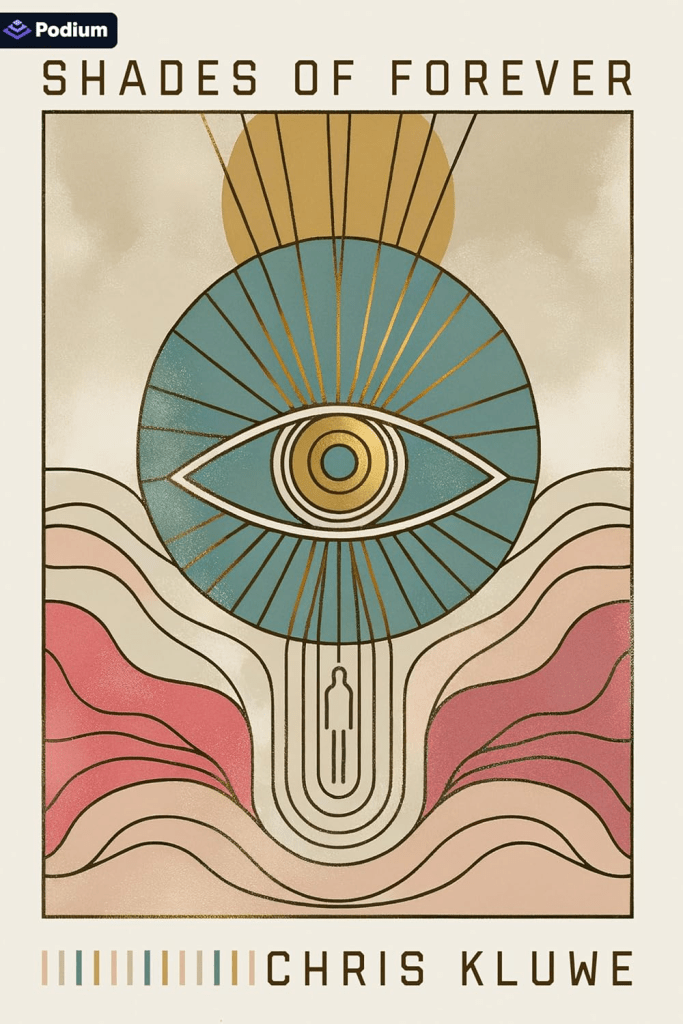
Shades of Forever by Chris Kluwe,
published June 30, 2026 by Podium Publishing.


Leave a comment