


TL;DR: Twenty-three pieces of new weird horror, and the peaks are remarkable. Chris Scott’s “The Sunflower Farmer” alone justifies the volume. Morgan Melhuish, Toshiya Kamei, A.L. Goldfuss, D. Marmara, Caroline Hung, and Audrey Zhou turn in work that would anchor any anthology. Five years in, Tenebrous Press is still picking the stranger option. The small press scene is better for it.

The church house is gone by the time Emily reaches the clearing. Only a sunflower remains, taller than her uncle by several feet, and Emily, who has two ex-husbands and enemies who would happily list her flaws, is not delusional. She shakes the stem. The seeds scatter and are carried off by mice and chipmunks and birds, to every corner of this beautiful and damaged country. In one week the country will be unrecognizable.
Chris Scott‘s “The Sunflower Farmer” opens at that clearing and pivots twice before finding its center of gravity. The story is told five ways: close third on Emily, a book-club transcript dissecting an unpublished manuscript that is doing something to everyone who reads it, a twelve-year-old’s recollection of a 1949 sermon about something called the Great Monoculture, a comment-thread panic as sunflowers start taking over America, and a final airborne image that refuses to describe itself as apocalyptic because the person watching it has stopped being afraid. It is the anthology’s first major peak and the piece the rest of the book gets measured against.
The rest of the book is uneven. Twenty-three pieces in a small-press volume do not sustain a single register. The dial moves from A.L. Goldfuss‘s “Drosera Regina” (a girl-becomes-carnivorous-plant arc that runs from adolescent sexual assault to adult self-possession without apologizing for either end of the line) to Daniel Loring Keating‘s “Letter of Apology From Eldritch Appliances, LLC,” in which a refrigerator manufacturer offers $650 per lost pet weighing 10 lbs and up. Juleigh Howard-Hobson‘s “Death Doesn’t Sound Like It Looks” is a rhymed sonnet about a were-steer, tucked in among the prose without announcement. D. Marmara’s “In the Amygdala of the Beholder” is a Lovecraftian romantic comedy in which a human protagonist learns to eat spaghetti through a dog mask because her trans-dimensional girlfriend’s actual face would rearrange her brain. By the second date, Prudence is buying a rash guard. The anthology asks the reader to swallow this range and most of the time the reader does.
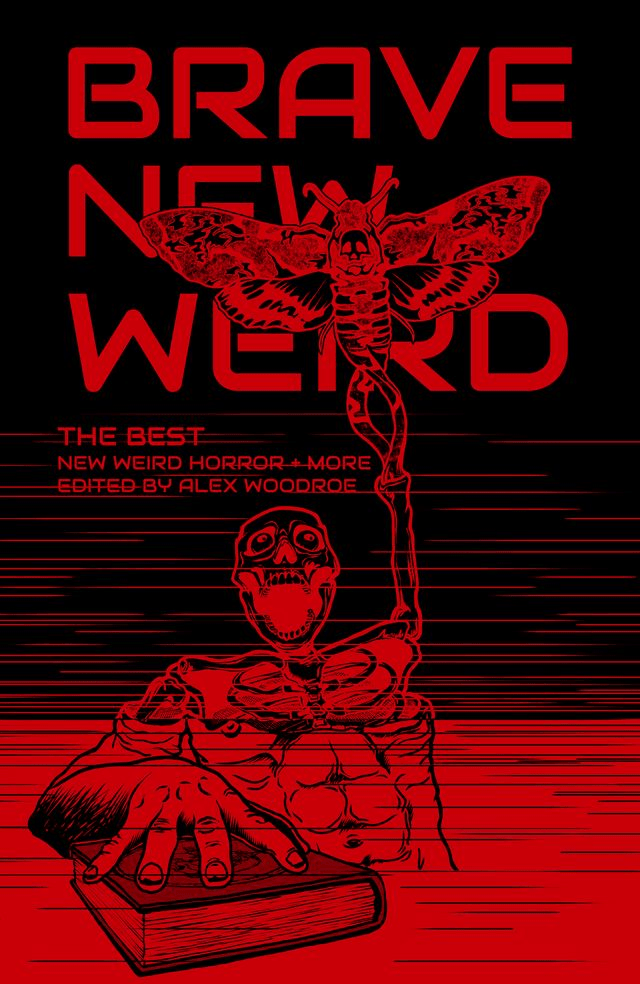
Editor Alex Woodroe (Shirley Jackson Award nominee, Romanian, based in Transylvania) coined the term New Weird Horror in 2021 for the small press she co-founded with publisher Matt Blairstone, and this is the fifth year of the press and the fourth volume of the series. Her introduction frames the project as a reaction against disproportionate representation given on the basis of nothing but the name beneath the title. The table of contents bears this out. The contributors are queer writers, writers of color, writers working in translation, writers published by presses the reader has not heard of. LGBTQ+ themes run through “Sworn Brothers,” “A Fragment of the Heart of Sappho,” “In the Amygdala of the Beholder,” “Two’s Company,” “Glitter in Your Eyes.” None of them feel token.
Morgan Melhuish‘s “A Fragment of the Heart of Sappho” interleaves fourteen numbered passages of Sappho‘s surviving verse with a first-person account of caring for her re-animated corpse in a villa after the cult that raised her has lost interest. The caregiver puts on the radio (Dusty, Madonna, auto-tuned Cher), clips the gnarled toenails, shampoos the patchy matted pelt that used to be hair. The piece is queer, domestic, and specific down to the spearmint mouthwash. Almost nothing else in the book works at that level of detail.
Toshiya Kamei’s “Sworn Brothers” is a 1915-era transmasculine kabuki dancer traveling from a white-columned mansion in upstate New York to Yokohama in search of the stage his fathers had performed on before one of them failed the other. It is one of the few pieces in the book that permits itself to grieve openly.
Caroline Hung‘s “Ticket Po Mamser” is a Filipino airport nightmare in which a woman trying to flee a collapsing nation-state is told her passport has become scrap paper because the country no longer exists on the map. The list of items prohibited in checked luggage: no chemicals or toxic substances, no fluids over 1,000 milliliters, no lithium batteries, no laptop chargers, no power banks, no love, no light, no family, no safety.
(The second-person in Audrey Zhou‘s “Two’s Company, Three Might Be a Sign of Demonic Possession” is doing work. The demon addressing the necromancer as “you” is not a stylistic tic. It is the demon reassuring itself that the person it is watching is not the person it has replaced.)
Not every piece lands. Corrie Haldane‘s “Hivemind” is a beekeeper grief-story that stays where you expect a beekeeper grief-story to stay. Alistair Rey‘s “Leviathan’s Womb” spends its opening movement describing the ocean as a concept at a length the premise does not repay. David Luntz‘s “Brief Interlude With the Night Hag” is a single unpunctuated sentence that runs down the page and through a childhood and into Borges translations and Mozart’s Requiem and Sir Francis Drake’s game of bowls on Plymouth Hoe, and whether it works will depend on how much goodwill the reader has left for a piece whose central gesture is syntactic obstruction. Zebulon Horse‘s “The Mascot’s Head” renders a demolition in engineering vocabulary (frustum, sagitta, chord, oblique angle) and the effect is more difficult than affecting.
The image that sticks is Emily in a plane running out of fuel over an endless field of sunflowers, no longer afraid of anything. The anthology is good. Ask again next volume.

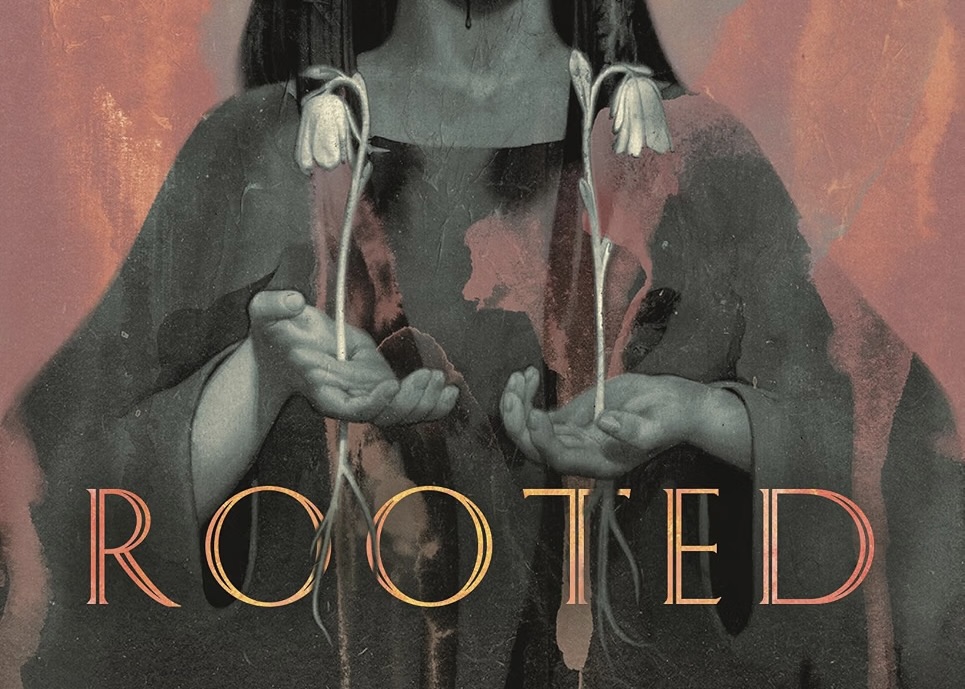
Brave New Weird Volume 4, published June 23, 2026 by Tenebrous Press.


Leave a comment