
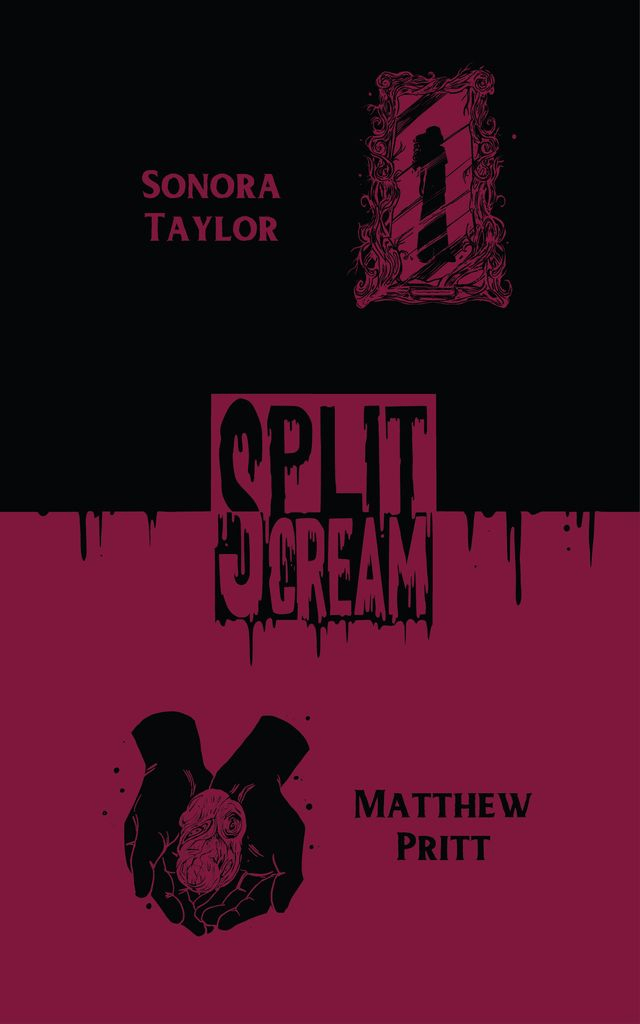
TL;DR: Matthew Pritt’s “Lash Egg” is a quiet masterwork of ecological dread and parental grief — one of the sharpest folk horror stories recent memory. Sonora Taylor’s “Passing Glance” brings a genuinely unsettling mansion and teeth-based terror, but runs out of runway before the payoff. Together: an uneven but worthwhile double feature with a knockout closer.

“Passing Glance” by Sonora Taylor



Sonora Taylor‘s contribution is a haunted-mansion story built on a fun premise: Moore Mansion in D.C., assembled from multiple rowhouses, stuffed with eclectic pop-culture art (a Richard Nixon mask on a Xenomorph, a Warhol Elvis that slides into the ceiling to reveal a dining room), and riddled with secret passages. A group of college friends reunite for Heather’s 30th birthday; Dylan, our protagonist, has been lusting after Hunter for years and finally sees her chance now that he and Melanie are broken up. The mansion’s labyrinthine architecture is well-drawn, the secret mirrored hallway is atmospheric, and the dinner scene where the hostess Tamara tells the house’s history has a nice campfire-story energy.

Where it falters is in the horror escalation. The setup takes too long establishing the friend-group dynamics and Dylan’s sexual fixation on Hunter, material that reads more like contemporary romance than horror for the first half. When the scares finally arrive, they’re vivid individual images but feel disconnected, a haunted-house grab-bag rather than a coherent mythology. The Robert Moore encounter deflates the mystery by over-explaining. And the ending, while effectively creepy in concept, arrives too abruptly after the preceding chaos to generate the dread it should.
The writing is clean and readable, the mansion itself is a terrific setting, and Taylor has a good ear for the cattiness and unspoken tensions of adult friend groups. But the story can’t quite decide whether it’s a social comedy about sexual jealousy set in a haunted house or a genuine horror piece, and splits the difference in a way that dilutes both.

“Lash Egg” by Matthew Pitt




This one caught me off guard. What looks at first like a simple eco-horror setup, a sick chicken starts a plague chain through the food web, reveals itself as something considerably more ambitious: a folk-horror parable about faith, belonging, trauma, and the impossibility of leaving the past behind.
Ben and his daughter Lydia are refugees from “the Bear’s territory,” a collapsed society consumed by “the madness.” They’ve spent six years in the Doe’s territory, a peaceful agricultural community governed by ecological balance and spiritual communion with the Doe, a nature deity whose voice the faithful can hear. Ben can’t hear the Doe. He’s never been able to. He fakes his prayers, mimics the rituals, does the physical labor of maintaining the Balance, but the core belief eludes him. He’s too scarred by what he survived to trust that any safe place is permanent.

Matthew Pritt structures the story with italicized flashback sections showing Ben, Charlotte (Lydia’s mother), and young Lydia fleeing the Bear’s madness, each fragment revealing more of what they endured. These interleave with the present-day story of the infected chicken and its cascading consequences, until both timelines converge on the same realization: Ben’s inability to believe in safety is itself a kind of infection, one that threatens the community he’s trying to protect.
The worldbuilding is economical and convincing. Pritt sketches the Doe’s territory with a few precise details: the marketplace economy, the youth choir rehearsing for the Equinox Festival, the ritual of clearing invasive wineberry bushes. The community characters, Jack the neighbor, April the weaver and her gambling son Landon, feel lived-in rather than functional.

The ending is devastating. Faced with exile, Ben offers to leave Lydia behind because she belongs, she can hear the Doe, she’s part of the Balance in a way he’ll never be. The bees start buzzing and the chickens start clucking before he’s even left the property. It’s a parent voluntarily amputating themselves from their child’s life because their presence is the poison. The final prayer exchange, “May you walk in the Doe’s Balance” / “All creatures great and small,” spoken without looking back, left me sitting with it for a while.
The prose is unshowy and effective, the pacing strong throughout, and the folk-horror worldbuilding does real work without info-dumping. If I’m reaching for flaws, the Bear-territory flashbacks occasionally tell more than they show, and Charlotte’s fate could have been given one more beat of clarity. But these are minor complaints against a story that succeeds at something difficult: making you feel the weight of a man’s decision to walk away from everything he built, knowing it’s the one thing he can’t survive.

The Split Scream series’ double-feature format continues to deliver on its promise of offering two very different takes on a shared theme. “Cursed Places” is the thread, and both stories deliver on it, but from entirely different angles and at very different levels of ambition. Taylor’s contribution is a competent, fun haunted-house piece with strong setting work and a good social comedy scaffolding, but its horror never coheres past the level of spooky imagery. Pritt’s is the real find here: a folk-horror novelette with emotional depth that uses its cursed place as a metaphor for the trauma of displacement and the impossible bargain of parenthood after collapse. The pairing works well enough as a double feature, the tonal shift from Taylor’s contemporary D.C. haunted mansion to Pritt’s post-apocalyptic pastoral is refreshing, and Tenebrous Press continues to be one of the most interesting small presses operating in horror right now. If you buy this for one story, buy it for “Lash Egg.” The other one comes free.
Split Scream Volume 8 by Sonora Taylor & Matthew Pritt. Published April 21, 2026 by Tenebrous Press.



Leave a Reply