
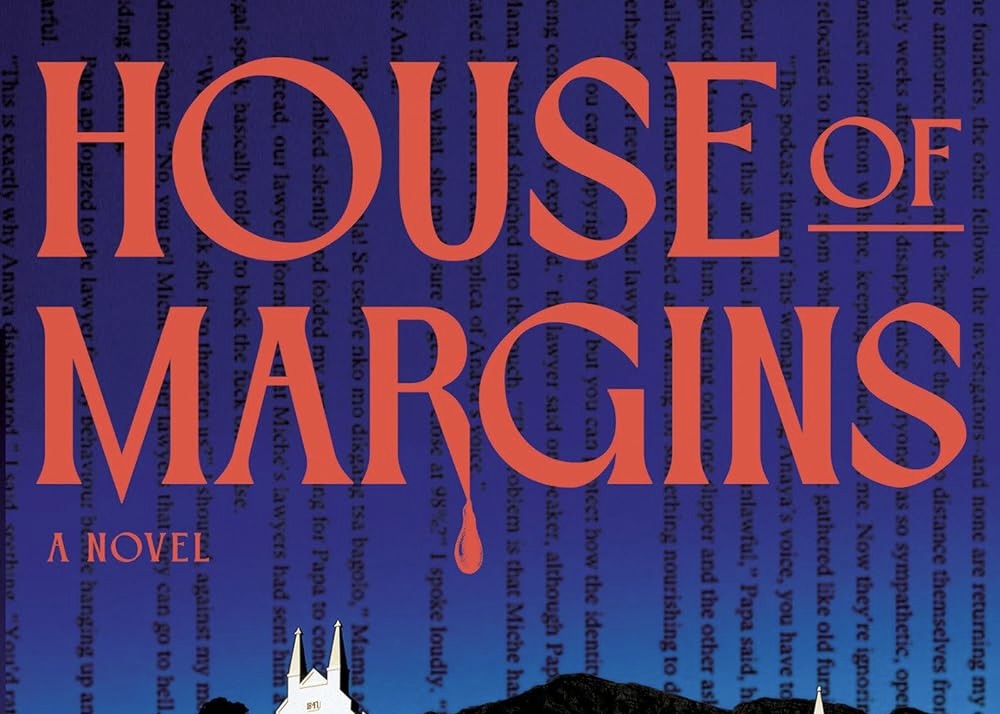
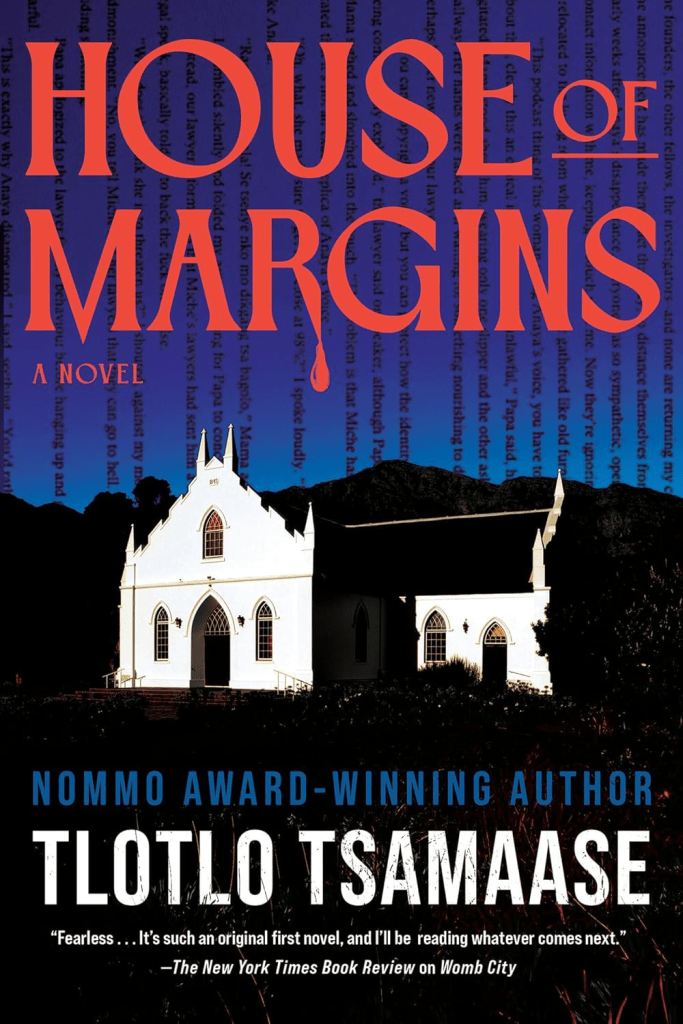







TL;DR: Tlotlo Tsamaase’s House of Margins is a furious, restless standout, part revenge horror, part media autopsy, part haunted house built from theft and entitlement. It claws at identity and voice until the page feels alive, then turns true-crime consumption into a weapon. Strange with purpose, razor-smart, and impossible to forget.

The house squats on the slope of Devil’s Peak and it is a Cape Dutch farmhouse and a colonial inheritance and a publishing imprint and a digestive organ. It calls itself Huis. It wants women. Not just any women. Black women with manuscripts in them, women whose voices can be siphoned and pressed and bottled like wine for a foreign market, women whose disappearances will sell well as a podcast. Anaya Sebeya, twenty-five, broke, unpublished, Motswana, comes for the prize money. The prize money was always meant for the house.
Tsamaase has built her novel out of fellowship paperwork and Patreon tiers and audio waveforms and the strict whitespace of poems, and the hauntedness is the form. The true-crime podcast that frames the book, hosted by Michele Visser, white South African cofellow and self-appointed chronicler of Anaya’s vanishing, comes with tip jars and an Investigator subscription tier that promises access to the interrogation footage. Tsamaase reproduces all of it. The pages with the screenshots have the look of evidence in a trial nobody is going to convene.
Inside this scaffolding the prose is two things at once. It is the voice of a young Motswana writer, contemporary and slangy and conversant in Setswana code-switching, the kind of first-person interior that knows what bo rakgadi say about jealous neighbors and tells you so without the courtesy of a glossary. It is also a translation engine for older violences. Tsamaase will set you down at the breakfast table for a workshop critique and turn the page on a scene of colonial atrocity from the eighteen hundreds without a chapter break, without a transitional sentence, without permission. The horror is layered through time the way sediment is layered through rock. You read one stratum and the older one bleeds up.
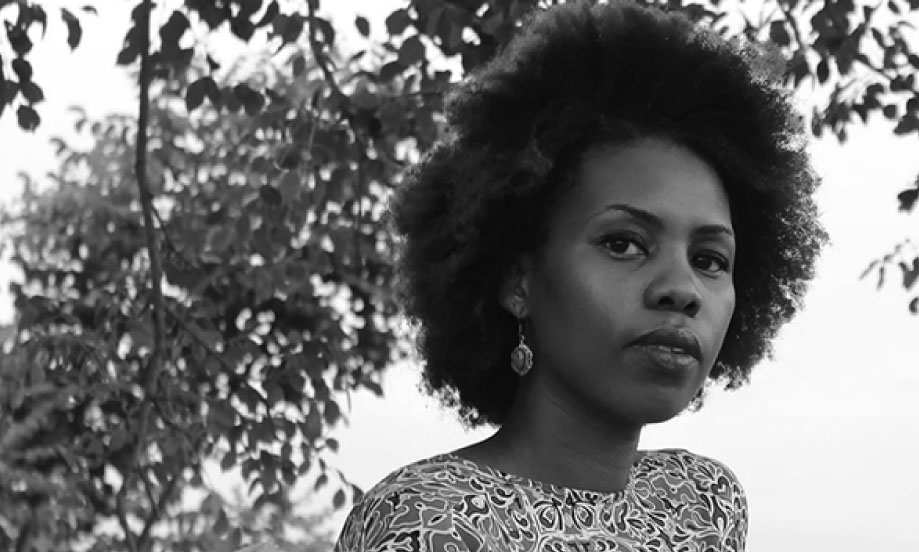
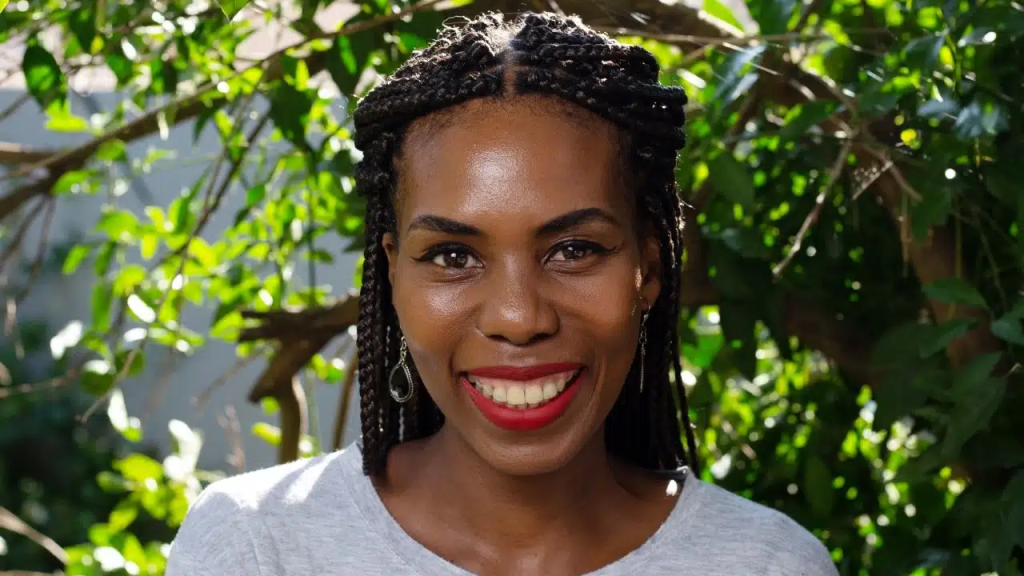
Tsamaase trained as an architect at the University of Botswana before earning an MFA at Chapman, and you can feel the architect in every page of Huis, in the louvered movables and the floor-to-ceiling bookshelf that conceals a sunroom and the en-suite bathroom whose panel slides like a stage trick. She is by now a substantial writer. A Caine Prize finalist for “Peeling Time (Deluxe Edition).” Joint winner of the 2021 Nommo for “Behind Our Irises.” Lambda finalist for the novella The Silence of the Wilting Skin. Author of the cyberpunk body horror Womb City, which finalled for the Locus and the Ignyte. The first Motswana writer ever to win a Nommo. She has been working this seam for years. The body as contested architecture, the city as a mechanism for consuming women, the house as a biographical organ. House of Margins reads like the room where everything she has been doing finally consents to share a wall.
The mechanics of how the book frightens are not the mechanics of a haunting in the usual sense. There is a creature in the bed at one point. Bodies hang from a rootless tree at another. There is a skin that whitens in patches like a Rorschach blot working its way north. But the deepest dread is editorial. It is in Anouk Rijks behind a glass desk telling Anaya that her depiction of colonial rape needs a trigger warning and probably some scenes cut. It is in Katja Günter explaining, languid on a couch at six in the morning, that death is indiscriminate and so is publishing. It is in the maid in the pale green uniform whose name nobody asks. The supernatural in the book is real and rendered with a craftsman’s confidence, but the supernatural is the diagnostic instrument and not the disease. The disease is the room itself.

A book this ambitious cannot be all bone, and there is some fat. The cosmology of Huis occasionally narrates itself out loud, ghostwomen explaining how possession works to a newly arrived victim, and the explanation drains mystery from a system that ran on mystery. The middle third has a stretch where Anaya’s time-slippage encounters with the matriarchal ghost Yanano begin to plateau before a single industry meeting cuts through them like a hot wire. Some of the satirical artifacts, the Patreon poll widgets and giveaway copy, work better as ideas than as paragraphs. The book wants you to feel suffocated and at moments you simply feel briefed.
These are nicks. The book holds. What you carry out of House of Margins is not a creature or a chase but a system, fully diagrammed. A residency that is a feeding ground. A podcast that is a meal. A house with rooms enough to lodge a few generations of women who could not be allowed to keep their own voices. Tsamaase has written the haunting that publishing has always been, and she has written it without flinching at any seam, including the seam where the writing of this very book becomes part of the system she is anatomizing. The book ends on a scene you will not soon forget, of a different room and a different hostess and a clean horizon, and the final image is a small one and very still, and it does what the best horror endings do. It does not tell you the disease is over. It tells you the disease has moved.

House of Margins by Tlotlo Tsamaase, published May 26, 2026 by Erewhon.



Leave a Reply