
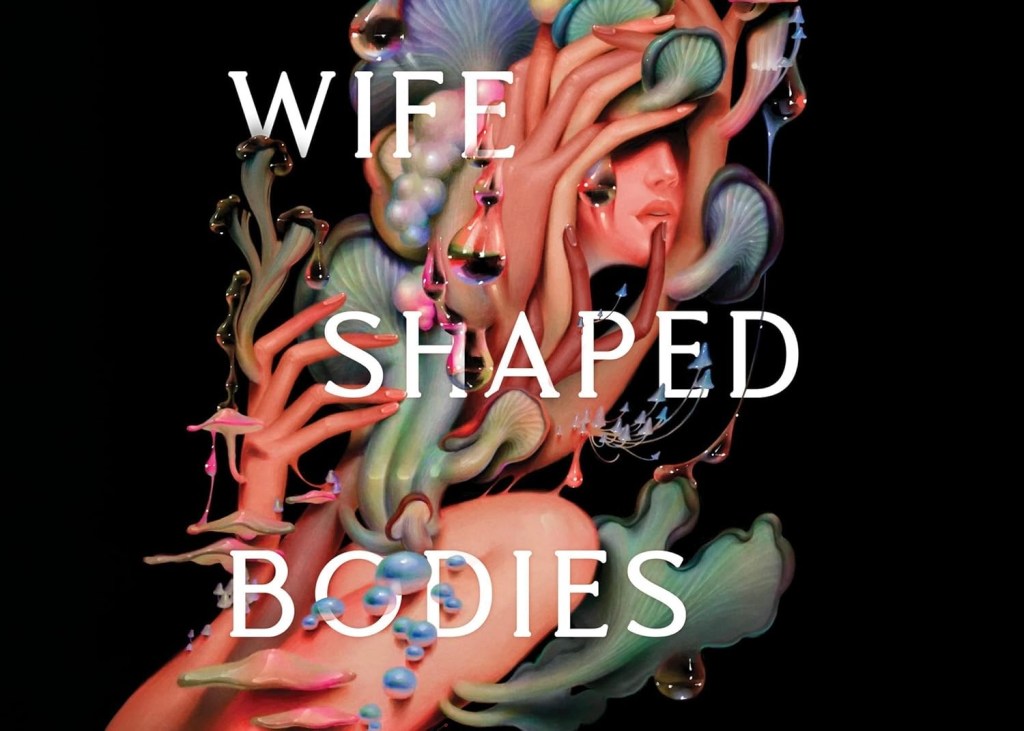
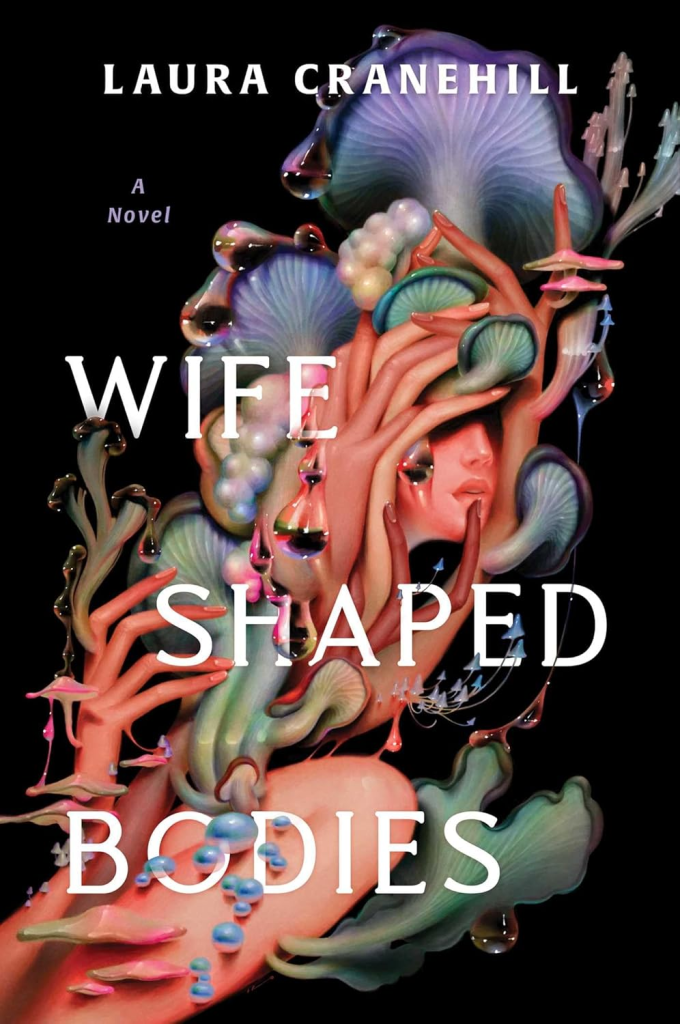







TL;DR: Wife Shaped Bodies does what only the best feminist horror manages: it makes the patriarchy’s machinery viscerally, biologically real, then tears it apart at the cellular level. Dense prose, genuine dread, and an ending that earns its devastation. Cranehill is the real thing.

I read the first three chapters of Wife Shaped Bodies standing in my kitchen at midnight with my shoes still on and the stove cold, having completely forgotten I was supposed to be making dinner. That is not a boast. That is a confession. That is the specific quality of disruption this book inflicts on your life before you’ve had any say in the matter.
Here’s what happens on page one: Nicole’s mother shaves off her mushroom growths the night before her wedding. Slices away the creamy-orange shrubbery of her shin, the woody folds at her knees, the moist masses at her hips that “splatter when they hit the porcelain.” Nicole is being cut down to the size of a wife. She says so herself, with a flatness that is not resignation so much as the absence of any frame of reference in which to locate resistance. She has never known a body that wasn’t shaped for someone else. The shaving is not horror in any genre sense. It is mundane and intimate and wrong in ways the book doesn’t rush to name, and by the time Cranehill does name them, you’re already past the point of being able to stop. I put down my phone, looked up, and thought: oh, this is going to be a problem for me.
That is how this novel operates. It walks you into something terrible at a pace you mistake for ordinary.
The world is a post-apocalyptic compound where a small group of elderly male scientists and their descended families live behind a wall separating them from a forest supposedly poisoned by radiation. The women of this world are semi-fungal beings, their bodies wrapped in mushroom growths that the men require them to shave off daily, because the growths mark them as other, as dangerous, as not-wife-shaped. Nicole has spent her entire life in a single house, looking through a window at a street she has never been allowed to walk. When she finally leaves for her wedding day, she walks past the graves and the granary and the lab and all the infrastructure of this small, suffocating civilization, and the world is both larger and more confining than she imagined. The horror in this book is not what is in the woods. The horror is the compound itself, the decades of management passed off as protection.
None of that sounds like a 7 to me when I write it out. It sounds like the premise of a perfect book. So let me be honest about where it isn’t, before I tell you what it is.
Nicole is a hard protagonist to spend two hundred pages inside. She is passive in a way that is almost certainly intentional, her interiority shaped by a lifetime of confinement so complete that she has never developed the interior architecture for defiance. Cranehill is making a point about the structure of captivity, about how oppression doesn’t just restrict action but atrophies the imagination of action. I understand this. I believe it. And I spent the middle third of the novel wanting to shake her by the shoulders anyway, because understanding the thematic function of a character’s stillness doesn’t make it less still, and understanding why someone can’t act doesn’t stop you from wanting them to act, and I know that says something unflattering about me as a reader, and I don’t give a shit. The pregnancy section in particular, long and hallucinatory and structurally correct, is rough going. There’s brilliant imagery in there. But it is slow. It is the novel trusting the reader further than some readers will want to be trusted.
What saves everything is Teaghan.
Every scene Teaghan walks into becomes the best scene in the book. She is the reckless, bell-sleeved, fungus-crowned nightmare of a girl who has been wandering out of the compound’s frame her whole life just to see what’s there. She eats raw animals in the dark. She announces things casually that should not be casual. She already knows more than Nicole and doesn’t feel obligated to explain herself, ever, to anyone, and frankly good for her. Cranehill is clearly more comfortable in Teaghan’s body than in Nicole’s, and the novel knows it and uses the imbalance correctly, because what is Nicole’s story but the story of a woman who can only understand her own hunger by watching it operate freely in someone else first.
There are set-pieces in this book that are among the best horror writing I’ve encountered in years. I won’t describe them. What I’ll say is that the dread Cranehill builds is not the dread of the monster visible and approaching but the dread of the system understood, of the moment when you have finally parsed how something works and the parsing is the horror. She is doing something harder than making you afraid. She is making you complicit in an act of comprehension, and it’s fucked up, and it works.
Speaking of the body: I want to talk about the prose, because it is doing work that most debut novelists don’t attempt and several veterans have failed at. Cranehill writes flesh the way you’d write landscape, with geological patience and genuine desire, like she is mapping something that matters. The touch system, where women share memory and sensation through skin contact and fungi, is not a metaphor and not an occasion for sentiment. It is a communication technology with specific properties and costs, and Cranehill understands it at the cellular level because she has apparently read everything Paul Stamets and Merlin Sheldrake and Terence McKenna ever put to paper and then asked herself what it would mean for a human body to be mycorrhizal with other human bodies. The answer is lyrical and accurate and a little disgusting in exactly the right ways.
The mythological frame runs through the book as consistently as the fungi, Greek myth deployed the way it always should be: as a management structure the inhabitants have partially internalized and are in the process of dismantling. The problem is that a few of these insertions feel imposed from above, moments where the novel stops moving to make sure you noticed what it’s doing, and those are the only times the prose loses the feverish forward pressure that is otherwise its greatest attribute. You don’t need to slow down for me. I’m right there with you. Keep going.
But then there is the ending. And the ending is extraordinary in a specific, difficult way: it makes good on the promise of the opening while arriving somewhere the opening couldn’t have predicted. The emotional register is volcanic and strange and quiet, all three at the same time. The epilogue is a different kind of beauty. I am not a person who typically has good things to say about epilogues.
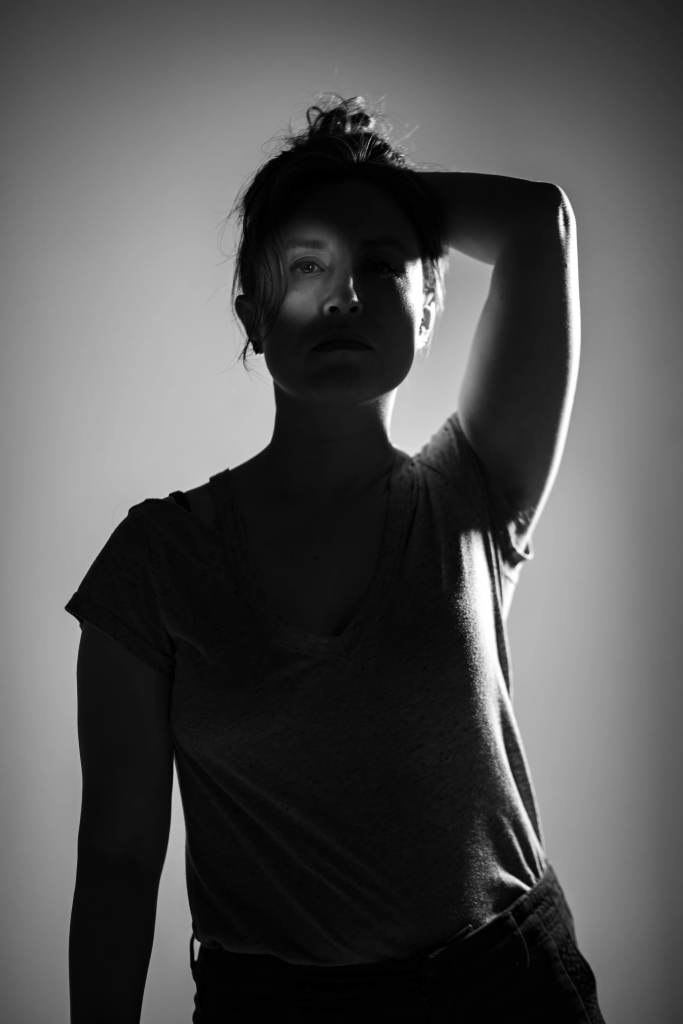
Laura Cranehill‘s prior work appeared in Vastarien, ergot., Strange Horizons, and PANK, which tells you something about what she has read and what she thinks fiction can do. Vastarien especially matters here, built as it is around the conviction that consciousness is a mistake and the universe is hostile to organic life, and there is something of that cosmic indifference in the men of this novel, in their absolute certainty that what they have built is civilization when it is actually a terrarium. But Cranehill is not a pessimist. She is a mycologist’s kind of optimist: she believes in decomposition as a creative force, in the idea that the organisms that break down dead systems are what make new life possible. This book is not hopeful in any comfortable sense. It is something stranger and more durable than hope.
Wife Shaped Bodies is a debut, and it reads like one in the places I’ve described. But the places it doesn’t read like a debut are the places that matter more. The touch-as-communion system is fully original. The fungi are genuinely researched and deployed with understanding rather than vibes. The Teaghan and Nicole dynamic is the most interesting queer relationship in genre fiction this year, and it does not soften itself or explain itself or apologize for the places where it gets difficult to categorize.
I mean it when I say the middle third is rough going and Nicole’s stillness costs the reader something real. I also kept turning the pages. The book got its hooks in and didn’t ask permission, and that is the only thing that has ever mattered.

Wife Shaped Bodies by Laura Cranehill, published April 14, 2026 by Saga Press.





Leave a Reply