




TL;DR: The best stories here, and there are several, build their dread from domestic arrangements rather than monsters, and the dread is the right kind: specific, accumulated, and cold. Kiste is as good as contemporary horror gets when the argument and the atmosphere are the same thing. Here, often, they are.

Gwendolyn Kiste has a theory about haunted houses, which is that they are not houses. They are marriages, they are bodies, they are the beauty industry, they are wherever women have been put and kept. The supernatural in her telling is what happens when the social refuses to be borne any longer. The Haunted Houses She Calls Her Own collects fourteen stories organized around this thesis, and the thesis is correct, and for most of the book it produces some of the finest feminist horror writing this reviewer has encountered in a good while.
The strongest entry is “Melting Point,” which sets a suppressed desire for the woman next door against the Three Mile Island meltdown of 1979. The neighbor, Rose, begins to dissolve into something stranger than radiation damage, the gaps in her skin filling with constellations and the possibility of other universes. This is body horror and love story and domestic elegy at once, and Kiste moves between all three without sentimentalizing any of them. The dread here arrives not from monsters but from a truck in the driveway and a mother in the recliner and years of choosing the safe and suffocating thing. What she accomplishes with the ending of the story is harder than it seems and represents the thing Kiste does better than almost anyone working in this mode right now.
“The Eight People Who Murdered Me,” presented as an excerpt from Lucy Westenra‘s diary, does something almost as good. Lucy accounts, in numbered sections, for everyone who contributed to her death: the vampire, her mother, her best friend, the out-of-town doctor who transfuses strange men’s blood into her body without consent or explanation. The genius of it is structural. Lucy insists she would never have blamed herself for what wasn’t her fault, and then details at some length all the things she would never have blamed herself for, and the gap between what she says and what we hear is narrow and precise, like the space between a wall and its paper, and it is exactly where the story lives. The anger in it is cold, which is the right temperature. It won a Bram Stoker Award and the award was not wrong.

“Her Skin a Grim Canvas” has a fashion designer who sews his aesthetic vision directly into his muses’ flesh, embedding roses without removing the thorns, threading silk through muscle. It should be too much. Kiste’s flat and factual prose holds it together. The story understands that the designer is not the point; he is where a system becomes visible, an instrument that the wealthy collectors who buy his blood-crusted garments knew about all along. The body horror and the social commentary are not two different things in this story. They are the same fucking thing, which is the only way this kind of horror actually works.
“The Eleven Films of Oona Cashford,” formatted as a film festival retrospective booklet for a fictional female filmmaker whose movies literally absorb their audiences, is the collection’s most inventive piece and one of its most mordant. It is a meditation on how women visionaries are made to disappear by the culture even as, or especially as, they are declared legends. The horror in it is the horror of being told you are brilliant while you vanish.
Kiste is a four-time Bram Stoker Award winner and a Lambda Literary Award winner, the author of several novels including The Rust Maidens and The Haunting of Velkwood, in which she has been developing these same preoccupations at greater length. She lives outside Pittsburgh on an abandoned horse farm, a detail she has mentioned often enough that it has become something like a brand, but which happens to be true and explains something about her work: the combination of pastoral and decrepit, of beautiful and barely habitable, of staying somewhere nobody quite expected her to stay. Her short fiction here is mostly previously published, assembled from outlets including Nightmare Magazine and Tor Nightfire, and the collection has the coherence of a sustained argument rather than a miscellany.
That coherence is also where the problem lives. Every story in The Haunted Houses She Calls Her Own is, at its core, the same story: a woman is contained, and then something monstrous happens, and then she escapes or transforms or takes her revenge, and then it ends on a note of triumph or of irresolution that is also a kind of triumph. By the time you reach “Ides,” a cult story with a strange central situation, the woman who keeps murdering her beloved prophet and watching her beloved prophet resurrect, the formula has become legible enough that the story’s strangest passages feel like interruptions of what you already know is coming. There is a scene in “Ides” where Brystol and Julia sit together on the ground all night waiting for the apocalypse, their thighs touching, the sky churning overhead, and it is moving and odd and exactly the kind of scene Kiste can write beautifully. Then the apocalypse comes, more or less on schedule.

The deeper problem is that Kiste is always on the right side. She is so consistently on the right side that by the third or fourth story you stop wondering who will survive and start counting pages until they do. The most effective horror leaves you uncertain about what the darkness wants. Kiste’s darkness always wants the same thing, and when the darkness wants what you want too, it sits next to you like a reliable friend rather than something that could devour you.
“All the Hippies Are Dying” is the exception and very nearly the collection’s finest piece: a daughter’s account of her Woodstock-obsessed mother, whose cancer turns out to be playing Woodstock songs from inside her body. There is no supernatural menace here in the conventional sense. There is only the slow grief of caring for a person you are still afraid of, and the stranger grief of discovering that person becoming, near the end, someone you might have been able to love. It is warm, which is unusual for Kiste, and the warmth costs something rather than reassuring you. The story does not know it is supposed to earn the release it earns. That is why it earns it.
The title story, which closes the book, is a Black Dahlia meditation in second person that eventually turns on the reader and asks whether our fascination with murdered women is itself a form of violence. The question is fair. The story loses its nerve in the asking. By the time the narrator announces she is setting the reader free and walking into the California morning, we have been told how to feel about what just happened rather than made to feel it. Kiste, usually so controlled, explains the irony. That is the one thing she should never do, and it is the last thing we see.
Still: “Melting Point” alone is worth the price of admission, and there are three or four stories here that will stay longer than you expect. Kiste knows how to build dread from domestic architecture, how to make a husband’s truck in a driveway more frightening than anything with fangs. She knows that women’s bodies are haunted houses in ways that horror fiction has not often said plainly enough, and she says it plainly. The argument deserves to be made. Whether horror is the right place to make it, where argument and atmosphere are supposed to be indistinguishable from one another, is the question this collection leaves open when it should not.

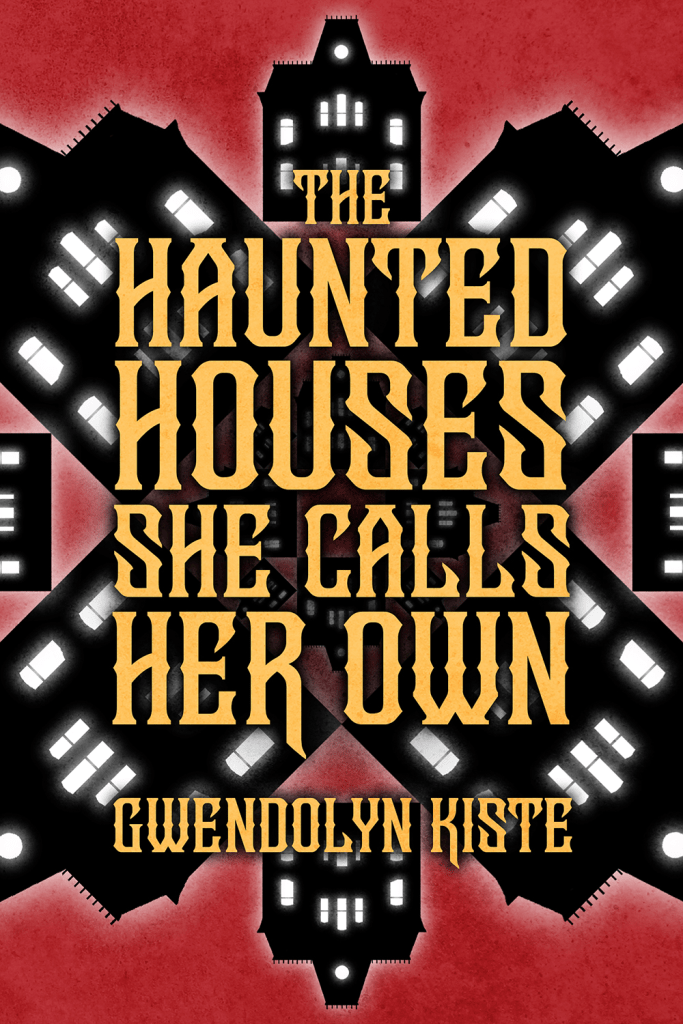
The Haunted Houses She Calls Her Own by Gwendolyn Kiste,
published April 14, 2026 by Raw Dog Screaming Press.


Leave a Reply