




TL;DR: Ellery Adams spent twenty years mastering the cozy mystery, then kicked the door down into horror and arrived fully armed. Invasive Species is a creature feature with real teeth, a feminist gut-punch disguised as a Long Island summer read, and proof that the scariest monsters have always been the ones who sign your paychecks. Absolutely devourable.

The book opens in a hot tub. Mrs. Smith is reading a Cosmo article titled “How to Eat Like a Thin Person” and finding it personally irrelevant. She has, after all, very different dietary concerns. She is ancient and hungry and waiting for darkness, and when she flings the magazine across the room it lands cover-first on the water and the brunette on the cover stares up at her, silently begging, until Mrs. Smith sends it to the bottom with one hooked nail. This is a fine beginning. It tells you nearly everything you need to know: the comedy is here, the menace is here, and you are welcome to laugh before you understand what you are laughing near.
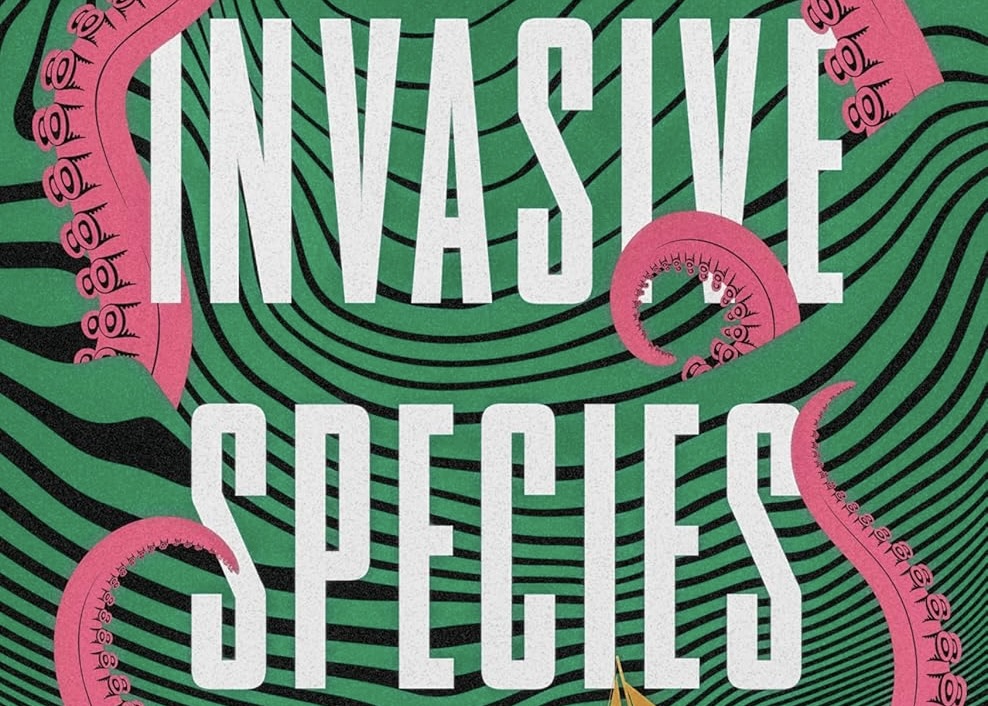
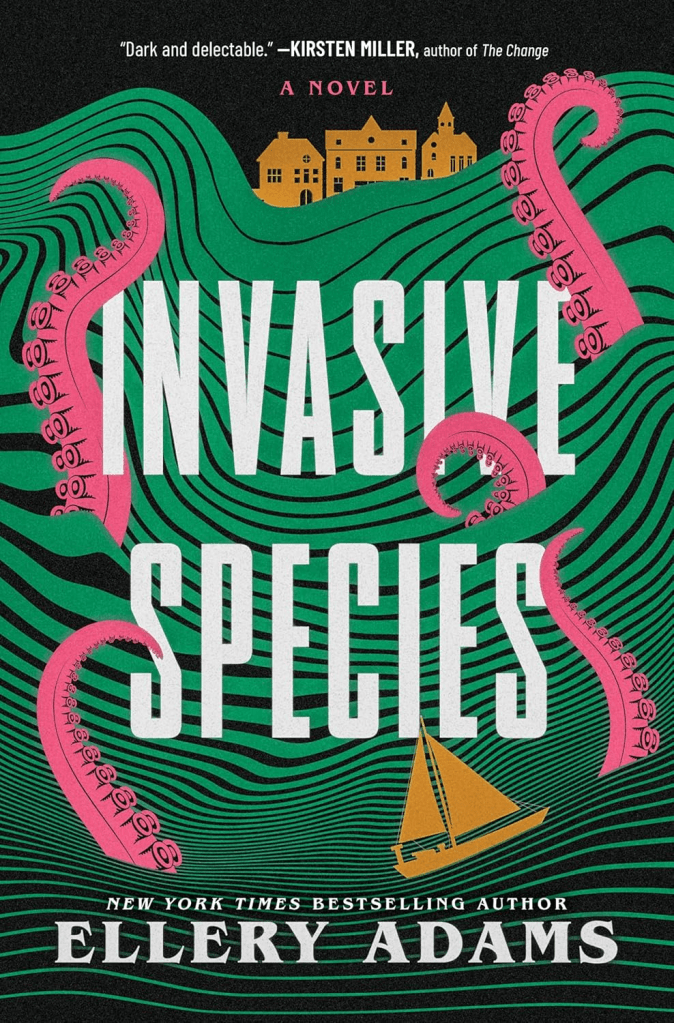
Invasive Species is a sea monster novel set in Cold Harbor, Long Island, June 1982, and it is the strangest career pivot of the year. Ellery Adams has written over forty cozy mysteries and is beloved by readers who reach for her books the way other people reach for a good cup of tea. Then she did this. This is not a cozy mystery. Mrs. Smith, the neighborhood recluse in her sunless Victorian mansion, is the Mother of Eels, an ancient entity who takes human form long enough to hide between hunts, and who requires nine adolescent bodies consumed between summer solstice and fall equinox to be reborn for another century. The yacht club leases their land from her. She subscribes to a great many book clubs.
The book rotates between four perspectives: Mrs. Smith; Natalie Scott, a real estate agent who has just taken her first listing and is eating ambition like other people eat lunch; Una Einarsson, a sixty-two-year-old Icelandic housekeeper with a gift for quiet knowing; and Jill, Natalie’s twelve-year-old daughter, a girl who writes stories in notebooks and finds a human tooth in Mrs. Smith’s lawn. Each chapter is named for its narrator. Adams has a real talent for the social texture of the era. These women negotiate status with the precision of chess players. They organize their garden clubs. They count each other’s closets.
The book’s central joke, which is also its central argument, is that the suburban community already runs on a set of hungers that are not entirely unlike Mrs. Smith’s. Natalie wants advancement badly enough to sabotage a colleague’s listing. Elaine Bernstein is staging an Atari-fueled bar mitzvah as a cure for her son’s friendlessness, and everyone knows it won’t work, and everyone attends. Mrs. Smith, reading from her hot tub about women who cannot stop being hungry, finds the neighborhood comprehensible. The invasive species of the title works as a metaphor without laboring over it. The bittersweet vines from her property creep over every fence. They cannot be stopped. They will not stay where they have been put.
When the prose is working, it is actually unsettling in the way that comfortable comedy suddenly isn’t. Mrs. Smith’s interior life is rendered with deadpan precision. She has opinions on Danielle Steel. She is wearied by Don Pulaski’s sexual performance. She remembers a younger world with real longing, back when humans walked naked into the water and offered themselves, when the covenant between species was honored, before everything got bright and loud and complicated. The grief in these passages is not entirely ironic. Adams allows Mrs. Smith the complexity of an apex predator who has lost an entire world and adapted, which is somehow more frightening than if she’d been simply monstrous.

Una is the book’s heart. Her chapters are warmer and less self-deceived than anyone else’s, and her Tuesday morning ritual of hair-brushing and Saturday gardening and library visits makes her easy to love at a pace that leaves you unprepared for what her love will cost her. Her Icelandic grandmother’s stories shadow the whole narrative, functioning the way folk horror is supposed to function: as a warning system for people smart enough to read the landscape. She recognizes Mrs. Smith in a century-old photograph. She finds a harpoon at the right moment. She is the only adult in the book who takes a twelve-year-old seriously, which is a mercy and a grief.
Adams spent twenty years in the cozy mystery business, and occasionally that training shows itself like a structural seam. There are too many garden club scenes that do the same work. Elaine’s bar mitzvah preparations are covered in such thorough detail that the reader can feel herself becoming an authority on catered yacht events. The social comedy is accurate and diverting and sometimes you wish it would leave the room so the horror could sit down. The pacing of the suburban chapters wants trimming, while Mrs. Smith’s sections could go longer. Every time Adams cuts away from the hot tub, you want to go back.
The women’s “inner monsters” are gestured at more than developed. Natalie’s act of sabotage against her colleague is the most alarming thing any of the human characters does, and the book treats it almost as a footnote. The implication that Mrs. Smith’s hunger rhymes with Natalie’s hunger is never pressed. Beth Pulaski has the richest possible arc and the fewest pages. The book knows these women have monsters in them. It is more interested in the one outside.
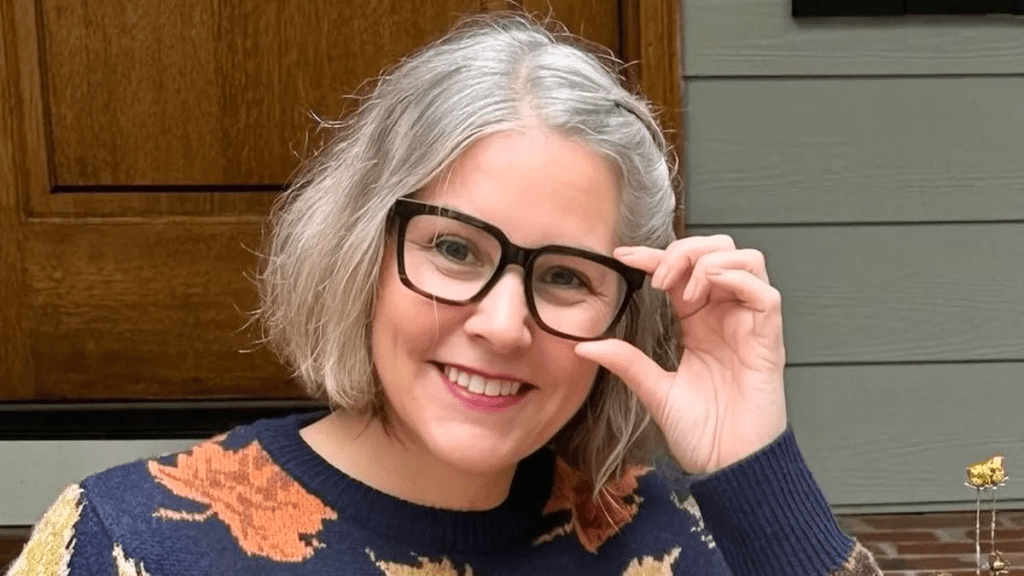
Invasive Species is published by Hanover Square Press, which is HarperCollins’s imprint for books that want to be something other than what they started as, and that framing seems right for Adams. She grew up on a beach near the Long Island Sound and having spent her adult life in a series of landlocked towns, she cherishes memories of open water, violent storms, and the smell of the sea. The geography of this book is not borrowed. The harbor smells real. She has written over forty novels and describes Invasive Species as genre-blending fiction focusing on women and their inner monsters, her first release in this exciting new direction. The cozy mystery infrastructure occasionally shows through the walls of this new house, but the ambition is clear and the effort is not wasted. She is a writer who has spent two decades making readers comfortable and is now studying how to make them frightened, and she has learned a lot already.
The final chapter belongs to Jill, thirteen, in winter, standing at a school window watching snow fall on a garden she cannot stop thinking about. Her English teacher tells her she has the gift for stories. She goes to her room, sits at her blue typewriter, and decides to become a monster. The sentence is a little on the nose, and it is also the right way to end. Not comfort. The harbor is still there. Mrs. Smith is still at the bottom of it, surrounded by eels, waiting for the drumbeat to return.
She has done this before.
Invasive Species by Ellery Adams, published April 14, 2026 by Hanover Square Press.



Leave a Reply