
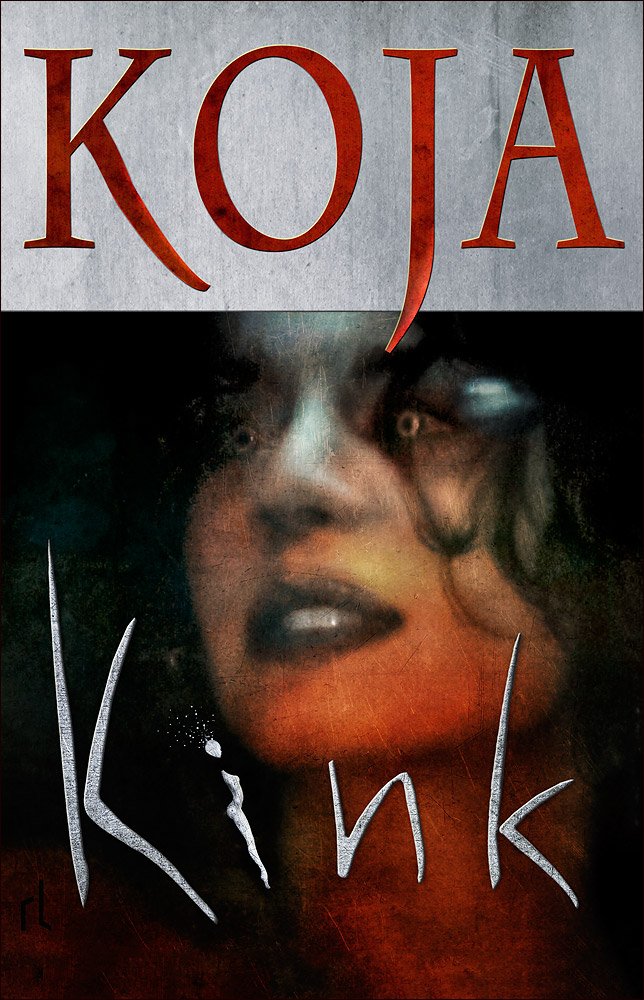





TL;DR: Kink is a sweaty, claustrophobic little mindfuck about art, desire, and control that still hits like a bad decision at 3 a.m. The voice is electric, the sex is messy and human, and the power games feel painfully real. Some 90s artsy drift and repetition blunt the edge, but for modern readers who like their horror intimate and invasive, it absolutely still slaps.

Koja drops this thing in the mid 90s, right in that weird cultural pocket where goth clubs, performance art, and “transgressive” photography felt like portals to other lives instead of Instagram moods. The epigraph is from Joel-Peter Witkin, patron saint of beautifully defaced bodies: “I hate the aesthetics of the world. I create the enclosure that becomes the world.” That line is not just a flex, it is the mission statement. Kink shows you what happens when someone decides your actual life is raw material for their private gallery. Coming off novels like Skin and Bad Brains, Koja was already the house prophet of damaged artists and bad devotion. Kink feels like a refinement of that project, a leaner, more domestic descent, swapping loft-industrial grunge for cramped apartments, salons, and clubs where art and kink bleed together.
The setup is deceptively simple. Jess, our narrator, lives with Sophie in a hot, ugly little flat where money is low and sex is high. Their shared religion is the “game” – turning other people into stories. They listen to their upstairs neighbors fuck, spy on strangers from the window, and drift through the city narrating everyone around them. “Listening is part of the game,” Jess says, and it is clear that watching and being watched is their shared kink as much as any physical act. Jess temp-jobs and sulks, Sophie does transformative makeovers at AmBiAnce and flirts with reinvention. Then new neighbor Jim arrives, along with his enigmatic friend Lena Parrish, a photographer and performance artist whose whole deal is creating those “enclosures” Witkin talks about. The game that used to belong to Jess and Sophie alone is suddenly being rewritten by someone who treats them as raw material. Jess wants to be in the picture. Sophie wants something to change. Lena wants control. That triangle is the real monster.
What makes Kink endure is not plot pyrotechnics so much as the intensity of a few core elements. First, the voice. Jess’s first person is a kind of urban chant, all run-on rhythms, jump cuts, and obsessive circling. Koja uses it to make everyday scenes (watching neighbors move out, standing in the shower, fighting over Chinese takeout) feel as charged as ritual. A fight in a Vietnamese restaurant, a “fuck lunch” in a storage room, a trashy club night where Jess first really registers Lena’s gaze: these set pieces land because the camera is glued to Jess’s nerves. Second, the imagery. Kink is built out of repeated motifs including windows, mirrors, cameras, sweaty apartments, bad air conditioners, the idea of “enclosures” you can’t quite leave. Even the upstairs neighbors’ sex noises become a kind of offstage soundtrack, a reminder that there are always other rooms, other scenes, other audiences. Third, the central relationship. Jess and Sophie are not a healthy couple, but they are believable as hell: codependent, horny, funny, cruel in the way only long-term lovers with shared in-jokes can be. When Lena enters, you feel the shift the way you feel barometric pressure before a storm.
Kink may be one of the most purely readable of Koja’s 90s books. The prose is dense but not impenetrable. Sentences corkscrew, yes, but they still land. Early on, the narration slides from watching neighbors to Sophie putting Jess’s hand in her lap in public, and the whole scene runs like a single exhale that somehow contains humor, erotic charge, and social observation. For a contemporary reader used to clean, minimalist horror, this style will either feel like a drug or like homework. Personally, it worked: the overload matches the subject. We’re in a mind that can’t stop framing, can’t stop narrating, and Koja lets that drive the pacing. Where it feels dated is less in the language and more in the occasional 90s gender and mental health framing. There are spots where queer desire and kink are still edged with that era’s “this is inherently broken” vibe, even though Koja is clearly more interested in obsession and exploitation than in demonizing kink itself. Some readers will also feel the middle third sag a little, as scenes of parties and clubbing stack up like variations on a theme. You can feel the book doing a slow constriction instead of a big escalation, and if you want a clear horror ramp, it may feel like it is just fucking around.
Kink has aged disturbingly well. It is not just a book about sex; it is a book about consent, spectatorship, and the line between collaboration and manipulation in both relationships and art. Jess and Sophie’s “game” starts as mutual voyeurism. They make up stories about strangers, spy on neighbors, get off on being half-seen by the city. This is safe because they think they own the frame. Lena’s presence asks a brutal question: what happens when someone smarter, colder, and more disciplined takes that same impulse and uses it on you? Her photographs and scenes literalize the way exploitative artists cannibalize their intimates. The real horror is not that bodies get bruised or tied up. It is that Jess, who lives to narrate, starts to need Lena to tell her what she is. When the book turns darker, it is not because some demon shows up, it is because people refuse to walk away even as the “game” stops being consensual. You walk away thinking about how many of your own relationships, friendships, or creative projects have run on the same fucked-up fuel: “We’re just playing, it doesn’t really matter,” right until it really does.

Kink sits in that slightly under-read but crucial corner of 90s horror where eroticism, queer desire, and art damage were doing something stranger than simple sexy-vampire shit. Alongside Poppy Z. Brite and the weirder edges of Clive Barker, Koja helped carve space for books that treated kink as a lens on power, not just a cheap thrill. You can see echoes of Kink in more recent dark romance and indie horror that leans into BDSM and performance art, but very few of those books are this interested in the ethics of looking. It is not the most “famous” Koja title, but you can feel its influence ghosting around modern character-focused horror.
In the context of Koja’s career, Kink feels like a tight cousin to Skin and Bad Brains, part of a run of novels about art, body, and obsession that pretty much define 90s literary horror at its risk-taking best. In the wider canon of that decade, it belongs on the shelf with the rawer, queerer books that pushed horror away from monsters and toward human mess, closer to a razor-wired relationship novel than a conventional frightfest.
Kink is strong, distinctive, and fucked up in exactly the ways that still feel relevant, even if some 90s edges and structural drift keep it from absolute top-tier status. For readers who like horror that crawls into your head and whispers bad ideas about art, love, and looking, it is absolutely worth prioritizing.

Read if you want intimate, sweaty, relationship-centered horror that makes you feel like you’re eavesdropping where you absolutely should not be.
Skip if you are not in the mood for lots of sex talk, kink, and emotional dependence that feels way too close to real life.
Kink by Kathe Koja,
first published 1996 by Henry Holt & Company.


Leave a Reply