



TL;DR: Samir Sirk Morató’s Gore Poetics is a brutal, beautiful knockout: body horror written with lyric precision and zero hesitation. These stories turn hunger, sex, illness, shame, and power into living nightmares that feel intimate and cosmically wrong at the same time. Smart, filthy, bold, and impossible to shake once it gets under your skin.

The first word in the collection is “No.” It opens a sentence about desire, specifically about what Annecy does not want, and it arrives in the first line with the confidence of something that knows exactly what it is doing. By the final page of that story, “bluebell ovipositor,” the reader has been introduced to maggots, reproductive parasitism, entomology lectures, and a kind of freedom that costs everything and is still maybe worth it. The collection has announced itself.
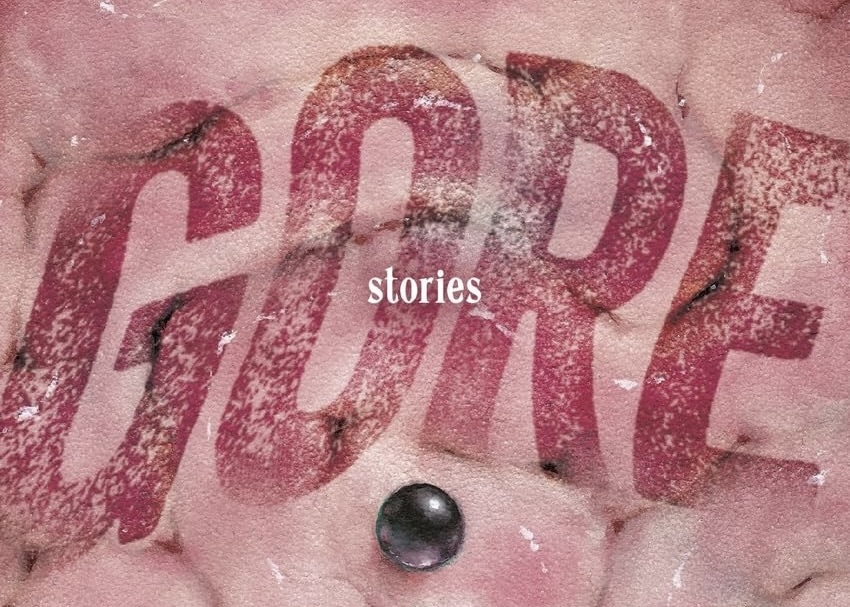
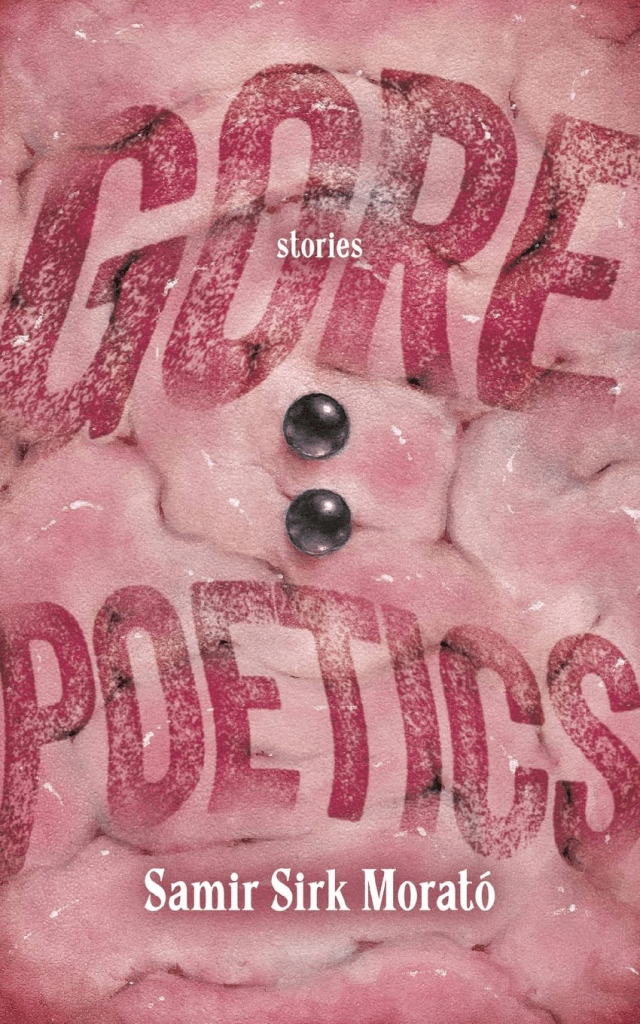
Gore Poetics is Samir Sirk Morató debut short story collection, nineteen pieces published by Cursed Morsels Press, each one illustrated by the author’s own hand. The title is honest about its intentions. The word “poetics” is doing the heaviest weight-bearing. This is not a collection that happens to contain gore. It is a collection that treats gore as epistemology: a way of knowing things about bodies, about intimacy, about what happens when the membrane between self and other turns out to be more permeable than anyone planned.

The prose is wet. This is the most reliable thing about it. Morató’s sentences arrive coated in something: brine, sap, adipose, cellular fluid, reproductive discharge. The biological vocabulary is not shock tactic but a language system. When a body is described here, it is described with the precision of someone who studied it under lens and lamp, who knows what a spiracle is, what an ovipositor does, what happens to mealpaste when a feeding tube is refused. The named real thing, correctly deployed, is more disturbing than anything invented. Morató knows this. The horror of “Lithopedion,” the collection’s longest and most patient story, comes not from any singular image but from accumulation: “womb sac,” “extractor loop,” “grandmother nucleus,” dropped into a narrative whose full horror assembles itself slowly, over pages, until the reader realizes what they have been inside the whole time.
The best pieces are strange in ways that feel like discovery rather than decision. “Colossus” is the most ambitious thing in the book, narrated by someone whose relationship to their own body has become a sustained act of attrition, set in the Wyoming prairie where wind becomes a literal entity with its own appetite. Its final sequence achieves something that is difficult to describe without spoiling, which is probably the strongest endorsement available. “Brainworms” is the other standout. Its narrator is dead, or something adjacent to dead, cohabiting with centipedes who speak in HOA-meeting register and expect him to manage his affairs. This is funny. It is also, gradually, not funny at all. The centipedes are polite. Their politeness is the mechanism of dread. By the final pages the story has done something quietly devastating with grief, connection, and the biology of continuing against all available evidence. It is the collection’s best argument.

Morató began publishing fiction in 2020, moving through small press speculative and horror venues before landing pieces in NIGHTMARE Magazine, Strange Horizons, Flash Fiction Online, and the journal ergot., which appears four times in this collection’s publication history. They received a Brave New Weird award in 2025, a Best of the Net nomination in 2024, and have contributed fiction to X-R-A-Y Literary Magazine and Archive of the Odd, among others. The arc is the recognizable one of a writer building a body of work through short form venues before a debut collection assembles those pieces into something like an argument. The fact that Morató also provided all nineteen interior illustrations gives the book a coherent aesthetic identity that most debut collections lack. They identify as a scientist. The biological horror in this collection has an accuracy to it. It does not feel like horror that imagines bodies. It feels like horror written by someone who knows what they actually contain.
The collection spans register. “famine frontier” is a single page and it cuts. “LESS DEAD” is a prose poem about missing girls and the animals that know what the adults pretend not to know, and it is over before you have finished registering what it has done. “The Halved World” runs for fifteen pages and takes its time, a story about returning home and discovering a vegetable facsimile of yourself rotting in the back garden, and the loneliness of being the last one left to deal with it. The pacing of the collection at large is harder to navigate. By the eighth or ninth story, a pattern becomes apparent: body as site of violation, violation reread as intimacy, intimacy as the ambiguous engine that could save or finish you. This is a valid preoccupation. It is also, by story ten, something a reader begins to anticipate rather than experience. “Poolhorse,” “limerence,” and “entrada” occupy the collection’s softer center, pieces that function more as mood than as complete experience. Nineteen is a lot of stories. The collection might be stronger at fourteen.

The disability and queerness woven through the material are structural. (This matters. Horror about bodies has a long history of using queerness and disability as shorthand for monstrosity. Morató is not doing that. The monstrous and the queer and the disabled are not collapsed here. They are allowed to be in proximity without the narrative insisting on their equivalence.) “Pearlescent Tickwad” handles this with something approaching warmth, about a Korean housewife who discovers she is made of thirty-five million ticks and has to figure out what that means for her marriage, her daughter, and the rice cooker they just bought together. “sharp house,” published in NIGHTMARE Magazine, gives the horror to a creature made of needles that cannot stop destroying things and wants desperately to be gentle and cannot be. Its mantra appears at the story’s end without comment and stays.
The closing story, “Aberration,” does not quite live up to what the opening trio promised. This is the minor flaw of a debut: the beginning is the best argument a writer knows how to make, and the end reveals where the argument still needs work.
But there is a writer here doing something fucking real. The prose is identifiably itself, which is rarer than it should be. The best stories are not waiting to be compared to other things. Whether Morató’s particular frequency, this insistence on wetness and intimacy and bodies that refuse to stay bounded, is the frequency you are already tuned to: that is a question only the first twenty pages can answer. And the first twenty pages are honest about what they are.
Gore Poetics by Samir Sirk Morató, published April 14, 2026 by Cursed Morsels.


Leave a Reply