
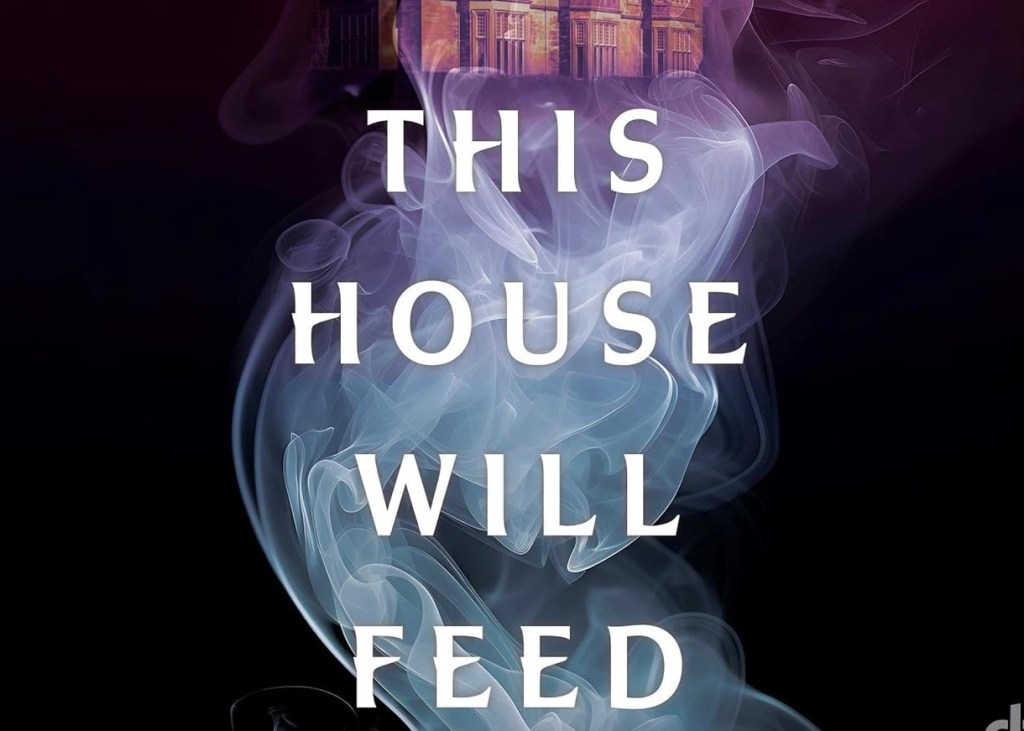
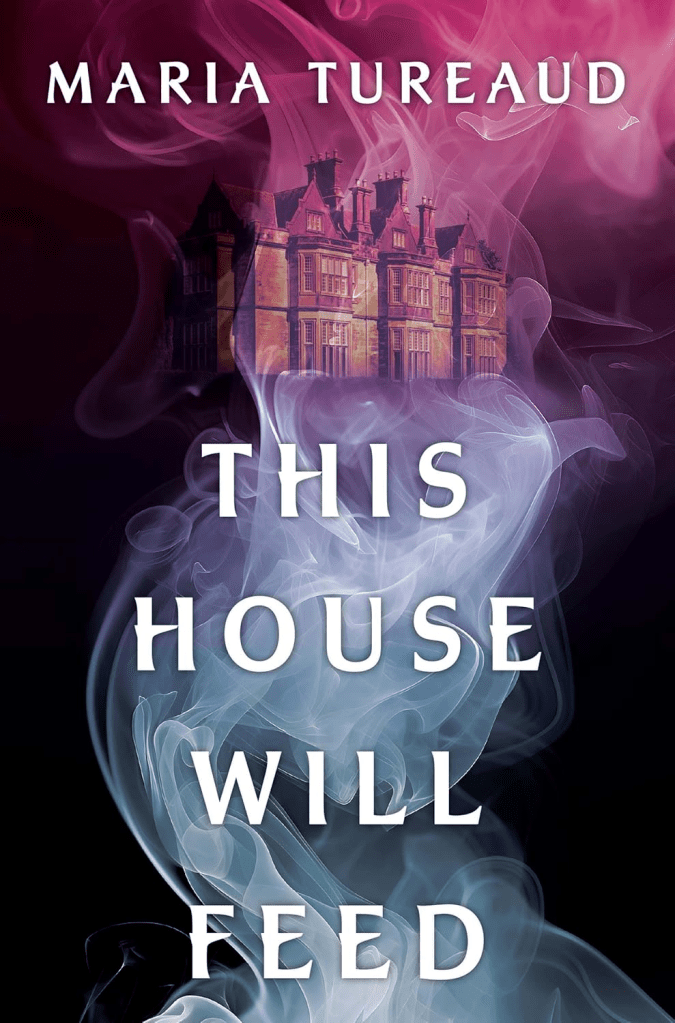



TL;DR: A famine-era historical gothic that runs on pure appetite: a hungry house, old powers still collecting, and protective folklore symbols that feel carved into the story’s bones. It lands for readers who want atmospheric, nasty, thematically coherent horror with real “feed the house or it feeds on you” momentum, even if it’s not wildly form-bending.

This House Will Feed is Maria Tureaud’s famine-era gothic with a first-person narrator who opens on the kind of sentence that doesn’t ask permission: “The taste of my brother’s flesh still haunted me.” Well… fuck.
The book’s biggest flex is that it builds dread like a debt. It starts with hunger as a physical fact, then turns hunger into a rule system, then turns the rule system into a house. Maggie O’Shaughnessy is alive when she shouldn’t be, and she knows it. The story does not let her forget it for even a paragraph. Every time the plot offers a ladder out, it also shows you the nails in the rung.
In 1848, Maggie is scraped out of the workhouse life and offered an arrangement by Lady Catherine Browne. Maggie will pose as Lady Catherine’s daughter, Wilhelmina, for long enough to survive an impending legal inspection, and if she pulls it off, she gets land of her own. She’s taught the posture, the diction, the manners, the society version of grief. Meanwhile, the famine is still chewing the countryside to splinters, and Browne House sits out in the Burren like a beautiful tooth, waiting.
Maria Tureaud is an Irish-born writer from County Clare and has worked for years as a developmental editor in publishing. Before this, she published middle grade fiction. That genre jump is interesting because the book still has that editor-brain sense of propulsion and clean setup, but it’s now aimed at historical trauma and folk horror. In writing about her approach, she’s been explicit about translating colonial violence and Great Hunger history into horror, rather than treating the famine as a tasteful backdrop. Read in that context, the “old powers still collecting” angle feels less like spooky garnish and more like a thematic bridge between land, myth, and exploitation.

Tureaud is smart about escalation. Early scenes move with that propulsive, clean clarity that keeps you reading even when you want to put the book in the freezer and apologize to your ancestors. The bargain is laid out plainly, contract and all, and the hook is not just “haunted manor.” It’s “I am being trained to become someone else while the world starves, and the price of failure is not abstract.” As Maggie’s lessons advance, the tension shifts from survival to performance: can she be convincing, can she keep her story straight, can she sit in a room with men who have the power to declare her life invalid?
Then the weirdness starts behaving less like set dressing and more like weather. Browne House gets rendered with tactile specificity, heavy stone and isolation and the sense that the land around it is watching. The book’s folklore muscle shows up in protective symbols and old-name language that feels lived-in. There’s a recurring triskele motif, a little “three swirls” emblem that functions like a ward and a warning. The supernatural is not a jump-scare machine here. It’s an economy, and the question becomes: what does this place require, and who pays?

The timeline structure helps the dread climb. Interspersed “Before” chapters pull you back into Maggie’s earlier life, when talk of Dublin still sounded distant and the worst people in the room were merely landlords and their agents. Those backflashes are doing more than tragedy-porn. They explain Maggie’s internal wiring: her guilt, her hunger for land as a form of atonement, her willingness to swallow poison if it comes with a deed attached. They also make the present-tense hauntings land harder, because the book keeps reminding you that history is already the monster. The ghosts just show up to make it personal.
When the horror really clicks, it’s because Tureaud knows what to show and what to imply. One of the best sequences is a late-night moment where moonlight cuts under a door, hinges screaming, and Maggie registers porcelain dolls arranged like an audience, their eyes turned toward her. It’s not complicated, and that’s why it works. The image is clean, the staging is cruel, and the aftermath matters. Maggie doesn’t simply gasp and move on. She carries it, the way you carry hunger, the way you carry shame.

Maggie is a solid anchor because she’s not sainted. She’s intelligent, reactive, stubborn, frequently wrong about what she can “manage,” and always aware that she is bargaining with people who have better tools and fewer scruples. Lady Catherine is the sharpest blade in the drawer: charismatic, pragmatic, and terrifying when she’s calm. Their relationship is the book’s engine. Not romance, not mentor-and-protégé comfort, but a tight negotiation between two women trying to outwit systems built to grind them down. Cormac adds useful friction as both ally and variable, and the supporting cast gives the house a social ecosystem so the story does not become a two-hander in a hallway.
If I have a craft gripe, it’s that the mid-book “lesson” sequences can occasionally feel like we’re circling the same drain: Maggie learning composure, then learning more composure, then being reminded that composure will not save her if the wrong person asks the wrong question. The writing keeps it readable, but you do feel the gears. The payoff, thankfully, earns the time. When the outside world finally pushes in through official channels, the pace tightens, and the book turns performance into a pressure test. There’s also a great use of space where the house seems to participate in concealment, and a door simply is not there when it would be inconvenient for it to exist. That’s the vibe this novel is best at: power expressed as architecture, morality expressed as appetite.

This is a book about what hunger makes permissible. Not just “people do terrible things when starving,” though that’s in here from page one. It’s also about the way institutions weaponize hunger, how land ownership becomes both salvation fantasy and moral trap, and how “protection” can be indistinguishable from predation when the bill comes due. The Old Gods framing works because it mirrors the human systems around it: bargains, debts, collateral, sacrifice. The supernatural logic keeps snapping into the same shape as the historical one, and that coherence is what makes the whole thing feel nasty in a meaningful way, not just grim.
If your BWAF taste is “form-breaking horror or bust,” this is not that. It’s more classic in its bones, more grounded in historical-gothic propulsion than in stylistic risk. But if you want famine-era folk horror where the land has memory, the house has rules, and the supernatural is braided tightly to the human cruelty that birthed it, this absolutely feeds.

Read if “old powers still collecting” is your catnip, especially when folklore wards and land-mythology actually matter.
Skip if “hungry house” plots make you roll your eyes unless they do something fresh with the bite.
This House Will Feed by Maria Tureaud,
published January 27, 2026 by Kensington.



Leave a comment