TL;DR: Uruguay, 1951. Delmira forges a letter from her husband and turns up alone to keep the country’s easternmost lighthouse, where the locals have no working clocks, a ghost called La Loba, and one rule about not sleeping on the ground floor. A hundred years earlier, a woman chained to a post on that beach says she’s a sea lion and would like her skin back. There’s a treasure map in a spyglass. There’s a sea lion with a grudge who could take any of us. The 1852 chapters are some of the meanest, funniest shit I’ve read all year. Go.





I got scared of a sea lion this week. A big brown one, on a beach, in a book. She doesn’t talk and she doesn’t have powers. She sits outside a lighthouse all night working at the door with her teeth, and I’d have let her have it.
The book is Loba, a horror novel by Valentina Cano Repetto, out from Angry Robot. Loba is Spanish for she-wolf, and the Spanish for sea lion is lobo marino, sea wolf, so the title is a woman and an animal at once. It tells two stories in turns, a chapter of one and then a chapter of the other, set a hundred years apart on the same beach in Uruguay. One is a ghost story. The other is the ghost’s side of it. And the scariest thing in either of them is the lighthouse.
We start in 1951. Delmira Torres is thirty-three and married to Santiago, a lighthouse keeper who hits her. The navy has posted him to a fourth, at Cabo Polonio, a fishing village so deep in the dunes that the only way in is a cart pulled by three horses. Delmira gets off the cart alone with a typed letter from Santiago that says he’s held up for a month and his wife will mind the lamp. She typed it. The plan is a month of keeper’s pay, then a bus to Brazil before he shows. The job is climbing a hundred and thirty-two iron steps every three hours, all night, every night, to wind the clockwork that turns the lamp, which means she has run away from a man who beat her in three lighthouses in order to sit up alone in a fourth one, looking after what is, where sleep is concerned, a newborn made of glass. In ten years his one compliment was that the lighthouse lens was the only jewel he could afford her.
NEVER MARRY A MAN WHO TALKS NICER TO THE LAMP.
Cabo Polonio has no roads and no working clocks. Watches die there, and the fishermen say it’s the sea, that bitch, running time however she likes. The croissants come in by horse, and one man reports using his to hammer a chair leg back on. The sea lions sing at night, as a group, and nobody asked them to. The village also has a legend and a rule. The legend is La Loba: in 1852 a woman pulled half-drowned from a shipwreck swore she was a sea lion, killed her husband, burned most of the village alive and was never found. The rule is that the keeper doesn’t sleep on the ground floor, because that’s where she appears, and the last three men who saw her are dead. Then there’s the live animal from my first paragraph, a female the locals just call the loba, who has a scar across her neck nobody can account for and who hates Delmira on sight.
The other chapters are 1852, and they belong to La Loba herself, before any of it. A sea lion hunter named Fausto dragged her out of a wreck two years back and has kept her on a chain since, a post by day and his bed by night. He calls her his wife. The village calls her loca. She answers to Amalia and says that isn’t her name. She says she is a sea lion, that Fausto tore her pelt off in the water, and that it’s pinned under a rock in a sea cave she can see from the end of her chain. Get to the pelt and she goes home. (There’s an old folktale under this, the selkie wife, where a man steals a seal-woman’s skin so she has to stay and keep his house. It is a horror story about a guy hiding a coat.) Then a shipwrecked Spanish captain washes up with a treasure map and offers her a deal.

Amalia can’t sleep, because a white light sweeps the beach every twelve seconds and nobody else can see it. The village tells her it’s the luz mala, a ghost light that points at buried treasure. You know what it is, because one chapter ago you watched Delmira wind it. The lighthouse won’t be built for decades and it is already keeping this woman up. It runs the other way too. Delmira hears a hoarse voice on the ground floor asking for water, and later you hear Amalia say it in the hut. The two years share a wall, and things come through. Harm comes round on a timer here and lands on whoever is standing in the beam, in either century. It’s the best fucking idea in the book.
The clock on my stove has been an hour wrong since March, and I do the sum every time I look at it. I thought the book might have something for me on that. It didn’t.
Amalia tells her own chapters, and she is the reason to buy this. She doesn’t think of herself as a person. People are a species she’s been stuck with. She has broken every object in the hut her chain will reach except one chair, too light to smash, and she reports having made her peace with the chair. I’ve had that arrangement with a futon since 2009. When the half-drowned captain wakes up and asks, very politely, for water, she growls at him, hisses for a change of pace, throws a boiled egg at his head, and is sorry only about the egg. She pisses in her captor’s bed on purpose. I would fucking vote for her. And the book hides its fear in the one place she won’t look. Scraps of somebody’s memories keep floating up in her head (a mother’s hands, a locked door, a man with a cabinet), and she swats each one off as a sickness you catch from wearing a human brain. You work out whose they are long before she’ll allow it, so you’re left holding the bad news while the narrator refuses delivery, and each refusal is worse than the one before.
The legend says she burned the village. She is in the best mood of her life. She goes about it the way you’d close up a shop, laughing with what’s left of her voice, and she stops in the middle to cut two horses loose, because the horses never did anything to her. No narrator steps in to be sorry on her behalf. What comes after is harder. The legend’s own question, whether she was what she said she was, gets an answer from the only party whose opinion she ever wanted, and nothing arrives afterward to soften it.
I started the next chapter and couldn’t tell you what was in it.

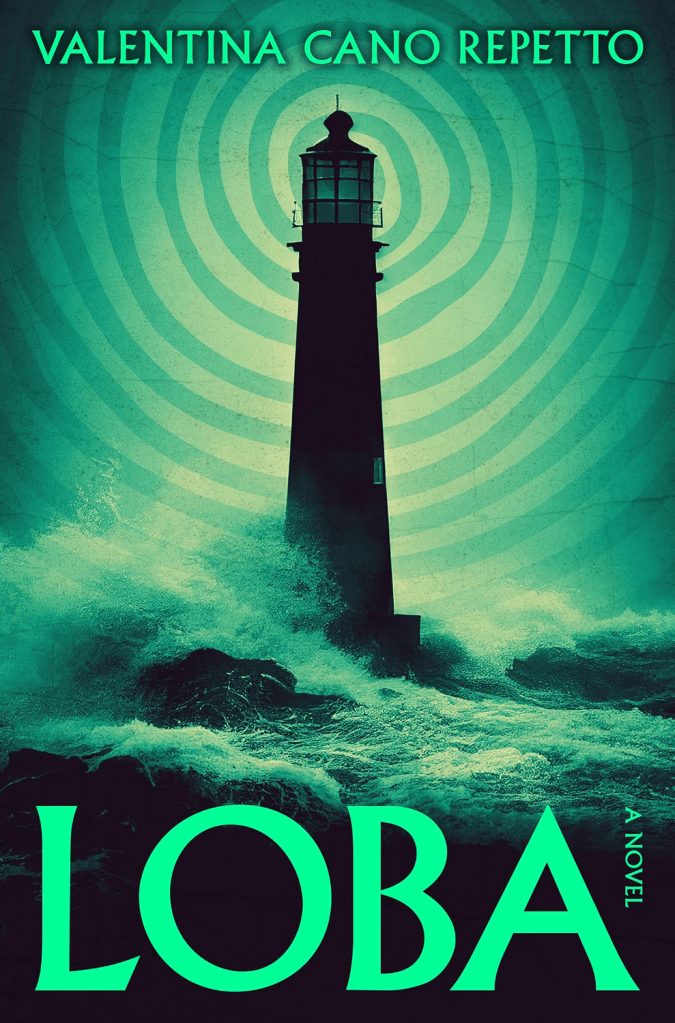
Follow the spirals. A lighthouse is a spiral staircase with a lamp on top, and Delmira sleeps on the stairs, because cold iron at her back is the nearest thing to kindness a lighthouse has shown her. The dead keeper before her left a logbook where the handwriting quits the columns and winds into the margin, tighter with each turn. The 1852 chapters tell you where the shape started, and it’s small: something a girl did with one finger, on a piece of ironwork, to be somewhere else while a thing was done to her. From then on every spiral in the book is a person leaving her own body, and the last one is the first that anybody makes on purpose and gives away. Alice Coleman’s cover puts a spiral behind the tower where the beam should be. She read it right.
The 1951 half is the weaker one, and there’s more of it. Delmira is well made. She flinches at any man’s raised voice, and Santiago heckles her in italics from inside her own head, weeks and half a country away. She gets sentences like this: “I’d been rich in the jewels his blows had given me.” It closes a list of her bruises as gemstones, the last a ring on a thumb that kept her from opening doors one-handed for a month, and the figure falls apart into an injury. But she narrates like somebody filing reports on her own epiphanies, and what the book has spent its whole length showing about what its women are trained to hand over gets read out near the end as a short speech. Her villains are Ignacio and Federico, two of Santiago’s old workmates, who turn up to wait for him and drink. They have one idea between them, and the idea is a pipe. They leer, they say puta, they leer again, and that’s the whole shitty act. Every time they walked in I missed the sea lion. The village has a secret, a good nasty one, and it comes out as a speech in front of a boat shed, like the end of a Scooby-Doo with worse weather.
Then there’s Jacinto, the one local who’s decent to her, a fisherman who sleeps in his boat among the sea lions and feeds them breakfast so they won’t eat the new keeper. He is so gentle the sea lions let him referee. I had him filed as a prize the book hands Delmira for surviving. Then I thought about who raised him, which the book is specific about, and it wasn’t a man. So he’s the book going soft, or he’s its whole case about where violent men come from, made with one fisherman. He’s filed twice. Her ending pays out in more than one currency, and after what the sea does in 1852 I wanted it to stay that mean.
Cano Repetto was born in Uruguay, of Charrúa descent. This is her second novel under the full name, after Sanctuary (CamCat, 2024), with earlier books as Valentina Cano. One of the publisher’s blurbs calls it a debut and magical realism in the same sentence. It’s a horror novel, and she’s done this before.