
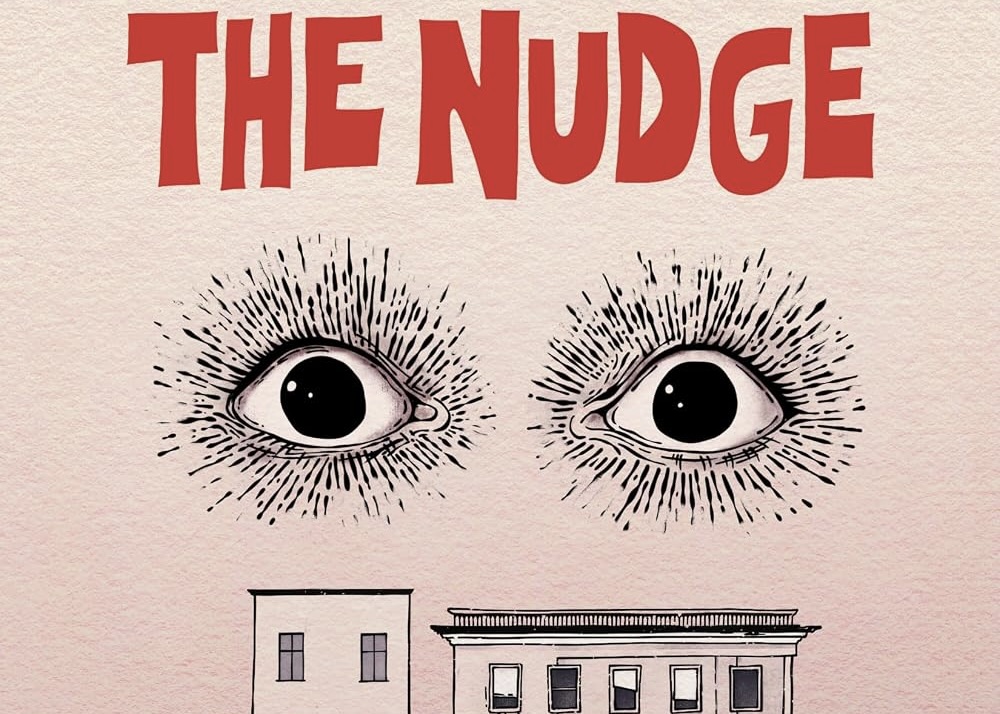
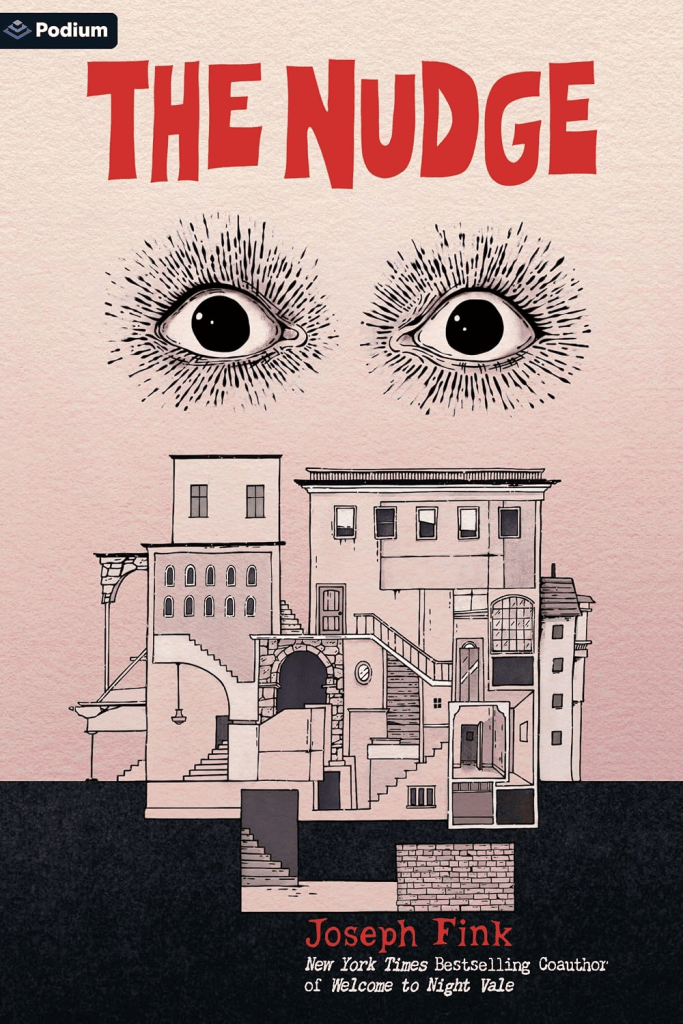




TL;DR: Two men, one hallway, no quotation marks, and a monster that never has to be described because it only ever suggests. Fink turns a formal dare into a horror novella that gets its dread from casserole dishes and sewing needles before any blood. The middle sags once. The rest does not. Read it in one sitting, with the door checked.

There are two people talking in this book and for most of it you don’t know their names. One has driven for three days with a knife wound in his side. The other is carrying his bag. There are no quotation marks around what they say to each other, no “he said,” no paragraph that steps outside the conversation to tell you what the hallway looks like. If you want to know what the hallway looks like you have to wait for one of them to mention it, and they mention it the way people do, in passing, on the way to something else. The rug curls up here. Not that chair, that one is a little funny at times. The hotel has burned down twice.
Joseph Fink says in the acknowledgments that he wrote the opening pages the day he heard two podcasters discussing Stephen King’s “Mrs. Todd’s Shortcut,” a story told entirely as talk between two old men in Maine, and that he wanted to see if he could do it. He can. The Nudge is a novella, one sitting, and it never once breaks the rule it sets for itself, which is the first thing to say about it and probably the most important. A gimmick you notice is a gimmick. A gimmick you stop noticing is a form.
The guest tells the story. He and his wife, Sharon, met on the last day of college in Ohio, lost each other for two years, found each other again in a chain restaurant near Fisherman’s Wharf, married at a courthouse in Indiana. Twenty years. Then she began to change. What follows is the part of the book people will talk about, and it is delivered as a list, because the guest is the kind of man who can only get through it as a list. Her nose an inch from the hallway wall. A casserole dish she can’t let go of. A sewing needle in a bowl of pasta, a little red thread still hanging from the eye. A smile that isn’t hers, arriving on her face while she sleeps. Fink doesn’t raise his voice for any of it. Each item gets the same weight as the last, and the accumulation does what accumulation does. (The needle is the one I keep coming back to. Not the stranger things that follow it. The needle, and the thread, and the fact that she sews.)
The premise of the title is that the thing doing this cannot control anyone. It suggests. It leans on a weakness that was already there and waits, and it can wait longer than you can. This is a smart piece of engineering, because it means the monster never has to be described, only inferred from behavior, and the behavior always belongs to somebody’s wife or a stranger at the next table. The book is at its best when it stays with the mechanics of that: how a man decides whether to trust the person handing him a drink, how long he watches them swallow first. Fink has said elsewhere that horror shows you not what the world is but what it is like to experience it, and the experience here is a specific, unglamorous one. Choosing the booth by the emergency exit. Checking the hinges. Counting the seconds between footsteps on a stair.
Half the book takes place at the Bluebird Motel, a roadside place with metal keys, a box television in the lobby playing a rerun of Friends and then a rerun of How I Met Your Mother, and one other guest, a heavyset man named Wayne in a suit that had once been elegant, holding a cigarette he never smokes and a plastic cup with three inches of whiskey in it. The clerk calls it the last great American motel and cries a little when he says so. The other half is the hotel where the story is being told, which is bigger than it looks from the road, which was a private house and then a university and is now something else, and which the two men are walking through the entire time, down a hallway built too narrow, into an elevator that takes its own time, down a staircase where the walls bend inward. Two lodgings. One is dying because nobody stops there anymore. The other keeps adding rooms. Fink does not draw the line between them for you and the book is better for it.
The man carrying the bag has opinions. About towels (six minimum, ten for a suite). About the hotel knock, which has a correct volume. About mattresses, which he turns himself every three weeks. He interrupts the guest’s story to ask whether the motel had a pool. This is the book’s second driver and the one that will divide people. The interruptions are funny in the flat way Fink is funny, and they do something structurally necessary, which is to keep reminding you that this is a conversation, that someone is listening, that the listener has his own reasons for listening. But there is a stretch in the middle of the second act, the guest hiding in his room, waiting, watching daytime television, where the asides about amenities are carrying more of the weight than they should and the pace goes soft. It recovers. It does not recover right away.
And because it is all dialogue, the book now and then has to make a character say out loud what a narrator would’ve shown you. The design on this mantelpiece is quite unusual. Are we going down this staircase here. You can hear the stage directions inside the lines. Fink mostly gets away with it (the awkwardness reads as two tired men making small talk, which is what it is), but a reader who can’t forgive that won’t forgive it, and should know going in.
The worst scene in the book is a conversation about dessert. Fink understands the thing most possession stories do not, which is that the horror is not the person becoming someone else. It is the person staying exactly who they are, talking to you about apples, while their hands do something else. The cover calls this a psychological thriller. It is a horror novella and it knows it.
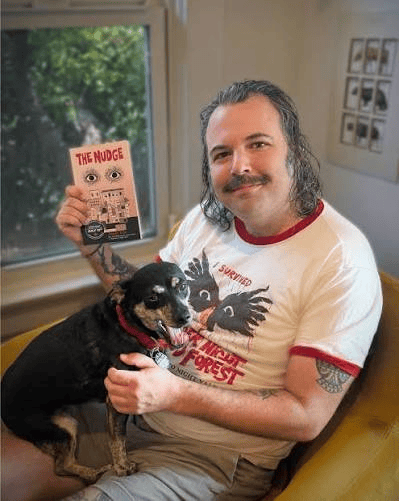
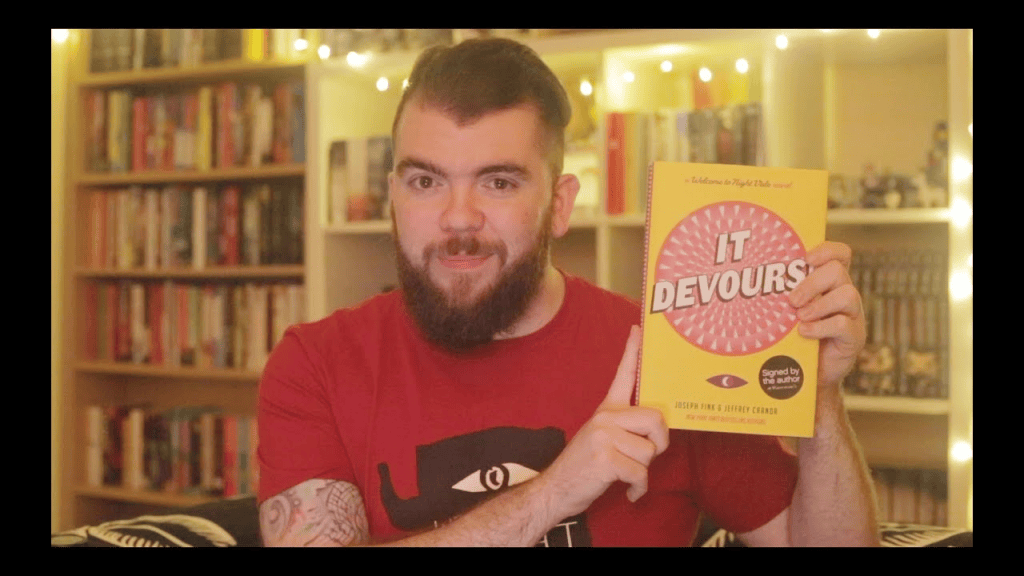
Fink co-created Welcome to Night Vale with Jeffrey Cranor in 2012 and has co-written three New York Times bestselling novels set there, along with Alice Isn’t Dead, which began as a podcast about a truck driver and became a novel in 2018. In an interview around that book he said anxiety had shaped everything he had written, that Night Vale was not about anxious people but was told from inside an anxious mind. The Nudge is the first thing of his I have read where that mind is the whole subject rather than the lens. It is also, by his own account, a formal exercise that arrived on a run in Eagle Rock, which is a fine way for a book like this to happen.
The guest says early on that when he talks about Sharon it is like she is there. He talks for the whole book. The other man carries his bag the whole way and will not let him take it back.
The Nudge by Joseph Fink, published
September 1, 2026 by Podium.


Leave a Reply