






TL;DR: A village that pays its rent in the blood of its dead, and a love story warm enough to survive it. Joyce writes two people in a cold cabin better than she writes the thing in the trees. One night in the woods will keep you up. The eighty pages of walking will put you back down.

Here’s what I wanted from this book. I wanted the motherfuckin ledger.
Aplin Shade is a village in the Canadian bush in 1863 that its residents got for free. Twenty years back a band of broke and desperate people came up the road hoping to beg a meal and found instead a whole village standing empty, houses furnished, pantries stocked, tools bought and waiting, and not one body anywhere. What they did find was a death ledger whose final five pages list hundreds of people dead on the same day of the same cause, one word repeated down the column like a hymn. Blight. So they moved in. Of course they moved in. The desperate do not negotiate, they just take the keys and try not to ask.
Rent came due later. Something in the woods takes your dead, drains the blood out of them, and gives them back. For nineteen years that arrangement holds because it’s cheap and because there’s nowhere else to go, and then a logging camp opens and the trees start coming down and the trees, it turns out, have a position on this.
That is a hell of a premise and Mere Joyce knows it. She also knows what to do with paperwork, which is rarer. Our narrator, Dominic Wright, is eighteen and the village barrister by inheritance and default, small and quiet and easy to talk over, and the way he finds the crack in the world is by noticing an empty box in a column of a book nobody reads. One dead man’s row is missing an entry. That’s it. That’s the horror. Not a scream, not a face at the window. A clerical absence in a room full of mildew and mouse shit where a boy is hiding from farmers who won’t pay him.
I would follow that book anywhere.

Then he walks. God, does this boy walk. Two miles to the logging camp, two miles home, back again after supper, and I started to feel the second act of this novel in my knees. The middle stretch of As the Snow Gathers is a young man going back and forth across a snowfield having the same conversation about wages and spring with people who love him and people who don’t, and the dread that the opening builds so patiently gets set down like a bucket while everyone talks about money again. There is a version of this novel about eighty pages shorter that is genuinely frightening. That version is in here. It’s wearing a lot of coats.
What is not in doubt is the love story, and I’m going to be honest with you about it because it’ i’s the reason I finished. Dominic and Lex, the Norwegian logger, a foot taller than him and white-blond and violet-eyed and stubborn as a stump about ever letting anybody treat one of his own wounds. They teach each other their languages by candlelight, Dom the written English and Lex the spoken Norwegian, curled up in a ten-by-ten cabin that Lex himself calls a grave. They eat a whole cake once, years ago, and both of them vomit for hours, and neither of them has touched cake since. Dom smuggles him a slice of pigeon pie in his coat pocket because Dom cannot eat the pie, because his mother bakes it with the feet still sticking out of the crust. That’s the book at its best. That’s Joyce writing two people in a cold room and getting every single thing right, including the socks, because Dom’s one complaint about the great love of his life is that he hangs his wet socks to dry without washing them first.
I believed them completely. I believed them more than I believed anything with claws.
Joyce comes to this from somewhere specific and it shows in ways both good and not. She is a Canadian librarian and a teacher of library studies, out of Kitchener and now Nova Scotia, and she has spent a decade writing for kids and teens, contemporary stuff, mysteries, a couple of ghost duologies, the Orca and Cormorant end of the Canadian YA world. She grew up on Fear Street. This is her adult debut, and she’s said the difference in the writing was that instead of paring down she got to add: more detail, more world, more horror. You can feel both the librarian and the addition. The archival instinct is the best thing she brought with her, the sense that the true monstrous fact is sitting in a box file waiting for someone patient. The added-on part is the trouble. Whole passages exist to make sure you have understood the passage before it.
And she doesn’t trust the reader. That is the real flaw, more than the pace. This is a novel that puts a beautiful image in front of you, pine bark packed into the slit necks of two flayed Clydesdales that came screaming down the camp road in the dark, and then walks you through what it might mean, and then walks you through it again four chapters later in case you were doing something else with your evening. The theory Dom builds about the blood is arrived at three separate times. The thesis of the entire book, this village makes monsters of us all, gets said out loud by a character, in dialogue, twice. Nobody had to say it. It had already been demonstrated by everyone who opened their mouth.

Which brings me to the villagers. The smithy, the pharmacist, the pastor, the logging foreman. Every one of them a mustache. The smithy spits on people. The pastor is a lecher circling a disabled young woman like weather. The pharmacist will sell you extra poison and wink about who it’s for. They’re fun the way a pantomime is fun and they cost the book its argument, because if the humans were already this rotten going in then nothing is lost when things go bad, and a horror novel about complicity needs somebody in it who had something left to lose.
But there’s one night in the woods, and that night is why I am not as down on this. Joyce turns something loose out there. It’s grotesque and it’s patient and it’s genuinely, physically upsetting, and for about thirty pages she stops explaining and just lets the thing happen in front of us . The dead in this book are not returned to us gently. When the monsters finally show themselves they are fucking wrong in a way that kept me awake. She said in an interview that this was her favorite section to write and you can tell, you can absolutely fucking tell, and the tell is that it is the only long stretch where the prose stops narrating and starts arriving.
The last third turns hard and cold and it’s more interesting than the machinery that gets us there, and the coldness of it is earned in shape if not entirely in psychology. Something in Dominic snaps, and Joyce commits to it, and I respect the commitment. I just wanted the snap to hurt as much as the wet socks did.
So: a solid folk horror with a great engine, a real love inside it, sixty too many pages of walking, and a habit of holding your hand through the dark like you might be frightened of the dark, in a book whose entire subject is that you should be.
Joyce can write two people in a cold room. She has not yet figured out that this is the whole trick.

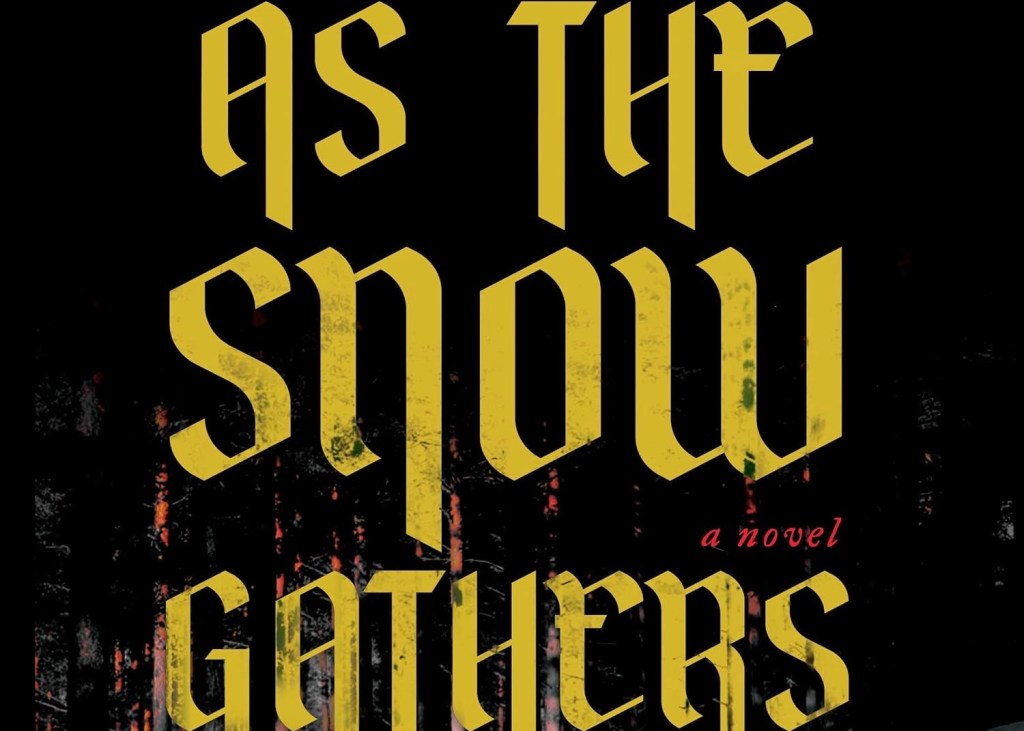
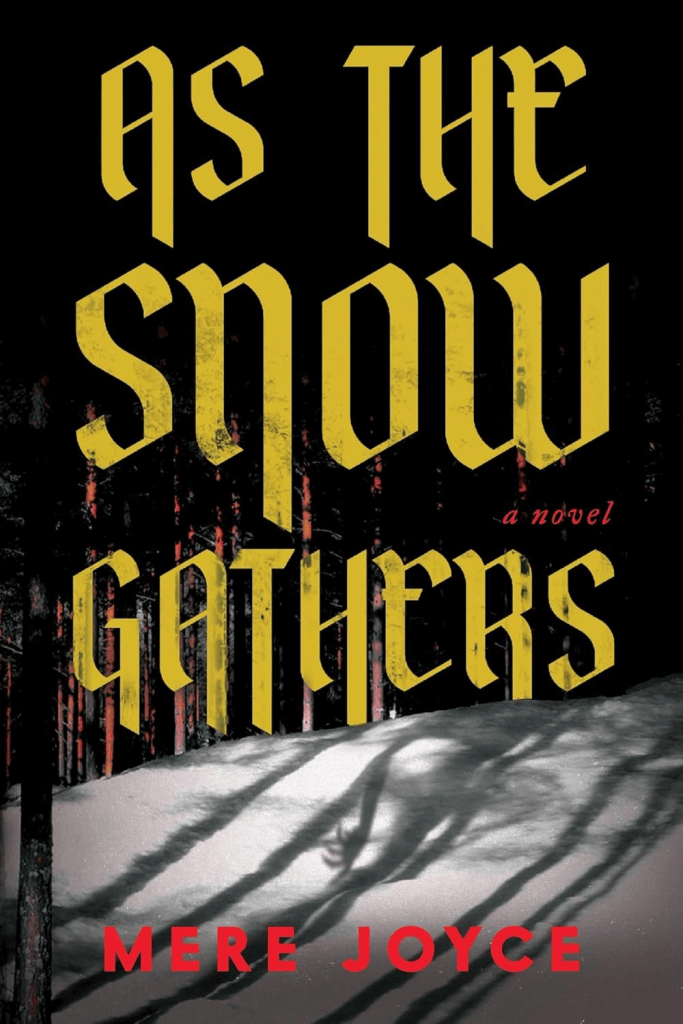
As the Snow Gathers by Mere Joyce, published September 1, 2026 by Poisoned Pen.


Leave a comment