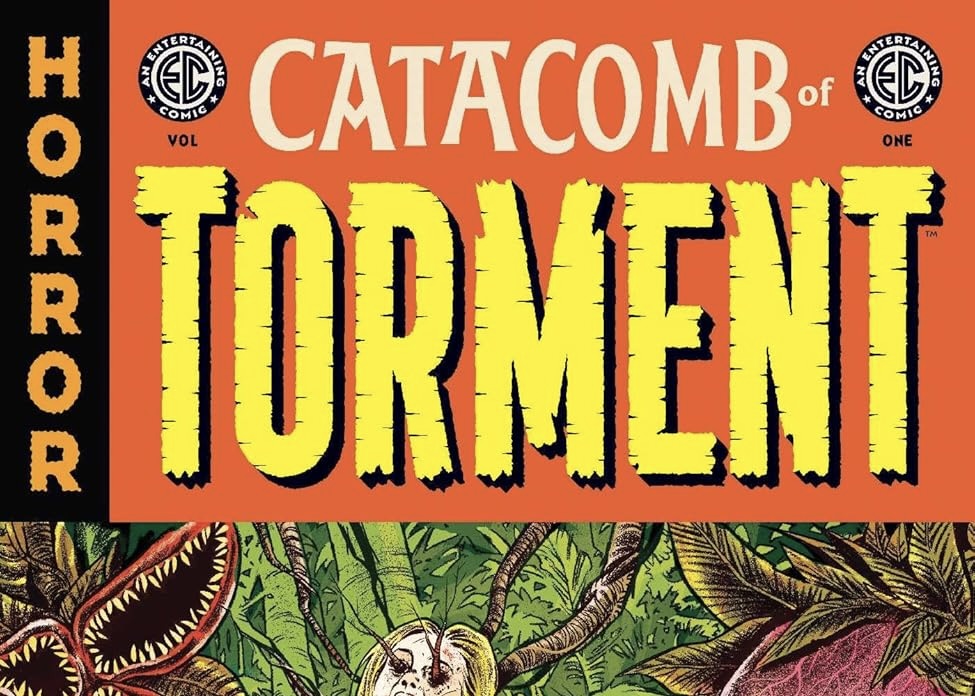
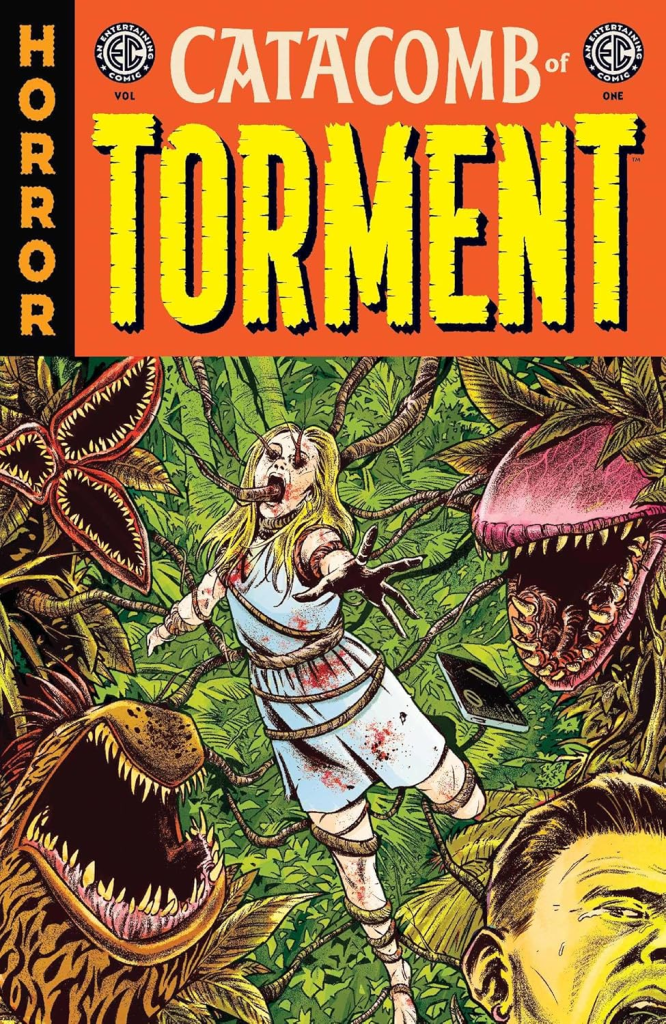






TL;DR: Catacomb of Torment Vol. 1 is EC’s gleefully vicious reboot, led by the Tormentor, a new horror host who treats human anatomy like a hobby and punchlines like a weapon. This anthology rips through modern anxieties with classic twist-ending cruelty, sharp voices, and art that makes every page turn feel like a trapdoor. Mean, fast, and fun as hell.

The first thing this book does is grin at you like a corpse with perfect teeth and say, “Relax, it’s just a story,” right before it shoves your face into the current year. Catacomb of Torment Volume 1 is a twisty anthology that wants the old-school EC snap, but it also wants to talk about modern life like modern life is the monster (because, surprise, it is). You get the gallows humor, the nasty little moral geometry, the “gotcha” endings, and a parade of creators rotating through different visual languages like it’s a haunted gallery exhibit where every room has a different smell.
Here’s the two-lens truth of it: one lens is the EC tradition of “narrator with a pun and a knife,” tight short-form pacing, and karmic payback. The other lens is the modern social-horror impulse: the real terror is racism you can’t scrub off your vacation, the smug cruelty of “hostile architecture,” the grind of family stress, the way people weaponize language, the way “polite society” is just a nicer font for predation. When these two lenses click, the book rules. When they don’t, you can feel the twist turning like a wind-up toy.
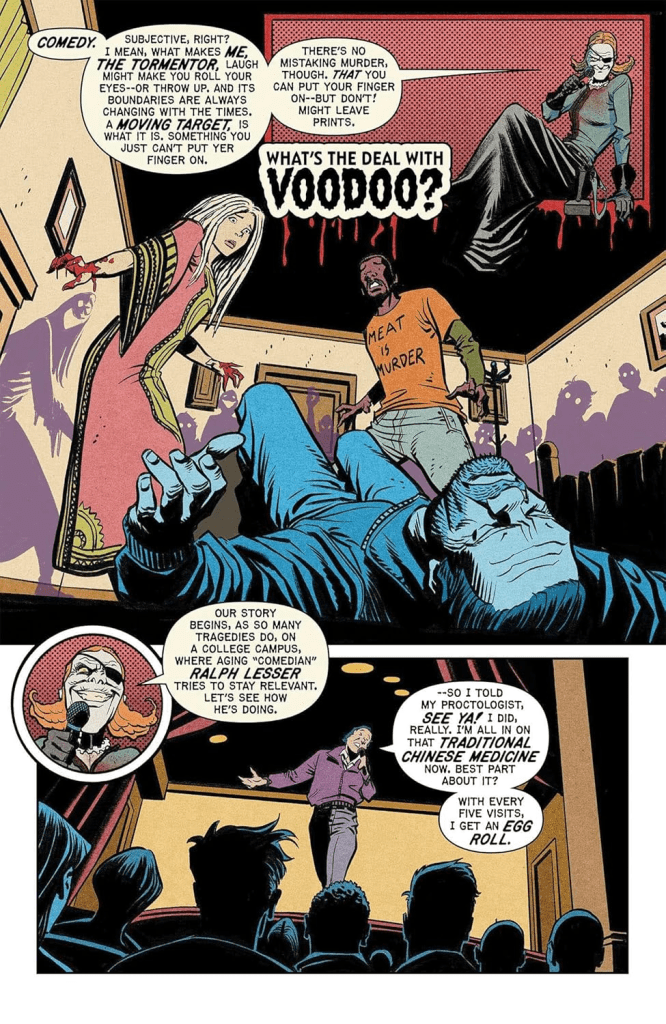
This volume collects Catacomb of Torment #1–4, a run of short horror stories introduced and buttoned by a gleeful host voice that loves bad news and worse punchlines. Each tale drops a person into a very specific pressure cooker, dials up dread through escalation and irony, then snaps shut with a consequence. The settings range from everyday modern spaces to more heightened, genre-forward scenarios, but the common thread is human behavior acting like the first infection.
Because you keep resetting, the book can afford to be ruthless. You’re always a few page turns away from a new premise, a new palette, a new rule set, and that gives the creators permission to compress like hell. Lots of these stories use the classic EC rhythm: establish normal, introduce the flaw, add one “nope” detail, then accelerate into a reveal that lands right at a page turn. You can feel the craft in how often the last panel on a page is a little hook, a facial expression held too long, a line of dialogue that reads normal until you flip and realize it was a warning label.
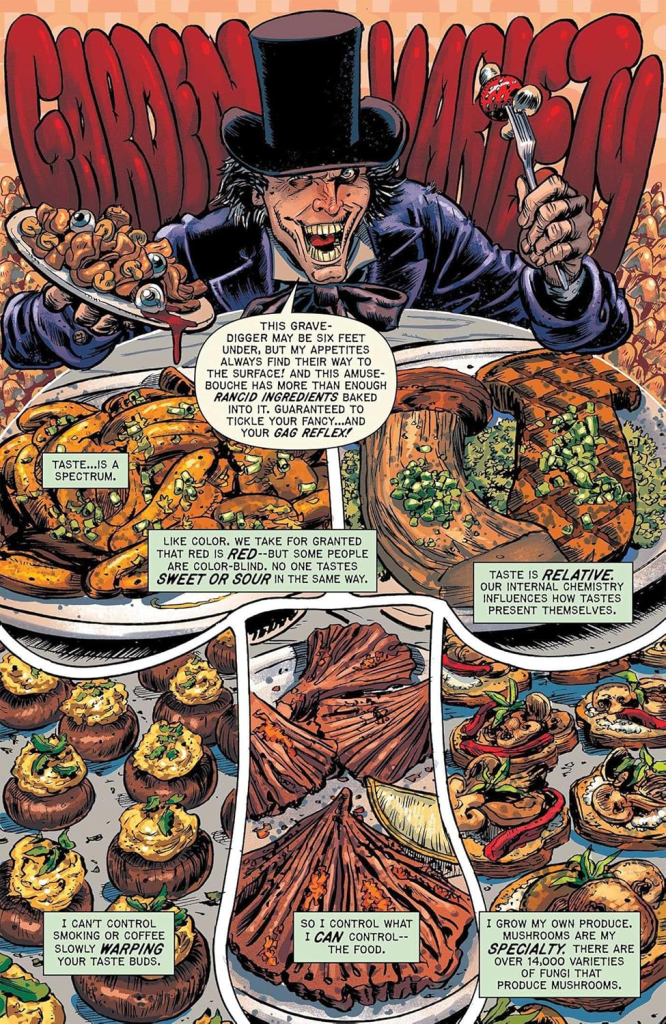
Paneling and pacing vary by story, but the best entries understand the holy power of the silent beat. A few pages will go quieter and wider, giving you space to see the environment, then they slam back into denser grids when the characters start lying to themselves. Some tales use a big establishing panel up top to lock location and status, then subdivide into smaller panels to simulate mounting pressure, like the air is getting chewed up. Others go the opposite way: tight close-ups on faces and hands, then a sudden wide panel that changes what you thought the scene was, which is a great way to do “reveal” without doing “exposition dump.”
Readability and staging are mostly strong across the volume, even when the styles change. You can tell a lot of attention went into body language and spatial coherence, especially in sequences where horror is implied instead of shown. Characters don’t just “react,” they telegraph. Shoulders creep up, eyes refuse to meet, hands hover near a door or a phone like it’s a weapon. Action beats tend to stay legible, with clear eyelines and clean panel-to-panel movement, which matters in an anthology because you don’t have time to re-learn how to read every scene.
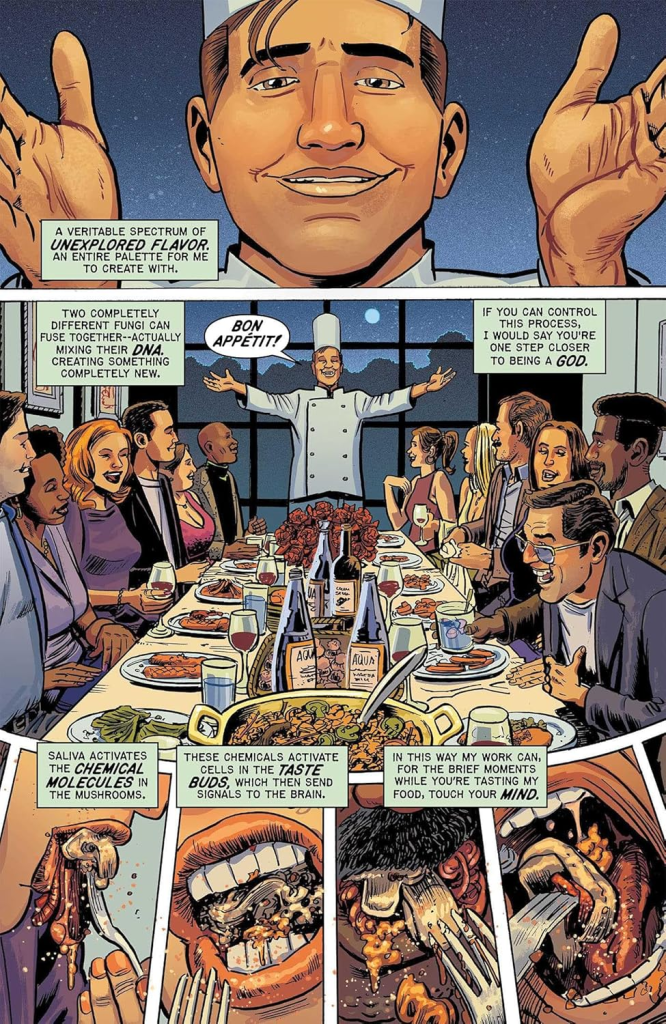
Lettering and sound do a lot of heavy lifting. Balloon density shifts depending on whether a story wants you trapped in someone’s head or watching them dig their own grave in real time. Captions often carry that classic EC narrator vibe: wry, judgmental, delighted to be right. Sound effects are generally integrated as part of the image rather than slapped on top, and when a story leans into it, the SFX become punctuation. You get that satisfying comic “thunk,” “splurt,” “whaahh” energy that makes the violence feel physical even when the panel composition stays restrained.
Color and ink choices are where the book earns its variety badge. Some stories go for a grimy, textured darkness, lots of heavy blacks and bruised tones that make the page feel damp. Others pop with cleaner lines and brighter color fields, which sounds less scary until you realize it makes the horror feel cheerful, like a smiling brochure for a nightmare. There are great uses of negative space, especially when the story wants you to stare at a room corner and realize the room is staring back. And the inks often lean into grime and shadow as mood, not just decoration, which is exactly how you make dread stick.
The horror is mostly smart. One story will stage violence explicitly, almost operatically, and let the gore be the punchline. Another will keep the camera pulled back, showing aftermath or suggestion, forcing you to do the ugly math yourself. That contrast is one of the book’s strengths. It keeps you off-balance. You never know if the next story is going to whisper or bite.
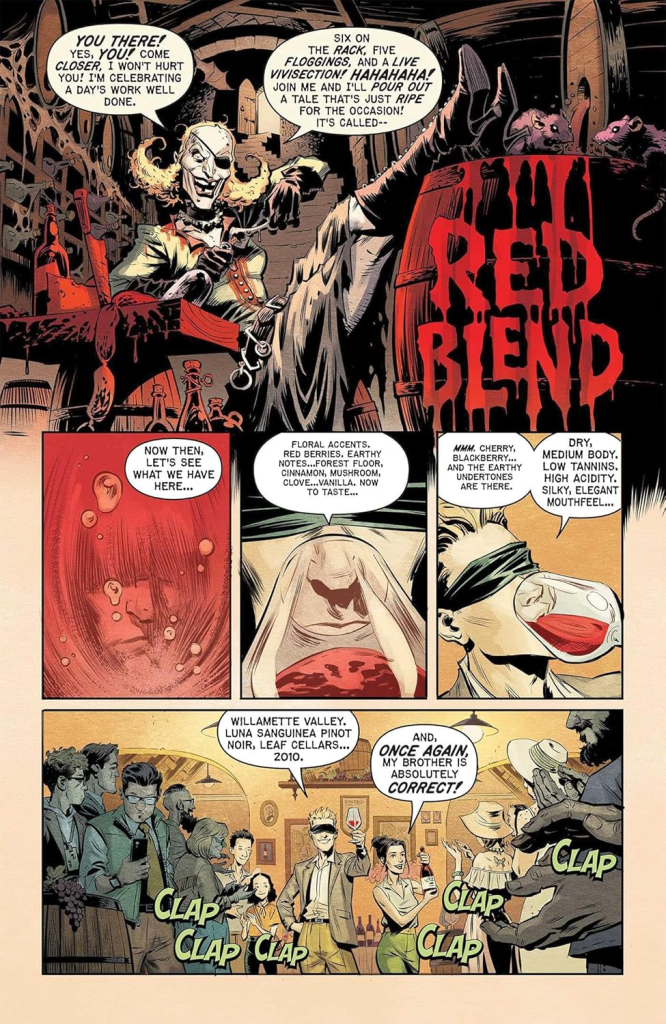
The themes are blunt in a way I respect: cruelty is often banal, and “systems” are just people doing violence with plausible deniability. This volume is obsessed with how people justify harm, how they outsource guilt, how they turn language into a shield and a shiv. Even when a story goes full creature-feature, it tends to be about the human impulse to consume, exclude, punish, or pretend nothing is happening. The monsters are entertaining, sure, but the real recurring villain is entitlement.
The anthology is uneven, and a few entries feel like they’re wearing the EC mask a little too tightly. You can sometimes predict the shape of the twist early, and when that happens, the story has to rely on execution alone. The good news is the execution is often solid. Even when I saw where something was going, the art choices, the pacing, and the host voice still kept it fun. The best stories make you laugh and then immediately feel gross about laughing. That’s the lane.
If you love modern anthology horror that is topical, mean-spirited in a purposeful way, and structurally committed to the short-form snap, you’ll have a great time even when a couple tales don’t fully surprise you. If you want slow-burn ambiguity or a single sustained narrative, this might feel like a buffet where you wish the chef would commit to one dish and really simmer it.
Creator credits (as listed in the provided file): Cover Art by Jorge Fornés. EC Exclusive Cover Art by Mark Buckingham with Lee Loughridge. Horror Hosts Design by Dustin Weaver. Logo and Design by Rian Hughes. Production Designer Angie Knowles. Editor Allyson Gronowitz. Associate Editor Jung Hu Lee. Group Editor Sierra Hahn. (Story-by-story credits are listed in the contents.)
Read if you miss EC-style twist endings that leave you laughing and then immediately checking your pulse.
Skip if twist endings make you roll your eyes instead of rubbing your hands together like a villain.
Published June 16, 2026 by Oni Press.

 The Blog Without a Face
Leave a comment