
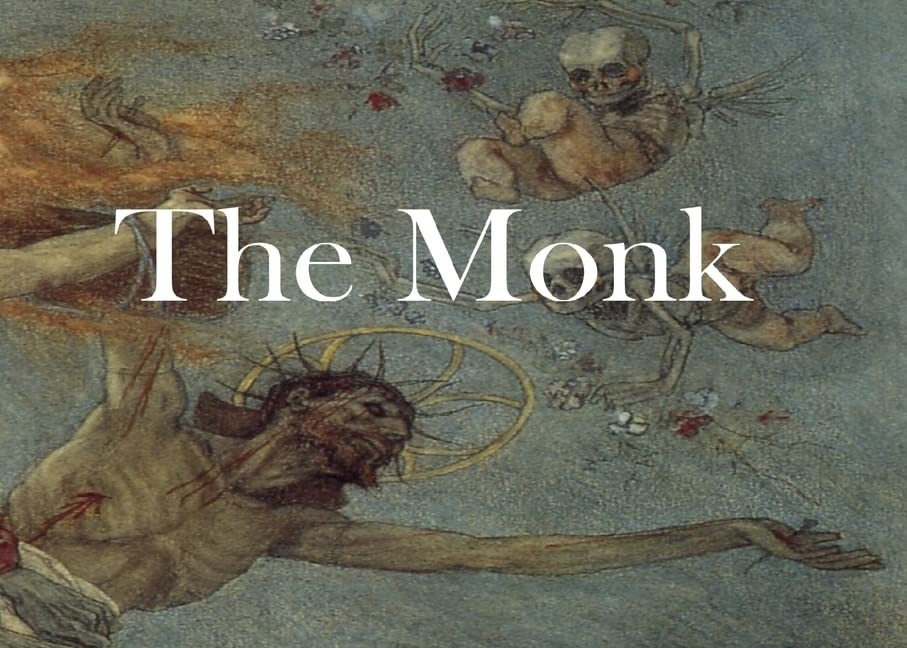
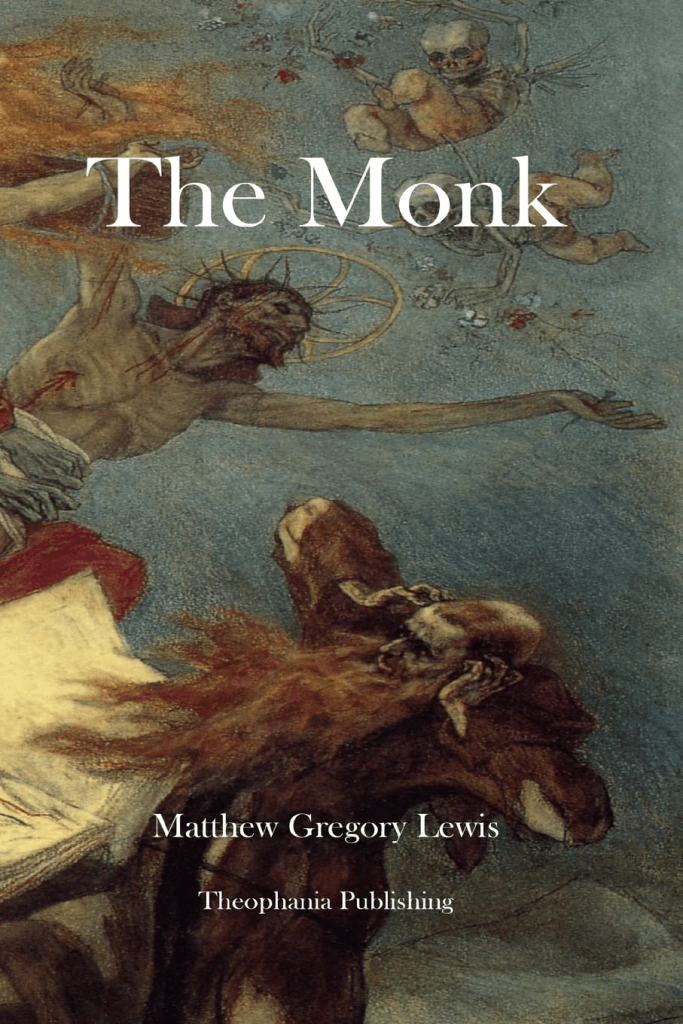




TL;DR: The Monk is a loud, horny, mean little cathedral of hypocrisy where a celebrity holy man faceplants into lust, violence, and the kind of “God is watching” dread that still slaps when it’s focused. It’s also shaggy, melodramatic, and sometimes weirdly smug about its own cruelty, so yes, modern readers should prioritize it if you want foundational Gothic trash-fire greatness, but do not expect elegance.

Matthew Gregory Lewis drops this thing into 1796 like a brick through a stained-glass window, and it lands with enough scandal to make the author infamous. He was nineteen when he wrote it and allegedly cranked it out in ten weeks, which honestly explains the book’s best and worst qualities: it has the frantic momentum of a teenager who just discovered that you can put everything in the same novel if you don’t fear God, editors, or basic restraint. The first edition was anonymous, but it did not stay secret for long, and critics (Coleridge most famously) came for its throat over immorality, blasphemy, and plagiarism. The Modern Library note is also worth keeping in mind: later editions got “cleaned up” because people clutched pearls so hard they nearly turned them into diamonds, so reading a text set from the April 1796 edition is basically choosing to mainline the original menace.
The milieu matters too. This is arriving in a Britain jittery about revolutionary “contagion,” with government crackdowns and a general vibe of authority tightening its grip. Which makes it extra funny that the book’s central fantasy is “what if the most publicly revered moral authority is actually a disaster gremlin with perfect PR.” Even the text’s own apparatus nods at how it was assembled: the Ambrosio plot is linked to the Santon Barsisa story from The Guardian (1713), and the Bleeding Nun comes out of German folkloric tradition. It’s a remix record, and Lewis is the DJ who keeps yelling “ONE MORE TRACK” while the venue catches fire.
We start in Madrid with Ambrosio, a Capuchin abbot so famous he’s literally branded “The Man of Holiness,” and the crowd treats him like a rock star for chastity. He’s been raised inside the monastery, admired into a kind of spiritual ego that’s basically a loaded gun. Then a disguised novice (and later, a woman named Matilda) ruptures his sealed little world, and what he wants mutates fast: first to protect his reputation, then to indulge desire, then to cover crimes, and eventually to outrun punishment with any bargain available. Meanwhile, a parallel thread follows lovers (Raymond and Agnes) battered by aristocratic control, convent politics, and literal supernatural intrusion, pushing the book into prisons, catacombs, madhouse energy, and one of the nastier “holy” institutions you’ll ever tour in fiction.
What still endures is the sheer audacity of the opening construction. Lewis knows how to stage a public idol, and the early cathedral scenes have this nasty clarity: Ambrosio is not just pious, he’s performing piety at a level that makes everyone else feel dirty for existing. The prose straight-up frames him as a spectacle with “fiery and penetrating” eyes, and the crowd turns his rosary into merch, literally snatching it up and dividing it. That’s killer imagery for fame-as-devotion, and it still feels modern as hell. Second, the book’s dream and omen logic is great Gothic machinery. There’s a delirious nightmare where a gigantic figure has “Pride! Lust! Inhumanity!” written on its forehead before the scene collapses into an abyss, and it’s not subtle but it works. Lewis can be blunt, but he’s blunt like a church bell dropped from a tower. Third, when he leans into claustrophobic horror, he’s a damn problem: tombs, corruption, the airless dread of enclosed spaces, and the way power turns private and predatory. Ambrosio screaming that Antonia will stay “amidst these lonely tombs… rotting, loathsome, corrupted bodies” is a moment where the book’s cruelty becomes an environment, not just an act.
Where time dulls the edge is mostly in the book’s appetite for punishment and its uneven empathy. Lewis is fascinated by sin, but he’s even more fascinated by consequences, and a lot of that consequence is distributed in ways that feel less like tragedy and more like the author gleefully pressing on bruises. The novel’s sexual violence and coercion are not coy, and while that’s part of its historical shock-value, it also means modern readers will hit stretches that feel less like “critique of hypocrisy” and more like “watch the innocent suffer because the plot needs another escalation.” The book wants you to be appalled, but it also wants you to keep looking. That push-pull is the driver, and it’s also the grime you can’t quite wash off.
Stylistically, The Monk reads like someone sprinting and occasionally tripping into a lute solo. The prose can be surprisingly clean and forward when it’s in motion, with strong, declarative scene beats and a theatrical sense of entrances, exits, reveals, and “now the door creaks.” (Lewis was primarily known as a playwright, and the bones show.) Dialogue is often big and declarative, people announcing their emotions like they’re trying to hit the back row. The book also swings tone hard: one chapter is legit dread, the next is melodrama, the next is bawdy commentary, the next is a poem about drinking out of skulls like your buddy just handed you a mixtape called GRAVEYARD BANGERS VOL. 1. That volatility is part of the fun, but it’s also why it doesn’t land as “exceptional.” You can feel the ten-week haste in the coincidences, the sprawl, and the occasional sense that Lewis is more excited by the next set piece than by stitching the emotional logic perfectly.
Still, some of the “dated” elements are complicated. The book is obviously anti-Catholic in the period-Gothic way, and it plays with a Protestant audience’s appetite for “look at these corrupt monks and terrifying convents.” Even the supplemental guide points readers toward blasphemy controversies and anti-Catholic readings, and notes that Lewis later excised passages after criticism. That makes the novel historically legible, but it also means a contemporary reader has to hold two thoughts at once: it’s attacking institutional power, and it’s also cashing in on a specific cultural prejudice. Gender-wise, it’s messy. Women are victimized, yes, but they’re also frequently the plot’s nerve endings: desire, agency, resistance, manipulation, survival, all of it, sometimes in the same character depending on the scene. The result is not “progressive,” but it’s not flat either. It’s feverish, and it shows the era’s anxieties about female sexuality and male authority without resolving them into a neat moral.
The cleanest thread is hypocrisy as predation. Ambrosio isn’t just “a bad monk,” he’s what happens when a human being is treated as holy property. The crowd’s worship inflates him into a symbol, and once he cracks, he weaponizes that symbol to harm people who can’t fight back. The horror machinery expresses that through enclosure: convent walls, prison walls, tomb walls, the idea that institutions create spaces where cruelty can happen quietly and then get justified as righteousness. The aftertaste, at least for me, is this greasy question: how much evil is “temptation,” and how much is just a powerful person realizing they can do whatever the hell they want because everyone already agreed they’re special?
The Monk feels like it poured gasoline on the Gothic and taught it new tricks: explicit sex-and-sanctity collision, clerical villainy as spectacle, supernatural intrusions that aren’t just “spooky ambiance” but active plot weapons, and the now-classic architecture of “public saint, private monster.” It helped open doors for later religious-horror riffs and a whole lineage of anticlerical Gothic where faith is both set dressing and a knife.
For shelf placement, this is the chaotic younger cousin at the Gothic family reunion. If Radcliffe is the careful architect, Lewis is the guy who kicks in the door yelling “I BROUGHT FIREWORKS,” and to be fair, sometimes the fireworks are gorgeous. The book is also a weird time capsule of an author who only wrote this one novel, but brought a playwright’s appetite for big effects and an audience’s gasp into prose form. On an anniversary read, it holds up as historically important and intermittently great, but not consistently masterful.
A hugely influential, frequently entertaining Gothic freakout with unforgettable set pieces and a nasty core, but it’s uneven, overstuffed, and occasionally so in love with its own damn depravity that it blunts the impact.
Read if you enjoy spiraling moral collapse, institutional rot, and supernatural bargain-making.
Skip if you hate anti-Catholic Gothic tropes and can’t stand the period’s voyeurism.
The Monk by Matthew Gregory Lewis, published in 1796.



Leave a Reply