

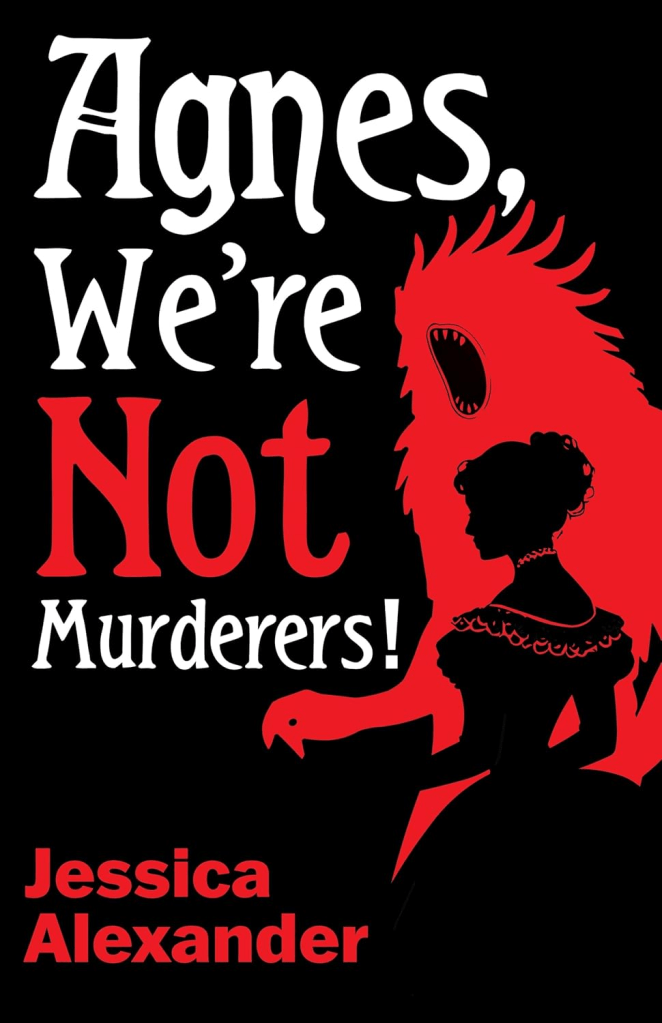






TL;DR: A feral little gothic remix that treats classic vampire lore like a haunted dollhouse you can kick open, crawl into, and then realize the walls are moving. It’s funny, nasty, and smart as hell, and even when the metafiction starts doing parkour, it still lands enough emotional bite to make the whole thing feel alive.

Jessica Alexander isn’t showing up here as a debut baby author asking politely for your attention. She’s got a track record in hybrid and collaborative work, and this novel reads like somebody who’s spent years learning how to weaponize form. She’s published a story collection (Dear Enemy) and collaborative books like That Woman Could Be You (with Vi Khi Nao) and None of This Is an Invitation (with Katie Jean Shinkle), and you can feel that background in how confident this book is about breaking the “rules” and then making the wreckage part of the architecture. This is not a “respect the genre elders” book. This is a “steal the elders’ jewelry, melt it down, forge a dagger” book.
Keep your hands and feet inside the narrative at all times because it loves to lurch. At its center are women and girls moving through an eerie, Styria-soaked vampire dreamspace and its echoing American Gothic shadows: Agnes, increasingly boxed in by illness, domestic control, and the story other people want her to be; Mary, an alluring, slippery presence who keeps reappearing under different lights; and a rotating cast of men (physicians, fathers, generals, romantics) who keep thinking they’re the heroes and keep getting told, in various ways, to shut the fuck up. There’s a convent/estate/inn complex that feels cursed down to the nails in the floorboards, and there’s a literal trunk, a recurring object that works like a portal, a coffin, a plot device, and a joke about how gothic stories smuggle women from one prison to another. Everybody wants something simple: safety, love, escape, explanation. The obstacle is that the world of the book won’t hold still long enough to grant simplicity, and the genre itself keeps changing the locks.

The structure makes this thing special, and I mean that as both compliment and warning label. The book is stitched together with footnotes, cross-references, letters, and meta-asides that feel like the book is winking at you from behind the curtain while also yanking you by the collar back into the fog. It’s a gothic vampire story that knows the entire gothic vampire library is standing behind it, breathing down its neck, and it uses that pressure like fuel. One minute you’re in lush, moony melodrama, the next you’re dropped into an acidic little aside about taste, academia, violence, and who gets to be “serious.” It’s doing a kind of collage where Carmilla-era seduction and modern rage are pasted right on top of each other, and the seam shows, on purpose. The book keeps insisting that “stories are tricks,” and then it proves it by tricking you into caring anyway.
There are set pieces that fucking kill. The trunk sequence is one of the best: it’s absurd, creepy, and horny in a gothic way where desire and danger share a mouth. The inn material is another highlight, with this vibe of history curdling into local legend, the building refusing to burn down like it’s got a grudge, and the whole place feeling like a joke told by the devil with perfect timing. And the “Martin” material, with the book openly mocking the savior-boy posture, is sharp enough to draw blood. The novel is constantly turning romantic tropes inside out: the helpful man becomes an invasive man, the rescuer becomes a nuisance, the “poor sick girl” becomes a lens that reveals how everyone else is using her.
Alexander writes with a deliberately anachronistic swagger. The base layer is gothic diction, polished, theatrical, and atmospheric. Then she interrupts it with contemporary bluntness, profanity, and essayistic voice. That clash creates friction, and friction is basically this book’s religion. Sentence-level, she loves a dramatic swell, then a hard cut. The footnotes are not decorative. They are part of the punchline and part of the wound, sometimes in the same breath. Pacing is intentionally jagged: instead of a clean escalation, you get spirals, returns, echoes, and reroutes. When it works, it feels like being dragged through a velvet corridor into a trapdoor you were warned about and jumped into anyway. When it doesn’t, it can feel like the book is so busy being clever that it forgets to let a scene simply breathe.

This book is about ownership and narration: who gets to define a woman’s body, her desire, her illness, her story. The vampire machinery becomes a way to literalize violation and longing at once, that familiar gothic double-bind where intimacy is also predation, where being “seen” is also being consumed. The aftertaste is a humid kind of fury, like waking up from a dream where you were trapped in someone else’s genre expectations and you’re still mad about it at breakfast.
Agnes feels like a smart, mean little bridge between classic gothic obsession and contemporary lit-horror’s love of fracture and commentary, but with more actual fun than the drearier “important” experimental books that act like pleasure is a sin. It’s ambitious, it’s stylish, and it’s got genuine bite. It’s not perfect, but it’s memorable as hell.
A sharp, sweaty, inventive gothic that occasionally trips over its own cleverness, but still staggers across the finish line with blood on its mouth and a grin on its face.

Read if want a gothic vampire remix that’s formally unhinged; like footnotes, letters, and narrative trapdoors; enjoy feminist teeth and literary chaos in the same bite
Skip if need clean plot lanes and a stable POV; hate metafictional side-eyes and structural games; want your gothic served straight, no chaser.
Agnes, We’re Not Murderers by Jessica Alexander,
published June 16, 2026 by CLASH Books.

 The Blog Without a Face
Leave a comment