
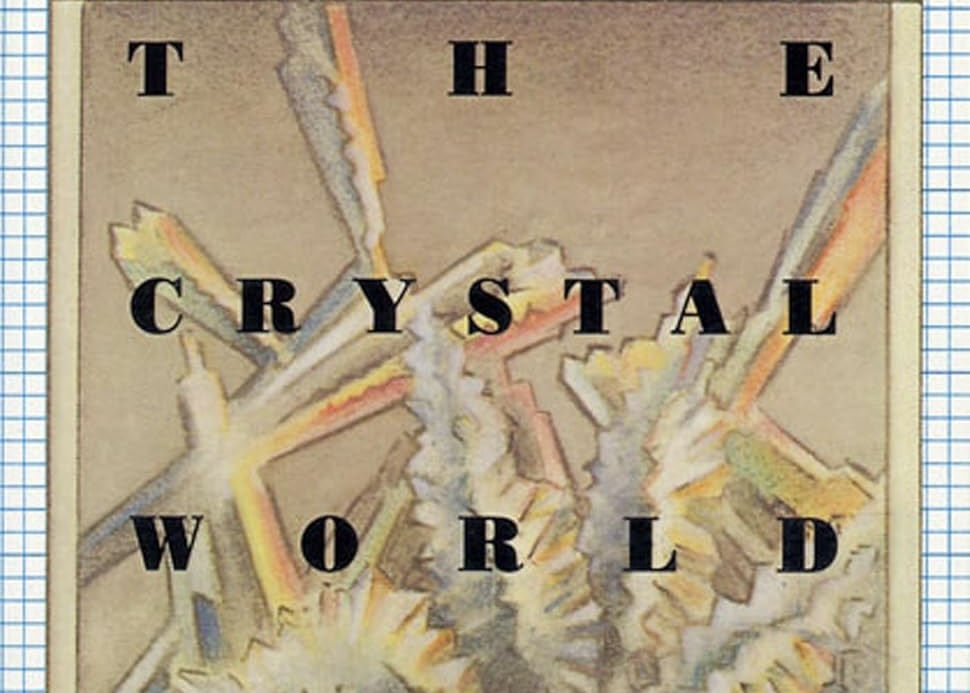
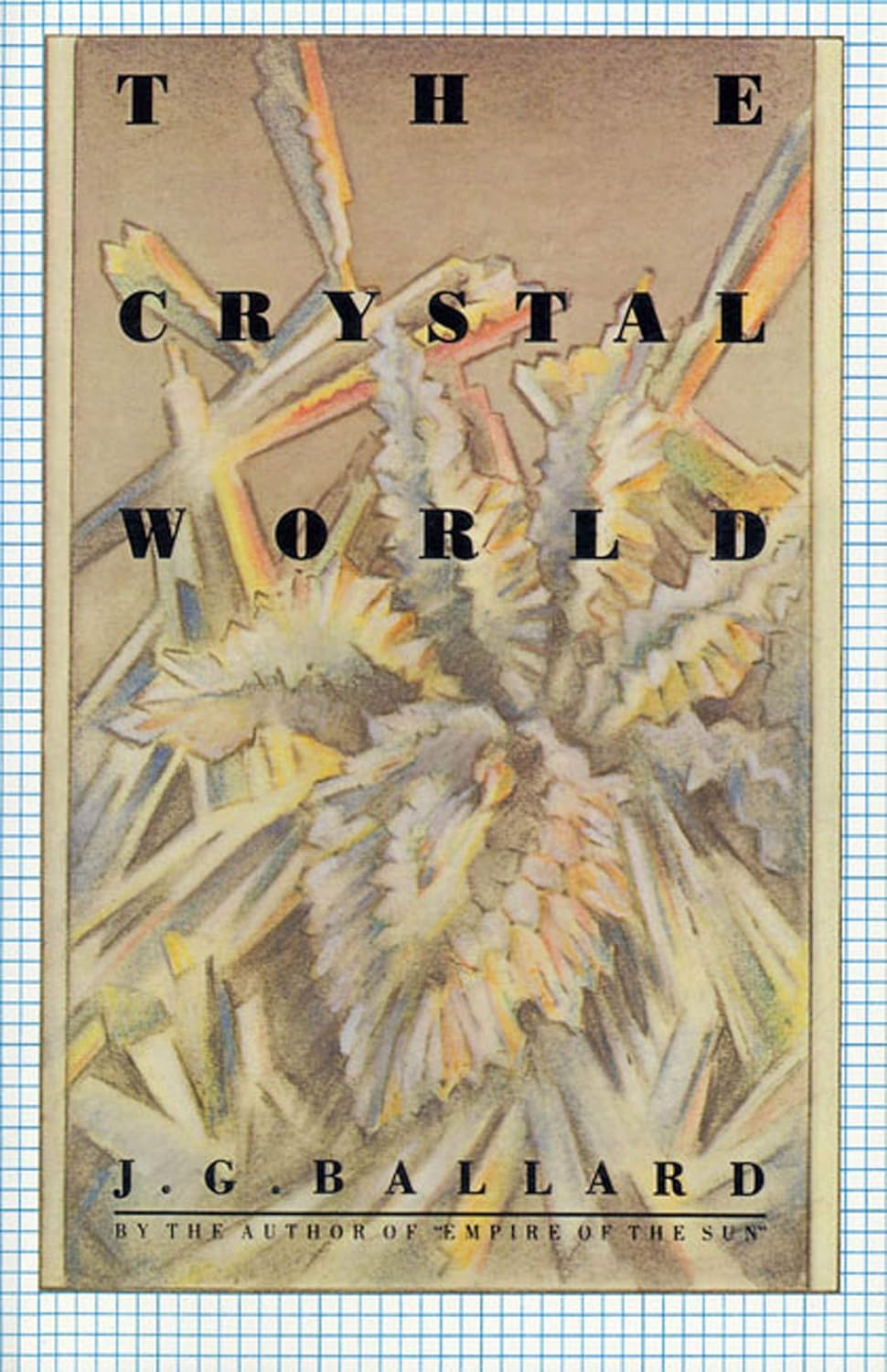






TL;DR: This is Ballard doing a slow, glittering apocalypse where time curdles, jungles turn into chandeliers, and people decide whether to flee or fuse with the nightmare. It still kills for its atmosphere, strange beauty, and conceptual audacity, even while the characters feel thin and the colonial gaze is dated. A modern reader should prioritize it if they care more about vibe and image than plot and heart.

Published in 1966, The Crystal World lands square in the British New Wave of science fiction, that moment when genre fiction got bored with rockets and decided to mainline surrealism, psychoanalysis, and end-of-the-world mood pieces. Ballard had already done The Drowned World and The Drought; this is the culminating third catastrophe, swapping water and dust for crystalline stasis. It is also a deeply sixties book, steeped in postwar malaise, nuclear paranoia, and a very specific white colonial presence in West and Central Africa, written right as European empires were nominally packing their bags but still very much haunting the landscape. The African setting is both a stage and a mirror, and you can feel Ballard mining Conrad and Graham Greene as much as sci-fi pulps. The result is a novel that smells like river mud, cheap hotel brandy, and old imperial guilt, and it has not stopped glinting in the genre’s rearview mirror.
The premise is simple and beautifully deranged. Dr. Edward Sanders, a leprosy specialist, comes to Port Matarre in Cameroon to visit old friends at a clinic upriver and to untangle his own mess of desire and guilt. There is an ex-lover, Suzanne; her husband, Max; the haunted priest Father Balthus; the gun-toting schemer Ventress; and assorted colonials and soldiers. As Sanders moves inland, he discovers that the jungle around Mont Royal is undergoing a bizarre transformation: the forest, the animals, the people, the river itself are turning into crystal, frozen in luminous, faceted stasis. Time seems to thicken. Light behaves wrong. People start choosing sides: run while you still can, or step willingly into the slow, glittering end of everything. The stakes are less “save the world” and more “what kind of person do you become when the world decides to stop moving.”
What lets the book endure is the image system. Ballard is not really interested in explaining the crystallization in any rigorous SF way, and the pseudo-physics is basically a shrug. What he does do is make you feel like you are walking through a cathedral built by a fever dream. The jeweled crocodiles, the crystal orchids, the river sheathed in a glass skin, the satellite blazing unbearably bright over the jungle, the illuminated man racing through the trees like a living chandelier: these are all-timer images. They work like recurring hallucinations, and Ballard hammers them until they sink in. The opening in Port Matarre, with Sanders fixated on the unnatural darkness of the river and the weird auroral light on the shabby hotels, is already unsettling; by the time you hit the heart of the crystallized forest, the whole book feels like a prism someone pressed against your brain. Even when the plot meanders or the conversations feel like stagey therapy sessions, the imagery keeps punching above its weight.
Craft-wise, this is prime sixties Ballard: cool, clinical sentences loaded with baroque description, third-person close on Sanders but emotionally distanced, moving in and out of hallucinatory set pieces. The prose rhythm is relatively slow, almost hypnotic; this is not a book that hustles. Scene construction leans more on tableau than on forward-driving action. You get a lot of people standing around in weird light, talking obliquely about death, time, and desire, while the jungle quietly turns into a cathedral of frozen flame. If you want snappy dialogue and big twists, you are going to be irritated as hell. If you are okay with plot as a loose clothesline for images, you are in good hands.
From a 2020s perspective, some pieces have aged incredibly well and others are crusted with old shit. The stylistic boldness feels timeless; plenty of current “literary horror” and New Weird stuff is still trying to hit this temperature of dreamy dread. The whole idea of the environment mutating into something beautiful and lethal at once, and humans being drawn into it like moths, could sit happily next to VanderMeer or Langan. On the other hand, the colonial setup is almost painfully of its time. African characters are mostly background, function, or symbol. The moral center of the book stays firmly with the European interlopers wrestling with their own spiritual and psychological crises while the local population just evacuates stage left. It is not hateful, but it is myopic. You feel it whenever Ballard wants to talk about “the forest” and “the natives” in big impersonal sweeps. Also, many of the women are typed primarily as emotional or erotic catalysts; Suzanne and Louise have moments of genuine presence, but a lot of their function is to refract Sanders’s anxieties and Ballard’s own fixations. That part feels lazy by current standards, and it takes a bit of effort not to roll your eyes.
Underneath the glitter, the book is about stasis, entropy, and the seductive pull of giving up motion. The body horror is fairly mild on the surface, but the real horror is existential: what if the universe is sliding toward a perfect crystalline stillness where nothing hurts and nothing changes, and some part of you wants that. Sanders works with lepers, bodies literally losing pieces of themselves; now he confronts a different kind of dissolution, where individuality is surrendered to a frozen ecology of light. Father Balthus’s crisis of faith, Ventress’s manic aggression, Suzanne’s ecstatic descriptions of the jeweled forest; all of these are different responses to the same cosmic invitation. Ballard uses crystallization as a metaphor for psychological fixation, for trauma that stops time inside you, and for the allure of an aestheticized death. The aftertaste is strangely tender and bleak at once. The next day, you are left with this nagging question: if the world started to end in a way that was terrifying but gorgeous, would you run, or would you just say “fuck it” and walk into the light?
The book’s influence is sneaky rather than blockbuster. It never became a pop-cultural juggernaut, but it seeded a ton of later work. You can feel it in basically any story where landscape and psyche melt into each other: New Wave SF, New Weird, eco-horror, cosmic horror that cares more about mood than monsters. The idea of an area where physical laws have gone strange, transforming the environment into deadly art, echoes through everything from Annihilation to weird videogame zones. Ballard’s insistence that the true “monster” is a shift in reality itself, experienced as both horror and erotic attraction, is something a lot of modern horror is still chewing on.
If you are the kind of reader who needs clean arcs, deep character interiority, and airtight worldbuilding, this book will feel like being lost in the woods on really strong cough syrup. The characterization is deliberately flat and emblematic. Sanders is less a fully fleshed human and more a set of compulsions in a lab coat; Ventress is basically a walking death wish; Balthus is spiritual crisis in priest drag. They all speak in Ballard-ese, this slightly chilly, elevated register. But there is a weird consistency to it. The book is not pretending to be realist; it is a myth about people drifting toward a static, glittering afterlife that has invaded the living world. If you meet it on those terms and stop expecting something like a tight thriller, it becomes easier to just sit with the strangeness and let it mess with your head. And honestly, sometimes it is nice to read a book that is perfectly happy to be a beautiful, fucked-up cul-de-sac rather than a three-act engine.
Within Ballard’s output, The Crystal World sits in that second tier that is still absolutely worth your time. Crash and High-Rise are sharper and more vicious; The Drowned World arguably has a stronger, cleaner concept. But this one may be the purest distillation of his “inner space” catastrophes, where the disaster outside is just a mirror for the slow freeze inside the characters’ heads. In the broader canon of sixties horror and SF, it deserves a place as one of the strangest, most visually memorable end-of-the-world novels, even if it is not the most accessible or emotionally satisfying.
The Crystal World is a gorgeous, chilly, occasionally tedious mindfuck that trades warmth and momentum for some of the most haunting apocalyptic imagery you are likely to find, and it still earns a strong recommendation for anyone willing to let a book get beautifully, luminously under their skin.

Read if you love eco-horror and cosmic horror where the “monster” is physics having a nervous breakdown.
Skip if you require brisk pacing; the book is content to wander, repeat, and just stare at the shiny doom.
The Crystal World by J.G. Ballard,
first published in 1966.


Leave a comment