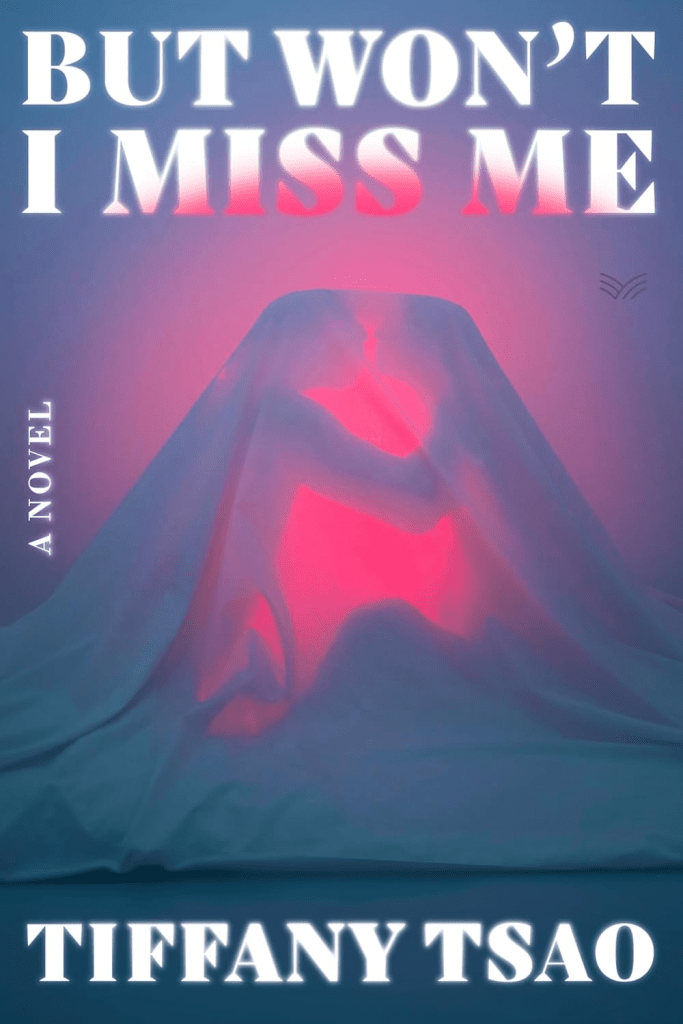


TL;DR: Tiffany Tsao has written the rare horror novel that earns its premise sentence by sentence. But Won’t I Miss Me is a book about a third stage of labor nobody questions, rendered in prose so controlled it makes the unbearable readable. The cleanest piece of horror writing I’ve read this year. A title that means more on the second pass.

But Won’t I Miss Me is a horror novel about a third stage of labor that nobody questions. The handbook calls it rebirth. Mother delivers child. Mother’s body produces a hormone. Mother falls asleep. A small, identical self crawls out from between her legs, slug-sized at first, full-grown within minutes. The small self is the mother now, this second one, only stronger. Then it eats the first. Bones, organs, hair, blood. The matter-of-fact tone is the handbook’s, not Tsao’s. Tiffany Tsao quotes the handbook in a block quote and moves on. So does everyone else in the book.
This is the world. Vivian, called Vivi, was supposed to go through it. Something went wrong. She came out the other side without the new-mother muscles, the new-mother brain, the new-mother capacity to know what her child wants without being told. She came out the same person, more or less, only worse. (Her husband, Gabe, finds this unacceptable. His promotion was supposed to coincide with her domestic competence.) The first half of But Won’t I Miss Me is the small irradiated weather of her life now: peanut butter folded inside a slice of white bread, jellybeans her old boss Acek slips to her toddler when she pretends not to look, the puke-yellow sofa in the country house, two pieces of plastic Hot Wheels track that don’t fit together, “machine mode,” the term Vivi uses privately for the dissociated state she enters when her son screams.
The prose moves the way a person moves who has been through something and has decided, going forward, to be precise. It catalogues. The Wiggles on a hobbled DVD whose screen flickers. The Casio watch Acek taps before leaving. The brochure from Mothering Made Simple with its wheel-chart of ideal infant solids. The lentil puree spectacularly rejected. The phrase Persistence is key. Your child’s nutritional well-being is at stake, running through Vivi’s head like a banner ad on a loop. The horror in But Won’t I Miss Me is that mothers eat themselves and the doctors send a brochure home and the magazines run a feature on pre-rebirth nutrition and a small industry of bedside cots accommodates the difference between a new mother’s hyper-vigilance and a father’s clumsiness. The horror is that everyone is nice about it. (Everyone except Vivi, who can’t quite be nice about anything anymore.)
The mommy-blogger setpiece is the cleanest piece of horror writing I’ve read this year. Greta Wilde, on a previous internet, on a tiered hosting plan, dewy-skinned in a tie-dye crop top, has decided to record her at-home rebirth this time, for empowerment. We don’t need to pretend it’s all pretty with a big pink bow wrapped around it, she explains, dabbing at her eyes, careful not to smear her mascara. Tsao films her in two shots. First on the sofa, lit, smiling, sponcon-ready. Then naked on a yoga mat, her new self crouched above her, lifting her by the throat. The blog persona and the body are the same body. The voice gives the reader nowhere to run.
Then the book reorganizes itself. I will not say how. I will say that Part II is told by a different narrator. I will say that the section is addressed to Vivi as a long second-person letter, and that the addressee is the Vivi we already know. I will say that the title, Vivi’s question to Gabe in pregnancy, asked of the embryonic blob in the corner of her thirty-week holosonogram, turns out to be doing more work than it looked like. But won’t I miss me? The book has been answering this question the entire time and we did not know. Read Part I again afterward and the doubled sentences hum with what they were always saying.
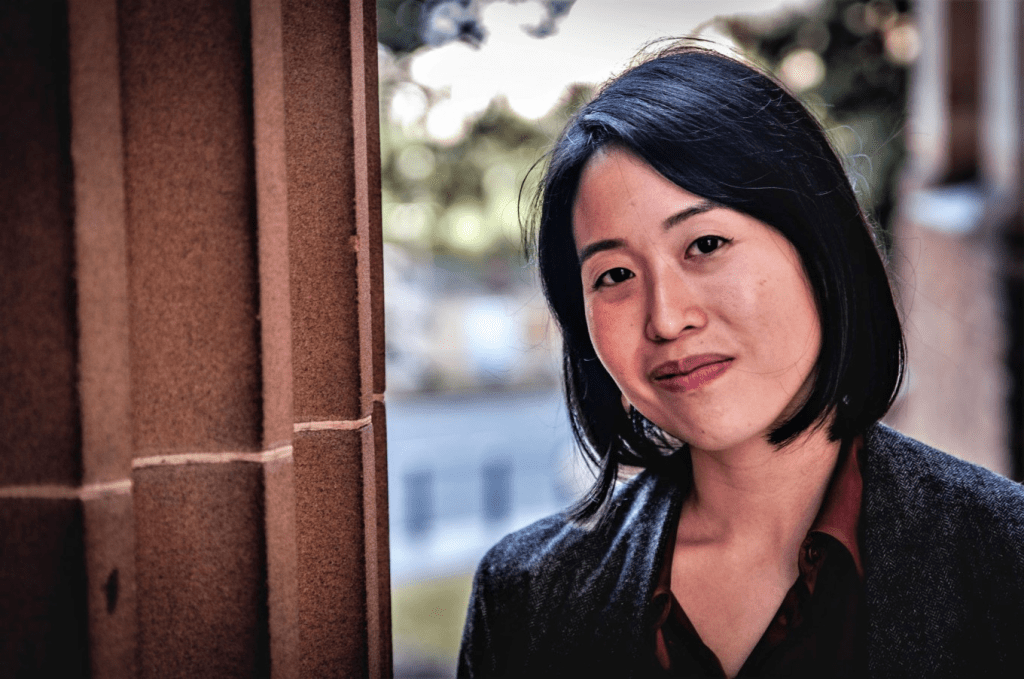
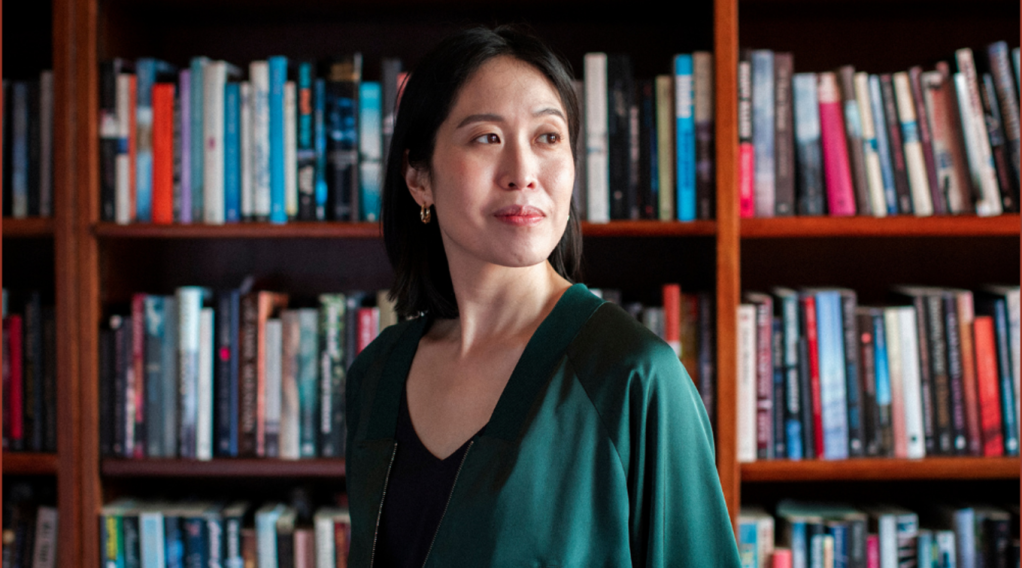
Tiffany Tsao is the author of The Majesties and the Oddfits fantasy series. She is also a literary translator from the Indonesian. She received the 2023 PEN Translation Prize for her translation of Budi Darma’s People from Bloomington, and her translation of Norman Erikson Pasaribu’s Happy Stories, Mostly was longlisted for the International Booker in 2022. She holds a PhD in English from UC Berkeley. She lives in Sydney, on Gamaragal land. In her author’s note, she writes that the novel began in 2018, when she was pushing her two young sons in a double stroller down a shop-lined street and her depression had been deepening since the birth of her second. Two thoughts arrived in quick succession: her body as a flooded cavernous house with a tiny version of herself treading water inside it; the possibility that she was not herself, that another version of herself had eaten and replaced her. The book is a working-out of these two images. Knowing this does not make it smaller. It makes the precision visible.
The third part is shorter than the other two and is told by Vivi’s son, now a grown man, now writing a report for a UN maternal health committee. The report is about reforming the practice the book has spent three hundred pages letting us live inside. There is a case to be made that this final movement is too literal, that the metaphor wants to stay metaphor and the ending wants to legislate. I see the argument, and I am not persuaded by it. The literalism is the same literalism Tsao has been using since page one: this is what is happening, this is what we do about it, this is what we don’t.
It is a horror novel and a domestic novel and a Chinese-Indonesian diasporic novel (the May 1998 riots in the periphery, Pa fixated on a motherland he never lived in, the long shadow of the 1965-66 anti-communist massacres, Acek’s quiet history of being “different” in his Medan childhood) and it does not act as if it has to choose. The world it builds is grim and energy-rationed and reasonable, fitted with hobbled toaster ovens and Eco-Quik liners and bioluminescent worm-bollards in the streets of Bangkok, and the worst thing that happens in it is what happens to women, and the women keep showing up to work. The book is about the women keeping showing up. Vivi, in machine mode, picking up the lentil-stuffed pasta tubes from the playpen one by one. Her mother, a generation back in Medan, pointing to the place on her foot where a scar used to be.
What Tsao understands, and what makes the book work as horror, is that the question in the title is not rhetorical. Vivi asks it. Gabe laughs. The novel does not.

 The Blog Without a Face
Leave a comment