

TL;DR: A haunted-house novel where the marriage is the real ghost and the missing spatula is the real haunting. Pokwatka’s eye for domestic dread is documentary-sharp, her prose patient and accumulating, occasionally tender enough to bruise. The supernatural set pieces don’t crest and the ending flinches, but read it for the kitchen, not the doll.

The thing nobody tells you about a 1750s house is that it absorbs people. The thing Aimee Pokwatka tells you, on page two of Accumulation, is that you might be one of the people it absorbs, and you might not notice for ninety thousand words.
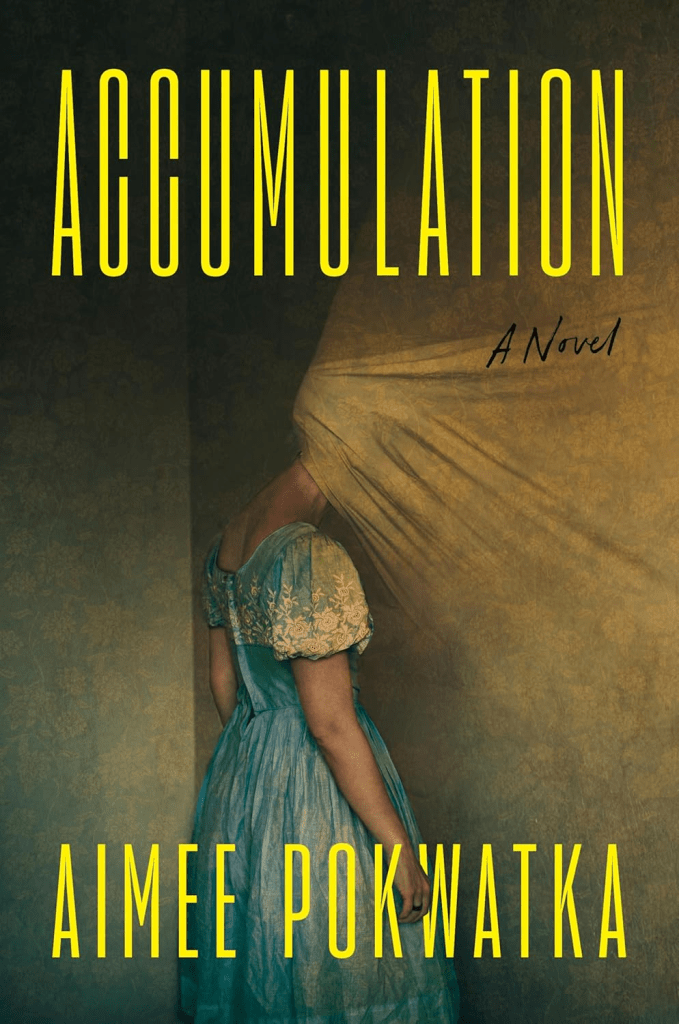
Tennessee Cherish, called Tenn, is a documentary filmmaker who became a stay-at-home mother and is now becoming a haunted woman, in that order. Her husband Ward bought her the dream: a 1750s colonial in New York with pitched floors, light switches in the wrong rooms, and a witch in the buckeye out front. He bought it because he loves her, and because he is sorry about something he will not name. Tenn loves it because she loves him, and because she wants to want what he gave her. The kids are seven and ten and have started inventing rules about which plates are allowed and how much milk a bowl can have. The dog is named Gogo. Gogo eats Post-its.
Pokwatka knows this house. She has paid for it in her own life.
There is an essay of hers at CrimeReads about an actual 1750s place she and her husband bought in Westchester. They moved in. They found a creepy doll in the front-yard ivy. They started pranking each other with it the way a married couple does, hiding it in glove compartments and underwear drawers, laughing, getting on. Then she sat down at the kitchen table to write the book about pranking each other with the doll, and the book turned into something else. The book is what was under the prank. The book is what the doll knew about her.

Here is where Accumulation is excellent: the minutiae.
The little spoons that keep going missing. The faucet that runs cold for no reason. The three wilted dandelions a child put in the utensil drawer instead of the spatula. The Post-its that curl off the cabinets in August humidity and get eaten by the dog. The ghost of a daughter being asked, for the eighth time, about Thanksgiving plans while the mother is scrubbing last night’s casserole pan with hands that won’t warm up. Pokwatka has the documentary filmmaker’s eye for the actual texture of a domestic day. Tenn does too. They are sometimes the same person.
The book understands how a marriage runs out of words. Tenn and Ward repeat the same exchange across the novel. He comes down the stairs. She asks him to take out the trash. He says they are out of little spoons. She says she will run the dishwasher. They have this conversation half a dozen times across the book and Pokwatka absolutely knows what she is doing with it. It is the real horror of the novel. The supernatural is just the venue. The script was already there.
What works in the prose: Tenn’s body keeps writing words on itself. Welts rise out of her forearm in raised letters and bloom into language. DOGHOUSE one day. Other words later. Her skin is a Ouija board and she is also the hand and the spirit and the husband next to her saying what does that mean. That is a fucking horror image. That goes in the canon.
What works less: the haunted-house parts that are supposed to do haunted-house stuff. The doll keeps showing up where it shouldn’t, and that is funny when it is funny and a little tedious when it isn’t. The set pieces of mounting menace, a fall from a ladder, a child gone missing in the night, a husband sleepwalking around the kitchen, are intelligently staged but they don’t stack into terror. Pokwatka is excellent at low atmosphere and mid-range dread. She does not crest. There is no scene in this novel where I forgot to breathe. There are several where I did not want to put it down. Those are different things.
The ending is where I have to be honest. Pokwatka has built a long, careful accumulation of irreparability. Cracking walls. A leaching field collapsed under a backhoe. A marriage worn down to the wires. Then she offers a key. The metaphor that earns the book its title, the resolution is intelligent and humane, and the book wants to leave you somewhere hopeful. I see what she did. I respect it. I just do not entirely buy it. Some of the dread Tenn earned was the kind that has no back door, and the book finds her one.
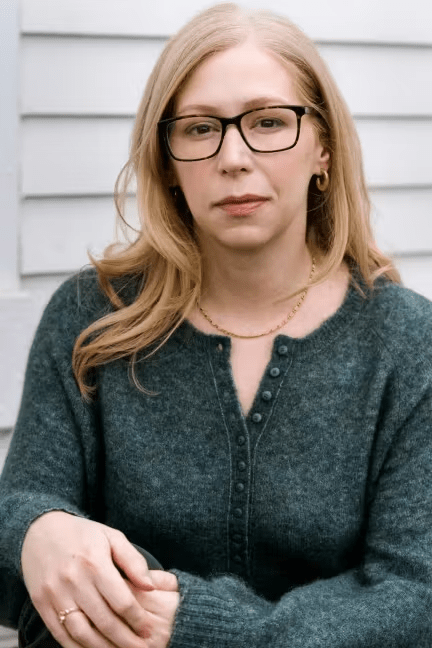
About Pokwatka. She grew up in Wheeling, West Virginia, studied anthropology at UNC Greensboro, where she helped catalogue archaic-period human skeletal remains (a fact that explains every page of her work, if you ask me), and took her MFA at Syracuse, where George Saunders later blurbed her debut. Self-Portrait with Nothing was a New York Times Best Fantasy of 2022, about a painter who could summon variants of her subjects from parallel universes. The Parliament, in 2024, trapped a chemist and a class of middle schoolers in a public library while ten thousand small owls outside ate anyone who tried to leave. She does not write the same book twice. She does not explain her premises. She lets the strange thing be the strange thing and gets on with the people. Accumulation is her first explicit haunted-house novel, and probably her most autobiographical, since the haunted house is the haunted house she actually still lives in.
Read this if you have ever stood in a kitchen at two in the afternoon holding a sponge and not been able to remember what you came in for.
Read it if your marriage has a missing spatula in it.
Read it if your dream house has been quietly billing you for the privilege.
It is a smart, ambitious, beautifully attentive book that flinches at the last second from how dark it could have gone. I am glad it exists. I wanted it to wreck me and it only mostly did.
Accumulation by Aimee Pokwatka, published May 5, 2026 by G.P. Putnam’s Sons.



Leave a comment