






TL;DR: Lauren Osborn’s Entomology of the Pin-Up Girl is a gorgeous, nasty little marvel: lyrical body horror that treats metamorphosis like a religion and a threat. Every story commits, pins, and writhes, turning insect obsession into a pressure system for desire, shame, and power. Daring, sharp, and weird in the best way.

The opening story is a series of small taxonomic entries, and somewhere around the second one I knew Lauren Osborn could write. Mantis religiosa: she loses her virginity at thirty one, and afterward the hunger does not quiet, and she keeps purging what she eats to make room for more. The Latin name up top, the gut shot under it, that is the move. The third entry of the same story is Homo sapiens. The girl gets a scientific name too. The book is going to do this to you, and it has not yet hit page eleven.
More than two dozen stories follow. Most are short. They are about women becoming things they did not ask to become, or wanting to and not being allowed, or trying for the wrong transformation and getting stuck partway through it. A wife cocoons in the master bedroom and her husband, an engineer, finally takes a vacation day to dig her out. A receptionist eats a coworker because she has eaten everything else and was working through a list. A girl plants her last baby tooth in the garden and grows herself a daughter. None of this is metaphorical. None of it is not metaphorical either. Osborn writes the kind of story where the woman is a spider and we are not going to talk about whether the spider thing is a symbol.
I read most of this collection on a Tuesday night with my phone face down. The story called “Boy” is the funniest thing I have read in a while, and I want to be precise about what I mean by funny. I mean: a woman invites a coworker home, and after he fails to pick between Earl Grey and peppermint, slips an oval pill into his cup. “Coffee it is, she said.” That is the whole register. Osborn does not blink. She does not wink either. The story goes where the story is going and the leftovers go into rye for tomorrow’s lunch.
That register is the gift. It is also why the back half of the book runs into trouble.
By the time you have read “Boy” and “Baby Teeth” and “St. Lucy’s Gift” and “Gossamer Girl,” you have read the move. Woman finds out she is something else. Lyrical, taxonomic, surreal. The body does the body horror. The story ends on an image that fades. The next story does it again with a different bug and a different woman and the same lyric register, and somewhere in the back third I caught myself anticipating which way each conceit would tilt. That is a problem I did not want to be having with a writer this good. Osborn has a register. She does not yet have registers.
Still. When the stories do work, they work the way the best horror works, which is by walking up to you in the kitchen.
“St. Lucy’s Gift” cost me an evening I am not getting back. It is a love story between a many eyed angel and a saint with no eyes, and the angel hides her extra mouths in the folds of her own neck because she is afraid that if Lucy ever sees her, Lucy will see what she actually is. The lie is the love. I read it twice and then I sat on the kitchen floor for a while. “Don’t Come Looking for Me” is a quiet apocalypse where the insects go first and nobody quite clocks it. The wife who is left counting living things out her bedroom window, one black bird, one fly, one baby mole between the dog’s teeth, is the best grief portrait in the book and one of the better grief portraits I have read in years. “Baby Teeth” I had to put down twice. The mother grows a daughter from a molar she pulled out with pliers in her own bathroom, and then feeds the daughter pieces of herself for the next forty pages, starting with toes. The mother loves the daughter. The daughter is hungry. Mothers in this book are eaten and mothers in this book are also doing the eating and Osborn does not pretend these are different jobs.
What the collection wants for is range. Every sentence is a little baroque, a little perfumed: boiled silk, milky moonlight, fingers working thread into skeins into dresses they could not afford. At first this is the music. By the back half I wanted Osborn to put the violin down for one paragraph and let something hit flat. The stories that come closest to doing that, like “Boy,” are also the strongest stories in the book. The pieces in poetry format like “Hive Mind” read like fragments from another collection she stitched into this one. A few stories quit while they are still stretching. “Mantodea” is a praying mantis sex scene that ends a paragraph before it has any weight. “Truffles” wraps just as it is becoming the story it should have been from the start.
And yet.
There is a line in the title sequence about a girl whose breasts are tick bites and I cannot get rid of it. There is a woman in Ecdysis who finds her husband’s body unzipped on the bathroom floor and climbs inside it because she finally wants to know what he keeps in there, and I cannot get rid of that either. There is a story called “In the Land of Hungry Ghosts” where a girl walks up to an elephant and tells her, kindly, that we are eating her species now. The elephant asks why. The girl picks a blade of dying grass. That is the whole story and it has no blood in it and it is one of the most upsetting things in the book.
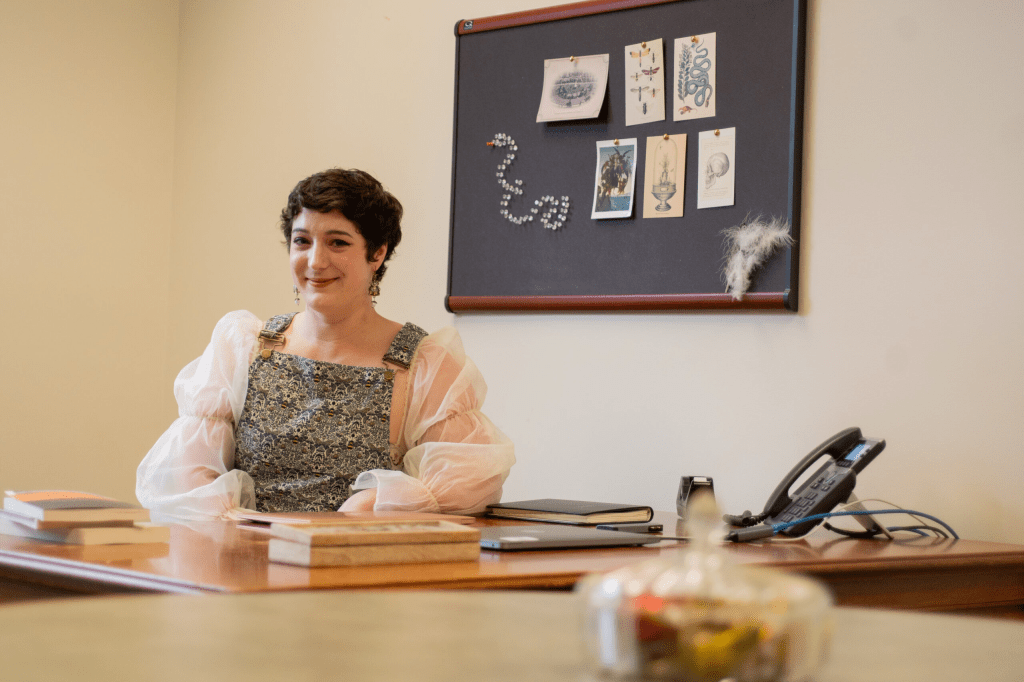
Osborn was born in Hattiesburg, Mississippi. She studied psychology at UAB before going to her MFA at Queens University of Charlotte and a PhD at Oklahoma State, where she ended up co-building a course with an entomologist on writing creatively about insects. She owns seventeen tarantulas. She is currently teaching at Gettysburg. The collection won the 2024 Dzanc Books Short Story Collection Prize, and the title story was a CutBank flash fiction finalist before that. Her own favorite story in her own book is “St. Lucy’s Gift,” which I do not blame her for. “Boy” got optioned for film. I will watch that adaptation and I will be furious if they soften it.
If you came to weird fiction through Aimee Bender or Joy Williams or Carmen Maria Machado, you have already preordered this. If you have ever pinned a moth to a board and wondered what the moth thought of you doing it, you should pick this up.
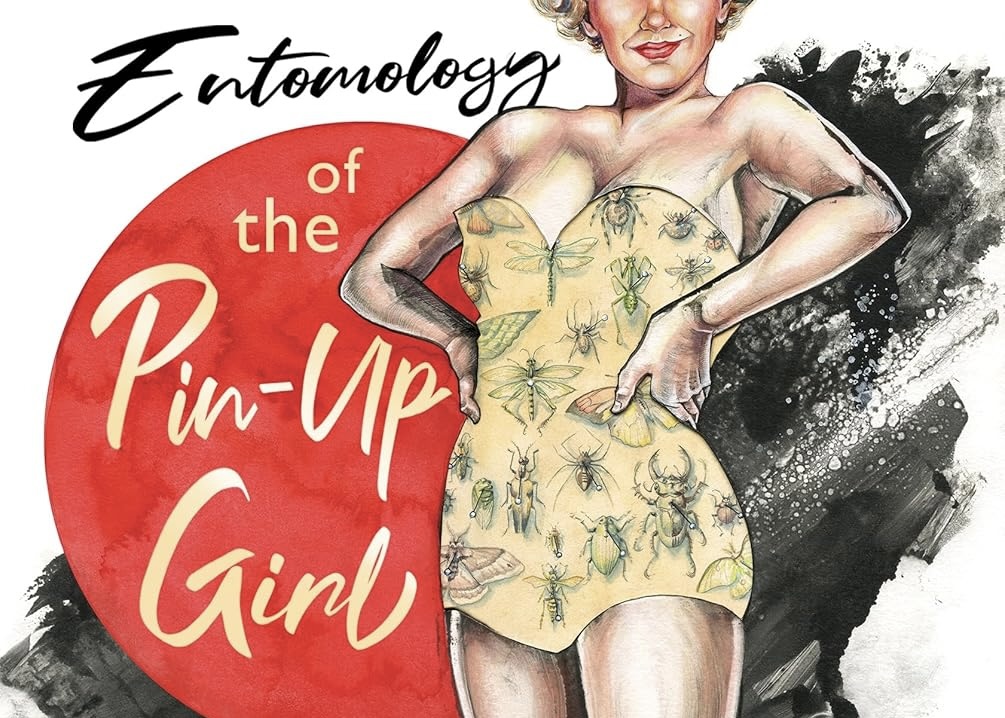
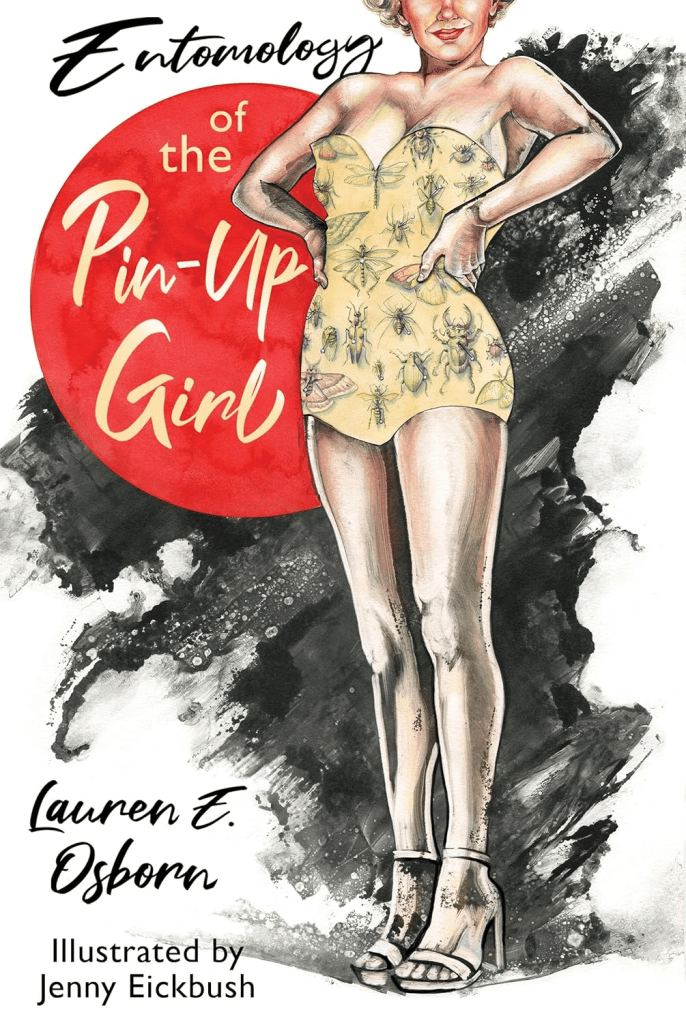
The cover has a bug on it. The bug has a girl in it. Osborn would say that is redundant.

Entomology of the Pin-Up Girl by Lauren E. Osborn, published May 12, 2026 by Dzanc Books.

 The Blog Without a Face
Leave a comment