
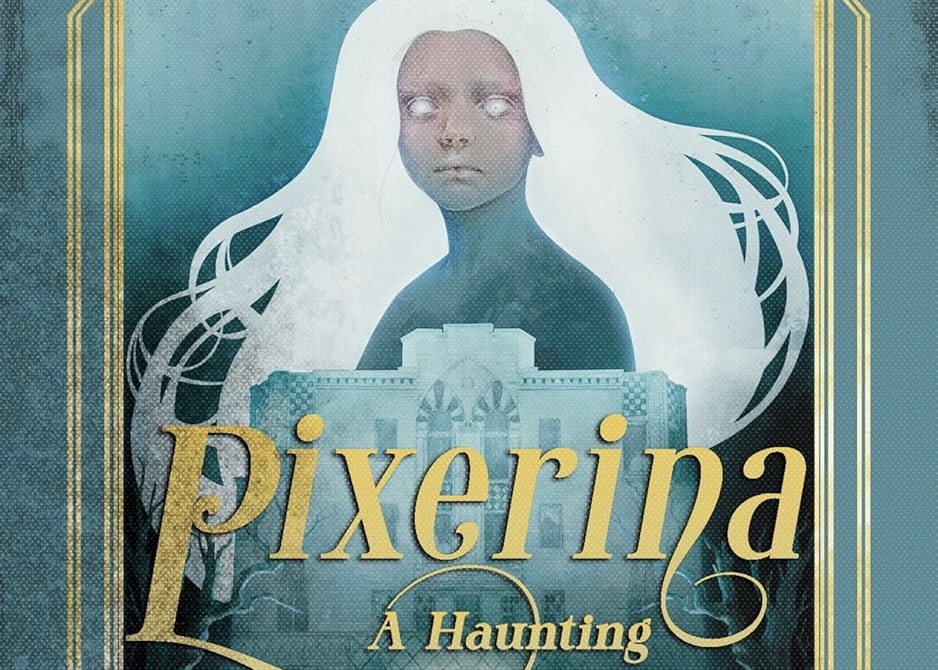
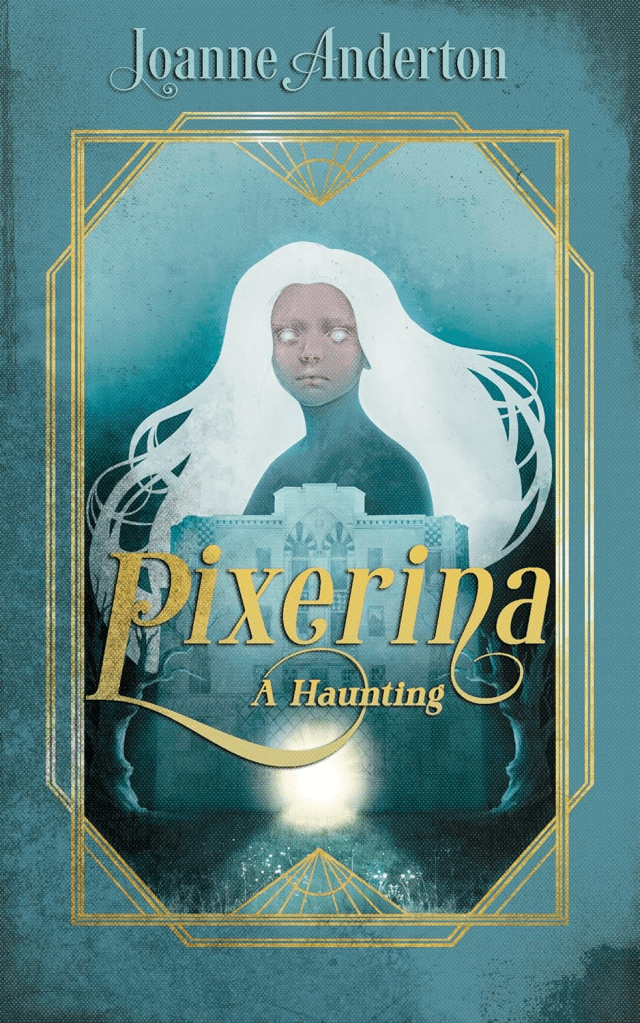






TL;DR: Pixerina and its artist share the same methods: take the child no one admits exists, the house that won’t stay still, the gap between inspiration and theft, and make something from it. Anderton’s dual narrative is controlled and strange where it needs to be. The domestic subplot outstays its welcome. The ending pulls one punch it shouldn’t. Read anyway.

The house is called Pixerina. It was named by someone who has been dead a long time. It sits at the top of a steep hill in a new suburb of Sydney, surrounded by chain-link and keep-out signs, and it has been calling to the woman who lives down the road for three years. She is an artist who has not made anything in three years. These facts are not unrelated.
Joanne Anderton‘s Pixerina: A Haunting is structured in five stages, named for phases of the creative process: Preparation, Incubation, Illumination, Creation. Each section opens with a gallery note, the flat interpretive prose of exhibition catalogs, for a painting by someone named Rebecca Bell. The paintings described are grim. A skeletal child on disturbed earth. A colonial house devoured by native flora. A woman’s face pushing through an abandoned wall, her skin the color of rotting wallpaper. The structure tells us, quietly, that we are looking at art from the future. The house is going to make her. The question the book holds throughout, in both hands, is what it will cost.
It runs two timelines. Rebecca (Bec) Bell is the artist: early thirties, marriage going cold, agent calling, career stalled. She breaks into the abandoned house and keeps going back. The other timeline is Angelica: a disabled child hidden in the upstairs rooms of the same house, decades earlier, confined by a father who is an artist (called only “Daddy”) and a mother (called only “Mother,” or “Lilith” when he speaks her name with his particular tenderness). Angelica draws faeries on the walls with stolen crayons. She names her doll Titania. She has never been outside the property. The man who fathered her does not like children and does not acknowledge her existence to anyone. He loves her in the way someone loves a thing they have made and do not know what to do with.
This is where the book is best. Anderton writes Angelica’s sections in something close to a children’s book voice, declarative and slightly simplified, and the horror lives entirely in the gap between the register and the content. Angelica catalogues the party guests she watches from her window with a child’s naming logic: Fatty, Snoozy, Nibbly, Clingy. She describes her father stealing her drawings with flat reverence. He makes them better, she thinks. They must be happier in his book. A sentence like that costs more than you expect it to, arriving in that register, from that mind.
The house does what it should do, which is to refuse ordinary space. Pixerina expands. Its corridors run longer than they should. Its rooms change positions. The backyard, which from the street looks like a large suburban block, contains a shed full of stone statues of the same woman over and over, a series of crumbling toadstool sculptures, a faerie circle Daddy built for the child he kept upstairs. Bec gets lost in it. Anderton describes this without explaining it, without separating the house’s strangeness from its natural dereliction, and the ambiguity is the atmosphere. Whether Pixerina is doing something to Bec or Bec is doing something to Pixerina is a question the book does not answer. It is right not to.
The gallery blurbs are the sharpest move in the book. By the time you reach the description of the final painting (a child weeping on disturbed earth, bones used as found materials in the canvas) you have read the scene from which the painting comes. The catalog note does not feel ironic. It feels like inevitability. This is what gets made from a ghost, from a grave, from a girl no one admitted existed. The blurbs are chilling in retrospect in a way they cannot be in the moment.
But the book has a pacing problem, and it lives in the marriage. Bec and Aidan’s unraveling occupies the middle sections in scenes that run longer than they need to, explaining what they could be suggesting. Aidan gave up poetry for a consultancy job and meets with ministers about bus payment systems and his parents are relieved he’s finally stable and Bec resents all of this, and all of it is stated rather than built. The dialogue in these scenes talks around what it means in the way that dialogue is supposed to talk around what it means, and then it also explains itself, which is one thing too many. (There is a version of their marriage that exists in atmosphere alone, in stubble on a jawline and a cold bowl of spaghetti bolognese on the bench, and that version surfaces occasionally. It is better than the version that talks about poetry.)
The local history museum, which arrives in Stage Three, is strange in the right way. The old man with his box of photographs, his refusal to say Lilith’s name without cracking, his insistence that there was no child, the fear coming off him when Bec presses. It is the only scene outside Pixerina’s walls that feels as alive as the house. It is also, structurally, too late. The information it delivers has been withheld past the point of maximum tension.
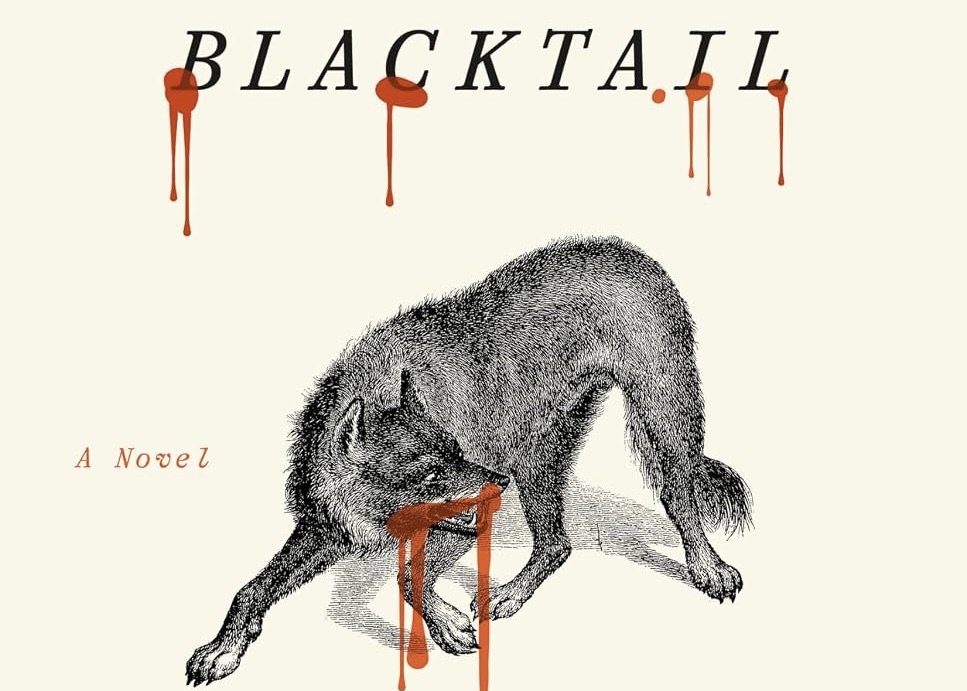
Anderton has been a presence in Australian speculative fiction for more than a decade, working across science fiction trilogies, short story collections, and horror. Her debut collection, The Bone Chime Song and Other Stories, took both the Aurealis and the Australian Shadows Awards for best collection, and her subsequent work has maintained an interest in what she calls “horror adds flavour to just about everything,” even when the container is genre fiction. Pixerina is a narrower, stranger book than anything in the Veiled Worlds trilogy: a 127-page novella from Bad Hand Books, published in the tradition of the small press horror object, with Thomas Brown interior illustrations and a cover that does not misrepresent the contents. She reveals in the acknowledgments that Angelica began as an obituary she read in The Economist, for a real woman named Angelica Garnett, daughter of Bloomsbury painter Vanessa Bell, who as a child haunted her mother’s Sussex house while the artists came and went. Garnett’s aunt Virginia Woolf gave her the nickname Pixerina. Duncan Grant, perhaps her real father, once drew her in her mother’s arms and rendered the child, in Anderton’s account, as a scribble and a nothing. You can feel this biographical seed through the whole novella. It is the right seed to plant. The question of what it costs a child to be born into art instead of care is one the book takes seriously, and does not resolve.
The catalog note for the final painting, in the exhibition that gets made from all of this, describes the girl on the canvas as weeping where a beloved pet was buried. Square Gallery will hang it on a dark wall with careful lighting. People will find it moving. The girl in the painting is not a pet. The catalog note does not say what she is.


 The Blog Without a Face
Leave a comment