
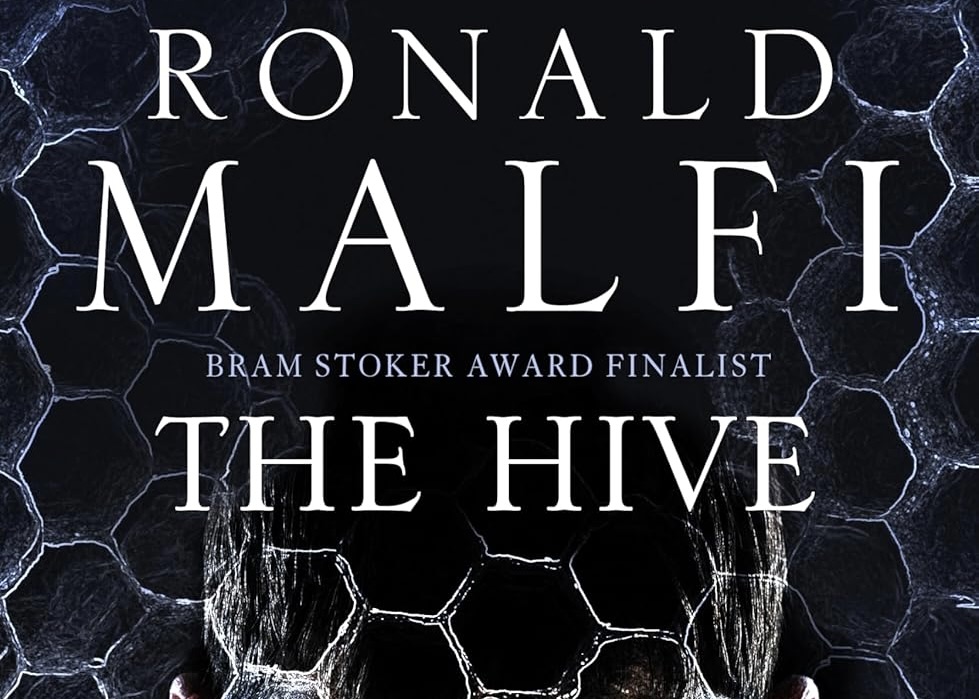
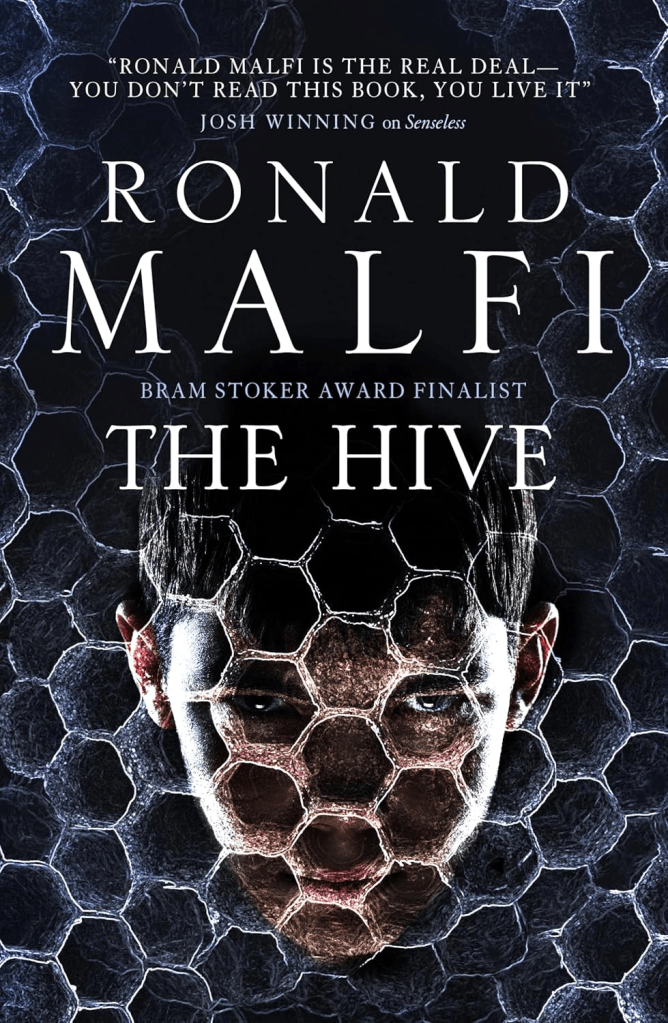






TL;DR: Malfi’s most ambitious novel locates genuine dread in the gap between what we are and what we can be made to do, and builds its mythology from dental nerves and obsession and the particular horror of a neighborhood that does not know it is already gone. An uneven machine with a brilliant engine inside it.

There is a particular horror in the buzzing of back teeth, that low incessant droning that is not quite sound and not quite pain, arriving not in the dark but in the middle of a Maryland summer, after a storm that leaves no mark on any weather record, in the hollow ordinary quiet of a neighborhood where the streetlamps still stand and the cul-de-sacs still curve as they always have and where something has come to rest. That is the territory Ronald Malfi stakes in The Hive: suburban possession at a cosmic scale, the spectacle of a collective mind bent to a purpose it cannot name, the horror of obsession as the opening through which something very old and very large slides in through your teeth.
The neighborhood is Mariner’s Cove, a quaint bayside enclave on the Maryland shore, the kind of place where the community association president worries about chalk drawings on the sidewalk and retired surgeons drink scotch at the neighbors’ luau and single mothers sell houses they cannot afford. Into this organism a storm comes and goes and leaves behind it a wound the instruments cannot measure. A retired heart surgeon fishes a door from the bay and cannot stop polishing it. A beekeeping loner hears his hive begin to speak. A draftsman covers his body in symbols he cannot read. A ten-year-old boy has been bending forks with his mind for a while now, and in the aftermath of the storm he begins to understand that whatever is living inside his skull is running hotter than before. The entity at the center of all this has no face and no body and no malice: it is a vast and indifferent consciousness from somewhere else, stranded here and dwindling, needing to go home. It exploits human obsession not out of cruelty but out of the same cold pragmatism with which a vine exploits a wall. It transmits its instructions through dental nerves. The back teeth ache. The neighbors start building.
What Malfi understands, and what gives the novel its best passages, is that compulsion is its own form of possession; that the mind fixed on a thing is already partly gone; that the most disturbing image in the book is not a monster but a man sitting in a dark garage, pressing his ear to a waterlogged door and listening. The entity, which the residents come to call the Dragon in the absence of any better word for it, arrives differently in every mind, manifesting as whatever the dreamer’s brain reaches for first: a snake, a leech, bees in a cloud, a Chinese parade dragon undulating overhead. The unreliability of the image is itself the point. You cannot name it. You can only feel it in your molars, and wonder when you first started feeling it there.

Between the novel’s first and second halves there is a long streaming passage that follows the entity through the sleeping neighborhood, winding from house to house in a single spiraling paragraph that goes incantatory in all the right ways, the syntax curling after the thing it describes, and this is where the prose most fully earns its ambitions. It is the kind of writing that makes you lean into the page. It is also the kind of writing that makes you aware of the distance between what a novel can occasionally do and what it does most of the time.
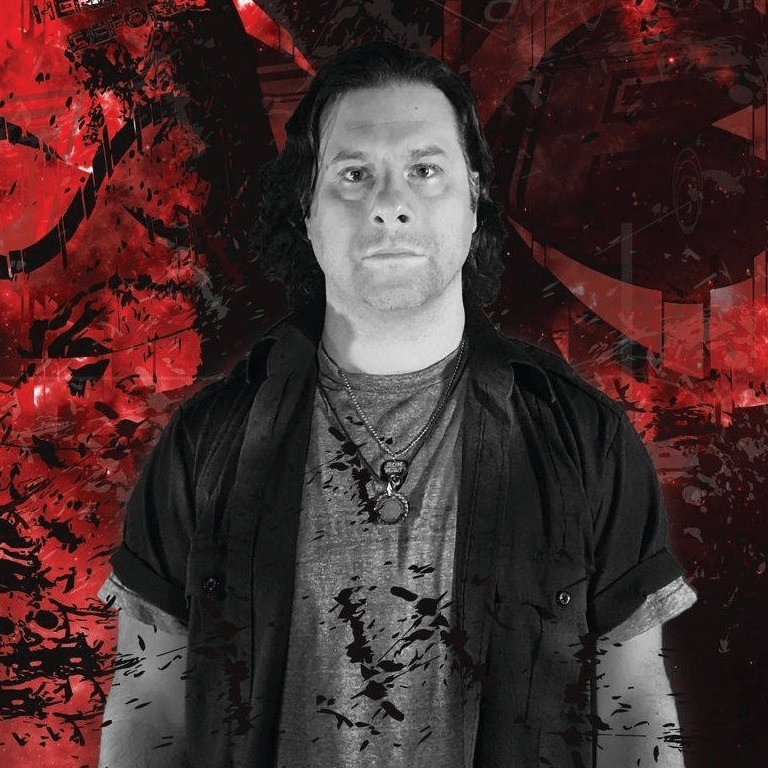
Ronald Malfi was born in Brooklyn and raised in Severna Park, Maryland, the son of a Secret Service agent, and has spent the better part of two decades writing horror that makes its home in broken families and ordinary American geographies. His bibliography includes Floating Staircase, a Bram Stoker Award finalist; Come with Me, which brought him to the New York Times bestseller list; and a run of novels including Black Mouth and Small Town Horror that have established him as one of the more consistently serious practitioners of literary dark fiction currently working. He is also, improbably, the frontman of a Maryland rock band called VEER, which anyone who has read his more maximalist prose either finds surprising or entirely inevitable. The Hive began as a trunk novel over a decade ago, written at nearly a thousand pages under the working title The Cove and put away at his agent’s sensible suggestion. The published version bears the faint marks of that excavation: shaped, condensed, and still carrying, in places, the ambition of a younger and more sprawling project.
That ambition is the source of both the novel’s pleasures and its difficulties. The book is an ensemble, and ensembles require that every thread earn its place. Some do. The novel’s most compelling figure is a recovering alcoholic named Brian Russo, a former radio personality whose telekinetic ability dried up alongside his sobriety, who is driving across the desert toward a new life when the boy’s distress reaches him like a signal between stars. His backstory, which includes a magnificent supporting character who talks about radio waves as traveling lightning and wears a cowboy hat like a wolf would wear one if a wolf had occasion to, carries an energy that the present-tense narrative periodically cannot match. The beekeeping loner who becomes the Hivemaster is the novel’s most original character, eccentric to the border of clinical, and convincing on his own strange terms. The surgeon and his door are a clean and eerie hook, a Hitchcockian obsession rendered with patience. But the teenage couple sharing dreams and tentative telepathy generates less electricity than their subplot promises, and the large supporting cast eventually begins to feel like so many labeled components rather than people.
This is the central crevice in the design. The mythology underlying the action is more evocative than coherent: the specific rules governing what the Dragon can and cannot do, why each character serves the role they serve, how the machine is supposed to function, arrive late and incompletely, delivered in a parable that accounts for the event without quite sealing it. This is not the productive indeterminacy of effective cosmic horror, which leaves spaces for dread to fill. It is the indeterminacy of an idea that was not entirely worked through. The book’s third act pivots toward rescue and confrontation and, in doing so, shifts register in ways that are technically competent and tonally dissonant; the novel’s best moments are not in the chase but in the quiet invasions: a dog that slides under a door and does not reappear; a woman who cannot stand up from a camping chair no matter how many times she tries; the particular quality of a neighborhood at three in the morning that has been changed without anyone knowing how.
There is a whole novel hiding inside this one that is more ruthlessly focused, darker, and stranger: that novel circling its subject like the entity circling the water tower, paring everything else away, trusting the image to hold. That novel does not exist. This one does. It is solid and atmospheric and its best invention is one of the more quietly terrible things: the feeling of something transmitting through your teeth, using your jaw like a receiver, and you not knowing it is happening until it has been happening for days.
The buzzing in the back teeth. That is what stays.


Leave a Reply