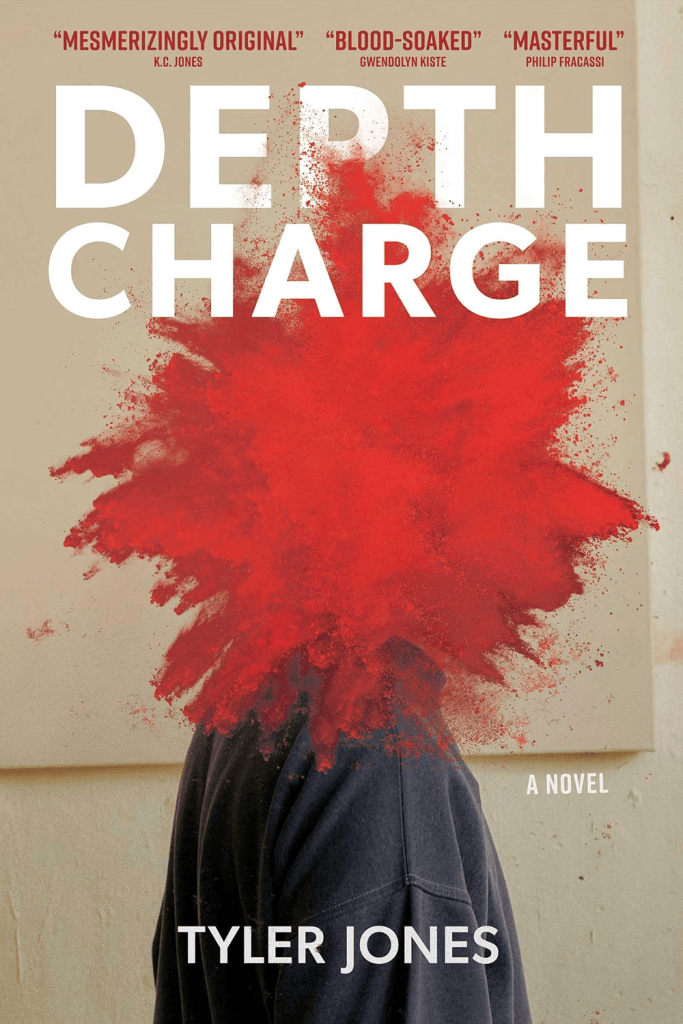
TL;DR: In fifth grade Julian picked his nose until it bled and saw his teacher’s car crash in the blood. Now he’s a famous painter with a fridge full of his own blood, and the bigger the canvas, the more death he sees. Then he paints a card for someone his best friend loves, and the book becomes a mother, a seven-year-old and a used RV on a twelve-week clock. Also a dog made of tank parts. It fucking wrecked me in a tire shop. Buy it and read it somewhere private.





Would you want to know the week? The one you die in, I mean, or the one somebody in your house does. Don’t answer yet. First a boy has to pick his nose.
Spider-Man got a radioactive spider. Julian Dorsey, a fifth-grader in rainy Portland, Oregon, gets a nosebleed habit so bad that his teacher buys him a personal box of tissues and a trash can, which is the most a public school has ever done for the arts. One recess he looks at the blood on his palm and sees that teacher dead in a car wreck. The next day the teacher is dead in a car wreck. Aw shit…
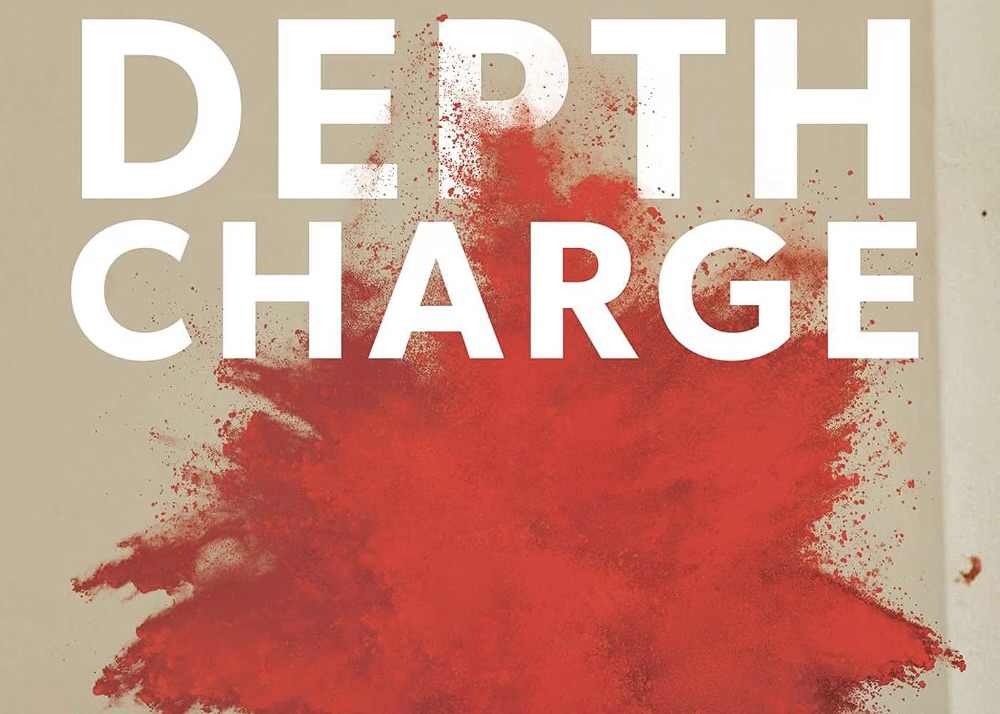
That’s where Depth Charge starts. It’s the new novel from Tyler Jones, a Portland writer, out from the small press Shortwave. The kid Julian shows his hand to is Marcy, the only one who’ll stand near him, and she tells the whole story as an adult looking back. The two of them spend their teens in her garage pricking his finger over index cards. Each card of dripped blood shows him one stranger’s death, due sometime in the next twelve weeks. He calls them blood tickets. They try to warn exactly one person and it goes about as well as you’d guess. Marcy also reads every paranormal book in the library, including one about a man whose telepathic French bulldog told him how the world ends, and I’d like to thank Jones for letting me type that.
Grown up, Julian is a famous New York painter called Julian le Sang (sang is French for blood, so the man is subtle), and he has traded the index cards for canvases and the pricked finger for refrigerated bags of his own blood. A bigger canvas shows him more dead people. A ten-foot one shows him a plane crash. “The bigger the canvas, the more you see,” he says, and that’s frightening because you start wondering what a really big one would show. Jones is wondering too.
The jacket sells what comes next as a thriller: secret government programs, a future arriving like a nuclear weapon. All true, eventually. What the jacket skips is the part that got me. Marcy, by now divorced and broke, has a seven-year-old named Alex. One evening Julian asks her the question up top, and she says yes, she’d want to know, she’d quit work and start living. Then he paints a ticket and her son is on it. The doctors catch up a few weeks later. So she buys a used RV and takes her kid to see the country.
That road trip is why you should read this. It’s a horror novel with the monster taken out and a calendar in its place. A zoo, a cave, a hotel pool, fries dipped in a milkshake, and a clock that the mother, the boy and you can all hear. (Alex is crushed to learn there’s no line painted on the ground between Ohio and Indiana. Same, buddy.) Nothing jumps out, and I wanted out of that RV so fucking badly. I read it in the waiting room of a tire shop. Don’t. They can see you.
Julian believes every choice is wired to every other choice by invisible threads (he capitalizes the word, and draws Marcy a diagram), and that they all run to the same place. Stop a death and it comes back later and uglier. The only freedom you get is how you spend the wait. The ancient Stoics had a picture for this, usually pinned on a philosopher named Chrysippus: a dog tied to a cart can trot along behind or get dragged by the neck, and it’s going where the cart goes. (Chrysippus, the story goes, died laughing at his own joke about a donkey. Keep that in mind when a man tells you how to face death.) Julian only talks. Marcy acts. She stands in a pharmacy line holding six prescriptions for her son, thinks about a painter who has never been wrong, and walks out to shop for an RV. That’s a mother choosing to trot, on a friend’s word, with somebody else’s body, and the book has the nerve to leave open whether it’s the bravest thing in it or the worst. Then it fucking blinks. Late on, one flat sentence with no doctor attached to it says the medicine would have made no difference. Either Jones is letting his heroine off, or Marcy, who is the one telling this, is letting herself off. The second is the better book and I can’t prove it’s the one he wrote.
Marcy is good company and she will not shut up. Her nose bleeds in a hotel bathroom, and she unfolds the tissue and stares into it for a vision the way her friend would, and what she sees is a tissue. Perfect. The next line is “The end is always coming.” She does that a lot, a picture and then a caption for the picture. So it counts double that the two best chapters are the ones where she holds back. Her father shot himself when she was a kid. She mentions it early and never describes it, until a man with a file sits her in a basement office and makes her. What she tells him out loud is short. What she remembers, a girl getting off the school bus in the rain and jogging home to a dark house with a window open and a smell she can’t place, runs between the lines of their conversation, and it has things in it that she decides, while we watch, he can’t have. Later comes the chapter the whole road trip has been driving toward. It’s shorter than this paragraph. She says those moments belong to her and she won’t describe them, and she doesn’t.
The lake they drive to in Ohio is printed as Lake Eerie, which is a typo or the best pun in the book. The thriller has been running in the background all this time. The government collected Julian before the RV left New York, and late in the trip he slips out and catches up with them. He brings Norman, an old Vietnam draftee who gets flashes of the future he calls mind movies and who is bleeding from a dog bite. Norman’s first move on meeting a terminally ill seven-year-old is to offer him a beer. He’s the best fucking thing in the book, and when it needs somebody to talk plainly about losing a child, it’s him, in the passenger seat, holding a can. Julian’s girlfriend, Katrina, gets less. She welds statues out of decommissioned weapons and makes Alex a dog from tank armor, named after an Army vehicle, the only pet in fiction with a procurement history. Otherwise she’s an accent until the plot needs her.
Then the government catches up, as promised. It is a man named Atwater in a brown three-piece suit, with a henchman everyone calls Kong, and their top-secret psychic facility is a house in the West Virginia woods with mustard-yellow siding and moss in the gutters. The residents call it the Shed. Your tax dollars at fucking work. This stretch is the more ordinary book: handlers, jumpsuits, a gun at the right head at the right moment. You’ve met its relatives. The late-night radio host the kids phone for advice is Art Bell, who took calls about Area 51 from the Nevada desert and cost a generation its sleep. A man who sees deaths coming and has to decide what he owes them is Stephen King’s The Dead Zone (1979), and a house in the woods where the government uses up gifted people to head off disasters is King’s The Institute (2019). The blood tickets, the canvas rule and the RV are Jones’s own, and so is the coolest thing in the Shed: a man who sits inside a ring of radios tuned to dead stations because two voices in the static tell him things. One night they say Marcy’s name.
My car still gets AM. After the radio chapter I sat in the driveway and went up the dial through the empty stations. A preacher. A man selling gold. Nobody said my name.