
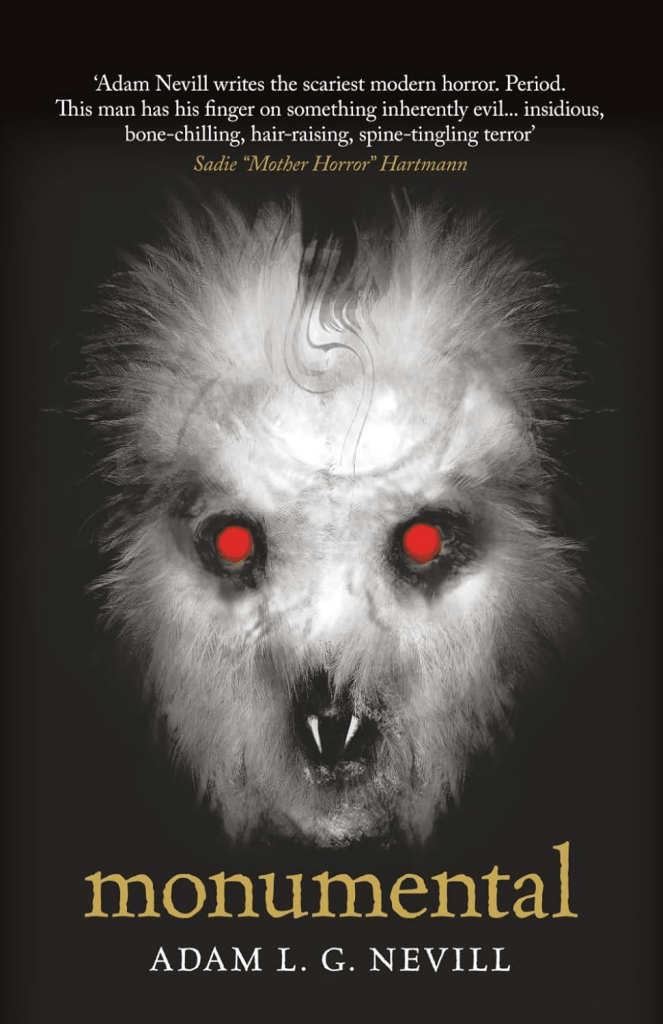


TL;DR: Nevill builds his horror from the ground up: a real Devon valley, a real tidal clock, and creatures older than the pyramids that have been waiting in the dark beneath both. The setting alone is worth the admission. What costs it is the pace, which the characters’ considerable baggage occasionally holds hostage. The valley delivers. Getting there takes patience.

The dead trees come first. Standing upright and bonewhite in the mudflats of the Wyrm Valley’s tidal estuary, roots long drowned by a sea that crept in millimeter by millimeter over three centuries until the trees simply could not hold any longer and died standing where they had grown, their bleached limbs raised at whatever angle the last living season had left them. Hanging from those limbs, strung on wispy brown twine from branches selected as thoughtfully as a butcher selects his hooks, the disarticulated remains of large animals: spinal columns intact, skulls gaping, femurs and ribcages arranged over the silted creek like the keys of a glockenspiel awaiting a hand that will not come. Six sea kayakers paddle beneath them in their bright neoprene, and the marsh does not acknowledge them, and there are no birds anywhere, and there never have been.
This is what Adam Nevill can do. He can make the English countryside feel like evidence.
Monumental is the third novel in what Nevill has quietly assembled into a pagan terror trilogy rooted in the Devon landscape where he now lives: The Ritual drew from Scandinavian forest and Nordic dark; The Reddening from the Brickburgh caves and a prehistoric coast; and here, born from seven years of sea kayaking the county’s estuaries and headlands, the Wyrm Valley, a real place known by another name, fenced from the public by steel and tidal inaccessibility, which Nevill entered by kayak and which his horror brain immediately understood as a location that had been waiting for exactly the kind of story he would tell. The bones in the trees are autobiographical. The dead wood rising from the mudflats is a real thing he saw. He stood there on the water and understood what it was for.
The novel’s structure is its cleverest device, a ticking clock made not from bombs or deadlines but from the ancient mechanism of the sea. Two tide cycles contain the entire story’s action, roughly fifteen hours, and once the group has paddled into the Wyrm Valley the creek empties beneath them like a bathtub draining, and they cannot leave until it fills again, and the thing that has been using this valley for eight thousand years knows this as well as any paddler with a tide chart. What makes it work is that the constraint is not symbolic. The water level is an actual problem. This is survival horror that requires you to have read the forecast.
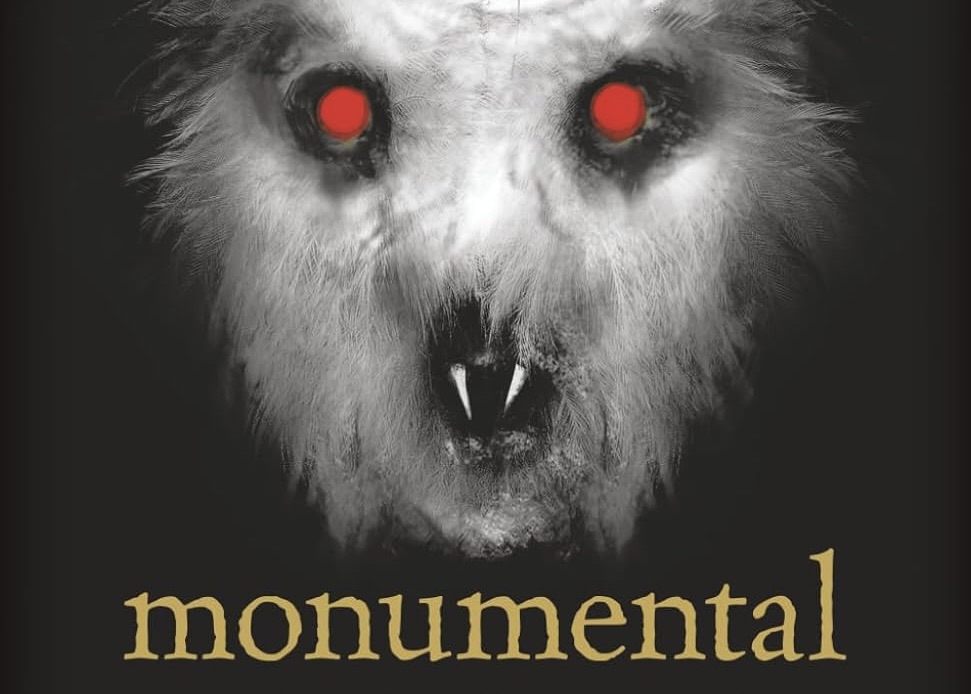
The horror itself is wellmade and properly strange. The Little Priests, Nevill’s wights, pallid and grublike and no taller than a man’s waist, their faces masked in gull feathers, their mouths disproportionate with doublespined teeth, are rendered without apology and with a specific biological disgust; they feed the way parasites feed, with patience and method, and the cattle they’ve marked lie heaving in the valley’s upper pastures with their flanks opened to a slow careful work that is somehow more terrible than if they simply tore the animals apart. The god they serve, when it finally comes, is properly abominable. It is not a dragon and not a demon; it is older and wetter than either, a flying column of something that should not be flying, and Nevill has the discipline not to show it clearly, which is the only discipline that matters in this particular economy.
It is here, in the middle distance of Nevill’s career, that Monumental becomes legible as something other than a standalone exercise. He was born in Birmingham in 1969 and grew up between England and New Zealand, published through Pan Macmillan for a decade, and won four August Derleth Awards for Best Horror Novel across that period: The Ritual, Last Days, No One Gets Out Alive, The Reddening. His first story collection, Some Will Not Sleep, won the British Fantasy Award for Best Collection in 2017. Two of his novels have been adapted to film. He left Pan Macmillan in 2016 to found Ritual Limited, his own imprint, which he runs from Devon with a network of editors and cover artists and proofreaders that amounts to a small press with a single title on its backlist at any given time. He has attributed the departure to creative freedom, specifically the editorial suggestion that The Reddening did not need its god, which he rejected and then proved wrong. Monumental is the product of a man who has earned the right to trust his instincts about what his novels require, operating without anyone to tell him otherwise. That is both his freedom and his particular liability.
What the novel needs, and largely gets, is a protagonist worth following into a valley that wants to kill him. Marcus is the best thing Nevill has made here. Not a good man but a selfaware bad one, a compulsive philanderer who has reached the stage of his affliction where he can watch himself act and feel the familiar shame gathering even as he acts, a man who has burned down enough rooms that he has developed a studied manner of standing at the edge of things he’s set on fire and explaining to himself and others that the fire was inevitable. He is exhausting and convincing, and his attempt at decency in the valley, when what he wants is irrelevant and what he owes is the only currency that matters, produces the book’s most surprising emotional note. Nevill renders him entirely from the outside. The outside is sufficient.
The group that surrounds him is less uniformly successful. The interpersonal warfare is sharply observed: the married couple corroding each other, the pompous older paddler who treats every dangerous situation as an opportunity to demonstrate expertise he does not quite possess, the cancersurviving older woman who should not have made this paddle and knows it and came anyway. In the first third of the book this material does real atmospheric work, making the valley feel like a second pressure cooker around a group that arrived already inside one. But Nevill has given each of these people their own point of view chapters, and the multiple perspectives, convincing individually, accumulate a mass that slows the horror engine. The social grievances of the group begin to feel like the primary subject. The bones hanging from the trees begin to feel secondary. That is not the right proportion.
The same charge can be leveled at the novel’s longest single scene, in which the valley’s owner, a tech billionaire delivers an extended account of what the valley is and what he found there, while Marcus has been quietly drugged and cannot stand up. The scene earns its place. Clement Colman is an interesting monster, a man who believed he had made a bargain and has been discovering for years what he actually agreed to. His account of the Neolithic site beneath the valley is fascinating in the way that all wellresearched pagan prehistory is fascinating: the processional cursus, the ring of staves, the stone structure deposited with bones for five millennia, older than the first Egyptian pyramid. It is also the most dramatically inert passage in the book. Nevill knows the information is necessary. He has found the most honest way to deliver it and delivered it honestly. Honesty is not always the same thing as momentum.
There are moments in Monumental that remind you this is an author who has spent years outside, in the dark, on the water, watching what the tide does to land, and those moments justify everything around them. The dead white trees at the start of the journey, their roots underwater twice a day, their bark gone pale as driftwood. A meadow gone still with a weight that is not wind. A mine shaft filled with the bodies of a hundred birds heaped like something awaiting collection, which is precisely what they are. Nevill does not explain this image. He does not need to.
The valley is good. The horror is earned. The tidal clock is a machine that works. And on the night side of the novel, when the Priests are feeding and the god is in the sky and Marcus is crossing an open meadow with someone he cannot carry fast enough, Nevill recovers everything the long first half asked the reader to accept on credit, and he does it without sentimentality and without waste. The bones hanging from the dead white trees at the start of the journey do not feel like atmosphere by the end of it. They feel like a promise kept. Kept at some cost to pace. That is the honest accounting.

 The Blog Without a Face
Leave a comment