

TL;DR: This collection is humid, mean, and gorgeous, like the swamp itself grew a mouth and started telling you bedtime stories with a grin full of teeth. Broadbent’s voice is raw and intimate, her imagery is sticky with rot and lust and rage, and the big centerpiece novella “Ink Vine” lands like a holy punch to the throat.

Elizabeth Broadbent’s foreword makes it clear this isn’t “writer discovers spooky vibes,” it’s a hard pivot built out of loss, relocation, and creative survival: a long journalism career collapsing, the dread of AI decay, and the ache of leaving South Carolina swamp country behind. That background matters because these stories feel like a person dragging home buckets of their own mud, dumping it on the floor, and saying: here, smell this, this is where I’m from. The author bio reinforces that she’s a journalist-turned-speculative writer with a real-world microphone and a horror writer’s nerve, now living away from the swamp with her family and, delightfully, a flock of crows. Let’s be real, though, Broadbent is no stranger to BWAF. Last year’s novella, Blood Cypress, was one of our favorite horror books of 2025. Read that shit!
Plot-wise, most roads lead back to Lower Congaree and its wet, watchful wilderness. You get quick, nasty little parables: in “A Mouthful of Roses,” a recovering young vet stumbles into a twin-shaped trap and the sweetness curdles into ritual rot, with the line about a “twice-dead virgin” hitting like a curse you cannot rinse off. “To Sing is to See” is a writer-in-a-cabin story that refuses the usual cozy bullshit and goes straight to body-cost obsession, using the mantra “to sing is to see” like a hymn you chant right up until the knife turns. “Some Fall,” “Questions a Man Ought Not to Ask,” and “A Living Pentecost” all orbit the same gravitational anger: women being boxed in by men, by churches, by town gossip, by poverty, by the ugly little rules people pretend are natural law. And “Folded in Light” is the teenage-town-rumor version of cosmic folk horror, where a gruesome warning (a guy runs out of the swamp missing a hand) becomes a door, then a dare, then a weirdly tender apocalypse.
The centerpiece novella, “Ink Vine,” (originally published in 2024) is the one that stitches the whole collection into a living thing. Our POV is Emerald “Emmy Ann” Joiner, broke as hell, trapped in a small town that feeds on shame, working nights at a strip club and trying to keep her head above the water and the men. Then she meets Zara Fenwick in the swamp, and the story becomes a romance, a haunting, and a transformation all at once. Zara is not just a person, she’s a presence that feels braided into the land, and Emerald’s want is painfully basic and cosmic at the same time: to be safe, to be herself, to stop being owned. The stakes keep tightening until the novella makes a sharp, ugly choice: Emerald’s rage turns literal, turns physical, turns vine-strong. The climax is written with that awful clarity stories rarely earn, with Emerald refusing to be renamed or managed ever again: “You’re not gonna tell me who I am.” It’s brutal, it’s tragic, and it’s also a grim little coronation.
Broadbent makes the swamp a moral force without turning it into a Hallmark nature sermon. The land is not “pure,” it’s not “evil,” it’s hungry and old and honest. The town is full of jailers, and the swamp is the only thing that doesn’t bullshit Emerald about the price of freedom. When she finally chooses Zara and the green-dark belonging over the human world’s small cruelty, Broadbent drops one of the collection’s most memorable lines: “Swamp was an ugly word, short and fat,” and then dares you to feel how beautiful that ugliness can be when it stops apologizing for existing.
Broadbent’s prose has that nasty-sweet rhythm where a sentence can be tender, funny, and vile in the same breath. She’s great at close first-person heat, the kind that makes you feel sweat in your armpits and hear cicadas grinding their teeth. She also understands escalation. These stories don’t just “get spooky,” they get personal, then bodily, then spiritual, then irreversible. Even the shorter pieces have a clean spine and a sharp final shove. When she wants to go lyrical, she does, but she’s not precious about it. She’ll give you beauty, then immediately smear it with mud and blood, because that is the point.
Autonomy in a rigged world: who gets to name you, who gets to touch you, who gets to decide what you are allowed to want. The horror expresses that through possession, metamorphosis, and appetite. Sometimes the cost is horrific, sometimes it’s liberating, often it’s both in the same damn moment. “Swamp Girl” is basically the collection’s feral mirror: a watcher-creature hating humans for their greed, then softening toward one girl who moves quietly through the woods, longing for connection but terrified of being known. It lingers like a footprint you find in wet soil and cannot explain.
As a collection, this feels like a statement of territory. The foreword frames Broadbent’s return to swamp country on the page as both homecoming and exorcism, and the stories back it up by being relentlessly regional without ever feeling small. “Ink Vine” especially reads like the work that levels her up from “great short story voice” to “this person has a whole fucked-up ecosystem in their head.”
It’s excellent because it’s weird and ambitious and memorable, and because it’s willing to be ugly when ugliness is the only honest route to freedom.
Read if you crave Southern Gothic that’s sweaty, horny, angry, and sincere.
Skip if you require a safe distance from class rage, religious fire, and swamp-magic teeth.
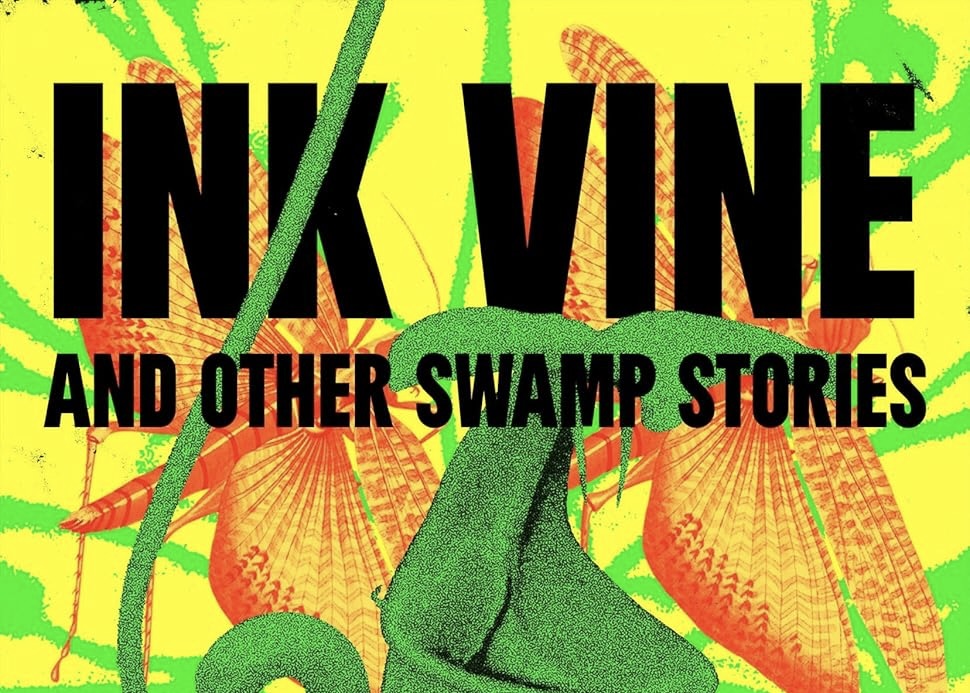
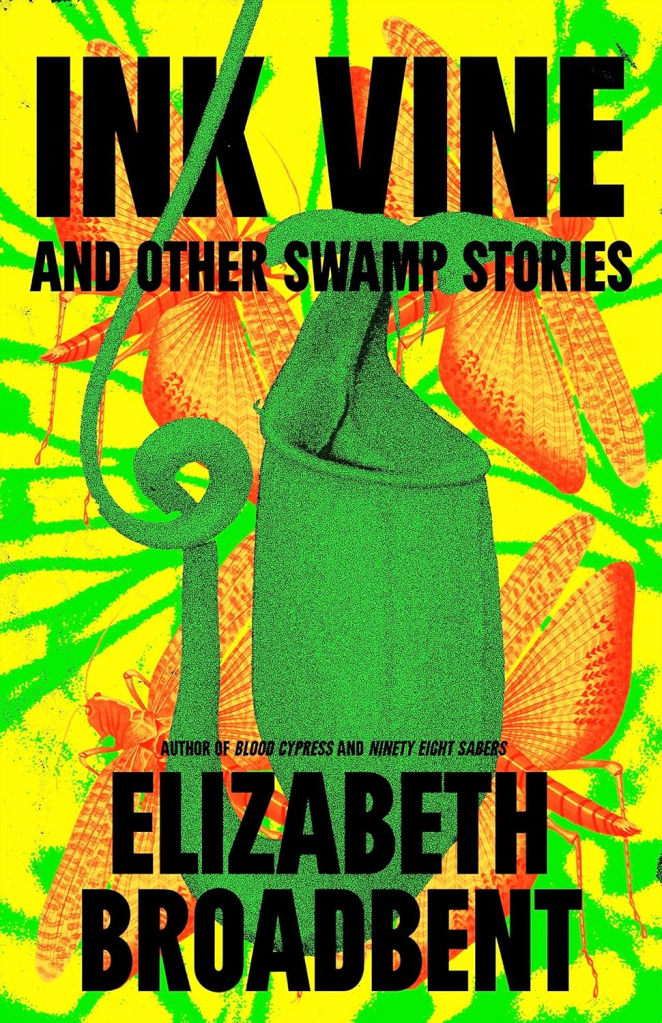
Ink Vine and Other Swamp Stories by Elizabeth Broadbent,
published March 6, 2026 by Undertaker Books.

 The Blog Without a Face
Leave a comment