





TL;DR: A slick, propulsive witch-order fantasy where secret society rules, training, and faction warfare do the heavy lifting, with monsters and Veil-horror mostly riding shotgun. You might dig it if you want power politics, rivalries, and an expanding “Order at war” engine, but if you’re here for real fucking dread and risk-taking horror, it reads more franchise-shaped than genuinely frightening. I probably should have looked into this one more before digging in.

This book has two faces, and which one you want is going to decide whether you have a good time or feel like you showed up to the wrong party. Face one is a sleek witch-order fantasy with secret society rules, training programs, political factions, and an “oh no, the war is coming” spine that keeps the pages turning. Face two is a horror setup about the boundary between the living and the dead fraying in the dark, with monsters slipping through and a castle that can rearrange itself like it’s annoyed you’re still breathing. Anderson clearly prefers the first face, and if you do too, well fuck you, I guess. For our tastes, though, the horror feels more like a sidecar than the engine, and the whole thing reads a little franchise-shaped instead of dangerously weird.
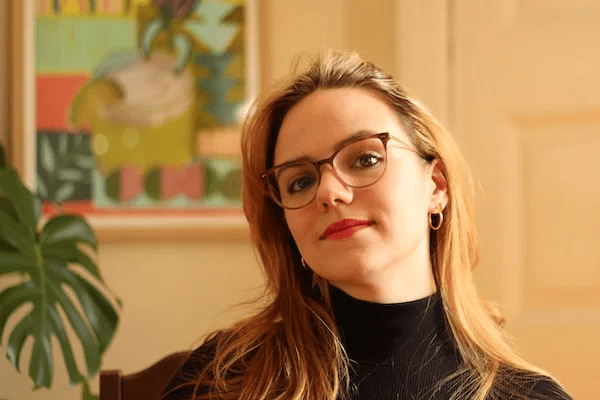
Liza Anderson has a background in journalism and media law, with degrees from the University of Texas and Yale Law School, and she lives in Austin. Her own site frames We Who Have No Gods as an “explosive debut” built around rivals, secrets, and simmering chemistry, which matches what the book foregrounds on the page. In a Writer’s Digest interview tied to the novel’s release, she talks about following her obsessions and confronting moral problems in fiction, which tracks with the story’s fixation on “balance” as both ethical cover and power doctrine. Read in that context, the book makes sense as a first major statement. It’s less interested in pure nightmare than in systems, rules, and what people justify when they’re handed authority.
After their mother vanishes, Vic Wood raises her younger brother Henry while trying to keep them unnoticed. When an Elder from the Acheron Order finds them, Henry is claimed as a witch and taken to Avalon Castle for training, and Vic goes with him. Inside the castle, the Order’s mission is bluntly cosmic: keep the Veil strong so the dead stay where they belong, even as internal power struggles and outside extremists push toward open conflict.
The voice is competent and clean, in close third person that stays tight to Vic a lot of the time, with other viewpoints and in-world historical excerpts used to widen the lens. Vic’s perspective is the strongest tool here because she’s practical, guarded, and angry. She has that survivor’s radar: always counting exits, always bracing for the bill to come due. Henry, by contrast, is the believer, the kid who wants purpose so badly he’s willing to accept the Order’s mythology on faith. That sibling dynamic should be emotional napalm, but the book often uses it as a functional scaffold to move Vic through the castle and into the Order’s orbit, rather than letting it really dig and twist.
Pacing is the book’s biggest win. Chapters move. Scenes end on clean hooks. Training, orientation, faction whispers, and escalating incidents are arranged in a way that makes “just one more” feel painless. Even when the story pauses for lore, it tends to do it with forward momentum, like it’s reloading a weapon rather than giving a lecture. The problem is that the propulsion keeps steering toward the power struggle, not the dread. The castle does some eerie work, and the Veil premise is genuinely horror-ready, but those beats get spaced like seasoning. Enough to remind you what genre sweater the book is wearing, not enough to make you cold.
The setting and imagery are strongest when Avalon behaves like a place with intentions. A hallway that won’t lead back the way you came. A warning against wandering after dark that actually feels like a threat, not just etiquette. A stained-glass window that depicts myth as an infection, beautiful and wrong. That’s the stuff that wants to bloom into full-on gothic nightmare. The recurring motifs are there too, especially the fixation on boundaries, doors, rules, and what happens when you break them. But the atmosphere gets frequently interrupted by the novel’s more familiar dark-academia rhythm: classes, ranks, rivalries, the sense of a curriculum for power.
The book has monsters, and it names them with satisfying bluntness. At one point, Vic gets the cleanest possible definition: “Orcans are beasts from the Other World. Monsters.” There are visceral descriptions when things turn physical, and the idea of creatures crossing through the Veil in “cheap imitation” of human form is a great little shiver. But the scares rarely get to breathe. The aftermath often snaps back into strategy and faction positioning, so fear becomes another plot input, not a lingering contamination. If you like your horror to hang around in the corner of the room and ruin your sleep, this doesn’t quite commit.
Character work lands best in moments of motive and contradiction rather than in relationships. Vic’s central drive, keep Henry safe, feels real. Her suspicion, honed by years of being poor and responsible and afraid, is consistent. Henry’s longing for meaning also scans, even if it sometimes makes him read as conveniently pliable. The supporting cast, especially the charming power-brokers and the dangerous “weapon of war” types, are fun to watch in motion, but they’re written more like a volatile ensemble for an ongoing series than like people whose private lives might surprise you. Dialogue is mostly believable and snappy, with a contemporary bite, although it can drift toward “banter as genre signal,” particularly when chemistry scenes take the wheel.
The themes are clear and, honestly, the most interesting part: power laundering itself as duty, secrecy as a tool of class control, and “balance” as a word people use when they want to keep their hands clean while doing ugly work. There’s also a steady undercurrent about inheritance, not just magical bloodlines, but inherited responsibility. Vic didn’t choose to be a guardian, she became one because no one else would. The Order didn’t choose to be benevolent, it chose to survive. The horror angle, the dead pressing against the living, is thematically perfect for that. It just isn’t emphasized as the primary emotional experience.
The ending leans pivot more than haunt. It feels designed to widen the board, raise stakes, and set pieces in motion, and it’s earned on the plot level. But it also reinforces the central BWAF gripe: the book wants to be a big, ongoing power struggle, and horror is one of the colors in its palette, not the canvas. If you’re a fantasy reader who likes secret orders, training arcs, rival factions, and a strong forward drive, you’ll likely rate this higher than I did. If you’re here for fucking dread and risk-taking horror choices, you may finish thinking, “Yeah, that was fine,” which is exactly where it lives for me.

Read if you want secret society witch politics that move like a thriller, with oaths, factions, and “we’re definitely sliding toward war” energy.
Skip if you want horror to be the focus, not the decorative gargoyle on the fantasy façade.
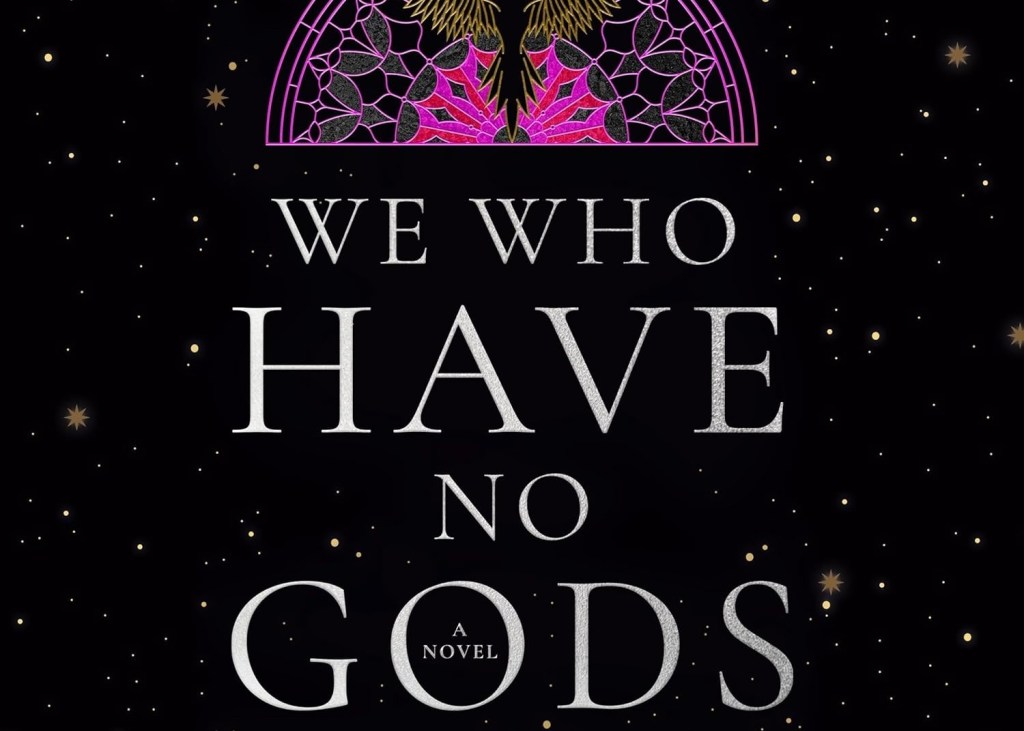
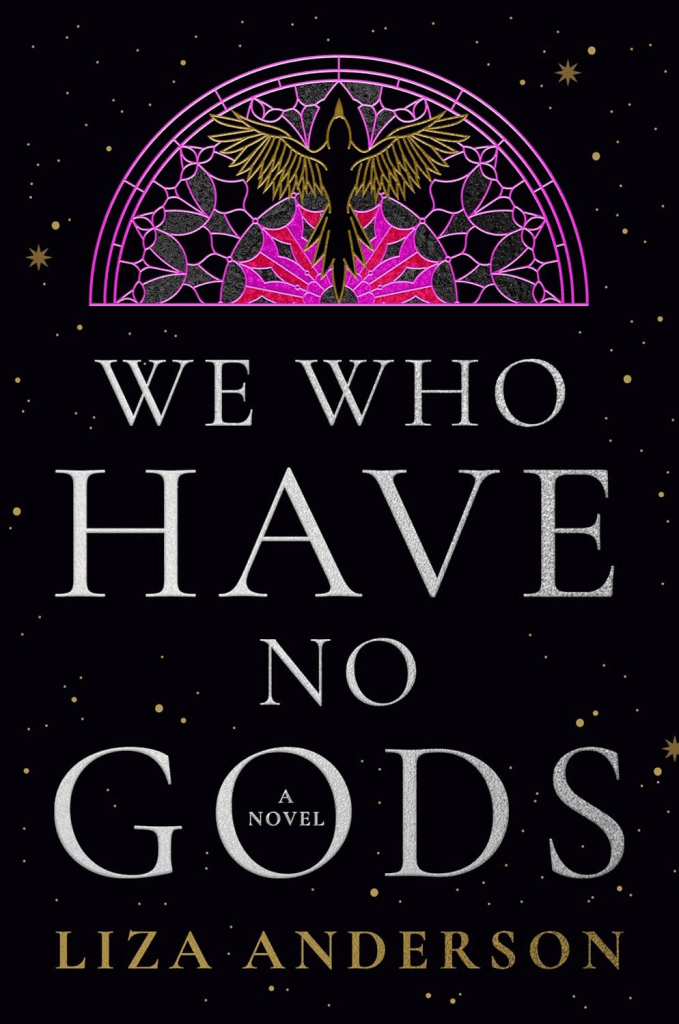
We Who Have No Gods by Liza Anderson,
published January 27, 2026 by Ballantine.

 The Blog Without a Face
Leave a comment