
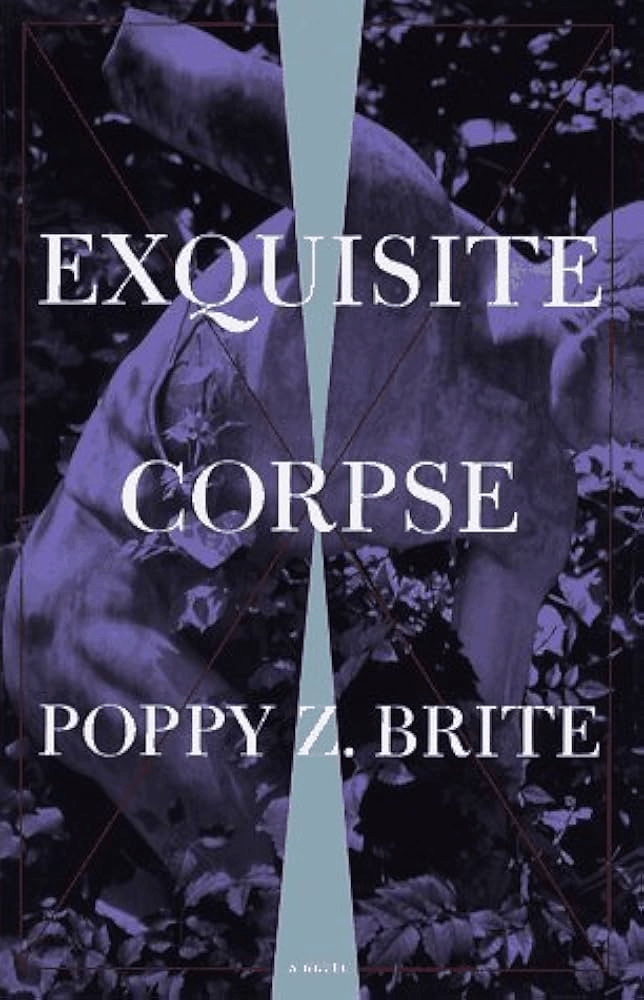






TL;DR: A razor-kissed, queer, ultra-transgressive serial-killer romance that still bites like cold steel, even if some 90s edginess and AIDS-era shock tactics feel glued to their moment. If you crave lyrical filth and moral vertigo, prioritize it; if you need comfort or distance, this corpse is not for you.

Thirty years on, the book’s debut sits inside a very specific storm system. Mid-90s tabloid true crime was still vibrating from Jeffrey Dahmer, and the novel signals that fixation from page one with its cool forensic chill and fascination with bodies as spectacle. The AIDS crisis saturates the cultural air, and Brite threads it into the plot with an HIV-positive killer and a background chorus of talk-radio bile. You hear it in the pirate-broadcast riffs, the sick jokes, the intrusive morality callers, the fight over who owns the right to speak. If you want the historical vibe in a single image, it is this: a pathologist still half-afraid of the virus while leaning over a legendary corpse. That jittery energy fuels the whole ride.
The plot is simple and nasty. Andrew Compton, a British serial killer with a poet’s contempt for ordinary life, fakes his death in prison, stages an escape from a morgue, and runs to America in search of new appetites. His counterpoint is Jay Byrne, an elegant, money-rotted New Orleanian who photographs boys and treats the French Quarter like a personal fridge. Orbiting them are two young men who will not survive as symbols, and a city that feels humid, hungry, and complicit. “My name is Andrew Compton,” the book announces with deadpan ceremony, and the hunt is on. Jay’s New Orleans entrance walks us down Canal and Bourbon into Jackson Square, a cinematic glide that makes the setting feel like soft velvet over a blade.
Why it endures has a lot to do with how cleanly the book executes its ugliest ideas. First, the concept is indecently efficient: stage a duet between two predators and let the romance of annihilation do the rest. The book is not coy about desire; it wants you to feel the skid where love and appetite swap masks. Second, the set pieces are precision work. The morgue resurrection is a pure horror-movie stinger where Compton opens his eyes on the slab and turns the autopsy into an assault; the prose moves like a gloved hand switching instruments, and the violence is intimate enough to make you flinch at the verbs. Third, the image system is consistent: bodies as art objects, blood as silk, New Orleans as a deliciously corrupted jewel box. Even when the text leans into purple decadence, it knows what it is doing.
Craft and style are the book’s signature and its litmus test. The sentences are lush, sensuous, and sometimes cruelly pretty. The opening pages give you that rhythmic, confessional monologue from Compton that slides from martyrdom metaphors into clinical reminiscence, and the voice stays controlled even as the acts get unprintable. Brite’s diction has a fetishist’s eye for texture, weight, and color; interiors feel tactile, skin is a surface you could catalog. To a contemporary reader, this reads both timeless and dated. Timeless, because the lyricism is confident and the point-of-view work is unblinking. Dated, because the book sometimes leans on 90s shock currency: AIDS as aura of doom, tabloid headlines as chorus, and a streak of anthropological gawking at subcultures and at Southeast Asian characters who deserve fuller agency than the story grants them. The frame is transgressive horror, not realism, so some moral framings are intentionally abrasive. Still, a few quips and poses have the stiff shine of a museum label. On pacing, it is lean once the duet locks in; dialogue is sparse and utilitarian, scene construction favors crescendo and aftermath, not procedural grind. Think crime-novel engine with decadent combustion.
Themes are where the book keeps lingering. The obvious thread is desire as hunger, but the more interesting one is complicity. The city feeds the killers and also hides them, the press feeds the public, the public feeds the press, and the radio show feeds everyone. The horror machinery makes the metaphor literal: the body as banquet, love as appetite that cannot separate art from eating. AIDS anxiety folds in as both stigma and soundscape, which makes death feel both private and public, a broadcast condition that turns everyone into a spectator with dirty hands. The aftertaste is unclean in a purposeful way. You are meant to ask why the book’s language is beautiful where its characters are monstrous, and whether beauty is an alibi or an indictment.
Legacy and influence are easier to see now. Exquisite Corpse is a cornerstone of queer splatterpunk and of the 90s crossover where horror rubbed shoulders with true crime and goth-club decadence. It opened a door for extreme, queer, erotically charged horror that refused to apologize for its body politics, and you can see its shadow in later transgressive lit, in indie horror that takes serial killer romance seriously as a form, and in any novel that treats New Orleans as a living fetish object rather than a postcard. The Dahmer nod is not a cheap hook; it is a thesis about how our culture shackles fear even when the man is dead.
If you want a quick calibration for content and heat, the morgue sequence tells you everything about the book’s willingness to put your face in the red. It is erotically charged, technically detailed, and morally nauseating, and if you cannot stomach that, you will not stomach the rest. If, however, the precision of the writing itself compels you despite your discomfort, that is exactly the spell Brite is casting.
For edition guidance, you will be fine with the original 1996 text as your entry point; the UK Phoenix paperback that followed quickly in 1997 reflects the same core novel and gives you the period packaging without sanded edges. The book’s bite is in the language and structure rather than paratext, so you are not chasing a definitive restored cut so much as the cleanest print you can find.
The book belongs with the 90s’ most confrontational horror, the work that treated the body as scripture and the city as accomplice. Within Brite’s early arc, it is the black-heart companion to Lost Souls and Drawing Blood, but with the romanticism stripped to bone and lacquered in formaldehyde. If Clive Barker made a true-crime valentine and Dennis Cooper decided to lace it with chicory and rot, you would get something like this.
For the then vs now reckoning, it is fair to say not all the transgression has aged gracefully. The AIDS scaffolding feels inseparable from the 90s and that is part of its documentary power, but it also means the shock tactics are not flexible outside that era’s fear ecology. The novel gets away with a lot because the sentences are so deliberate, but if you read for representation first, this is not the text that will persuade you. If you read for style and for the anthropology of horror history, it remains essential.
It still sings with terrible beauty, even as some of its 90s provocations feel embalmed in their moment, and on balance the craft makes the corpse exquisite.

Read if you crave decadent prose that makes you complicit in the gaze; you can handle graphic sex and violence as a serious aesthetic choice; you love New Orleans written as a living, poisonous jewel.
Skip if you need sympathetic anchors or a safety rail; you hate splatterpunk or erotically charged horror on principle; you require distance from AIDS-era imagery and tabloid noise.
Exquisite Corpse by Poppy Z. Brite,
published in 1996 by Gallery Books.


 The Blog Without a Face
Leave a comment