

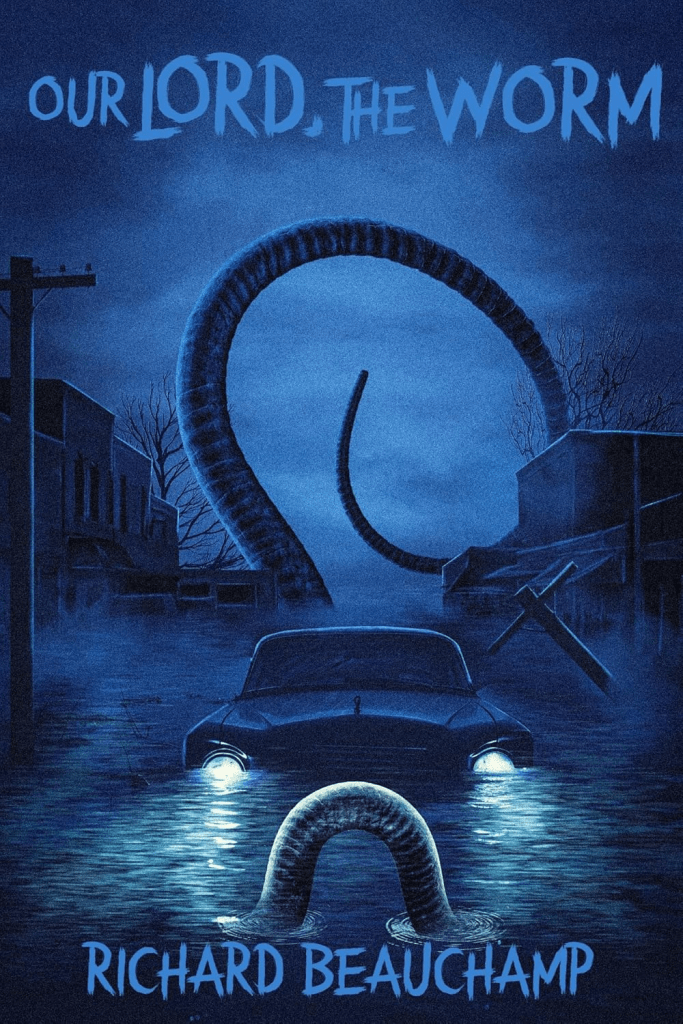





TL;DR: Our Lord, the Worm is river-soaked eco infection horror that starts as a small town character piece and then kicks the doors in with apocalyptic body splatter. It is muddy, pissed off, and surprisingly tender, the kind of book you hand to people who like their creature features chewy with politics and actual feelings along with the gross shit.

Our Lord, The Worm by Richard Beauchamp is a Missouri river town plague novel where the monster is part parasite, part god, and part open sore in the American body. It reads like someone crossed The Blob with small town realism and then dunked the whole thing in the Mississippi during an algae bloom.
Beauchamp has been working the rural horror beat for a while, with Ozarks collections and frontier novellas that already showed a taste for dirt, rust, and bad decisions in the back forty. Here he levels up to full epic mode. You can feel that he lives out where the hills and hollers actually are, tramping the Missouri Ozarks with his wife and many pets, turning that landscape knowledge into weird, fleshy dread instead of cozy postcard shit. Our Lord, the Worm feels like the book where he says, fine, let’s burn down the whole river valley and see what crawls out.

The premise is simple and nasty. In the town of Carlyle, tucked against a toxic Mississippi, something new and ugly festers in the waters near Devil’s Bend. The town itself is a literal narrator, a sentient place talking to “little Willard,” the neurodivergent kid who wanders unseen through its streets. Around Willard we orbit Gus, a grizzled vet and survivalist, Errol, the Black sheriff who is tolerated but never truly accepted, and Linda, a woman dragging her own history of grief behind her boat. When the worm plague starts turning fish and then people into vessels for writhing “bad spaghetti,” Carlyle becomes ground zero for T-Day, an outbreak that rapidly scales from local nightmare to multi state catastrophe. The stakes are survival, sure, but also the question of what survives when the land and the river themselves are sick.
This novel really fucking commits and it commits hard to its point of view. Letting the town narrate big swathes of the story sounds like a gimmick, but Beauchamp makes it work. Carlyle is folksy, bitter, proud, and petty, like a Greek chorus that drinks Busch Light and side eyes the Baptists. Through that voice we get a sweep of local history, class tension, racial discomfort, and religious tradition, all before the first worm chews through an eyeball. Then the human POV chapters swoop down into tighter, grubbier interiority, especially with Gus and Errol, who both carry very different relationships to violence and authority. Willard’s sections hit in a different way, combining sweetness, confusion, and slowly encroaching body horror until his final transformation lands like a punch in the fucking throat.
Beauchamp’s writing is solid and often more ambitious than splatterpunk fans might expect. The prose has a rolling, river current rhythm, full of extended metaphors about soil, water, and bodies that occasionally overindulge but usually sing. He toggles between widescreen disaster reporting, claustrophobic infection scenes, and quiet, melancholy beats where people argue about bait or church potlucks. The structure, marked by day counts since exposure, gives the book a ticking clock, and the late game escalation into full national security meltdown feels earned rather than tacked on. Dialog is crunchy and lived in, especially whenever locals are bullshitting each other in diners or on boats. There are a few patches where exposition about agencies and acronyms drags, and one or two action beats feel like “movie gunfight” instead of grounded horror, which is part of why this gets docked some points instead of an all timer. But when the book is on, it really fucking cooks.
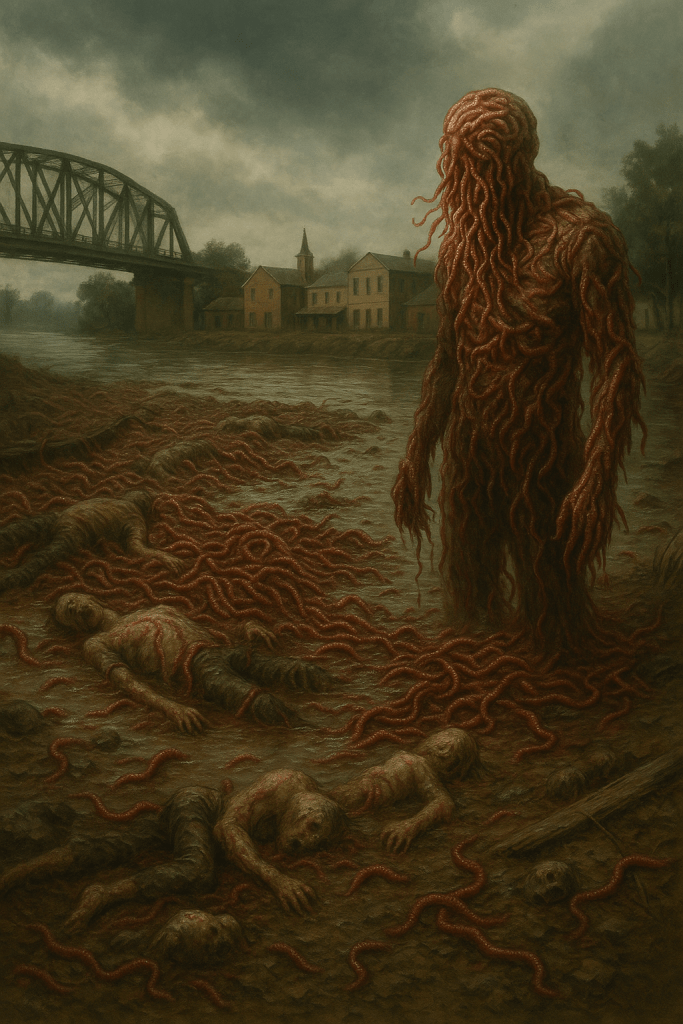
The gore is plentiful and specific. Worms thread through veins, burst from eyes and mouths, and churn under skin in ways that will make every itchy spot on your body feel suspect. The big set pieces, like the river turned mass graveyard and the outbreak statistics scrolling by while officials talk about casualty numbers higher than five thousand, have that sick, numbed scale that feels uncomfortably close to real disaster coverage. Then Beauchamp pulls you back to something intimate and awful, like Willard’s face erupting in “bad spaghetti” in front of a screaming stranger, and reminds you that every statistic is a single person’s fucked up last moment.
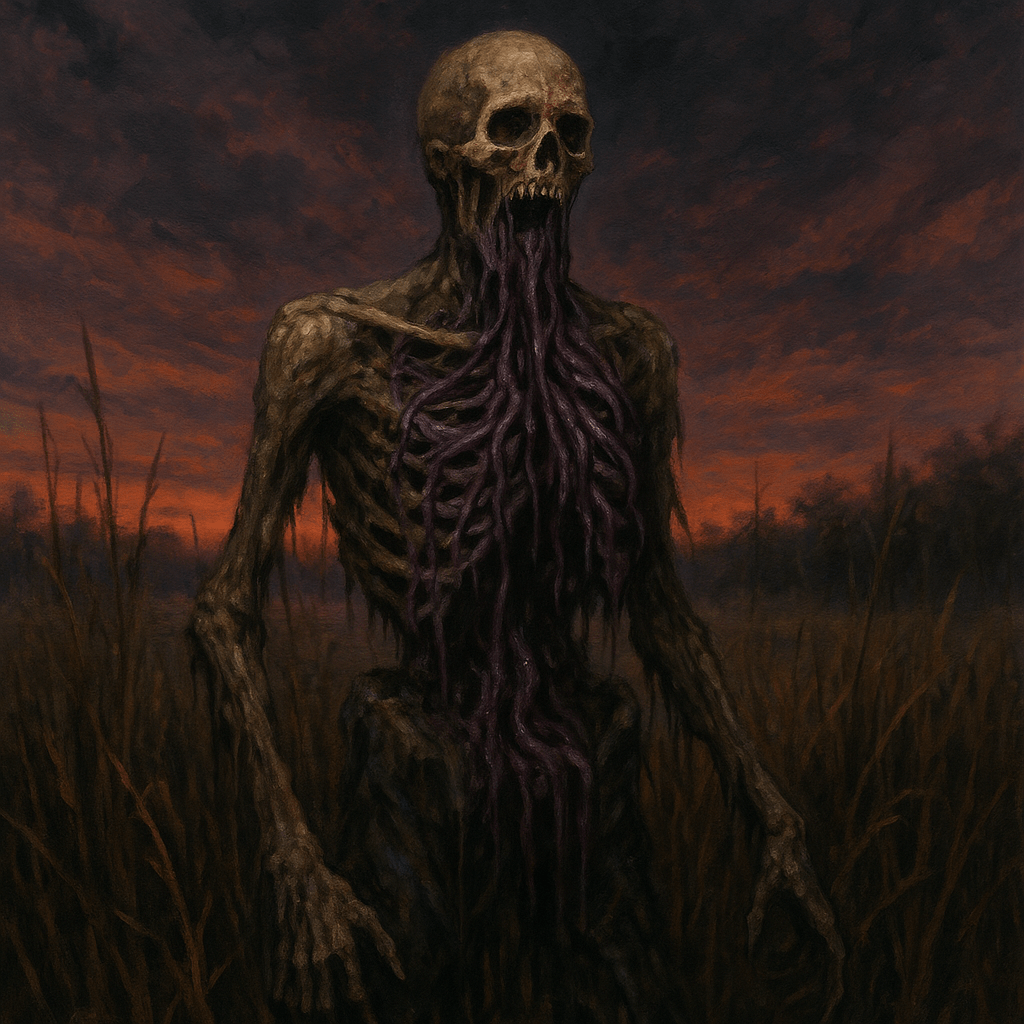
This is not thematically subtle, and that works. The worm is infection, sure, but it is also industrial pollution, government neglect, militarized overreaction, and the slow rot of a country that treats small towns as disposable. The Mississippi is poisoned long before the supernatural corruption swims in; the horror just makes visible what was already killing fish and people. Errol, as a Black sheriff in a mostly white rural town, becomes a walking pressure point for that system, and watching the state turn him into the face of the disaster is bleak as hell. Willard’s arc, from invisible kid to shambling vector guided by a new internal voice, hits on how vulnerable people get used as tools by forces way bigger than them. It’s muddy and sad, more elegy than victory; you close the book feeling like the river is still out there, still sick, and something hungry is riding the current.
Our Lord, the Worm feels like a big, messy, very alive entry in eco and infection horror, closer to the angry, place rooted stuff than sleek pandemic thrillers. In Beauchamp’s own body of work it reads as a culmination, taking the rural misery and supernatural weirdness from his Ozarks and frontier stories and blowing them up to a full on river apocalypse. It is not the most formally perfect release of the year, but it is one of the more distinct voices in the “the land is pissed, and so is God” corner of the genre.
A strong, wormy river epic with real heart and plenty of fucked up set pieces that occasionally sprawls, but earns its place on the shelf for anyone who likes their horror wet, angry, and crawling.

Read if you crave river mud, catfish guts, and eco horror that smells like algae and diesel.
Skip if you need minimal gore or tidy, metaphor only horror without actual worms in your shit.
Our Lord, the Worm by Richard Beauchamp,
published December 12, 2025 by Bell Mountain Press.



 The Blog Without a Face
Leave a reply to Grab the Lapels Cancel reply