


Fifty years on, Jaws remains a goddamn colossus, a film that didn’t just define the summer blockbuster but sank its teeth into the horror genre and shook it like a ragdoll. Directed by a young Steven Spielberg, barely out of his 20s and already swinging for the fences, and scripted by Peter Benchley (with uncredited assists from Carl Gottlieb), Jaws is a masterclass in tension, character, and primal fear. It’s a rare beast that still makes you dread the ocean. Let’s dive into the bloody waters and dissect this thing, from its creators’ roots to its enduring thrills.
Steven Spielberg was a cocky upstart when he tackled Jaws. Fresh off The Sugarland Express (1974), a scrappy road movie that showed he could wrangle character-driven chaos, and the TV movie Duel (1971), a lean, mean thriller about a trucker terrorizing a schmuck, Spielberg was already proving he could make dread feel personal. Duel’s man-versus-machine paranoia was a blueprint for Jaws’ man-versus-nature nightmare. The guy had a knack for turning everyday settings like highways and beaches into killing fields. At 28, he was a prodigy with a chip on his shoulder, fighting a malfunctioning mechanical shark and a studio that thought he’d sink the ship. Spoiler: he didn’t.
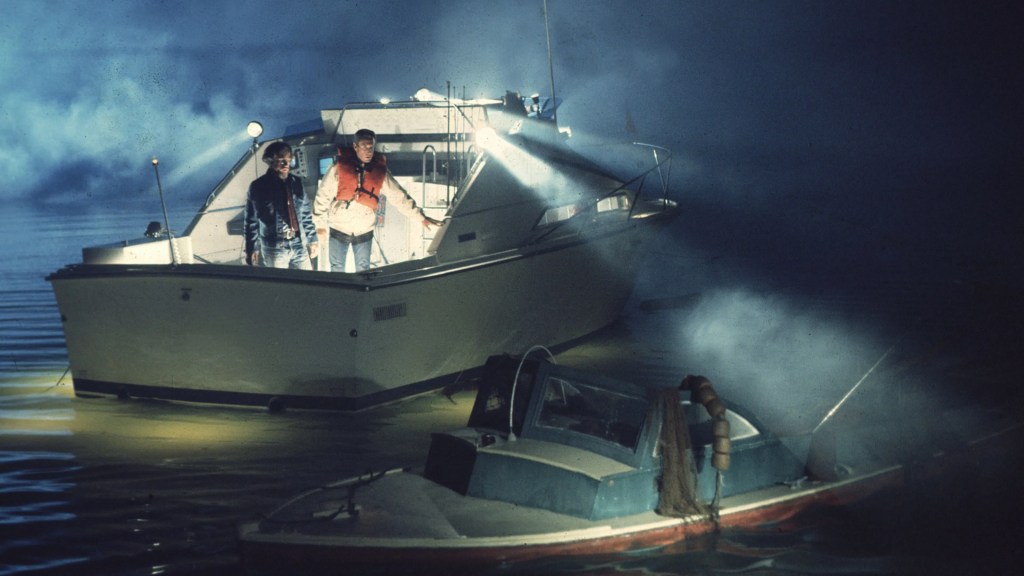
Peter Benchley, the novelist behind the source material and co-screenwriter, was a different animal. A journalist with a pedigree (grandson of humorist Robert Benchley), he turned his fascination with sharks into a 1974 bestseller that was equal parts pulpy thriller and environmental cautionary tale. Before Jaws, Benchley was churning out articles for National Geographic and Time, not exactly horror credentials, but his knack for vivid, accessible prose gave the novel its page-turning juice. The screenplay, however, needed Gottlieb’s punch-up to trim the book’s soap-opera fat (affairs, mob ties) and sharpen the dialogue into something that didn’t sound like a beach read left in the sun too long.

Amity Island, a sleepy tourist trap, is gearing up for its big summer season when a great white shark starts treating beachgoers like a buffet. A young woman’s gruesome death kicks things off, and Police Chief Martin Brody (Roy Scheider), a New York transplant with a water phobia, wants to shut the beaches. The mayor, a spineless suit obsessed with tourist dollars, says hell no. Enter grizzled shark hunter Quint (Robert Shaw) and cocky marine biologist Matt Hooper (Richard Dreyfuss), who team up with Brody to hunt the beast. What follows is a claustrophobic, sweat-soaked battle of wits on the high seas, as the trio faces a 25-foot killing machine that doesn’t give a shit about their plans.

Jaws is a primal scream about humanity’s arrogance in the face of nature. The shark isn’t just a fish; it’s a force—unknowable, unstoppable, and indifferent. It’s Moby-Dick’s cousin, but without the metaphysical baggage. The film skewers small-town greed (the mayor’s denialism is infuriatingly real) and toxic masculinity (Quint’s obsession with proving his manhood gets messy). Water symbolizes the unknown, a vast, uncaring void that swallows hubris whole. The shark’s attacks, sudden and brutal, mirror life’s unpredictability.
The screenplay is a tightrope walk: lean, witty, and brutal. Benchley’s novel was verbose, but Gottlieb’s rewrites (and Shaw’s improvised “Indianapolis” monologue) give it bite. Dialogue crackles. Quint’s “Here’s to swimmin’ with bow-legged women” is pure swagger, while Brody’s “You’re gonna need a bigger boat” lands like a punch. The script balances humor, horror, and humanity, letting characters shine through naturalistic banter. It’s not flawless; some early exposition clunks, and the mayor’s cartoonish denial can feel one-note. But when it hits, it’s a harpoon to the heart.
Strengths:
- Originality: Jaws invented the summer blockbuster and redefined horror by making the ocean itself the monster. It’s not derivative; it’s the template.
- Acting: Scheider’s everyman grit, Shaw’s unhinged intensity, and Dreyfuss’s nerdy charm are a holy trinity. Shaw’s “Indianapolis” speech is a gut-wrenching showstopper.
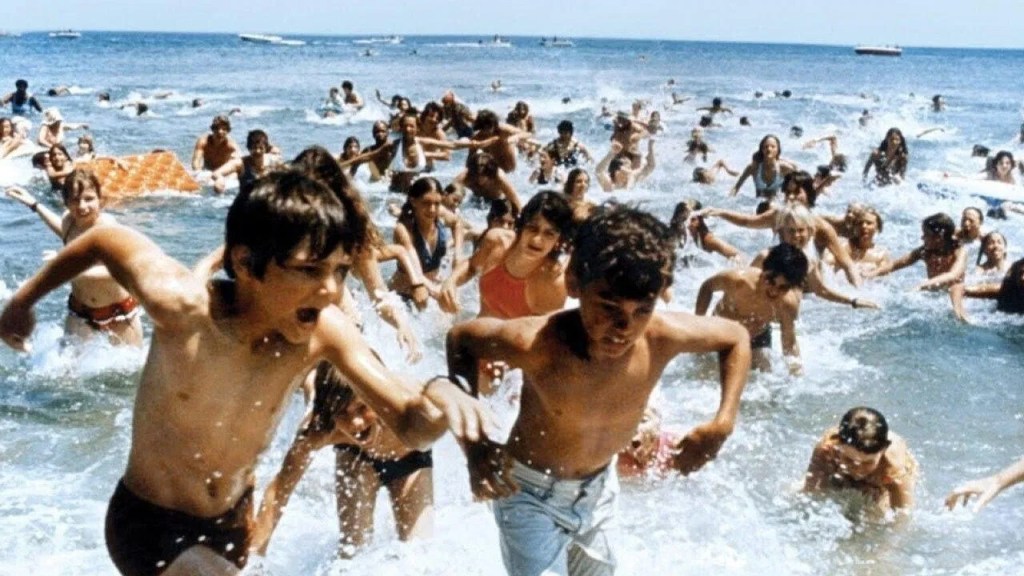
- Direction: Spielberg’s a wizard, using the broken shark (nicknamed Bruce) to his advantage, hiding it to build dread. The beach scenes are chaos captured perfectly.
- Cinematography: Bill Butler’s camera makes the ocean a character—vast, gorgeous, terrifying. The underwater POV shots are iconic for a reason.
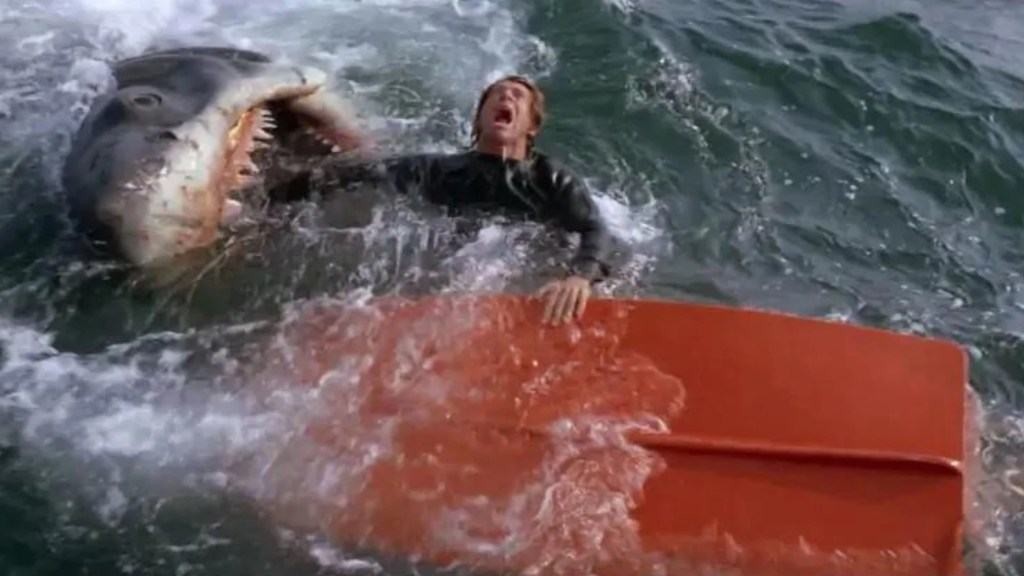
- Horror Impact: The opening attack is raw, visceral terror. John Williams’ score, those two notes, burrows into your skull. The shark’s absence early on makes its reveal hit like a freight train.
- Thematic Ambition: It’s not just a monster movie; it’s about fear, greed, and survival. It dares to make you question humanity’s place in the food chain.
Critiques:
- The pacing sags slightly in the second act; the town hall scenes drag.
- The mayor’s stubbornness borders on caricature, undercutting the realism.
- Some effects, like the shark’s occasional rubbery look, haven’t aged gracefully.
- The novel’s subplots (like Brody’s wife’s affair) were wisely cut, but their absence leaves her character thin.

Jaws is a primal wound that still festers. Spielberg and Benchley took a simple idea, a shark eating people, and turned it into a meditation on fear, greed, and survival. The horror hits because it’s real: the ocean doesn’t care about you, and neither does that 25-foot bastard with teeth. Fifty years later, it’s still the gold standard for making you scared to dip a toe in the water.
TL;DR: Jaws is a 50-year-old predator that still rips your nerves to shreds. Spielberg’s direction, a killer cast, and a script that balances wit and terror make it a horror landmark. Minor flaws don’t dull its teeth.




Director: Steven Spielberg
Writer: Carl Gottlieb, Peter Benchley
Distributor: Universal Pictures
Released: June 20, 1975
Recommended for: People who want their summer ruined by a fish with a PhD in murder.
Not recommended for: Landlubbers who think sharks are just big dolphins.


 The Blog Without a Face
Leave a reply to BWAF Selects: The Best Aquatic Horror Films – The Blog Without a Face Cancel reply