
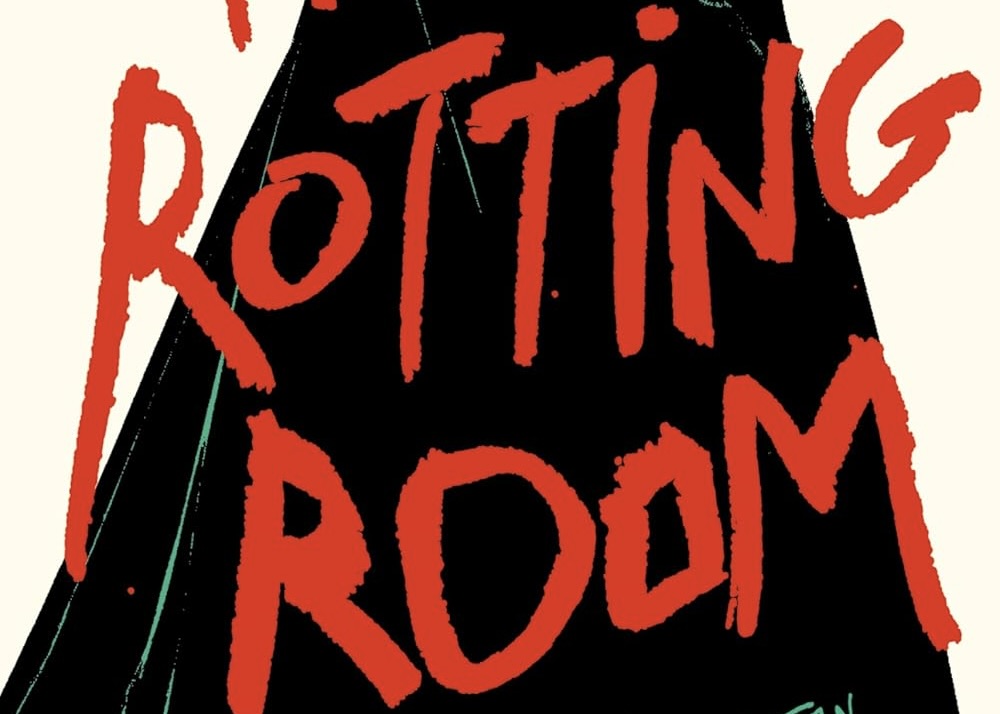

If Shirley Jackson, Clive Barker, and a vat of decomposing nun corpses had a lovechild, it might squelch out looking something like The Rotting Room. But let’s not get cute—this is a brutal, weird, thematically rich slab of gothic horror that knows exactly what the hell it’s doing. Viggy Parr Hampton, who’s already proven she can spin stomach-turning nightmares with a brain (A Cold Night for Alligators was no fluke), delivers a book that plays like a liturgical fever dream filtered through trauma, faith, and rot.
Let’s talk about Hampton. If you haven’t read her yet, picture an author who splices academic rigor with batshit horror—she’s like a possessed grad student with a thing for decay and morally conflicted women. She’s also a content marketing strategist and a podcast host (Horror Humor Hunger), which suggests she’s got a knack for spinning a yarn and maybe a touch of that self-promotional hustle. Her previous work leaned more into the medical and biohazard subgenres (Much Too Vulgar was a gory takedown of academic elitism via psychotic anatomy lessons), but The Rotting Room digs into ecclesiastical horror with a historian’s obsession and a heretic’s fury. From the dedication—thanking her father for his moral compass and edits—through to the vivid historical flourishes and vivid Catholic minutiae, you can feel how much research went into the bones of this beast. But Hampton doesn’t just write horror; she excavates it. This one reeks of damp stone, desperation, and buried shame.

Set in a cloistered convent devoted to a splinter Catholic order, The Rotting Room follows Sister Rafaela, a reformed Rafaelite trying to outrun her past and do the Lord’s work (whatever that means when you’re surrounded by sadistic nuns and a room full of decomposing corpses). The convent’s secret? A macabre burial chamber where the sisters rot in open stone chairs—think ossuary meets confessional—with the living praying the dead into sainthood. But something festers deeper than just dead flesh. The rituals are wrong. The spirits don’t stay quiet. And Rafaela? She’s unraveling faster than a communion wafer in a rainstorm.
Let’s get one thing straight: The Rotting Room is not fucking around with its themes. This is a horror novel about guilt, religious trauma, and the desperate violence of women trying to survive a system built to sanctify their suffering. The titular room isn’t just a nasty little grotto full of necrotic decor—it’s a metaphor for how institutions preserve trauma under the guise of tradition. These sisters pray over moldering corpses, chanting into decay, clinging to the illusion that suffering equals sanctity. Sound familiar? It should. Hampton is indicting every system that demands pain for purity—patriarchal religion, academia, even horror as a genre.
Sister Rafaela’s own past—full of zealotry, self-harm, and complicit cruelty—is layered so carefully it cuts like stigmata. This isn’t just a haunted convent story. It’s a character study of a woman whose piety is a shield for deep, festering guilt. And that shield? It’s cracking.
Other motifs worth noting:
- The body as battleground: Flesh is philosophy here. Rafaela’s body rebels, bleeds, and breaks in lockstep with her deteriorating faith.
- Sound and silence: The chants, the prayers, the muttering dead—this book weaponizes sound in. Silence, when it comes, is a reprieve and a warning.
- Decay as truth: If rot reveals the soul, then this book argues truth lives in pus, not prayer. The “holy essence” is a particularly nasty bit of symbolism—a perversion of the Eucharist, turning sacred ritual into a literal consumption of death.
Hampton’s prose is chewy as old incense and sharp as broken glass in holy water. She blends rich, almost biblical phrasing with abrupt, modern horror beats. It’s not purple prose—it’s violet, black, and arterial red. You’ll get long, mournful sentences broken by gut-punch lines like:
“Her breath caught, a hiccup in the hymn of the damned.”
When she’s describing the rotting room or the tactile horror of corpse drippings, she’s in her element—her epidemiological background shines through in the visceral, almost clinical detail. Lines like “the yellow-gray paper of her flesh, so mottled it looked burned” are gross and evocative, painting a picture that’ll stick in your craw. The dialogue between nuns is razor-sharp, alternating between icy politeness and passive-aggressive sanctimony. There are moments when the language slips toward overindulgence—especially in mid-book when Rafaela’s internal monologue spirals—but honestly, it fits the fever-dream tone. Hampton writes like someone trapped in a cathedral while the walls bleed.
Structurally, the book leans heavily on atmosphere, especially in the middle third. Pacing slows to a near crawl—but that might be the point. You feel stuck in that fucking room, gagging on incense and death, just like Rafaela. It’s immersive. It’s hell.

Strengths
The Rotting Room is fucking disgusting, and that’s a compliment in horror. The concept of nuns bottling corpse juice is so vile it’s almost genius, and Hampton milks it for all it’s worth. The abbey’s atmosphere is suffocatingly creepy, with its damp stone, flickering candles, and omnipresent stench. Rafaela’s a compelling protagonist—her mix of piety and paranoia makes her relatable. The historical grounding, inspired by the Poor Clares of Ischia, adds a layer of authenticity that elevates the horror beyond cheap shocks. When the book leans into its grotesque imagery, it’s a gut-churner in the best fucking way.
- Originality: Yes, it’s a convent horror, but there’s nothing standard about it. The concept of the Rotting Room is so grotesque and deeply rooted in religious psychodrama that it feels mythic.
- Characterization: Rafaela is a magnetic mess. Her descent isn’t linear; it’s recursive, nauseating, and honest.
- Horror impact: This book doesn’t trade in cheap jump scares. It’s dread stacked on dread, with spikes of full-body revulsion. That first encounter with the titular room? Gag-worthy in the best way.
- Thematic ambition: It’s not just scary, it’s smart. This is horror that asks you to think about how we use pain to justify faith—and how that can rot you from the inside.
Critiques
Let’s not canonize Hampton too fast. There are hiccups:
- Pacing: The middle act is dense, sometimes too dense. A bit of narrative tightening could have maintained the suffocating mood without smothering the reader’s engagement.
- Backstory dump: Toward the final quarter, there’s a scene where we get a lore-dump via a priest character that slows the otherwise mounting tension. If you’re not down for theological exposition, it’s a speed bump.
- Underutilized side characters: A couple of the younger nuns had promise but fall into cliché territory (wide-eyed innocent, bitter skeptic) without much payoff.
- That climax: Not all readers will agree with me, but the climax feels ripped from a ’70s B-movie. Don’t get me wrong, I love some of that shit, but I don’t think that was the intent here. Scary, sure, but the tone shift is surprising.
The Rotting Room stands tall—corpse-stiff, rosary-clutched—next to the best of contemporary religious horror. It’s more meditative than The Exorcist’s House–style pulp, more emotionally nuanced than Grady Hendrix’s cheekier outings, and less pretentious than some recent lit-horror darlings (you know who you are). Viggy Parr Hampton has written a horror novel that reeks of ambition, rot, and redemption. The Rotting Room isn’t flawless, but its boldness, originality, and execution lift it well above the heap of mediocre convent creep-outs clogging the genre. It’s terrifying, tragic, and thick with theological tension.




TL;DR:
The Rotting Room is Catholic horror by way of rotting flesh and rotted ideology. It’s not here to entertain—it’s here to unearth. Go in praying. Come out haunted.
Recommended for: Readers who enjoy their horror slow, sacrilegious, and soaked in corpse juice. People who hear “monastic spiritual decay” and think, finally, a good time.
Not recommended for: Anyone who thinks The Nun was too scary. Also, devout Catholics who get squeamish about bodily fluids or theological critique in the form of screaming pustules.
Horror Humor Hunger Press
Published April 23, 2025

 The Blog Without a Face
Leave a comment