
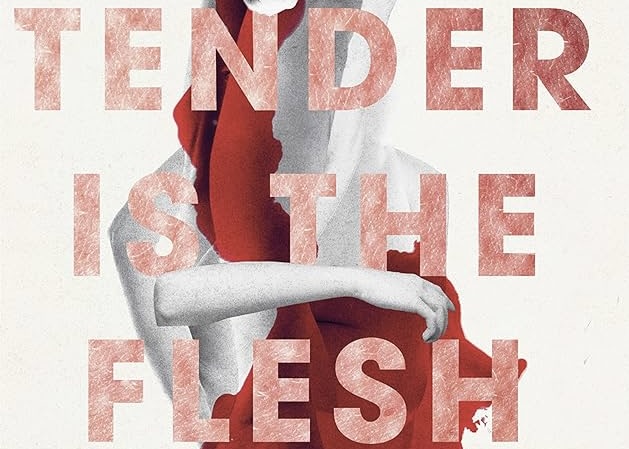

Agustina Bazterrica is an Argentine writer born in 1974 in Buenos Aires. She pursued her studies in Fine Arts at the University of Buenos Aires (UBA). Bazterrica has received multiple literary accolades, but she is particularly recognized for her novel Tender is the Flesh, which won the prestigious Clarín de Novela Prize. Today, I have the great pleasure… that’s definitely the wrong word… to review.
Tender is the Flesh, translated by Sarah Moses, is not a bedtime story. It’s not something you casually pick up for a light read to wind down your evening. No, this book is a visceral punch to the gut, a harrowing gaze into a dystopia that mirrors the darkest facets of our own world with uncanny and unsettling precision.
Set in a future where animal meat has become toxic due to a rampant virus, humanity has turned to a source of flesh that is shockingly plentiful yet morally bankrupt—other humans. Bazterrica doesn’t just nudge the reader into this new reality; she shoves them into the deep end. Through the eyes of Marcos Tejo, a man entrenched in the processing of “special meat,” we are given a front-row seat to a production line of horror that is as efficient as it is cold-blooded.
Marcos, a complex protagonist shaped by loss and desensitization, manages his father’s meat plant—a facility that has swapped cattle for humans. The novel opens with him receiving a gift, a female specimen of the highest quality, meant as a token to seal business dealings. Yet, this gift becomes a haunting presence, challenging the flimsy moral scaffolding that Marcos and society have constructed to justify their actions.

Bazterrica’s prose is stark and unflinching, with a precision that dissects humanity’s capacity for cruelty under the veneer of survival and business. The narrative is not just about cannibalism as a replacement for livestock but probes deeper, questioning the very essence of humanity. What makes us human? Is it empathy, society, or simply a matter of survival at any cost?
The “gift” Marcos receives—referred to with clinical detachment as a specimen—becomes a pivot around which his remaining shreds of humanity teeter. Her existence challenges the normalized brutality of his world, peeling back layers of desensitization to reveal the raw, unnerving possibility of empathy and connection. Yet, this isn’t a tale of redemption waiting with open arms. Marcos’s journey is gritty and fraught with moral ambiguity, making the narrative’s progression a compelling traverse through psychological and societal mazes.
The real horror of Tender is the Flesh, however, extends beyond its pages—it lies in the mirror it holds up to our society. The novel forces us to confront our own complicity in systems of exploitation and cruelty, be they related to meat consumption or the broader disregard for life in the pursuit of convenience and profit, with clear parallels between atrocities of slavery, Holocaust, and other genocides. The detailed, almost documentary-like depiction of the slaughter process and the industry’s inner workings are chillingly familiar, echoing practices that are all too real in our world.
Moreover, the novel’s exploration of language as a tool for dehumanization is particularly poignant. Terms like “head” and “special meat” sanitize violence, creating a linguistic buffer that allows society to maintain a facade of civility and progress. Bazterrica masterfully exposes how language can be manipulated to obscure the atrocities we commit, prompting a reflection on how such mechanisms operate in our own reality.
However, this book is not without its imperfections. The bleakness can sometimes feel overwhelming, the worldbuilding might overshadow the character-driven aspects, and the narrative’s grim trajectory might leave readers yearning for moments of respite or redemption that are few and far between. Yet, these elements are perhaps necessary for the kind of visceral reaction Bazterrica aims to evoke—a testament to her boldness as a storyteller.
Tender is the Flesh is a profound, disturbing, and meticulously crafted novel that delves into the darkest corridors of human capability. It is a stark reminder of the thin line between civilization and savagery, challenging us to consider how far we are willing to go, and what we are willing to consume, in the name of survival. This book is not just read; it is experienced, leaving a haunting aftertaste that lingers.



Published November 29, 2017

 The Blog Without a Face
Leave a reply to The Unworthy: Without Faith There Is No Refuge – The Blog Without a Face Cancel reply