
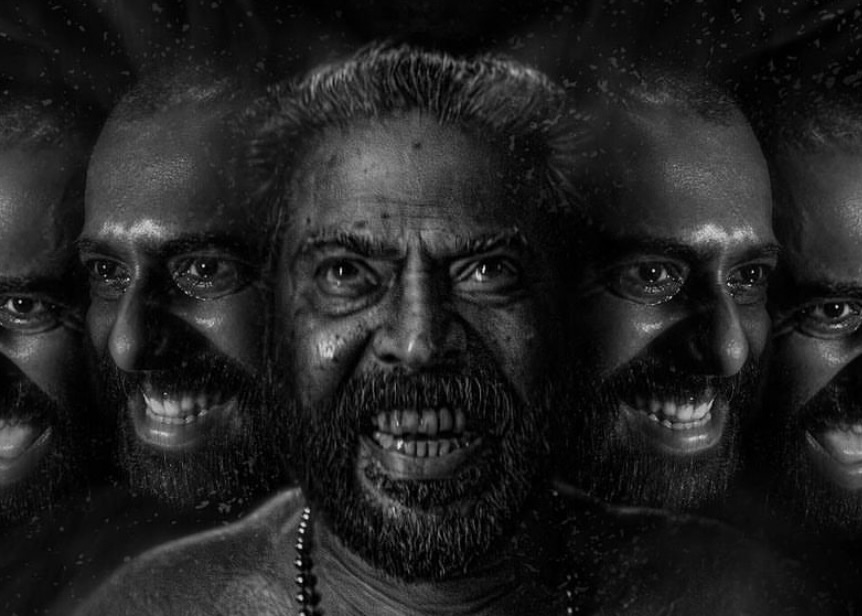

Bramayugam: The Age of Madness plunges audiences into a chilling folk horror landscape, marking a thrilling departure for director Rahul Sadasivan and megastar Mammootty. Set against a backdrop of 17th-century Kerala, the film intertwines elements of dark folklore, societal hierarchy, and an unsettling atmosphere that is captivating yet unnerving.
Bramayugam is set against the rich tapestry of 17th century South Malabar, a period and region ripe with historical intrigue, cultural complexities, and socio-political upheaval. To understand the historical context of the film, we must delve into several key aspects of this era and location, including the social structure, the influence of European traders, and the prevalence of folklore and superstition.
The social structure in 17th century Malabar was deeply stratified, with the caste system playing a pivotal role in everyday life. Brahmins (the priestly class) held the top tier of this hierarchy, enjoying privileges and status that were denied to others. The feudal system was in full effect, with large tracts of land controlled by a few, and the lower castes serving these landlords in various capacities. The film’s portrayal of a Brahmin mansion (mana) as the center of its narrative directly references this social order, showcasing the power dynamics and caste discrimination prevalent at the time.

This period was also marked by the arrival and increasing influence of European colonial powers, primarily the Portuguese, Dutch, and later the British. Kerala, with its rich spice trade, became a focal point for European commercial interests. The European presence brought new socio-political dynamics to the region, including trade alliances, military conflicts, and cultural exchanges. This influence is hinted at in the film through the mention of foreign invaders, serving as a metaphor for external pressures and changes impacting the traditional ways of life.
Folklore and superstition were integral to the daily lives of people in Malabar during the 17th century. Stories of sorcery, spirits, and the supernatural were not just entertainment; they reflected the deeply held beliefs of the people. The concept of “Bramayugam” itself, a period dominated by evil forces, draws from traditional Hindu beliefs about the cycle of time (Yugas), particularly the Kali Yuga, believed to be the current age characterized by strife and moral decline. In Hindu cosmology, the concept of Yugas is crucial in understanding the cyclical patterns of time and the moral and spiritual evolution of the world. According to ancient Hindu scriptures, notably the Puranas, time is divided into four great epochs or Yugas, which repeat in a cycle known as the Mahayuga. These Yugas are:
Satya Yuga (also known as Krita Yuga): This is the age of truth and perfection, lasting 1,728,000 years. Humanity is governed by gods, and everyone lives in harmony and happiness. Virtue reigns supreme, and human stature and lifespan are at their greatest.
Treta Yuga: Lasting 1,296,000 years, this is the second age, in which virtue slightly declines by a quarter. Emperors rise and righteousness begins to wane. It is in this Yuga that Lord Rama, a major deity in Hinduism, is said to have ruled.
Dvapara Yuga: The third age lasts for 864,000 years, marked by a further decrease in virtue and morality by another quarter. It is known for the stories of Lord Krishna, another key deity, particularly the events described in the epic Mahabharata.
Kali Yuga: The current age, which is expected to last for 432,000 years, in which human morality and spirituality reach their nadir. It’s characterized by strife, ignorance, irreligion, and vice. Virtue is reduced to only a quarter of its initial level in the Satya Yuga.
The transition between Yugas is often accompanied by a decline in spiritual and moral practices, leading to the degradation of society’s ethical fabric. Each Yuga has its defining characteristics and heroes, and the end of the Kali Yuga is said to herald the return of Kalki, an avatar of Vishnu, who will restore order and initiate a new Satya Yuga, thus starting the cycle anew. These Yugas not only signify spiritual and moral dimensions but are also thought to influence social structures, lifespans, human capabilities, and natural laws during their respective periods. The concept of Yugas helps to frame a worldview where time is cyclic rather than linear, emphasizing an eternal cosmic rhythm of rise and decline.

In Bramayugam, the title itself and the thematic underpinnings suggest a fictional or allegorical extension of the traditional Yuga concept, specifically the Kali Yuga. The term “Bramayugam” does not appear in traditional Hindu scriptures but is used within the film to represent a period within the Kali Yuga—described as a time of intensified evil or moral decay, beyond the typical attributes of the Kali Yuga. By setting the narrative in an era and place steeped in such lore, the film taps into the rich vein of cultural narratives that have shaped the region’s identity.
The 17th century was also a time of political flux in South Malabar, with various kingdoms and chieftaincies vying for power. The internal power struggles were compounded by the external threat posed by European colonizers. This period saw a series of conflicts and alliances that reshaped the political landscape of Kerala. The film’s allegorical exploration of power struggles and the corrupting influence of power reflects these historical realities, using the personal and supernatural conflicts within the story as a microcosm for larger societal and political themes.
Bramayugam is more than a historical horror thriller. By weaving together the social, political, and cultural threads of the era, the film offers a richly textured backdrop that enhances its narrative. It provides a window into a time of great change, where the ancient and the modern, the local and the foreign, the material and the spiritual were in constant negotiation. This historical context not only enriches the viewing experience but also serves as a reminder of the enduring nature of certain human struggles across time and space.
Mammootty delivers a stellar performance as Kodumon Potti, a character that exudes menace and authority, drawing comparisons to his past roles while standing out as uniquely intimidating in this narrative. His portrayal has significant depth and the ability to command every scene he’s in, making the character’s villainous presence profoundly impactful. His acting prowess, especially in conveying complex emotions and the dark undercurrents of his character, is incredible.
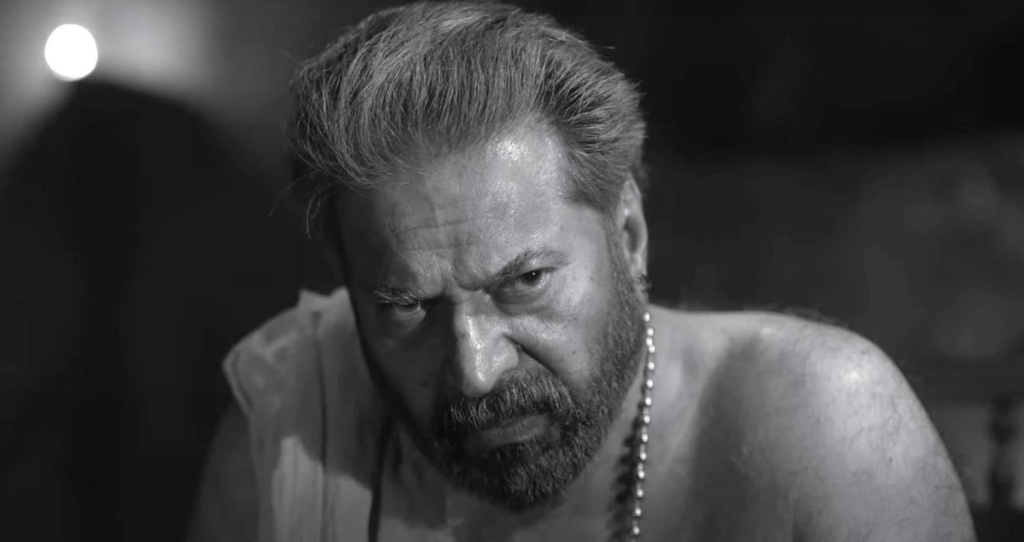
The film’s storytelling is minimalist, leveraging the starkness of black and white cinematography to amplify its thematic depth and the horror elements, transcending typical genre constraints to explore broader societal fears and anxieties. There are somewhat predictable plot elements and the non-Mammootty roles are bit underdeveloped. Nonetheless, Bramayugam is remarkable for its absolutely meticulous craftsmanship, from the haunting score to the beautifully composed frames, creating a pervasive sense of dread that lingers. I can certainly see people taking issue with the pacing of the film, but for this patient viewer, I found no issue with its lengthy runtime.
The thematic exploration of power dynamics, ideological hegemony, and the manipulation of reality is a strong element of the narrative, inviting comparisons to philosophical and literary concepts, thereby adding layers of depth to the horror and historical setting. The film provides an immersive experience that’s both intellectually stimulating and viscerally frightening (particularly that third act!). The movie showcases a remarkable ability to captivate beyond conventional horror tropes.
Bramayugam will certainly resonate with those interested in folklore and psychological horror, offering more than just scares but also a reflective look at historical and social themes through the lens of horror. While the film might not cater to all tastes, particularly due to its slow burn nature and complex themes, from my perspective, it’s a significant contribution to the genre that offers an incredible cinematic experience.

Overall, Bramayugam: The Age of Madness is a film that stands out for its bold thematic ambitions, Mammootty’s commanding performance, and its contribution to the folk horror landscape.


Director: Rahul Sadasivan
Writer: Rahul Sadasivan, T.D. Ramakrishnan
Released February 15, 2024



 The Blog Without a Face
Leave a reply to satyam rastogi Cancel reply