

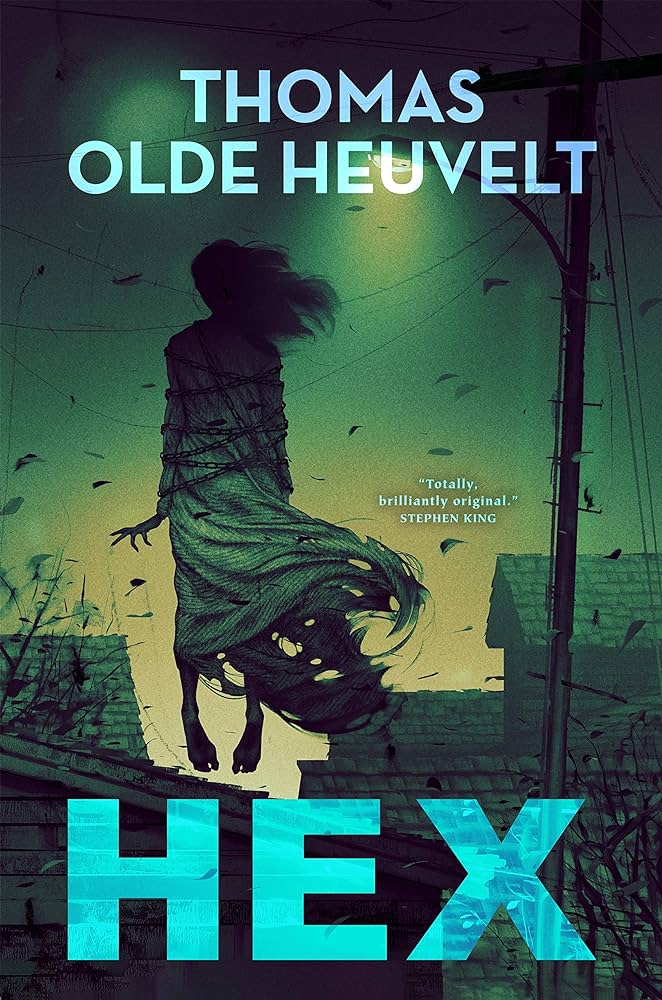
“Hex” is a horror novel originally written in Dutch and later translated into English, with significant changes made for the English-speaking audience. The story revolves around the town of Black Spring, which is haunted by the Black Rock Witch, a woman from the 17th century whose eyes and mouth are sewn shut. Despite the intriguing premise, there are several areas where the novel falters.
One of the primary criticisms could be leveled at the plot’s pacing. The novel starts with an intriguing premise, introducing the haunting figure of the Black Rock Witch in a modern setting, blending ancient curses with contemporary life. However, the pacing can feel uneven, with long stretches where little progress seems to be made in terms of plot advancement or character development. This slow burn might work for some readers, but for others, it could detract from the suspense and urgency typically associated with horror narratives.
Further, while “Hex” presents a variety of characters, their development is lacking or superficial. The residents of Black Spring are subjected to an extraordinary situation, but their reactions and transformations throughout the story can feel underexplored or inconsistent. The potential for deep psychological exploration of fear, community dynamics, and the impact of isolation is present but not fully realized, leaving characters feeling more like archetypes or vehicles for the plot rather than fully fleshed-out individuals.

The novel leverages traditional horror tropes, including the cursed town, ancient witchcraft, and the theme of surveillance. While the premise is compelling, the actual horror elements—such as the witch’s appearances and the town’s curse—may not always deliver the expected level of creepiness or fear. Very little inspired true terror until approximately Chapter 23. Props where props are due, the couple of chapters following Chapter 23 truly were a gut punch and unexpectedly effective. However, once again, the lack of character development made it much less heart wrenching than it could have been.
The novel attempts to explore themes of surveillance, privacy, and the mob mentality in a digital age. However, these themes are not fully fleshed out or integrated seamlessly into the narrative. The metaphor of the witch’s constant surveillance could be seen as heavy-handed or lacking in subtlety, and the exploration of how societies deal with internal and external threats might come across as muddled rather than insightful.
Given that “Hex” was translated and significantly revised for an English-speaking audience, I feel uncomfortable criticizing writing style. Some nuances of the original Dutch version could be lost or altered in translation, potentially affecting the story’s tone or the depth of cultural references.
While “Hex” offers a unique and promising premise that blends traditional horror with contemporary societal issues, its execution falls short in several key areas. The uneven pacing, underdeveloped characters, predictable horror elements, and somewhat superficial exploration of deeper themes. Additionally, issues related to the translation and writing style might further detract from the overall impact of the novel. This was certainly not for me.


Tor Nightfire
Published April 17, 2013




 The Blog Without a Face
Leave a reply to Darker Days: Welcome to Bird Street, Please Ignore the Rituals – The Blog Without a Face Cancel reply