
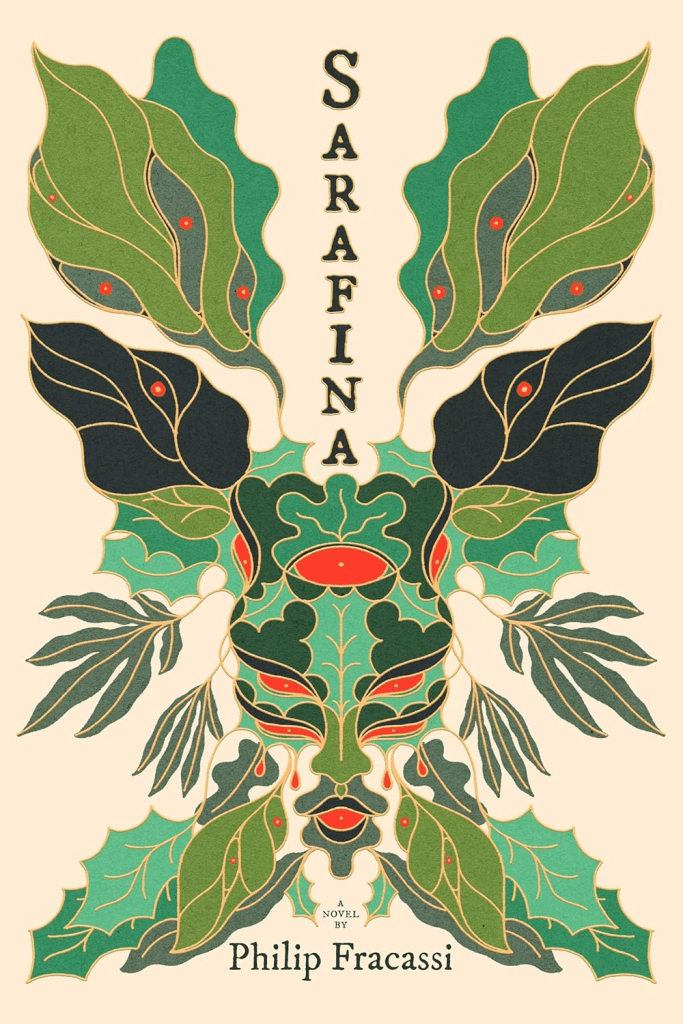


TL;DR: A Civil War gothic with cosmological nerve, Sarafina plants three deserter brothers inside a supernatural prison older than the flood and watches what rot sets in. Fracassi’s mythology is original and his central figure deeply haunting. The prose doesn’t always match the ambition. What it reaches, it holds. What it holds stays with you.

The Civil War begins this book the way it begins so many things in American fiction: with mud, with cannon smoke, with bodies that the earth does not want. Three brothers desert the Confederate Army at Shiloh, wade south through swamp and ambush and the cold mathematics of starvation, and somewhere in the deep wilderness of Mississippi they come upon a creek that flows in both directions at once, and on the other side of it a farmhouse that should not be there, and a woman standing on the porch who should not exist. Her name is Sarafina. Her dogs are the size of bears and they eat men.
What Philip Fracassi has built here is a Civil War gothic with cosmological ambitions, a story that wants to reach all the way back to the apocrypha, to the Watchers and the flood and the old dark contracts between women and angels, between the imprisoned and those who would free them. It is a serious project. The book opens on the Battle of Shiloh with real force, the prose of the battle sequences clean and hard and blasted through with the specific weight of cannon fire, the landscape rendered not as backdrop but as the accumulated horror of what men do to earth and to each other. The youngest brother Ethan, through whose eyes we spend the novel, is rendered from the outside entirely as a young man should be: he does not understand himself, does not know what he is made of, and neither does the reader, and that ignorance is the book’s longest-burning fuse.
The three brothers are well-differentiated in their violence. Mason the eldest is dangerous in the way a frozen river is dangerous; the danger is structural, not temperamental. Archie is meaner and more particular about it, a man for whom cruelty is its own sufficient reason. Between them sits Ethan, who has a good heart in the way of a man who has not yet been fully tested and does not know what the test will reveal. What Fracassi understands about brotherhood is that it is a cage made of love, and the love does not make it less of a cage. These three men, walking through the wilderness, are bound to each other and to their worst impulses in equal measure, and Sarafina knows this before they say a word.
The farm sequences, when the brothers arrive under the strange woman’s roof, are where the book is at its most atmospheric and most deliberately slow. The dread is architectural. The creek that encircles the property runs its impossible courses. Fruit ripens out of season. The dogs disappear and reappear. Titus, the boy, watches from doorways and says careful things. There is a pantry stocked with impossible abundance and a cellar the brothers are not meant to see. Fracassi is working in the tradition of backwoods dread that reaches from Algernon Blackwood through to Shirley Jackson, the tradition in which the wrong house is not merely a place but an ontological condition, a point in space where the usual rules have been quietly suspended and you cannot see it until you are already inside. He handles this well. The atmosphere thickens the way real fog does: before you notice it, you cannot see anything clearly.
Fracassi writes clean serviceable sentences, functional in the way of a good contractor rather than incandescent in the way of an artist pushing at the limits of language. His descriptive passages do their job without doing more than their job, which in a novel that requires the reader to feel genuinely lost in a place between the world and something older than the world is a real limitation. The Shiloh passages burn because the subject matter does the burning for him. When the book slows to let Sarafina and the brothers circle each other through dinner conversation and chores and the ordinary daylight hours of her farm, the prose has nothing extraordinary to lend it, and the pages pass without accumulating the weight they need to. The mystery of the woman and her enclosure is interesting, but the sentences carrying it are not sufficiently interesting to sustain the middle sections at full atmospheric pressure.
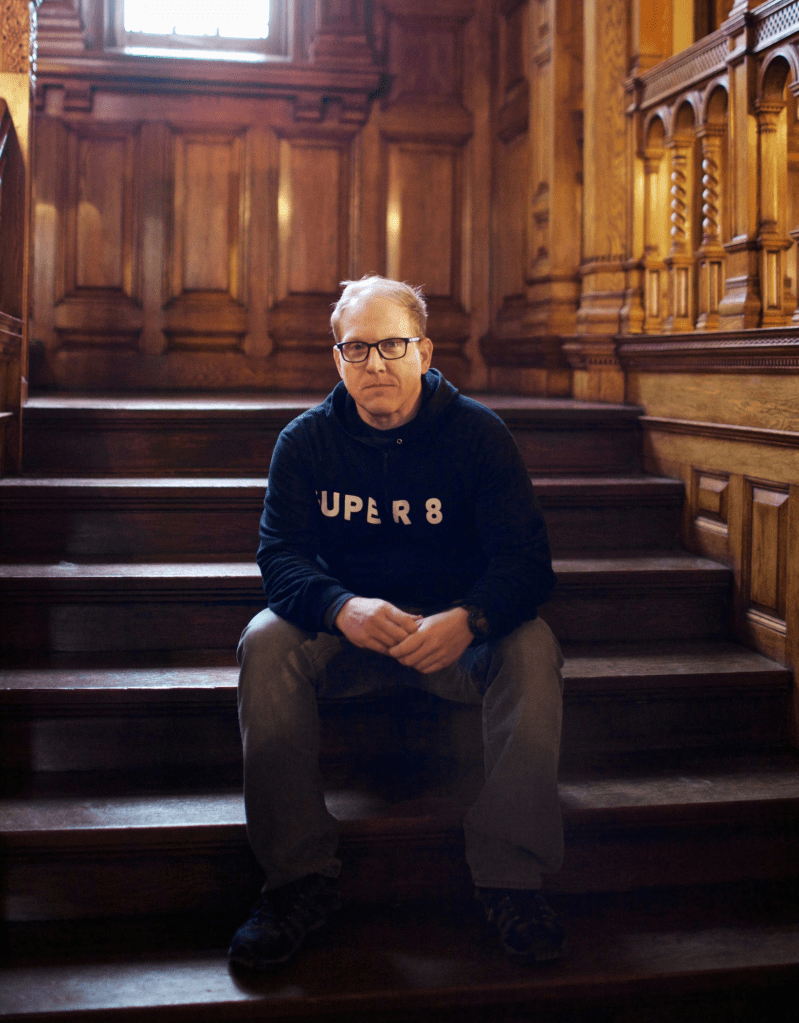
Fracassi was born in Los Angeles, lives there still, and has been building toward something like this novel for a decade. His story collections, among them Behold the Void and Beneath a Pale Sky, named best collection of the year by both This Is Horror and Rue Morgue, established him as a writer of controlled, old-school genre horror, careful craft over pyrotechnics, and his 2021 novel Boys in the Valley brought him wider attention, earning comparisons to The Exorcist and Lord of the Flies and praise from Stephen King and Stephen Graham Jones alike. Sarafina, published by CLASH Books, is in some ways the culmination of his preoccupation with religious dread, male violence, and the supernatural as a force that is not evil in any simple sense but ancient, trapped, acting out of necessity rather than malice. It is an ambitious book for a writer whose previous novels have tended toward the immediate and the contained. The ambition earns its score and costs him something too.

Sarafina herself is the novel’s achievement. She is not a witch in the folk horror sense, not a seductress in the erotic horror sense, not simply a monster waiting for a hero to defeat her. She is a prisoner who has done terrible things because prisoners do terrible things, and the terrible things are not separable from her longing for the world she cannot enter. The mythology Fracassi constructs around her is drawn from apocryphal sources, Watchers and Nephilim and the ancient compact between fallen angels and human women, and it is largely original in its application, arriving at something that feels like theological horror rather than borrowed demonology. The creek that rings the farm is a Michaelic seal, a pentagram drawn in water, and the moment the reader understands what it means is one of the best moments in the novel: the geometry of containment rendered as landscape, the horror not in what the demon is but in what she cannot do.
The climax is loud and ambitious and imperfect. Fracassi reaches for enormity and mostly finds it, though the exposition buckles under its own weight in places, the mythology explained when it would hit harder as something merely felt. The ending does not flinch, and the image it leaves behind is the right one: a locked door in a dark house, and something patient on the other side.
This is a novel that reaches past what it can quite hold, and what it holds is still worth the reaching. If the prose had matched the mythology, it might have been something extraordinary. What it is instead is a strong, memorable piece of historical horror built around a figure who deserves a better sentence occasionally than she receives, and who lives in the mind after the reading is done, which is the only test that finally matters. A farm in the wilderness, surrounded by impossible water, and a woman at the center who cannot leave. That image does not leave either.
 The Blog Without a Face
Leave a comment