
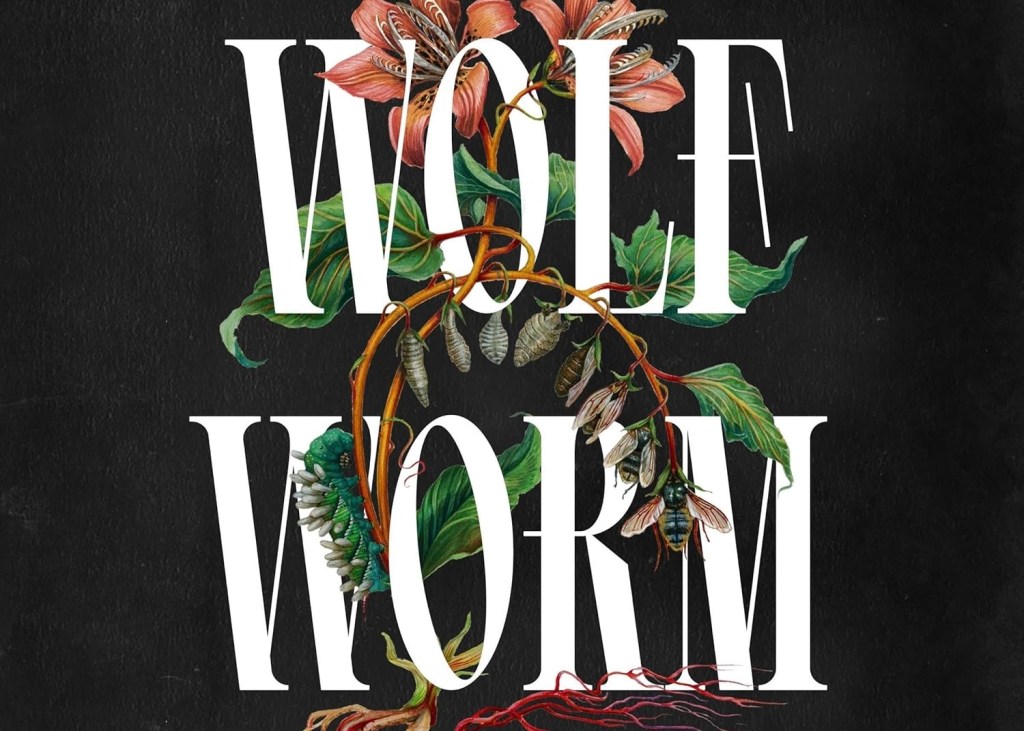
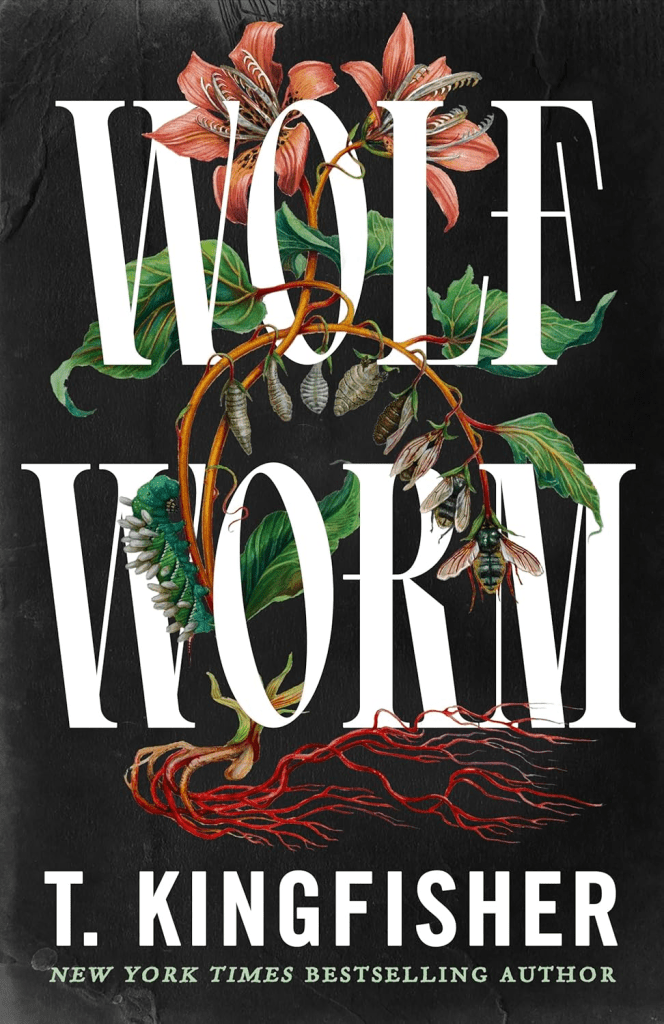


TL;DR: It gets inside you. That’s the joke and also the warning. T. Kingfisher delivers a slow-burning, painterly, genuinely nauseating Southern Gothic that loves its characters slightly more than its scares and is still, easily, required reading for anyone who thinks body horror has nothing left to say.

The first thing Sonia Wilson does when she arrives at the entomologist’s estate outside Goldston, North Carolina is discover that her new employer forgot she was coming. This is 1899. She has a cardboard suitcase containing mainly sketchbooks and one change of clothes. She has less than a dollar wrapped in a handkerchief. The ride she finally gets, from Siler Station, ten miles in the dark on a bad road, comes from a man named Asa Phelps, who is gaunt, who does not smile, and who tells her that the Devil walks these woods, Miss Wilson. He says it with total sincerity. She thanks him for the ride.
This is the register Wolf Worm works in: horror arriving through the side door while someone is managing a different anxiety. Sonia’s inner monologue runs a constant catastrophizing audit, rendered in parenthetical italics, (he thought better of hiring you) (you’ll have to go back to the school with your tail between your legs), and what the book does well, particularly in its first half, is to use that mechanism as a structural device. She is not a screamer. She is a woman who has been anxious her whole life and has learned to walk herself back from it, and the horror operates by outrunning her ability to rationalize it away.
The premise is better than average. Sonia has been hired to complete an entomological atlas, filling in illustrations that a previous artist left unfinished under circumstances that no one in the household discusses. The book concerns itself with screwworms, botflies, carrion beetles, parasitoid wasps, and a thing called Cuterebra emasculator, which forms warbles on the flanks of squirrels that hang there like grapes. The entomological detail is accurate, specific, and clearly loved. Sonia thinks in paint colors: Prussian blue through the shadows, gamboge for the squares of light across the floor, zinc white, rose madder, aureolin. The prose inherits her precision. It is the correct texture for this story, and it is one of the things the book does that few horror novels can.
Underneath the studio with the paint-stained porcelain palette and the warped copy of The Last of the Mohicans left open face-down on the desk is a locked shed. Underneath the shed is what it is, and what has been done to it, and that is the actual horror. When the novel arrives there, it arrives hard. The image of pale flesh hanging under a wire mesh table. The wet crunching noise. These are not prepared for by anything in particular, which is both the best and the worst thing about the structure of this book.
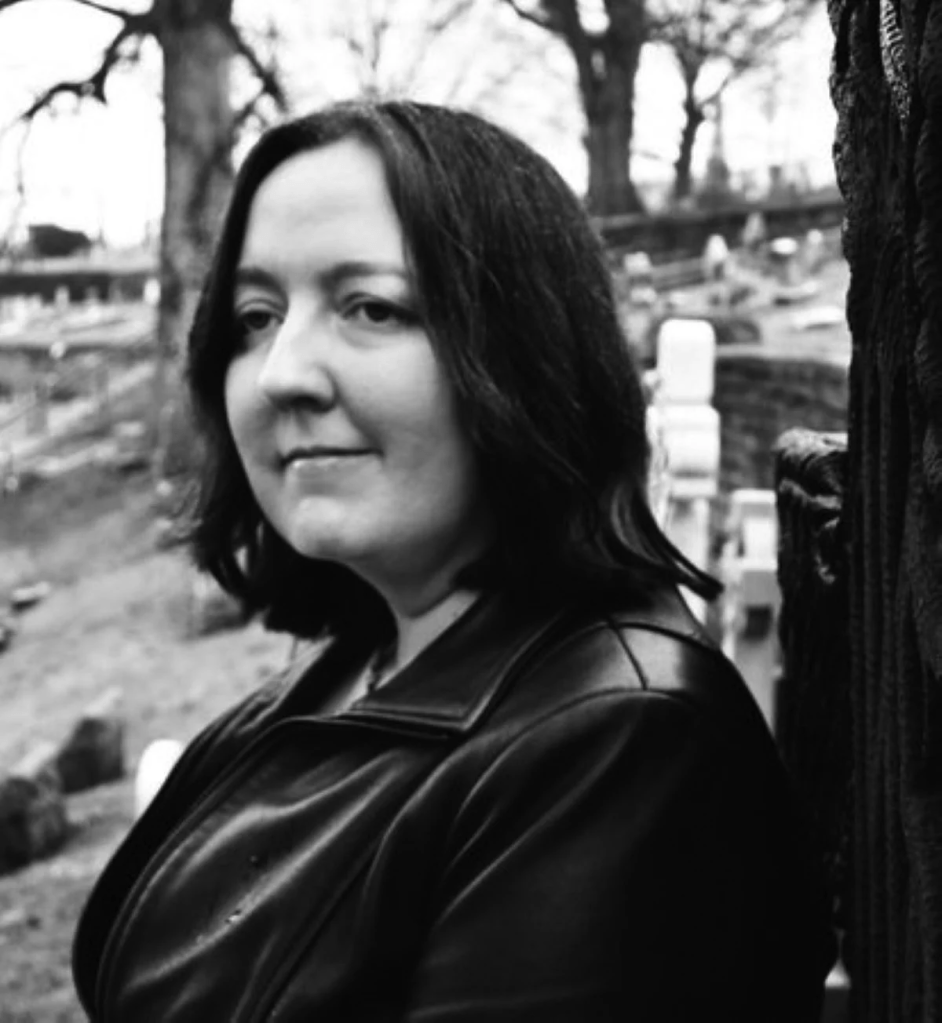
T. Kingfisher is the pen name of Ursula Vernon, a North Carolina author and illustrator whose other life involves children’s books, webcomics, and the Hugo-winning graphic novel Digger, about a wombat. She adopted the Kingfisher name for adult work, in part to avoid parents buying her horror novels for children who liked her other stuff, and in part as a homage to Ursula K. Le Guin, who once sold a story to Playboy under “U.K. Le Guin” and joked that readers might think the byline stood for “Ulysses Kingfisher.” She has published more than forty books under both names. Her horror mode, refined across The Twisted Ones (2019), What Moves the Dead (2022), and A House With Good Bones (2023), runs to a particular formula: a competent, wry narrator in a setting with enough atmosphere to absorb dread, surrounded by supporting characters who are more interesting than the genre usually asks for. Vernon was diagnosed with breast cancer partway through writing this book, and in the acknowledgments notes that her need to finish the draft before chemotherapy began gave her “a lot of thoughts about alien invaders inside your flesh.” The body horror in the back half of Wolf Worm reads like someone who had a visceral reason to mean it.
The supporting cast here is the best thing in the book. Mrs. Kent, the housekeeper, whose jaw is so clenched with anger at a particular point that Sonia worries about her teeth. Jackson Kent, her husband, who tells stories about blood-drained deer and a dead woman found halfway up a tree with her collar unbuttoned and her cuffs folded back, and does it the way a man does when he knows exactly what effect he is having. Ma Kersey, the Lumbee healer, who knows things and says just enough of them. These are characters built with time, which is the right way to build them in a mystery-adjacent Gothic, because what the book is asking is how long a reasonably intelligent person can rationalize away what she knows.
The answer is: a while. The pacing is the main problem. The middle section of Wolf Worm runs on atmosphere and delayed revelation in the way that Gothic middles tend to, and it runs on it long. The mystery of the shed has four or five scenes where it could have moved forward and doesn’t. This is not quite a flaw of craft, since the accumulation of detail does real work, but it is a flaw of proportion. When the reveal finally comes, it requires unpacking a mythology the novel handles both with good humor and some genuine invention. The mythology, treated here as natural history rather than folklore, is refreshingly unsentimental. It is, however, the kind of concept that belongs in a more brutal book. What Vernon does with it is, on balance, a little too tidy.

This is where you are supposed to be relieved, and the book lets you be. That is the problem with the last quarter. The ending it earns is not the one it takes. There is a final image, a black-and-gold fly glimpsed in the garden, that contains the entire residue of the horror, placed near-last on the second-to-last page, and the book adds a paragraph after it that explains what the fear means and how Sonia is learning to live with it. This is the version of the ending that says: here is the shape of the wound. It is not the version that leaves you with the wound.
The house, the household, the interracial marriage of the Kents and the social risks it requires in 1899 North Carolina, the way Sonia moves through the world as an unmarried woman naturalist with a palette knife at the bottom of her bag, the Lumbee community and its history named carefully in the author’s note and in the character of Ma Kersey: all of this is handled with more attention than the horror mechanics. The warmth is genuine, not performed, and that is both the source of the appeal and the cap on the ceiling. A sustained cold register was available here. The body of the book reaches for it. The ending sets it down.
A scientific illustrator with a cardboard suitcase, arriving at a house where a previous artist left their brushes in mid-project and their clothes in the wardrobe and did not come back. The mystery of where that artist went. The locked shed. The name of what is in it.
Whether the flies in the garden are still the same kind or something else now is a question the book raises and declines to answer. It should have stopped there.

 The Blog Without a Face
Leave a comment